Designed by Hunters, for Hunters

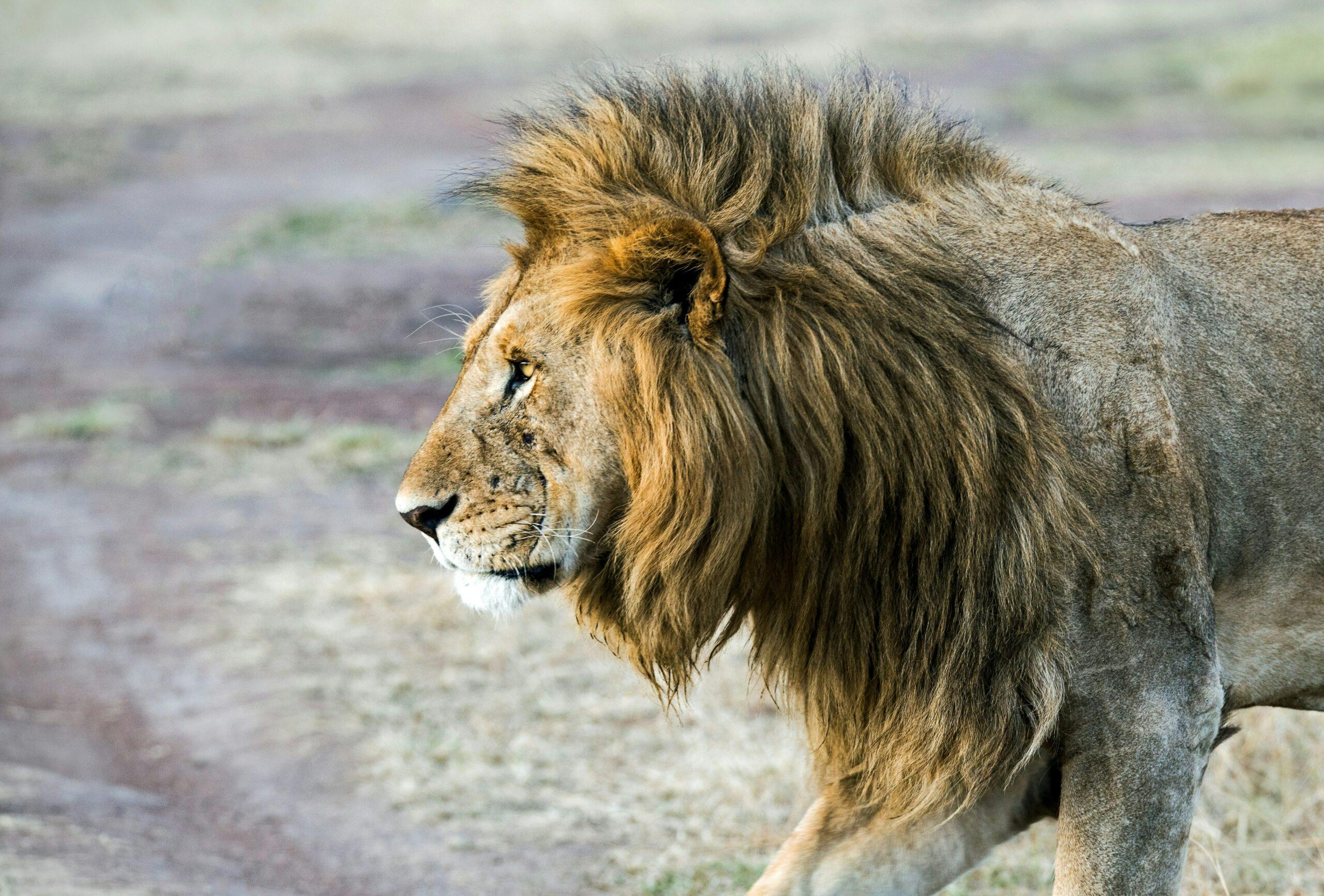
Lion hunting in Africa is one of the most sought-after dangerous game safaris, requiring precision, experience, and a clear understanding of shot placement. For those considering specific destinations, lion hunting in Tanzania offers some of Africa’s most authentic free-range safaris in vast, wild concessions.
Knowing exactly where to place your shot is critical for a quick, ethical kill when pursuing lion in the African bush. Whether you are planning your first safari or refining your approach, Understanding proper lion shot placement in Africa is essential for success. If you are preparing for a hunt, explore available lion hunting safaris in Africa to ensure you are fully equipped and guided by experienced professionals.
To consistently achieve a quick and ethical kill, it is essential to understand the anatomy of a lion and the position of its vital organs. Shot placement is not just about aim — it is about knowing exactly where the heart, lungs, and brain are located in relation to the animal’s body and angle.
Heart and LungsThe most effective and commonly recommended target is the heart-lung area, located just behind the front shoulder. A well-placed broadside shot through this zone will result in rapid blood loss and a short tracking distance.
Brain ShotThe brain is a much smaller and more precise target, typically only attempted at close range or in controlled situations. When executed correctly, it results in an instant drop, but it leaves little margin for error.
SpineA shot placed along the spine can immediately immobilize the lion, preventing it from escaping or charging. However, this is a narrow target and requires excellent shot placement and confidence.
Understanding these vital zones is critical for any hunter preparing for a lion hunting safari and significantly increases the chances of a successful and ethical hunt.
While hunting dangerous game in Africa, such as lion, buffalo, and elephant, some hunters prefer to carry rifles like a .416 Rigby or a .458 Lott due to the increase in stopping power. In most African countries a .375 shooting three hundred grain is the minimum legal requirement. It is always advisable to check the legal requirements of your target country before booking your game hunting safari.
Always check (for your own mental well-being) that your dangerous game professional hunter is carrying a big caliber rifle for backup and that he or she knows how to use it. When it comes to lion hunting and professional hunters in Africa, obtaining references and checking on experience is suggested. Not many first-time lion hunters are experienced enough to make the kill shot on a charging lion at less than ten yards!
Hunting lions in Africa is challenging and exciting. Shot placement knowledge and correct application when firing the first shot is vital for the hunter to survive the lion hunting safari. Lions, when wounded or highly annoyed are extremely dangerous. Make the first shot count!
When we talk about hunting lions in Africa and “the best shot,” there really is no “best shot” that can be adopted in advance by the hunter. Everything is dependent on the distance between the lion and the hunter and the subsequent angles to the kill zone. A lion is not always going to give a perfect broadside or frontal opportunity. The hunter is going to have to mentally prepare and practice before the lion hunting safari and think about all the shot placement options.
Hunting a lion that is injured in thick scrub and rough terrain due to a poorly placed shot is an exceptionally dangerous business. The lion will hide, go to the ground, and come out like a locomotive at full steam when he is within killing distance. This happens within a fraction of a second!
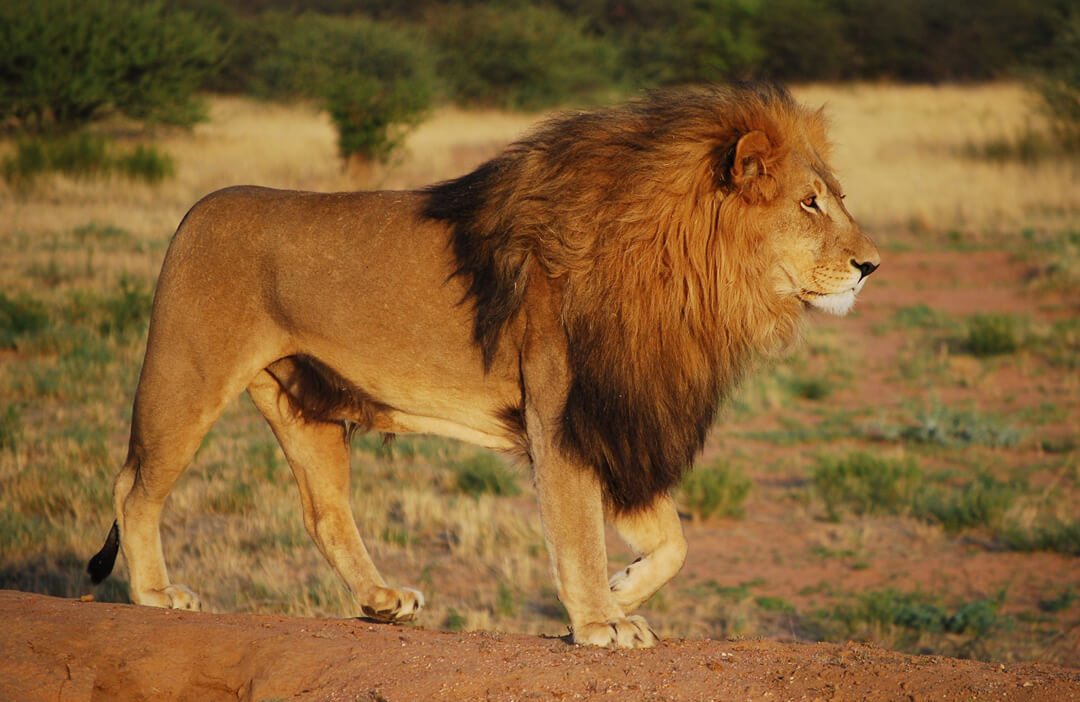
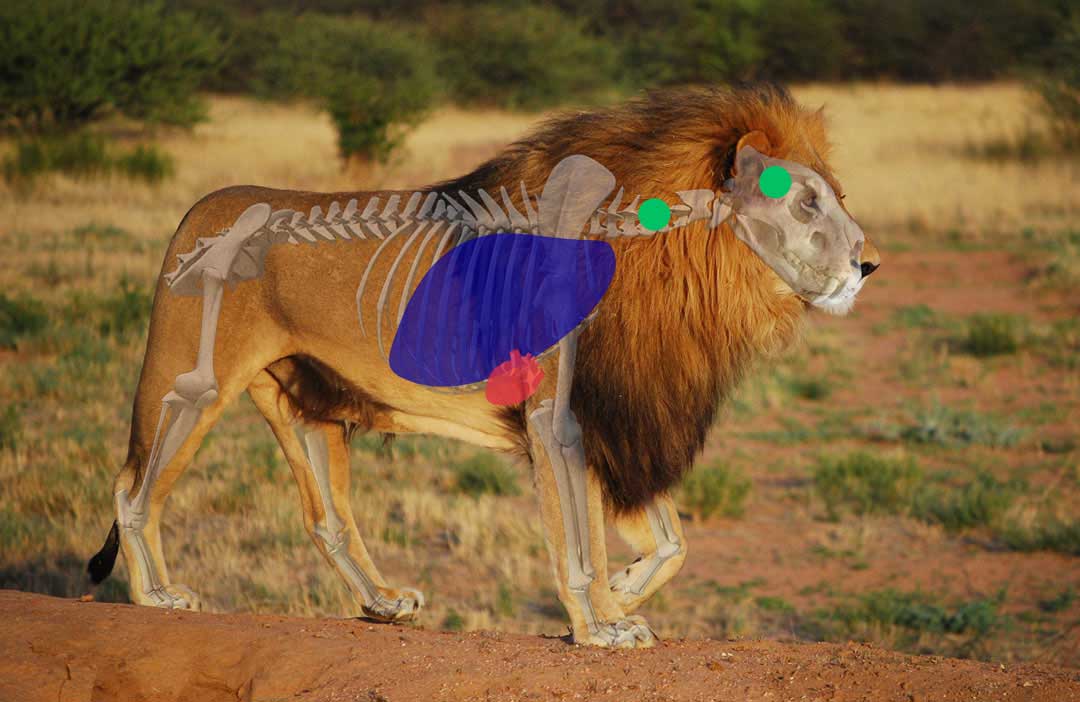
When taking the broadside shot, the hunter is looking to hit the lion hard straight into the heart resulting in a quick and humane kill. When the lion is standing broadside, the heart will sit just behind the lion’s front leg, just above the elbow joint. If the shot is slightly left or right, the bullet will still penetrate the lion’s lungs. If the lion is moving forward i.e., slow walk, the hunter will need to adjust the point of the target to compensate for the “stretched out” leg. If the shot is slightly high, it will still penetrate the lungs and will break the lion’s shoulder. The broadside shot on a lion is one that the professional hunter will suggest is taken, if, of course, the lion so presents itself.
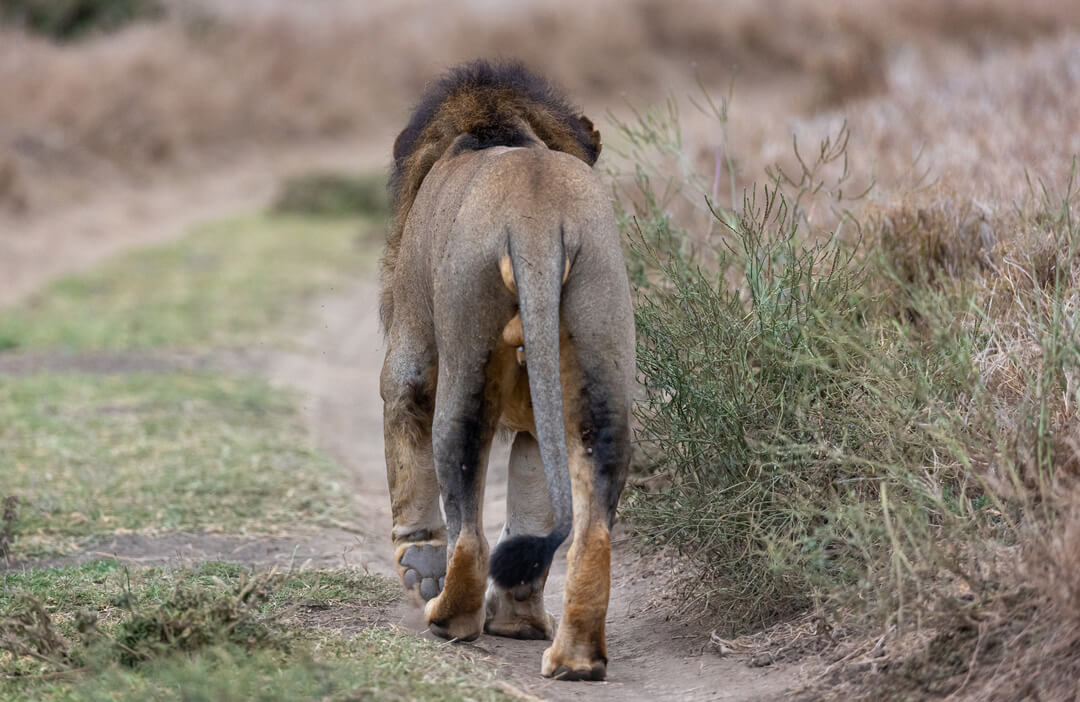
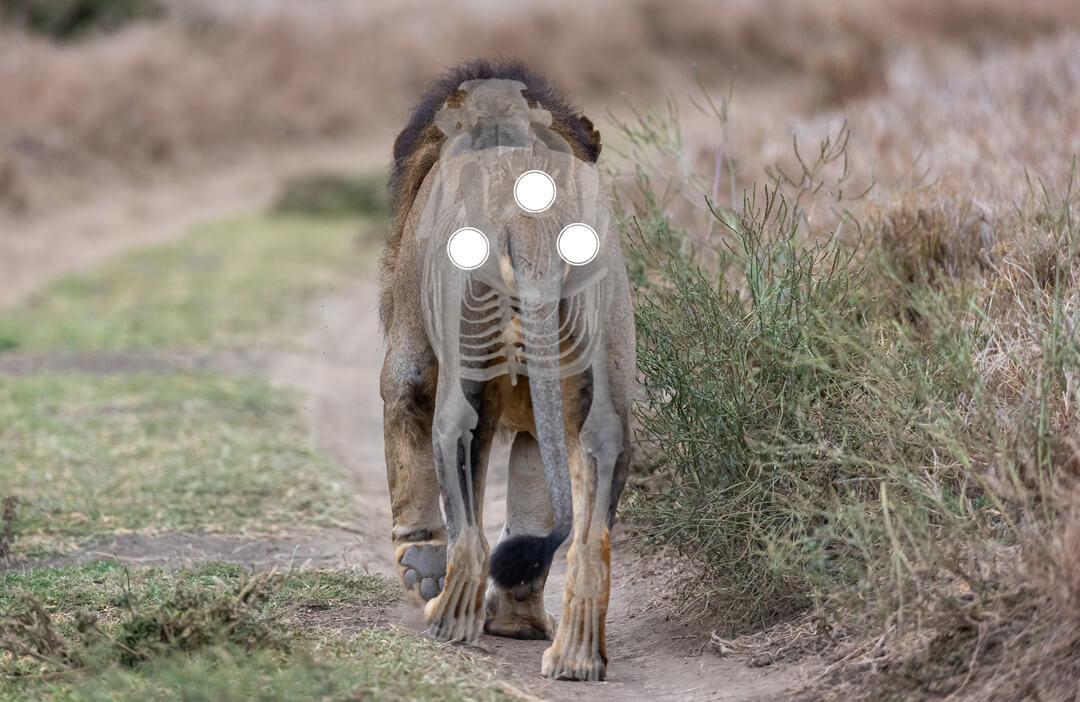
When on an African hunting adventure, the African cat may be facing away from you. In this instance, shot placement would be where the root of the tail joins the body. This is not a shot your professional hunter will suggest you take due to a small target and the associated risk. If the professional hunter on my game hunting safari made this recommendation, I would find a new outfitter!
When the lion is quartering towards the hunter, the lion will be facing the hunter at a slight angle. The perfect shot will be aimed at the base of the lion’s neck where it meets the shoulder. The bullet will go through into the heart and lungs of the lion and will be deadly.
This lion shot placement is not what your professional hunter will recommend as a first shot, only as a follow-up. If the lion has been wounded due to a poorly placed first shot and is facing away from you, this shot severing his spine can be taken which will cripple the lion. The bullet needs to enter the body at the rear of the spine which will be visible depending on the speed at which the lion is moving away from the hunter.
The African lion has a broad chest resulting in a large target area. This shot will be recommended by your professional hunter. A perfectly placed bullet in this position will hit the heart and lungs and will be humane and deadly. The hunter must ensure that they always know the position of the heart and lungs.
The hunter will need to aim and the junction of the neck and chest which will be below the lion’s chin.
When it comes to a frontal brain shot, this is not recommended as the lion trophy may be ruined. The brain position also constantly changes as the lion moves his head at various angles. This shot is only to be considered if the lion is charging towards you. The hunter in this life-and-death situation will have no other option.
The skull of an adult lion is quite soft, and the bullet will easily penetrate. This brain shot will need to be taken at about ten to twelve yards between the hunter and the lion.
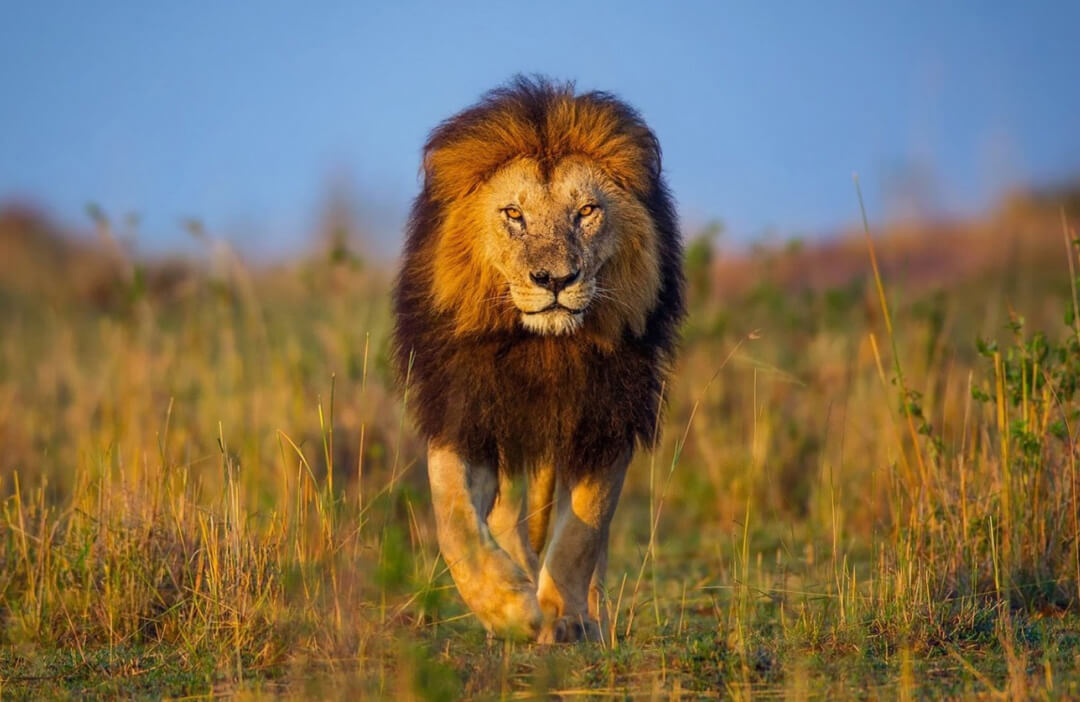
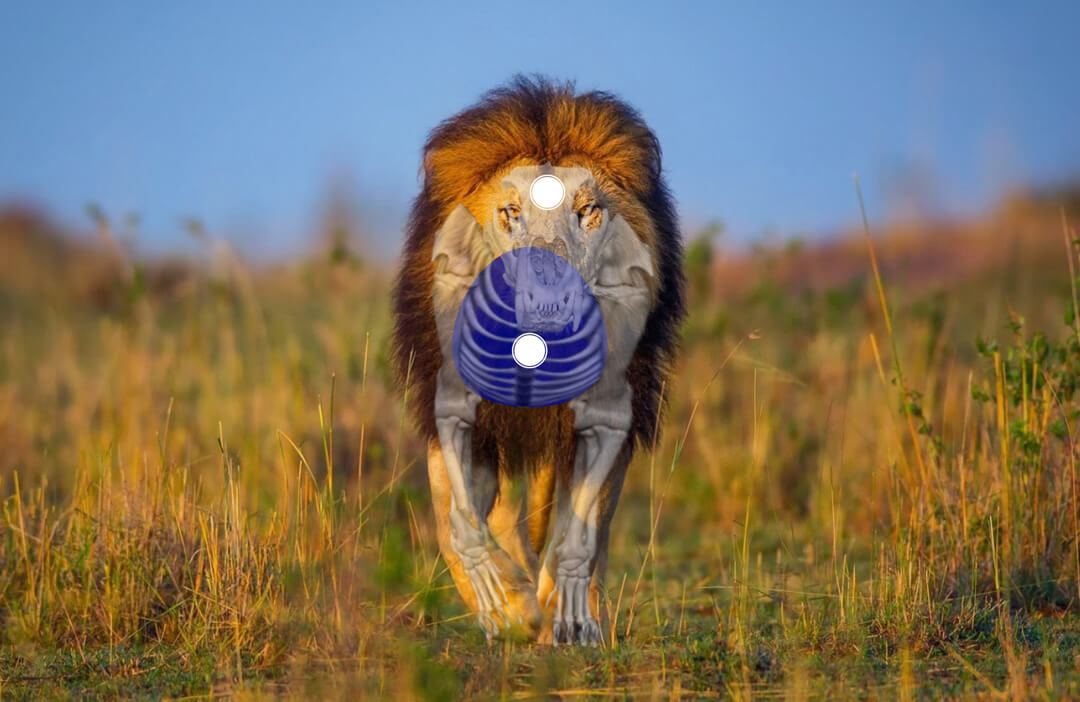
The wounded lion can go from zero to eighty miles in a split second. The only shot that will stop the apex predator is a direct shot to the brain. The hunter will have a split second to drop onto one knee, line up the rifle, and fire for this kill shot. When it comes to shooting a wounded and charging lion for the follow-up, the placement of the hunter, professional hunter, and backup junior is critical. It is important that in this adrenaline-filled moment, killing is limited to only the hunter, not other members of the lion hunting safari due to panicked shooting.
What is the best shot placement for a lion?
The most effective shot placement is the heart-lung area just behind the front shoulder. This ensures a quick, ethical kill and minimizes tracking distance.
Is a brain shot recommended when hunting lions?
A brain shot can be effective but is a very small target and usually only recommended at close range or in controlled situations.
What caliber rifle is best for lion hunting?
Most African countries require a minimum of .375 caliber, but many hunters prefer larger calibers like .416 or .458 for added stopping power.
What happens if a lion charges?
In a charge situation, a direct brain shot is often the only way to stop the lion immediately. This requires quick reaction and precision under pressure.