
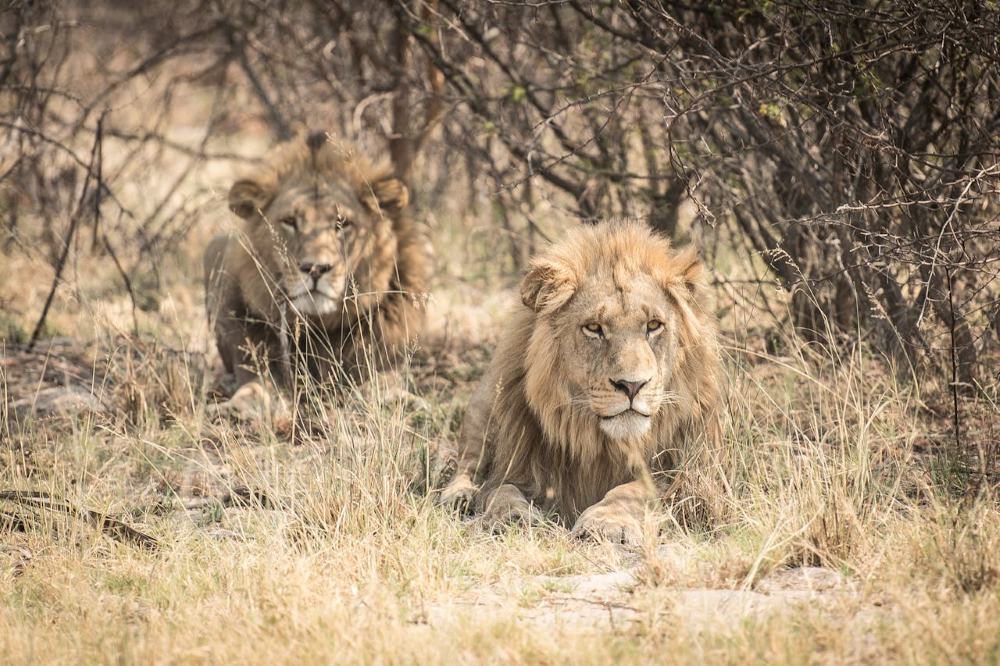
Most hunters want a lion.
They’ve seen the photographs.
They’ve heard the stories.
They understand the symbolism — power, danger, legacy.
Wanting a lion is easy.
It costs nothing — and that’s part of the problem.
Earning one is something entirely different altogether
Early in the decision process, most hunters eventually realize that a real lion hunt is not about desire, trophies, or ego at all. It’s about understanding the full reality of what’s involved in an authentic African lion hunt. Anyone seriously considering this African hunting safari should take the time to understand what a real lion hunt actually involves before deciding whether it’s something they truly want to pursue.
Most hunters don’t realize this at first. Some never do.
I’ve watched more than one experienced hunter walk away from a lion they could have taken — and sleep better for it afterward.

What People Think a Lion Hunt Is
From the outside, lion hunting is often imagined as controlled and predictable, with a clearly defined beginning, middle, and end.
A short safari.
A clear plan.
A moment of danger followed by celebration.
The lion appears when expected.
The outcome is assumed.
The trophy is inevitable.
That picture doesn’t hold up very long in the real world.
It doesn’t come from hunters — it comes from distance. From photographs without context. From stories stripped of failure, doubt, and restraint. The truth is, lion hunting is one of the most misunderstood pursuits in modern dangerous game hunting today…
And yes, most of the loudest opinions come from people who have never sat quietly for a full day waiting for something that might never happen.
What It Actually Demands
A lion hunt demands patience long before it demands courage.
Days of uncertainty.
Hours of silence.
The kind of silence where you start noticing things you normally ignore — wind in dry grass, birds going quiet, your own breathing—nature at its best, with you as an active participant.
There are no guarantees.
No clean timelines.
No promises that effort will be rewarded.
Many lion hunts end without a shot being fired. Some end with the hunter choosing not to take one. That decision — the ability to walk away — is part of what separates wanting from earning.
It’s also the part very few people post photos of or share.
The Weight of Time (Why This Hunt Feels Different)
Lion hunting has a way of slowing everything down.
Time stretches. Decisions take longer. Even simple choices feel heavier. Unlike hunts where movement and constant action fill the day, lion hunting often leaves you alone with your thoughts for hours at a time.
That space does something to people. It forces a person to slow down. To remember. To think.
It forces honesty.
It exposes impatience.
It reveals whether the idea of the hunt matters more than the reality of it.
Some hunters find that the waiting sharpens them. Others realize it drains them. Neither reaction is wrong — but both are very revealing in different ways.
Lion hunting sits firmly within the world of Africa’s most demanding safaris, where patience, pressure, and consequence define every decision. To better understand how this compares across species, explore our guide to dangerous game hunts in Africa, where the realities of hunting Africa’s most formidable animals are explained in detail.
The Meaning of “Earning” a Lion
Earning a lion has very little to do with pulling the trigger.
It has more to do with accepting that success may not come, respecting the animal beyond the outcome, and trusting professional judgment enough to say “not this one,” even when an opportunity exists and the animal is in your sights.
An earned lion isn’t rushed.
It isn’t forced.
It isn’t taken just because it’s “there.”
And it isn’t taken to satisfy impatience.
It’s taken when the hunt aligns — ethically, mentally, and situationally.
That alignment can’t be scheduled. And it certainly can’t be hurried just because the safari is ending on Friday.

What This Hunt Asks of You
Lion hunting asks for more than patience.
It asks for ownership.
Once you decide to pursue a lion, there is no version of the experience that stays entirely private. Whether you speak about it openly or not, the decision follows you — in conversations, in silence, and in how other hunters quietly measure you during the process.
Some will admire it.
Some will judge it.
Most will never say exactly what they think.
And you won’t always know which reaction you’re getting.
That’s part of the cost. But does that really matter?
A lion hunt forces you to accept that your reasons matter more than anyone else’s approval. If your motivation isn’t settled before the hunt begins, it rarely becomes clearer afterward.
This is why seasoned hunters tend to be cautious when talking about lions. Not secretive but cautious. They understand that these conversations follow you, both in public and private. They understand that the hunt doesn’t end when the safari does. It continues in how the experience sits with you years later, long after the photographs stop circulating.
For some, that weight feels earned and right.
For others, it lingers uncomfortably.
Both outcomes last.
Why This Hunt Filters People Out
Lion hunting quietly filters people.
Not because it’s expensive.
Not because it’s dangerous.
Not because it’s a safari, harvesting one of Africa’s apex predators.
Rather, it filters people because it demands emotional discipline.
Some hunters discover they don’t enjoy the waiting. Some struggle with the pressure of uncertainty. Others realize they want certainty more than challenge.
And there’s no shame in that at all.
Lion hunting isn’t a milestone every hunter must reach. For many accomplished hunters, deciding not to hunt a lion is the right decision — and often the more honest one. At the end of the day, the choice is a personal one.
Strangely enough, those hunters tend to be the ones others trust most when they do speak about lion hunting.

The Quiet Reality After the Shot
The moment after a lion is taken is rarely what people imagine it to be.
There’s no celebration in the way outsiders expect.
No sense of victory.
What remains is weight.
Reflection.
Respect.
A deep awareness of what just occurred — and why it mattered.
Some things don’t translate well into stories.
Lion hunting is one of them.
Knowing proper lion shot placement and how lions react after the shot is one of the most important factors in ensuring a clean, controlled outcome.
What Stays With You Long After
Long after the safari ends, most hunters don’t remember the moment itself as clearly as they expect to.
What stays is the process.
The waiting.
The restraint.
The moments where a different decision could have been made, and yet wasn’t.
For many, that’s where the real meaning of the hunt lives. Not in what was taken, but in how it was approached and dealt with.
Legacy Is the Wrong Word — But It’s the One People Use
People talk about legacy when they talk about lions.
It sounds clean.
It sounds noble.
It sounds finished.
But legacy suggests something you control.
And anyone who has been on a lion hunt will tell you, it doesn’t work that way.
What it leaves behind isn’t a story you tell once and move on from. It’s a reference point. Other hunts get compared to it — sometimes unfairly. Decisions get weighed against it. Even silence around the subject becomes meaningful and speaks volumes.
For some hunters, the lion becomes a quiet anchor. A reminder of restraint exercised correctly. A moment where patience mattered more than outcome.
For others, it becomes a question they don’t fully answer — only revisit.
That doesn’t make the hunt a mistake. But it does mean it’s not just another chapter. It changes the way the rest of the book is read.
That’s why lions don’t belong on bucket lists.
Buckets imply disposal.
Lion hunts don’t.
The Only Question That Matters
In the end, lion hunting isn’t about whether you can.
It’s about whether you should.
Whether you’re prepared for the uncertainty.
Whether you’re comfortable with restraint.
Whether you’re willing to accept an outcome that isn’t guaranteed.
This isn’t a hunt you research your way into — it’s one you either understand, or you don’t.
And no — this isn’t meant to talk anyone into or out of it. That’s the point.
Because wanting a lion is common.
Earning one is rare.
And understanding the difference is where every serious decision begins.
Editorial Note
This article was written by experienced hunters and safari professionals, drawing on firsthand knowledge of African dangerous game hunting. It is intended specifically for American hunters considering African safaris and reflects real-world experience, judgment, and perspective — not automated or generic content.
About the Author
This article was written by a contributor within the Game Hunting Safaris team who works directly with professional hunters and American clients pursuing dangerous game across Africa. Their perspective comes from watching real hunts unfold over a prolonged period of time — including long safari days that ended without success, moments where restraint mattered more than opportunity, and witnessing conversations that didn’t end with congratulations. Where time took a step back, and decisions weren’t measured in moments, but by the restraint that defined them.
The author does not update articles to chase trends, rankings, or seasonal changes. Their focus is on judgment, patience, and respect — qualities learned slowly and usually spoken about quietly afterward.