
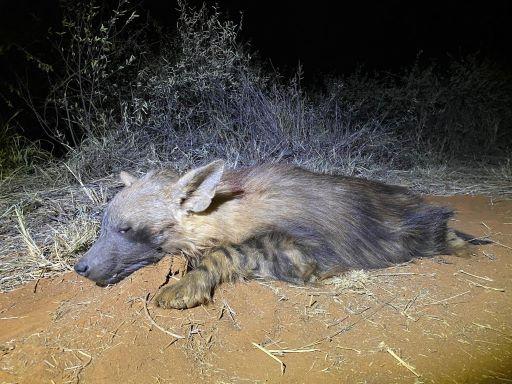
While hyena hunting in Africa might not be the first though in your mind when looking at game hunting options, but it can provide an exciting and challenging experience for those who choose to give it a try. For much of common history, the Hyena has been seen as nothing more than a dirty and opportunistic scavenger, stealing away the prey of other animals, lurking in the shadows, and offering little in terms of roles in the African bush. However, for millennia in Africa, the Hyena has been hailed as a spiritual symbol of both good and bad omens, a fortune teller of sorts. And for the American hunters who choose to tackle the task, an alternative and rousing experience.
[DYNAMIC-BLOGTABLEOFCONTENT]
Key Takeaways
- Africa is home to 4 recognized species of Hyena
- Hyena hunting in Africa can be a hunt of planning or opportunity
- Hyenas make an exciting and interesting choice of game hunting targets
- American hunters need to understand their chances of a successful hunt
- This type of hunt in Africa is not recommended for first-timers
Hyena Hunting in Africa: About the Species and Where to Find Them
Africa is home to four distinct Hyena species that can be found in various regions across the continent. These game hunting “wild dogs” are actually closer related to mongooses and felines than they are to the Canine family. Except for the Aardwolf, these carnivorous hunters possess some of the strongest jaws and bite forces of all predators, along with complex social structures and hierarchies that reveal an underestimated level of high intelligence, adaptability, and tenacity.

Spotted Hyena (Crocuta crocuta)
The most common and largest of the Hyena hunting safari species, the Spotted Hyena proliferates across most of Southern Africa. Their range includes Namibia, Zimbabwe, South Africa, and Mozambique, as well as other African territories like Zambia and Tanzania. Spotted Hyenas are known for forming large matriarchal clans that can be highly territorial, and these territories are respected; it’s been documented that Hyenas’ chasing prey will halt the moment their target enters another clan’s territory. Males are more likely to leave their “birth clan” and join another for mating purposes or to increase their rank, while females tend to remain within their clan especially if they’re next in the matriarchal line.
Spotted hyena have a highly developed front half, with a strong neck and well-developed foreleg musculature. Their hind end appears almost under-developed in comparison, being very rounded. This serves the purpose of allowing the hyena to escape a rear attack as there’s less “meat” for a predator to grab onto. They have a wide skull and snub-nosed snout; yet a large in comparison heart which makes up around 1% of their body weight, enabling them to possess a very high rate of endurance. They are also the only Hyena species to have rounded ears.

Brown Hyena (Parahyaena brunnea)
Nicknamed the Strandwolf (beach wolf), the shaggy-haired and dark-maned Brown Hyena can be found in Southern Africa; with game hunting populations in South Africa, Zimbabwe, Botswana, and Namibia. The Brown Hyena are known for being able to live around urban infrastructure, such as in Namibia, where clans have taken over abandoned mining and fishing towns as areas to den when breeding.
Brown hyena are scavengers by nature, feeding off the remains of carcasses left behind by other predators. In their coastal territories in Namibia and South Africa, they are known to feast off the remains of deceased whales, seals, and seal cubs that wash up along the beach. They complement this diet by hunting small rodents, hares, foxes, and birds. Unlike the Brown Hyena; the strandwolf forms wolf pack-like hierarchy of a dominant male/female pair, their offspring and relatives, as well as a smaller number of individual members. Their population numbers have dropped over the years, moving them up the rank of threatened species.

Striped Hyena (Hyaena hyaena)
The smallest of the dominant Hyena species, it’s joked upon that the Striped hyena missed out on the evolution that altered its relative species. Striped Hyena possess a much smaller skull with long legs that carry its short sloping torso. Like the Brown Hyena, the striped variety has a deeply sloped back and hind quarters but has a much thicker neck. Striped Hyena can be located in specific areas of Uganda, Tanzania, Ethiopia, Burkina Faso, and Cameroon.
Striped Hyena either live alone or in pairs and are primarily nocturnal. Like other Hyena species, they too mark their territory or home range by using their anal secretions to scent mark the vegetation and natural “borders.” This species of Hyena are quieter and will often avoid areas where larger Hyena populations reside, especially those of the larger Spotted Hyena.

Aardwolf (Proteles cristatus)
Is it, or isn’t it…that is the question many ask; but the aardwolf (literally Earth Wolf) is the smallest classified Hyena species. The Aardwolf looks like a smaller Striped Hyena thanks to their markings, but they sport a much slender muzzle and body shape. Unlike its larger relative, the Aardwolf doesn’t hunt at all, instead its primary diet consists of termites and insects. So if you happen to spot an Aardwolf hanging around a carcass, be assured they are there for the larvae, beetles, and other crawlies who help in decomposition.
Aardwolf are extremely shy and exist in a primarily nocturnal setup, occasionally becoming diurnal in the winter season when darkness hangs around just a bit longer, something to keep in mind on the hunting safari. The smallest of all the Hyenas, they prefers a solitary existence only forming pairs for breeding purposes which can lead to territorial infringements and fights. Aardwolf populations can be found in South Africa, Namibia, Zimbabwe, Mozambique, and Botswana when in the south; and in Ethiopia, Tanzania, and Kenya when travelling further up the continent.

Hunting Hyena in Africa: What the Cackles in the Dark Can Tell You
If there’s one almost universally known fact about Hyenas, it’s that distinctive laugh that can no doubt raise the neck hairs. However, not all Hyenas partake in this goosebumps-inducing call. The signature Hyena laugh belongs to the Spotted Hyena; and the call itself can indicate a variety of emotions or meanings, such as excitement, stress, frustration, or even warning. The laugh can also signal anxiety, threats or impending fights, as well as submission.
The other Hyena species make use of barks, grunts, whoops, squeaks, and even clucking noises in the case of the Aardwolf. These different calls and sounds carry communication about predator threats, the appearance of other Hyena packs, injury, or calls from cubs to parents. But what can American hunters keep in mind about some of these vocalizations when on their Hyena hunt in Africa?
Whoop: Whoops are a series calls made by Hyenas that can last up to a few minutes and can be heard up to 3 miles away. These whoop sounds are the most common vocalization and don’t have a specifically known trigger or cause.
Grunt: In Hyena language, a grunt is a low growl lasting seconds, it serves as a warning to other Hyenas whether they’re from the same pack or an uninvited visitor to the territory.
Low: A low-pitched groaning sound is used when an attack on another animal or predator is possible, but not certain.
Growl: This noise carries an “oh-aaa” sounding rattle that signals a certain and imminent attack on prey.
Fast Whoop: This call is higher in pitch than the standard whoop and has shorter gaps between the individual noises. Fast whoops are used when hyenas are attempting to steal food or prey from another Hyena pack, Leopard, or Lion.
Yell: A Hyena yell is a short and high-pitched sound used by an individual who has been attacked or bitten, somewhat of a 911 call to others in the area.
Low grunt-laugh: A series of low-pitched grunts is employed when attacking or running away from predators, ideally one would have listened to the calls or sounds that came before.
A Hyena’s vocalizations can also reflect their age, social status, or rank, and even individual identity, which helps hyenas to distinguish and recognize their pack members. For example, the more dominant an individual is, the lower the tone of their general vocal range. Lower-ranking individuals or subordinates typically have higher tones in their common calls or sounds.
Some Myth and Madness behind the Cleaners of the Bush
Game hunting has evolved from its primary use of food supply and subsistence, but the trophy aspect still harks back to the days when hyenas were shrouded in mysticism and folkloric meaning. Native tribes across the African continent have attached their own symbolism and meaning to Hyenas, embodying both good and bad ideals, characteristics, and fortune.
The Positives
Some tribes view this species as a symbol of balance between male and female energy, and the connection between life and death, where the old has to be cleared away to make space for the new. Hyenas are also tied to the qualities of resilience and resourcefulness, owing to how they often make home and survive in some of the harshest of African environments, pushing through relentless heat, drought, food shortages, and predation to survive and thrive.
In Nigeria, for example, Hyenas are seen as a symbol of cycles, bringing an end to a season before the start of the next. And not always in the literal sense. Thanks to their sometimes complex hierarchies, they are also seen to be symbols of community and intelligence through their use of communication, strategy, cooperation, and networking.
Throwing it back to the famous Hyena laugh, they are also seen as a symbol of finding the humor in life. Laughing during the rough and even absurd periods
The Negatives
On the flip side of the coin, Hyenas are often attached to themes or qualities that tie in with negative behavior or characteristics possessed by people, sometimes carrying a Biblical connotation or link. A common negative association with Hyenas is greed or gluttony, one of the seven deadly sins. This relates to a Hyena’s ability to finish off a carcass, bones and all, and then scavenge for more.
African folklore also promotes the Hyena as a symbol of cowardice and treachery, owing to their nature of stealing the prey (or achievements) of others. Similarly, this “cleaner of the bush” is also seen as unclean or immoral in character and can further be associated with desolation, destruction, and judgment.
Death and the Supernatural
Across many African cultures, the Hyena is seen as an omen of death, again owing to their love of scavenging and feasting on carrion. In the Maasai culture Hyenas are tied to grave robbing; ironically, this concept is viewed in a positive way as being feasted on by Hyenas after burial is seen as an honor and the “final stage” of the Maasai funeral rites.
Hyenas have for centuries been linked to witch doctors, witches, and other figures of dark magic. Some cultures believe these practitioners of the dark arts can transform into Hyenas or ride them as a supernatural figure.
The power and meaning of dreams is something taken seriously in many an African culture; and Hyenas are often associated with gossip and falling victim to unscrupulous people, as well as a sign of being told it’s time to find a new pack, or to find the humor in life’s current situation.

The Ins and Outs of Hyena Hunts
Hyena hunting in Africa might not seem as challenging as that of other game hunting species, but fair warning, hyena hunting has its own nuances and tactics that can go a long way to ensuring a desirable hunting safari outcome. Many of the things to watch out for relate to the animal’s senses and behavior, sometimes being tied to the natural elements of seasons and weather.
Periods of drought or dry season will bring more predictable movement around watering holes and bait sites, cutting down on tracking time. Conversely, when the environment is greener and food more abundant, American hunters and their parties can have a larger amount of time spent tracking and waiting on a target. Be aware of the moon phase and wind direction, moon phase can impact visibility (for both the hunted and hunters), while wind direction can carry scent and sound the wrong way.
In terms of firearms, it’s recommended that hunters bring a weapon they could fire in their sleep, meaning the hunter must be very comfortable and confident in their shooting. Hyena hunting in Africa requires exceptional patience, until such point where the Hyena is in the crosshairs. This point does not allow for delay or deliberation, only calm, quick and accurate shooting abilities.
When it comes to shooting the proverbial shot, the broadside option is considered the safest and most promising. Shots to the head and neck aren’t recommended as the prey can quickly turn, ruining the chance of a clean and ethical shot. Always follow the advice of your PH or guide when it comes to the shot; if they say wait, wait, and if they say shoot, pull that trigger!
It’s also important to note that each destination carries its own set of game hunting conditions when targeting the Hyena.
This can be summed up as below:
Hunting hyena can test the patience, skill, sanity, and determination of any hunter who books the hunting safari. But if one can bear to research the regulations, and listen to the advice of their team, it can be an exciting experience. Game hunting regulations can change at any point, so speak to your outfitter or PH before the time to ensure you’re up to date on the legalities and requirements.
A Hyena hunt might not give American hunters the prettiest African trophy, but it can provide them with an experience designed to test their mettle and experience a darker, more symbolic side of game hunting in Africa, with an unusual trophy to add to their trophy room.
Frequently Asked Questions
Can American hunters export their Hyena trophy?
According to the currently available information, the United States allows for the import of Spotted and Striped Hyena trophies, provided all relevant documents, including CITES permits, are in order. All trophy imports must also be cleared by US Customs and the United States Fish and Wildlife Service.
Unfortunately, Brown Hyena trophies are barred from import to the United States, especially those that originate from game hunting activities. This is due to their CITES level and placement on the Endangered Species Act.
What Skill Level is Needed for a Hyena Hunting Safari?
Hyena hunting isn’t for complete beginners, as it requires some kind of hunting experience. These hunts often take place at night (where allowed), so hunters need to be experienced in using night vision, artificial light, hunting calls, etc.
This type of hunt in Africa also requires a higher level of experience and skill, thanks to the fact that Hyenas can be some of the shyest and most cunning of targets. This is true especially in areas where hunting is a common occurrence, as they become used to the tactics and tricks used by hunters.
Are Hyena Hunting Packages Inclusive or Standalone?
A Hyena hunt can be structured as a standalone hunt or as part of a bigger package, depending on the hunter’s choice and outfitter offerings. Standalone hunts typically last 5-7 days and make use of specific baiting or calling, while hunts as part of a package deal may see one baiting station used for the Hyena and main target (usually Lion or Leopard), and the Hyena in this case, could be seen as an “opportunity target.”