
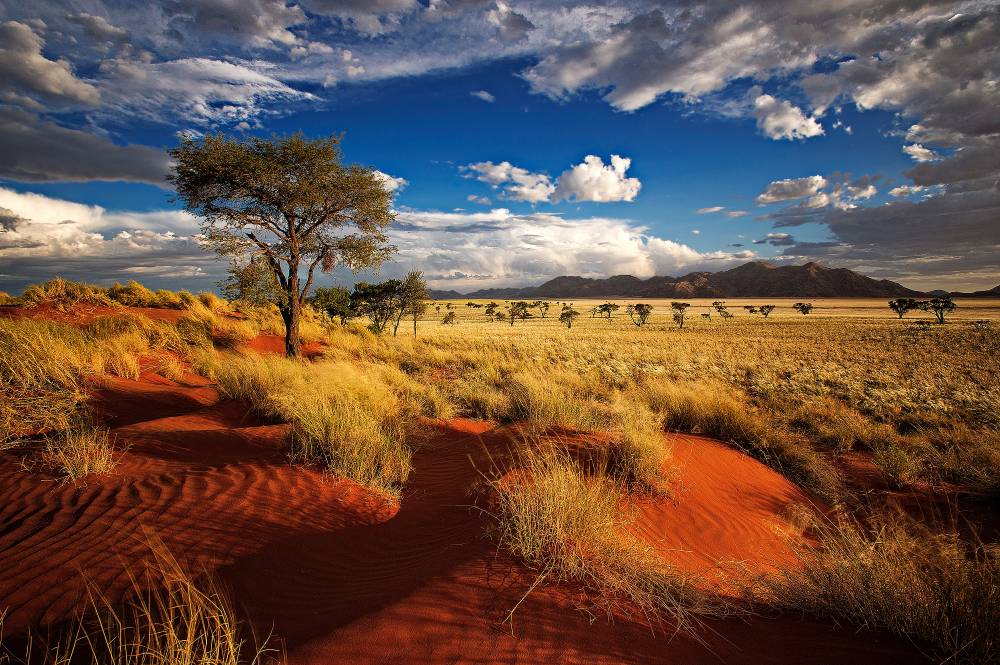
For many American hunters, the words “African safari” conjure images of wide open plains, spectacular wildlife, and the thrill of the chase under sun-kissed African skies. And that’s not wrong, so to speak. But among all African countries, Namibia stands out as a premier destination for hunting enthusiasts from the United States — and for good reason. Is it the diversity of species? The breathtaking landscapes that change from region to region? The welcoming culture, or perhaps the opportunity to come face-to-face with some of Africa’s most dangerous species? Perhaps it’s the strict conservation ethos that is enforced…but whatever it is, Namibia has carved a reputation as one of the most engaging and exciting destinations for an African hunting safari.
In this blog, we’ll explore why Namibian hunting safaris resonate so strongly with American sportsmen, what makes Namibian hunting safaris uniquely special, and how these experiences offer far more rewards than mere trophies. These hunts and experiences represent conservation, cultural exchange, and unforgettable lifetime memories that will remain long after the flight back to the US.
[DYNAMIC-BLOGTABLEOFCONTENT]
Key Takeaways
- US Sportsmen like hunting in Namibia for various reasons
- The destination offers challenging and epic safaris at reasonable prices to tempt hunters
- Namibia hunting safaris are professionally and ethically undertaken
- African plains game, dangerous game, and specialty species can be hunted here
- The destination is easily accessible via Europe and Africa
A Hunter’s Paradise: The Diversity of Game
One of the primary reasons American hunters choose this African destination is the wide array of species available when hunting in Namibia. From classic African plains game to dangerous game, Namibia offers a spectrum of hunting experiences that few countries can match.
The free-range hunting groups are large, sprawling across the country. Hunters can enjoy pursuing such species as:
- The Greater Kudu — Often referred to as Africa’s Gray Ghost or King of the Spiral Horns, this majestic large antelope is a huge favorite amongst trophy hunters and has them returning year after year for premier trophies. It is renowned for its ability to disappear before a hunter’s eyes….hence the nickname “Gray Ghost.” This is a premier plains game trophy, with horns reaching up to 6 feet
- The Gemsbok (Oryx) — With its striking coat and long, spear-like horns, this antelope has adapted to Namibia’s desert terrain. On a side note here, Oryx biltong is one of the author’s favorite treats. Also delicious is some fresh game meat steaks on the braai (BBQ), finger-licking good! Be sure to ask your resident chef to prepare some
- Springbok, Hartebeest and Eland — These are iconic species found within Namibia, and challenge both novice and experienced stalkers. The mighty Eland is a special trophy, being one of the largest African antelopes
- Leopard and Cape Buffalo — Dangerous game hunting has never been as exciting as in Namibia. Did you know that this diverse destination is also the only one of the only few destinations where ALL members of the Big 5 and Dangerous 7 can be hunted, making Namibia the perfect destination for those seeking a more intense and memorable dangerous game experience.

These animals are distributed across terrains and landscapes, ranging from the red dunes of Sossusvlei and the lush Zambezi region to open savannah and rocky outcrops, creating varied hunting styles that appeal to the full spectrum of American hunters. Whether it’s long-range glassing in open country or tracking elusive Leopards with expert guides, the diversity keeps seasoned hunters returning year after year to the Land of Sand.
Namibia Hunting Safaris: A Memorable Free-Range Experience
Compared to many other African hunting destinations, Namibia emphasizes a natural, free‑range hunting environment. Large tracts of land, often unfenced and minimally obstructed, give hunters the feeling of truly engaging with the wild. This contrasts with smaller, enclosed reserves common in some areas and allows for authentic, skill-based hunting that appeals to those who grew up stalking deer and hunting in the U.S.
This hunt style also brings long glassing sessions, careful stalks to avoid alerting prey, and a deep appreciation for the bountiful land upon which it is hunted. It’s not merely about the trophy. Rather, it’s the entire experience that resonates with the hunter, including the challenge, the skillset required, and the satisfaction that comes from a hunt done the old-fashioned way of glassing, stalking, and finding one for the pot.
Regulated and Sustainable Hunting Practices
Many American sportsmen are drawn to Namibia’s strong legal framework and wildlife management system. The Namibian government oversees hunting through strict permit processes and quotas based on scientific wildlife assessments, ensuring that populations remain healthy and sustainable for future generations. Namibia was the first African country and is one of only a handful of countries worldwide to include environmental protection and sustainable use of natural resources in its constitution, laying a strong legal foundation for conservation. It is included in Article 95 of the Namibian Constitution.
Each hunt is conducted under the supervision of licensed professional hunters (PH), and only mature or non-breeding animals are selected. This “fair chase” ethic speaks to many American hunters who want to be confident that their pursuit supports responsible wildlife management rather than exploiting vulnerable populations. Let’s be honest here: Even while hunting, people do like to feel that they are, in fact, giving back and helping to conserve species.
Namibia: A Working Conservation Model
In many parts of Africa, hunting and conservation are at odds. In Namibia, however, the two are closely linked. This conservation program shows how responsible hunting can directly support rural development and simultaneously support the protect of wildlife in the region.
This conservation model includes:
- Communities gain legal rights to manage wildlife on their land
- Revenue from hunts funds anti‑poaching patrols, habitat restoration, and wildlife monitoring
- Communal benefits include schools, water infrastructure, and employment opportunities
This really ticks the boxes in terms of “caring” – especially for those rural communities who are reliant on hunters and hunting safaris for their livelihoods. Let’s be honest here – Africa is HARSH, and these initiatives allow life to be just a little bit more manageable with hunts providing employment, the establishment of healthcare facilities and schools, as well as other infrastructure.
For American hunters who care about the bigger picture, participating in Namibian hunting safaris becomes a meaningful – and real! – way to contribute to conservation while still enjoying their sporting endeavors.
Colorful Culture and Welcoming African Hospitality
Hunting in Namibia isn’t just about the hunting adventure of heading to Africa; it’s a cultural journey unique to each hunter who enters this beautiful country. Many American sportsmen value the interactions with local guides, trackers, and local communities who share a deep knowledge and love for the land and its wildlife.
It’s the late-night stories that are shared around the fires with a beer in the hand, the early morning bonding while glassing for game after a quick coffee and a rusk, or the quick snack of some biltong and droewors on the vehicle as new tactics are discussed by the locals who know the region like the back of their hands. These are the memories that remain and that check all the boxes of an authentic exchange. Many a true friend is met on a hunting safari, where bonds are made, irrespective of race, culture, or social standing, where the love of the land and its wildlife sing a special song to embrace life on a hunting safari.
Expect great things in terms of food on a Namibian safari: From backstrap on the fire to traditional potjies cooked over hot coals in a three-legged pot, to Springbok carpaccio, local delicacies, and even traditional Milktart, it’s a taste extravaganza not to be missed.
Namibia’s unique blend of ethnic cultures, languages, and traditions enriches the hunt experience, with true African hospitality the cherry on top!

Easy Access and Comfortable Travels
Unlike some African safari destinations where the logistics of actually reaching the destination itself can be exceptionally daunting (haven’t most of us experienced that!), Namibia is generally regarded as more accessible and easier to navigate. English is widely spoken, and three international airports see flights land daily from Europe as well as African destinations (including charters). Namibia’s infrastructure supports comfortable travel across hunting regions. Not only that, but it is also home to some of the best hospitals in the region, picturesque towns to explore, and a good road network infrastructure.
In terms of accommodation, hunters have many choices afforded to them. From 5* Hunting lodges with all the bells and whistles to camps that range from rustic and traditional to comfortably equipped, this diverse hunting destination caters to different preferences and budgets. Many outfitters provide airport pickups, transportation to hunting areas, quality accommodations, and meals, making the safari experience seamless and enjoyable, especially for first-time visitors who may be unsure of the ropes.
Cost-Effective Safari Options
While no African hunting safari can be considered cheap, many American hunters find that Namibia offers excellent value for money when compared to other African destinations. Daily rates and trophy fees are often lower, while transportation costs can often be more competitive than similar types of safaris, especially when it comes to African plains game options.
African plains game hunts can be attractively packaged, especially those that harvest more than one trophy species per hunt, to compete against high-cost alternatives in Canada and Alaska for certain species. And let’s be honest, for American hunters, a plains game hunt, with species harvested in “deepest, darkest Africa” has also got a bit more of an ego-boost than those from Alaska or neighbouring countries like Canada!
All Skill Levels Welcomed!
The great thing about this African destination is that it welcomes hunters of all skill levels, whether novice, seasoned, or somewhere in between, with hunts available to challenge and reward each level. From African plains game hunts that are targeted at more beginner or entry-level hunts, to the highly dangerous and unpredictable Cape Buffalo dangerous game safaris, Namibia ticks the boxes in terms of inclusion.
Plains game hunts provide excellent opportunities for first-time African safari hunters to develop skills, experience free-range hunting, and build confidence before advancing to dangerous game safaris; while dangerous game hunts provide the thrill, excitement, and adrenaline that is so sought-after by many experienced hunting enthusiasts.

Namibian outfitters tailor experiences to individual preferences, making it possible to combine African plains game hunts with bird hunting, tracking, or even family holiday breaks for non-hunting observers and family members. This versatility makes Namibian hunting safaris appealing to a wide spectrum of American sportsmen, who relish the thought of combining an unforgettable African hunt with a traditional safari that can include all family members.
Iconic Landscapes combined with Breathtaking Experiences
Part of the allure of hunting in Namibia is that it takes place against some of Africa’s most breathtaking backdrops - and if you don’t believe me, come visit this beautiful country yourself! From the red dunes of the Kalahari to expansive savannahs and desert plains, the country’s scenery adds awe to every hunt, building memories, experiences, and moments that cannot be erased.

Building Community and Camaraderie Back Home
Many American hunters return from Namibia with more than premier trophies: They return with stories, bonds, and a sense of belonging to a global hunting community. Shared experiences on safari, mutual respect for wildlife and conservation initiatives, together with friendships forged in distant African lands, enhance a hunter’s hunting experiences, encouraging him to be even more adventurous in his next dream African hunt!
These evolving relationships often lead to return hunting safaris in this hunting mecca, or even referrals to friends, fellow American sportsmen, and more involvement in broader hunting and conservation circles.
The Land of Sand: A Hunting Destination Like No Other
When it comes down to brass tacks, American sportsmen choose hunting in Namibia because it delivers authentic adventure, ecological integrity, cultural depth, and personal fulfilment. It’s the smell of the bush as you wake in the morning and enjoy that first cup of coffee, staring out across the veld with trained eyes as you watch the game in the distance. It’s that feeling you get in your boots as you jump from the 4x4, ready and eager for another day’s hunting in Namibia. It’s that excitement that you see in your partner’s eyes when you talk about the trophy he harvested the day before. This is Namibia, a land of rugged terrain, diverse species, and unforgettable moments.
A hunting safari in Namibia is more than a trip; it’s an experience that teaches and enhances the respect for wildlife, encourages and challenges a hunter’s skillset, while connecting hunters with like-minded individuals in the hunting industry.
If you’re a hunter seeking an African destination that combines a hunting challenge, natural beauty, ethical hunting practices, unforgettable experiences, memorable stories, and legends, do yourself a favor and head to Namibia!
Frequently Asked Questions
Can you hunt the Big 5 in Namibia?
Yes, all members of the Big 5, including the Rhino, Elephant, Cape Buffalo, Lion, and Leopard, are available when hunting in Namibia.
When is Namibia’s hunting season?
Namibia’s hunting season runs from the beginning of February to the end of November each year.
When is the best month to go to Namibia?
While hunting in Namibia is available from February to November, Namibia’s peak hunting season runs from May to August, during the cooler, drier months.
Would you recommend plains game hunting in Namibia?
Yes. Namibia is home to a large number of plains game species to challenge hunters’ skillsets and provide epic hunting trophies. From large, medium, and small antelopes to specialty game and other plains game species such as Giraffes, Warthogs, and Zebra, the country’s African plains game species are some of the best and most abundant in Africa.