
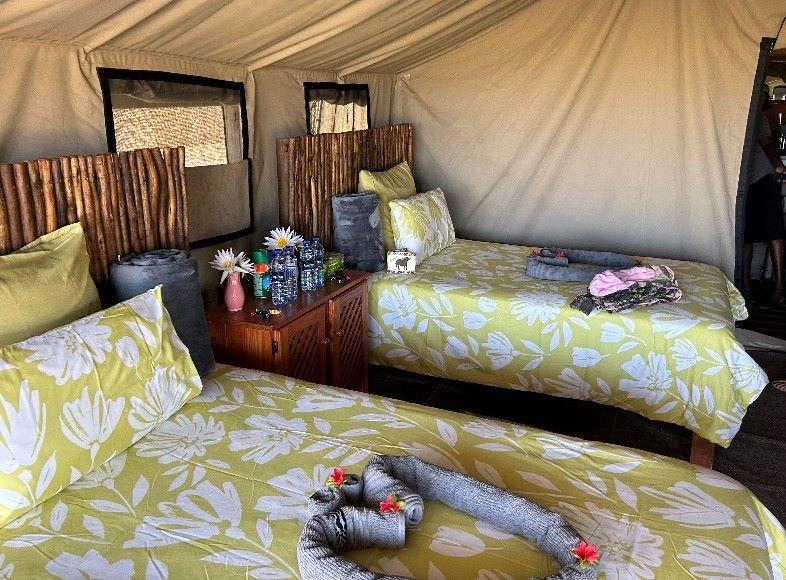
Accommodation on a Namibia hunting safari can vary considerably depending on where you're hunting. Some private ranches offer comfortable lodges with en-suite rooms, swimming pools and meals prepared by a resident chef. In more remote hunting areas, particularly in the Zambezi Region, you may stay in a tented camp where the facilities are simpler, but you're much closer to the hunting ground.
Neither option necessarily makes for a better hunt. What matters is understanding where you'll be staying, how far you'll travel each morning and what facilities are available for you and any non-hunting companions.
This guide explains the main types of hunting accommodation in Namibia, what you can reasonably expect and what you should confirm before booking. For hunting areas, available species and safari options, see our guide to hunting in Namibia.
[DYNAMIC-BLOGTABLEOFCONTENT]
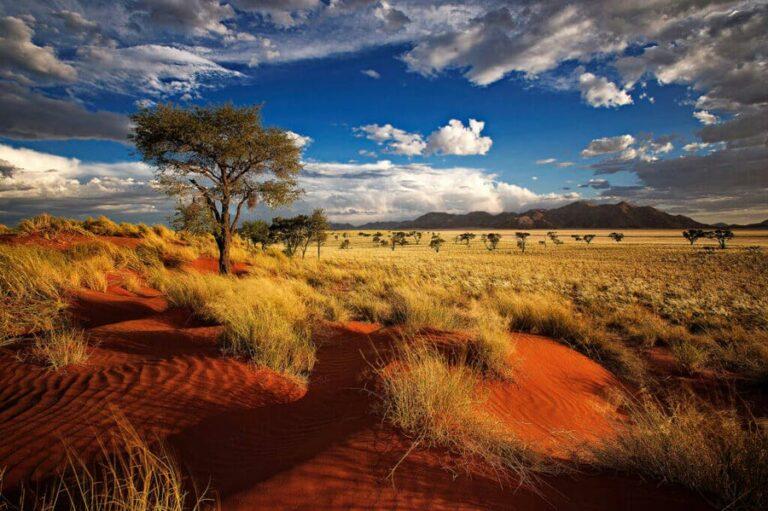
Types of Hunting Accommodation in Namibia
The accommodation included in your Namibia safari depends largely on the hunting area and the outfitter. A plains-game hunt on a private ranch may involve staying in a comfortable farmhouse or purpose-built lodge, while a dangerous-game safari in a remote concession might use a permanent or seasonal tented camp.
There are four common accommodation styles worth understanding before booking. The standard of accommodation, available facilities and travel time to the hunting area can differ considerably, even between safaris advertised at similar prices.
Luxury Lodges
For hunters who prefer a higher standard of accommodation, some Namibian hunting properties offer well-appointed lodges with spacious en-suite bedrooms, comfortable communal areas and meals prepared by experienced kitchen staff. Depending on the property, facilities may include air conditioning, a swimming pool, Wi-Fi and private outdoor areas overlooking the surrounding bushveld.
These lodges are particularly attractive to hunters travelling with spouses or non-hunting companions who may spend more time at the property while the hunting party is out. However, the word luxury can mean different things from one outfitter to another. A beautiful lodge does not necessarily offer spa facilities, reliable internet or organised activities for observers.
Location matters just as much as comfort. Some lodges are situated directly on the hunting property, while others require a drive to reach the hunting area each morning.
Luxury Tented Camps
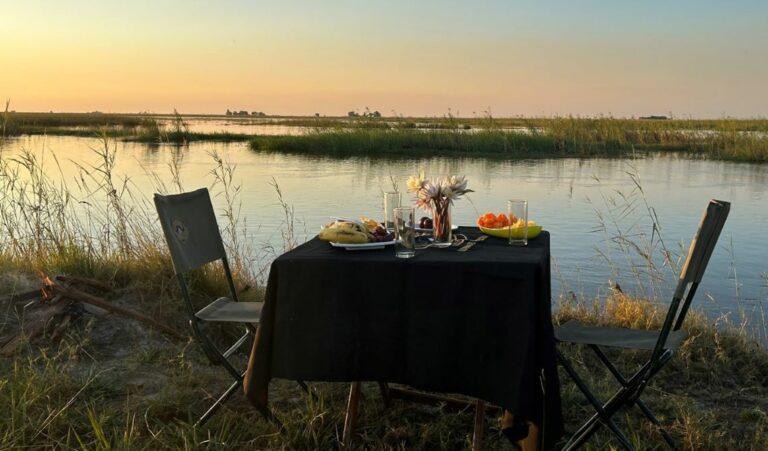
Some of Namibia's remote hunting areas offer surprisingly comfortable tented accommodation. These are generally permanent or semi-permanent safari tents, often with proper beds, en-suite bathrooms, hot showers and a private veranda. Depending on the camp, electricity may come from solar panels or a generator, while meals are served in a central dining area.
A well-run tented camp can be particularly enjoyable on a dangerous-game safari. You are often much closer to the hunting area, with the sounds of the African bush around you at night. Meals may include venison from the concession, and evenings are usually spent around the dining table or campfire discussing the day's hunting.
During our hippo hunting safari in Namibia's Zambezi Region, we stayed in a comfortable tented camp with proper beds, private bathrooms and hot showers. It was a welcome surprise to have those facilities in such a remote hunting area, particularly after long days spent on the river.
Rustic Tented Camps
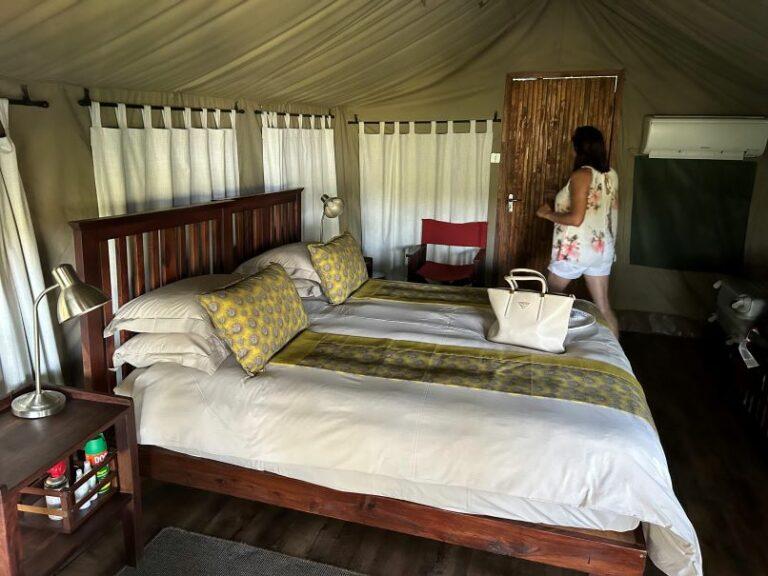
Not every hunting camp in Namibia offers en-suite bathrooms, air conditioning or permanent buildings. In more remote hunting areas, accommodation may consist of basic safari tents with comfortable beds, shared washing facilities and a central dining area. The emphasis is on providing a practical base for the hunt rather than luxury accommodation.
A well-organised rustic camp should still provide decent meals, clean bedding, adequate washing facilities and somewhere comfortable to relax after a long day. Evenings are often spent around the campfire, with meals prepared over an open fire or in a simple camp kitchen. For hunters who enjoy traditional African safari camps, this can be part of the appeal.
The important distinction is between rustic and poorly equipped. Before booking, establish whether showers and toilets are private or shared, how hot water is provided, whether electricity is available for charging equipment and what arrangements exist for laundry. Hunters travelling with non-hunting companions should also consider how comfortable the camp will be during the hours when the hunting party is away.
Farmhouse Accommodation
Many private hunting properties in Namibia offer accommodation in the main farmhouse, a converted farm building or separate guest cottages. These are often family-run operations where hunters stay on the property alongside the outfitter or host family. The atmosphere tends to be relaxed and personal, with fewer guests than at larger hunting lodges.
Meals are frequently one of the pleasures of a farmhouse stay. Expect hearty home-cooked food, traditional braais and, depending on the property, venison prepared from animals taken during the safari. Accommodation can range from simple guest rooms to comfortable en-suite cottages, sometimes with a swimming pool, garden or communal lounge.
For plains-game hunters, staying on the hunting property can be a practical advantage. You may be able to begin tracking shortly after breakfast rather than spending an hour or more driving to another hunting area. However, some outfitters operate across several farms, so staying at the main farmhouse does not necessarily mean every hunt starts on the doorstep.
What Can Non-Hunting Companions Do at a Namibia Hunting Lodge?
For hunters travelling with a spouse, partner or family members, the facilities available at the lodge can be just as important as the hunting itself. Some properties offer swimming pools, comfortable lounges, Wi-Fi and areas where guests can relax while the hunting party is out. Others, particularly remote tented camps, have fewer amenities but offer an opportunity to experience the African bush away from busy tourist areas.
Depending on the property, activities may include guided game drives, birdwatching, nature walks or visits to nearby communities. However, these should never be assumed to be included in the safari package. Some hunting camps are several hours from the nearest town, and independent sightseeing may not be practical without additional transport.
Before booking, ask what non-hunting companions can realistically do during the day, whether activities require advance arrangements and what additional charges apply. If your family would prefer sightseeing and coastal activities, consider allowing extra days before or after the safari.
What Should You Confirm Before Booking a Namibia Hunting Lodge?
Two Namibia hunting packages may offer similar species and hunting days but provide quite different accommodation arrangements. One may include a private en-suite room, daily laundry, airport transfers and drinks, while another charges separately for certain services. These differences are worth establishing before paying a deposit, particularly when travelling with non-hunting companions.
Ask your outfitter the following questions before booking:
-
Accommodation and privacy: Will you have your own room and bathroom? Does the property accommodate several hunting parties simultaneously, or will your group have exclusive use of the camp?
-
Observer rates: What is the daily rate for a non-hunting companion, and does it include meals, accommodation and any organised activities? Is there a single-occupancy supplement?
-
Transfers and daily travel: How far is the lodge from Hosea Kutako International Airport or your arrival point? Are transfers included, and how long will you drive to the hunting area each morning?
-
Electricity and communication: Does the camp have reliable electricity, Wi-Fi and mobile reception? Can you charge a phone, camera batteries and other equipment in your room, or only in a communal area?
-
Meals and laundry: Are meals, local drinks and daily laundry included? Can the kitchen accommodate dietary requirements, and are alcoholic beverages charged separately?
-
Health and emergencies: What arrangements exist for medical emergencies, and how far is the nearest medical facility? In northern Namibia and the Zambezi Region, ask about malaria precautions appropriate to the location and season.
-
Camp facilities: Is there a secure place for firearms when they're not in use? How are trophies handled and stored before collection by the taxidermist or dip-and-pack agent?
Request recent photographs of the actual accommodation and ask for the inclusions and exclusions in writing. This is particularly important when the hunting package includes a remote camp that may differ considerably from the lodge photographs used in promotional material.
Choosing the Right Accommodation for Your Namibia Hunting Safari
A comfortable lodge is always welcome after a long day in the bush, but the most expensive accommodation isn't necessarily the best choice for every hunt. A farmhouse on a private hunting property, a well-equipped tented camp in the Zambezi Region or a luxury lodge with additional facilities can all provide an excellent safari experience. What matters is whether the accommodation suits the hunting area, your expectations and the people travelling with you.
When comparing African hunting trips, pay attention to the accommodation as well as the species, hunting days and overall package price. A good safari isn't simply about the animals you pursue. It's also about having a well-run camp to return to each evening, where you can rest, enjoy a decent meal and be ready for whatever the following day's hunting brings.
About the Authors
Pierre and Tamlyn van Wyk are the founders of Game Hunting Safaris and have hunted and travelled extensively throughout Namibia. Their experiences include elephant hunting in Bushmanland and buffalo and hippo safaris in the Zambezi Region. Over the years, they have stayed in a variety of hunting lodges, tented camps and other safari accommodation across the country. Their firsthand experience gives them a practical understanding of what hunters and non-hunting companions should expect when choosing accommodation for a Namibia hunting safari.