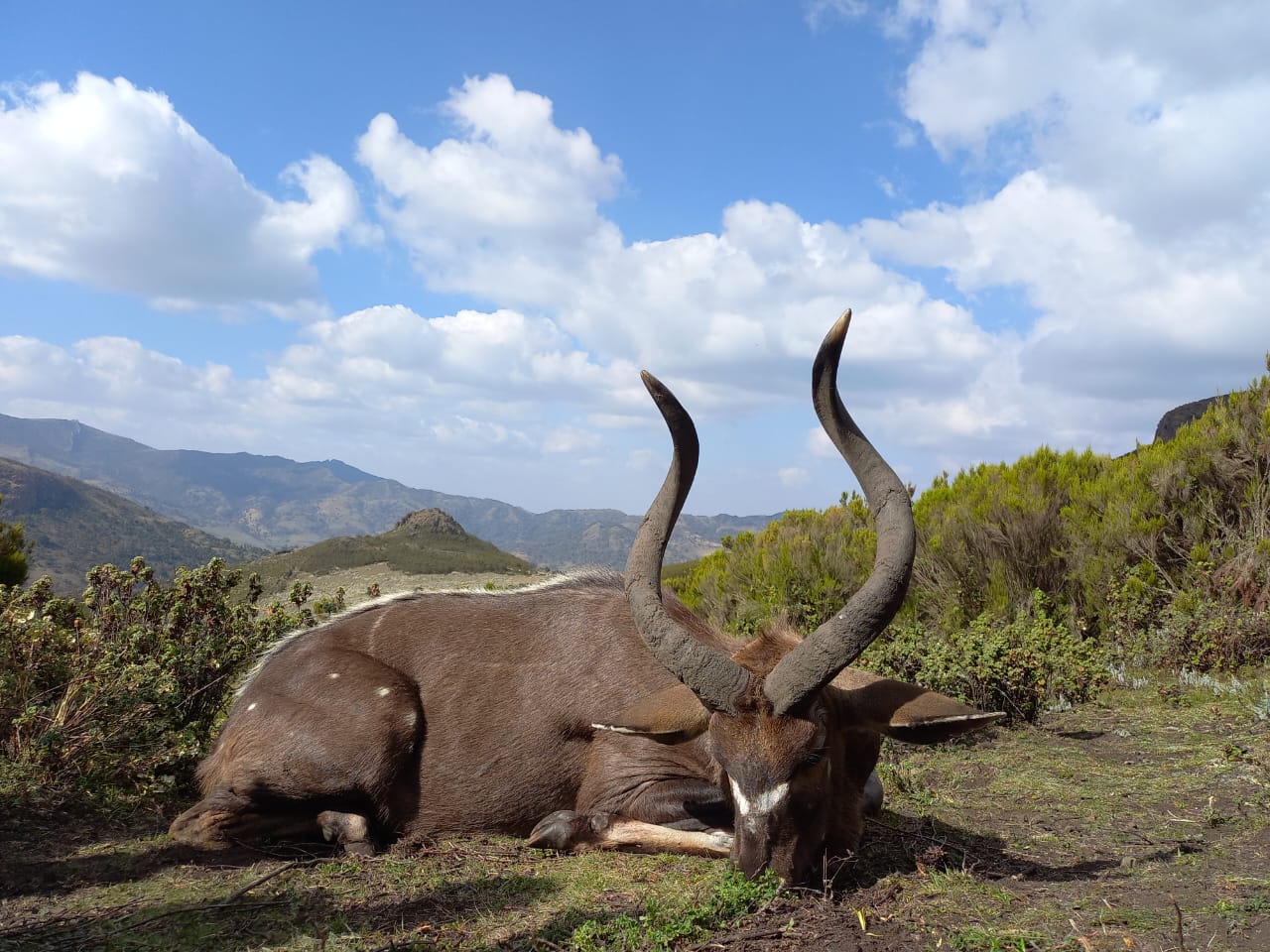
26-Day Mountain Nyala & Lowland Hunting Safari in Ethiopia
Booking Season: 2026
Hunt Difficulty: Moderate, Difficult

Ethiopia occupies a unique place in African hunting. Unlike more common African hunting safaris, Ethiopia offers a very different type of safari built around mountainous terrain, endemic species, and a long hunting tradition.
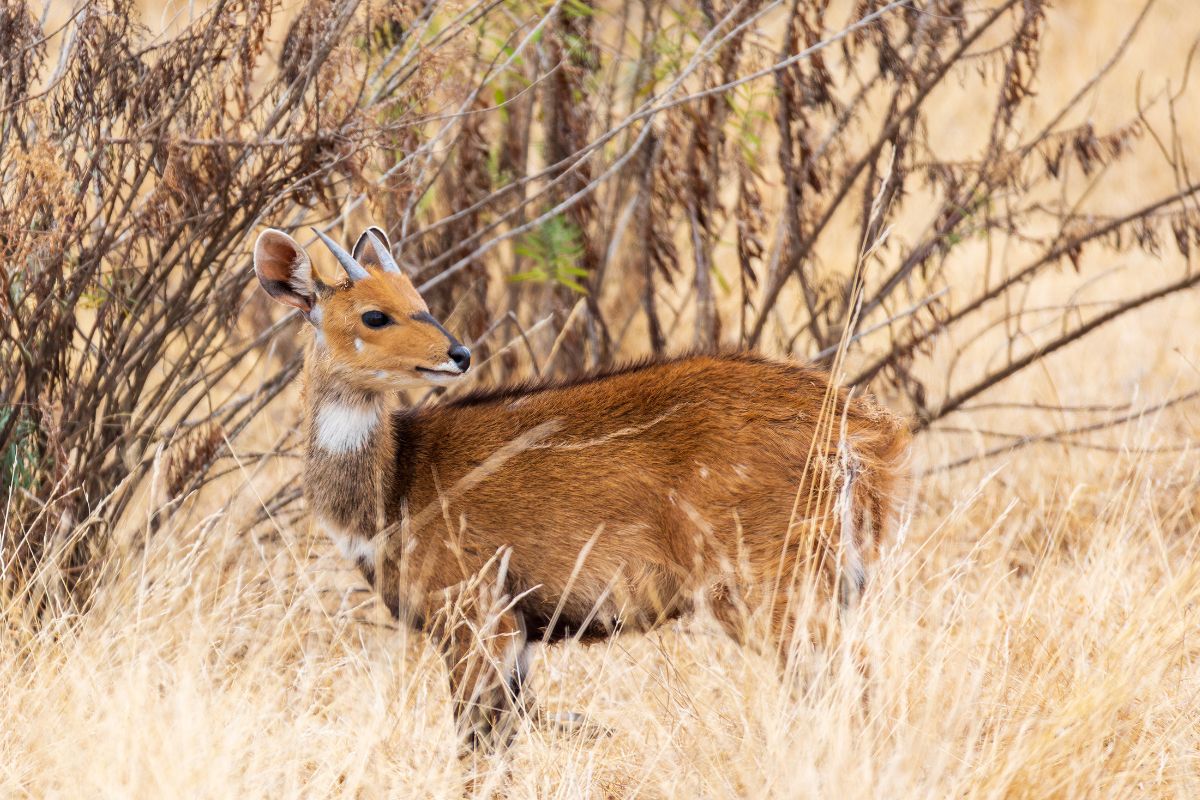
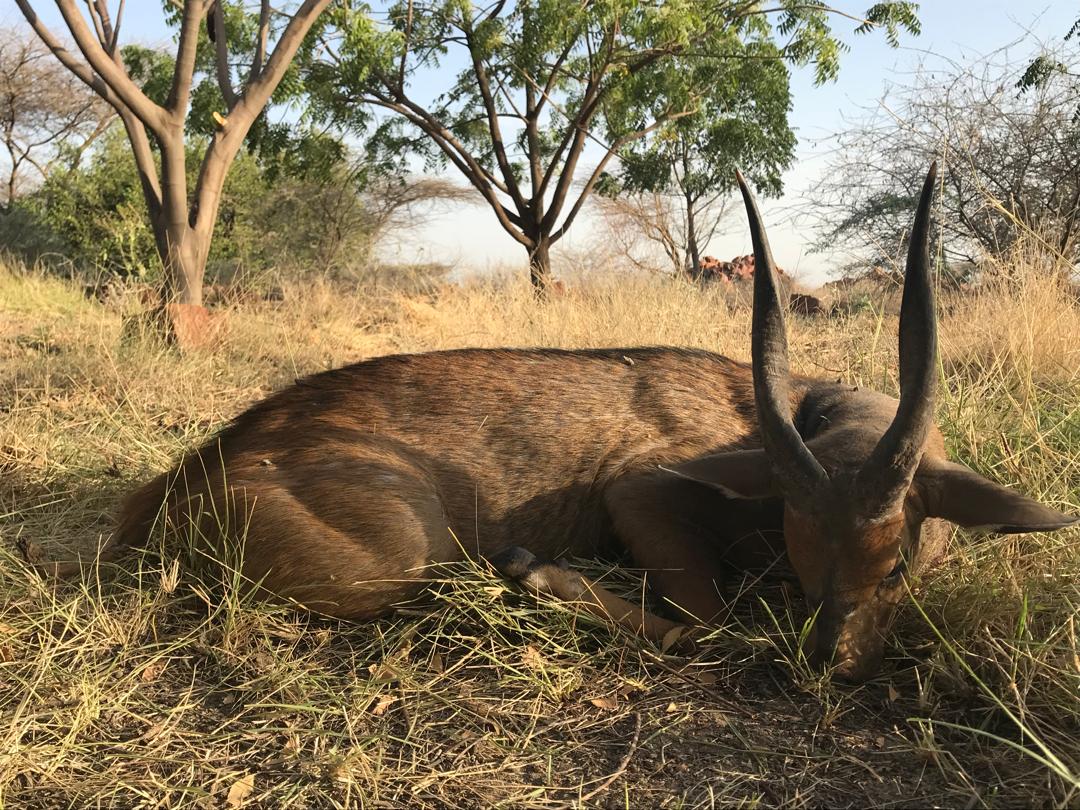
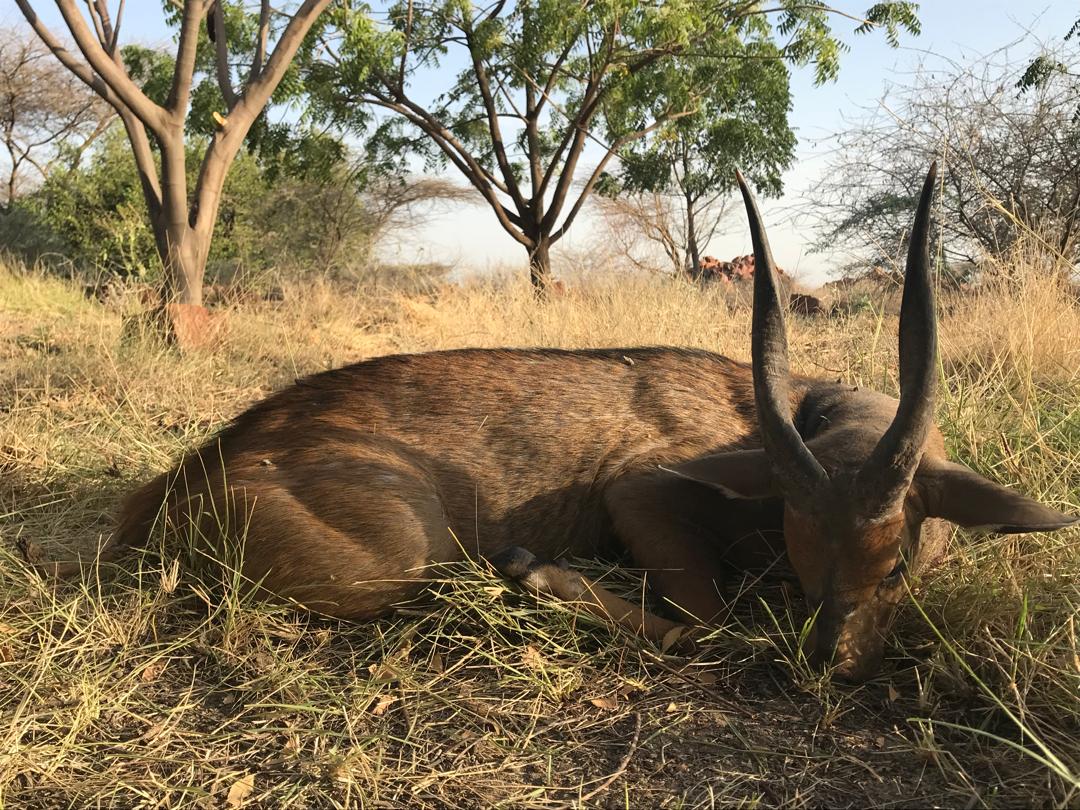
The attraction lies in pursuing animals that exist nowhere else on earth. Species such as the mountain nyala and Menelik's bushbuck are found only in Ethiopia, which means hunters interested in these animals must travel to the Ethiopian highlands to pursue them.
This exclusivity, combined with rugged landscapes and limited hunting areas, makes Ethiopia a destination that tends to attract dedicated collectors and hunters looking for something truly distinctive within Africa.
Hunts Currently Available
26-Day Mountain Nyala & Lowland Hunting Safari in Ethiopia
Booking Season: 2026
Hunt Difficulty: Moderate, Difficult

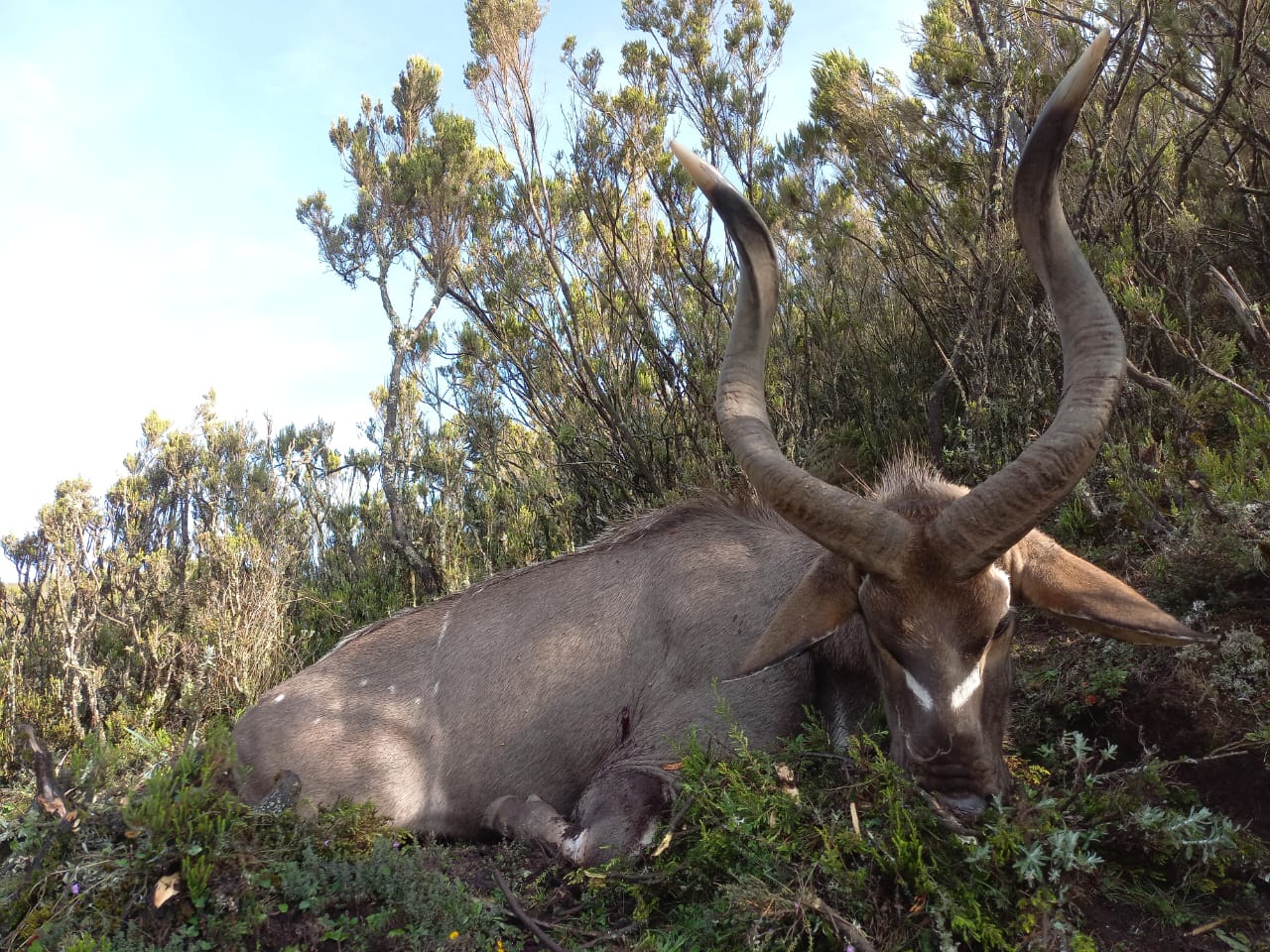
15 Day Mountain Nyala Hunting Safari in Ethiopia
Booking Season: 2026
Hunt Difficulty: Difficult
Most African safaris take place in open savanna or woodland environments. Ethiopia, however, offers something different.
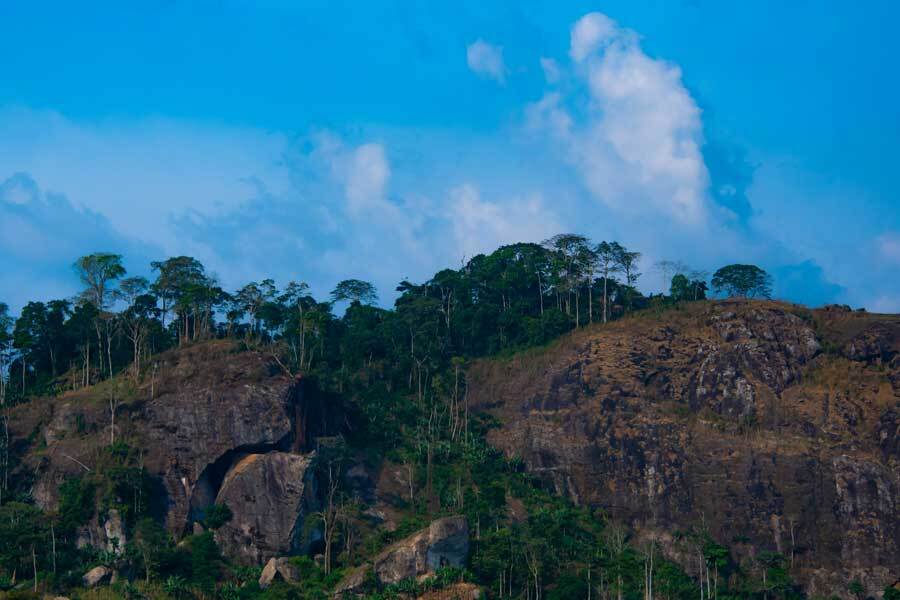
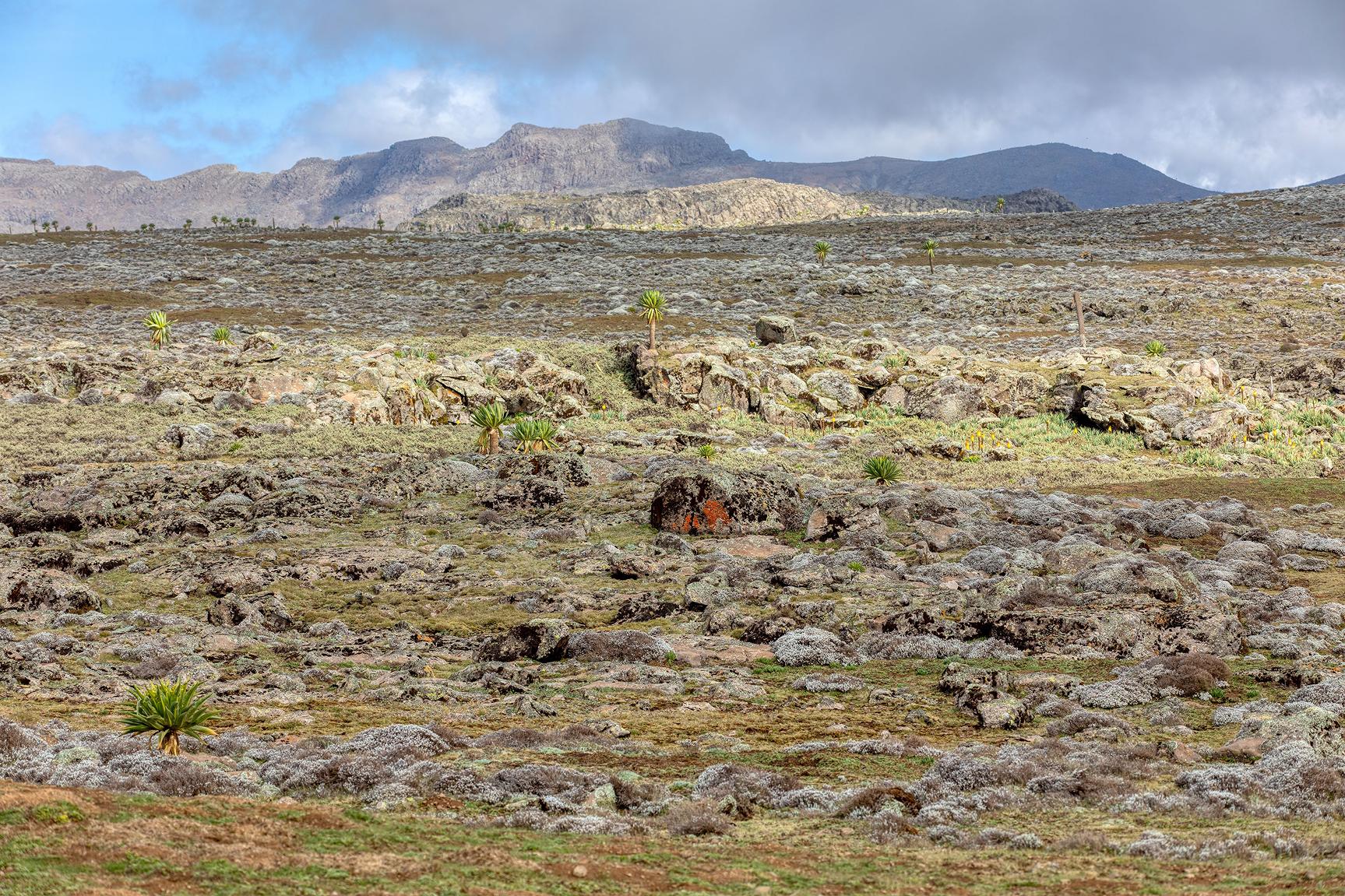
Large portions of the country consist of highland plateaus, steep mountains, and forested valleys. Hunting in these regions often takes place at elevations between 7,000 and 11,000 feet, where the terrain can be rugged and physically demanding.
Instead of long drives through open country, Ethiopian hunts frequently involve glassing mountain slopes, hiking ridges, and carefully stalking animals through forested terrain. Ethiopia can feel closer to a mountain hunt than a traditional African plains game safari.
Ethiopia On Map
You Might Also Like
Hunting in Ethiopia can feel very different from a typical African safari. In most parts of Africa, dangerous game and plains game hunting take place in open savannas or bushveld. Ethiopia, however, combines elements of traditional African safari hunting with terrain more commonly associated with mountain hunts. Pursuing animals such as mountain nyala often involves glassing steep slopes, climbing ridges, and stalking through highland forests at elevations rarely encountered elsewhere in Africa. This combination of mountain terrain and classic African wildlife gives Ethiopia a character unlike most other hunting destinations on the continent.
Much of Ethiopia's most famous hunting takes place in the highlands, particularly in regions such as the Bale Mountains and other mountainous areas of the country.
These high-altitude ecosystems contain dense forests, open alpine meadows, and steep ridges that provide habitat for several unique species.
Hunting in these areas often involves early mornings glassing hillsides before moving carefully through the terrain once animals are located. Because of the altitude and rugged landscape, hunters should be prepared for long days on foot.
The scenery in these regions is also among the most dramatic in Africa, with sweeping mountain views and expansive highland forests that give the safari a completely different character from the more familiar savanna environments.
At first light in the Ethiopian highlands, hunters often glass steep slopes where mountain nyala feed along forest edges. Once a mature bull is located, the hunt may turn into a careful stalk across ridges and through thick highland cover. In these mountains, patience and careful movement are often the difference between success and watching a nyala disappear silently into the forest.
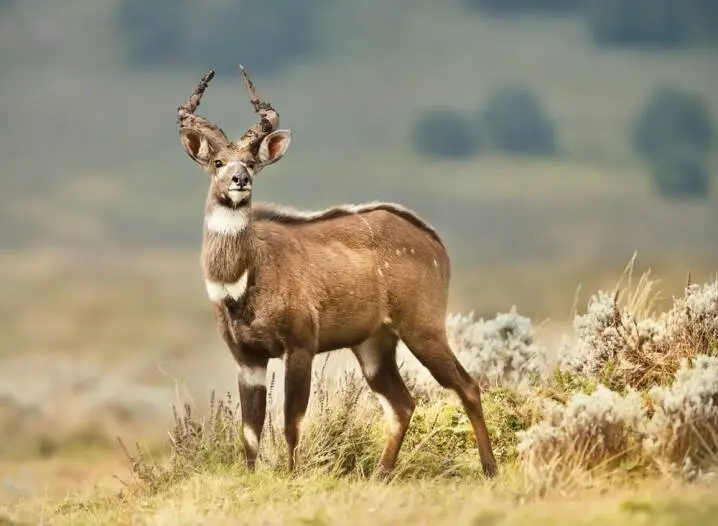
Among all the animals that draw hunters to Ethiopia, none is more closely associated with the country than the mountain nyala.
This striking spiral-horn antelope is found nowhere else in the world except the Ethiopian highlands. Because of its limited range and the rugged terrain it inhabits, the mountain nyala has become one of Africa's most prestigious trophies for serious collectors.
Mountain Nyala Hunting in Ethiopia typically takes place in high-altitude forests and mountainous terrain where hunters glass slopes and stalk carefully through dense cover. Mature bulls are impressive animals, known for their sweeping spiral horns and dark coats.
One factor visiting hunters do not anticipate is the altitude of Ethiopia's hunting areas. Much of the mountain nyala range lies between 8,000 and 11,000 feet above sea level, where thinner air and steep terrain can make stalking physically demanding even for experienced hunters. Professional hunters typically recommend that visiting sportsmen arrive well prepared for sustained walking and gradual climbs across uneven ground. The altitude and rugged landscape add another challenge to an already demanding hunt.
Mountain nyala is the primary reason most hunters make the journey to Ethiopia.
Among international trophy collectors, mountain nyala is often considered one of Africa's most prestigious spiral-horn antelope. Because the species exists only in Ethiopia and permits are limited, opportunities to hunt mature bulls are relatively rare compared to many other African antelope.
This rarity, combined with the challenging highland terrain where the animals live, has made mountain nyala a highly respected trophy among experienced hunters. Pursuing mountain nyala remains one of Africa's most distinctive specialized hunts.
Mountain nyala were only scientifically described in the early twentieth century, relatively late compared to most African antelope. Early explorers and naturalists were surprised to discover such a large and striking species hidden within the forests and highlands of Ethiopia. Even today the animal remains one of Africa's least widely distributed spiral-horn antelope, which adds to its mystique among collectors. Pursuing a species with such a limited range adds considerably to the appeal of an Ethiopian hunt.
Although mountain nyala is the most famous trophy associated with Ethiopia, the country is home to several other distinctive species that attract hunters from around the world.
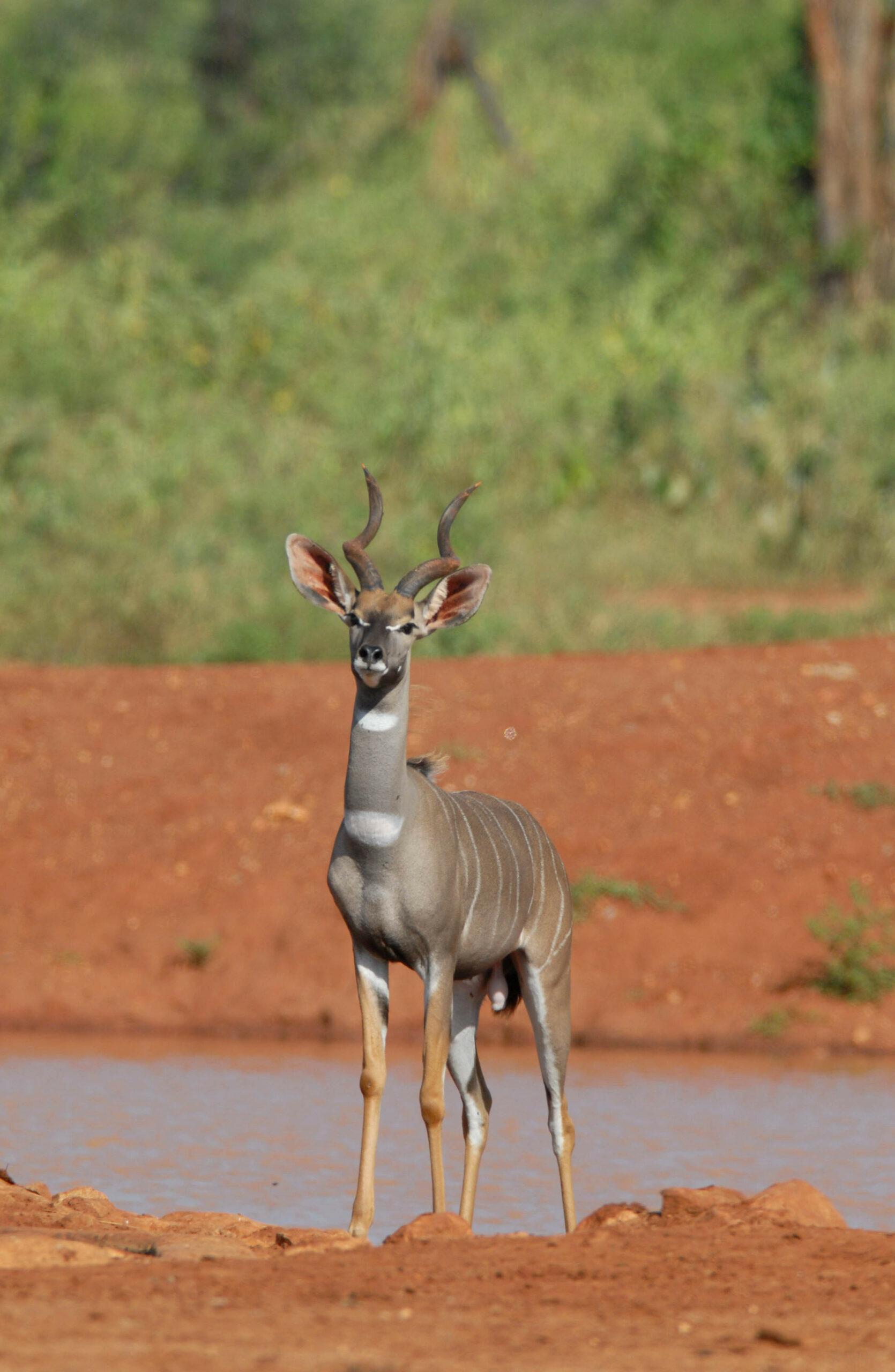
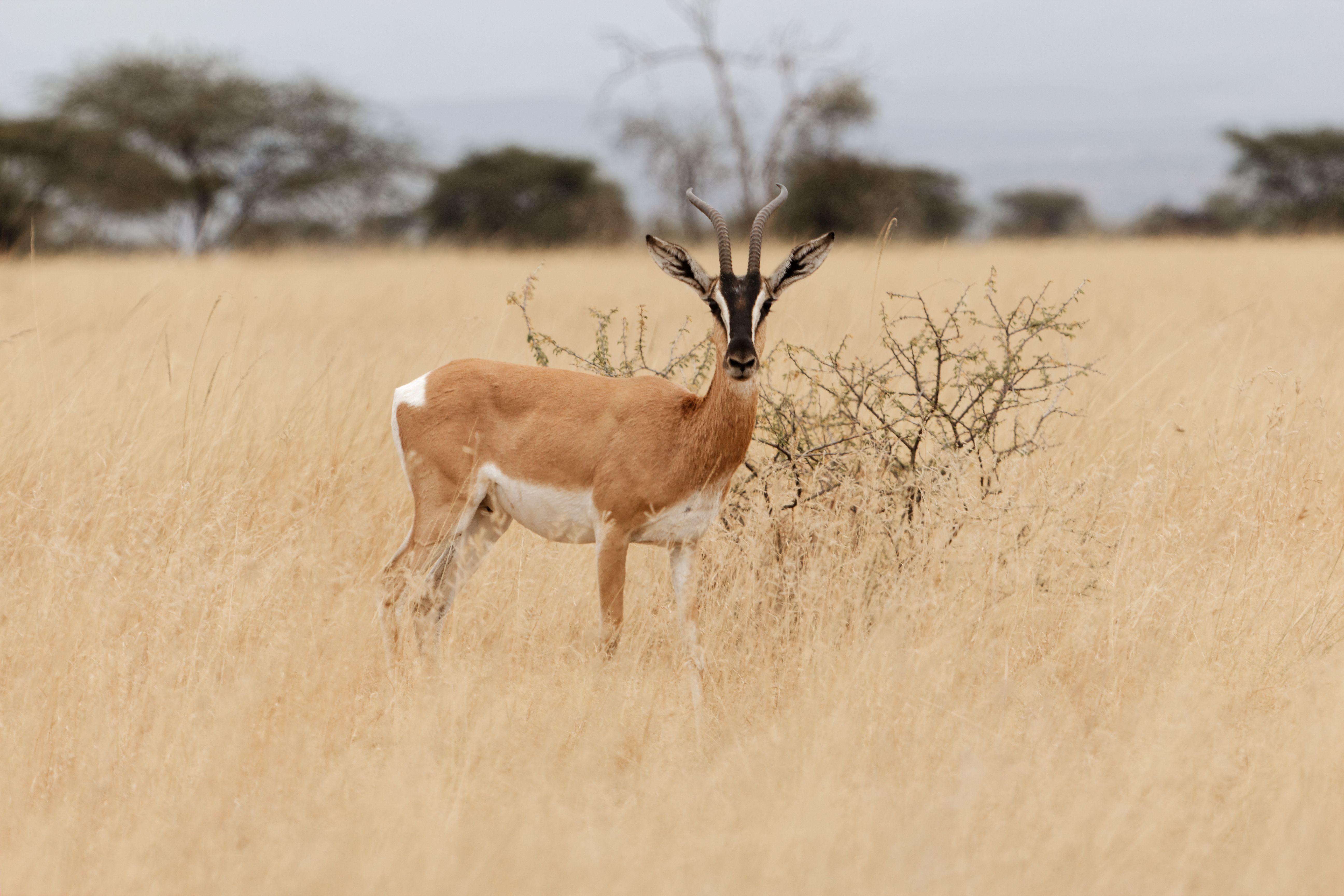
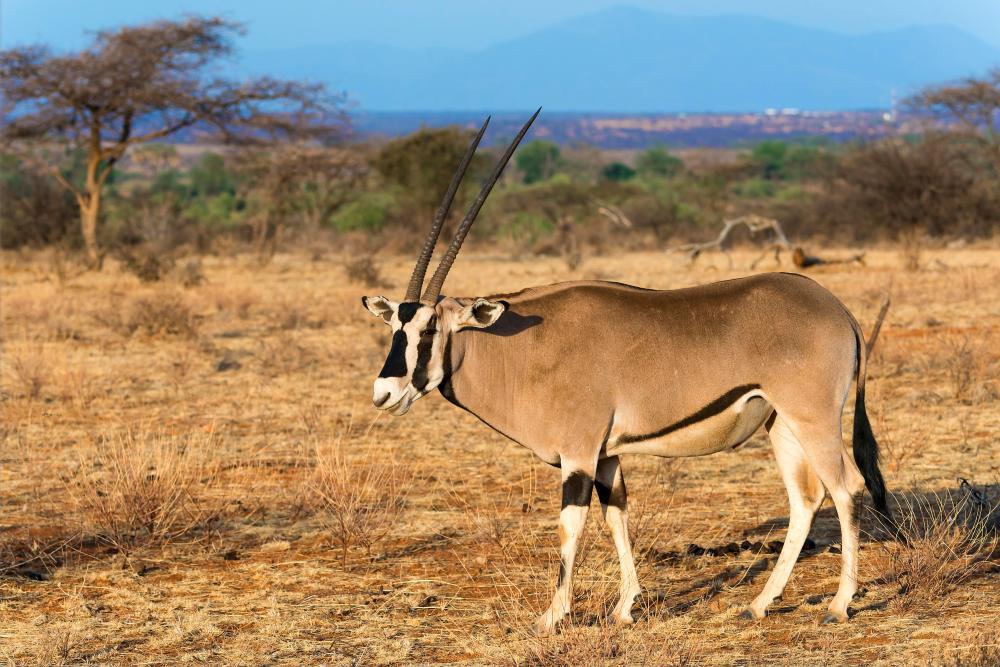
These include animals such as:
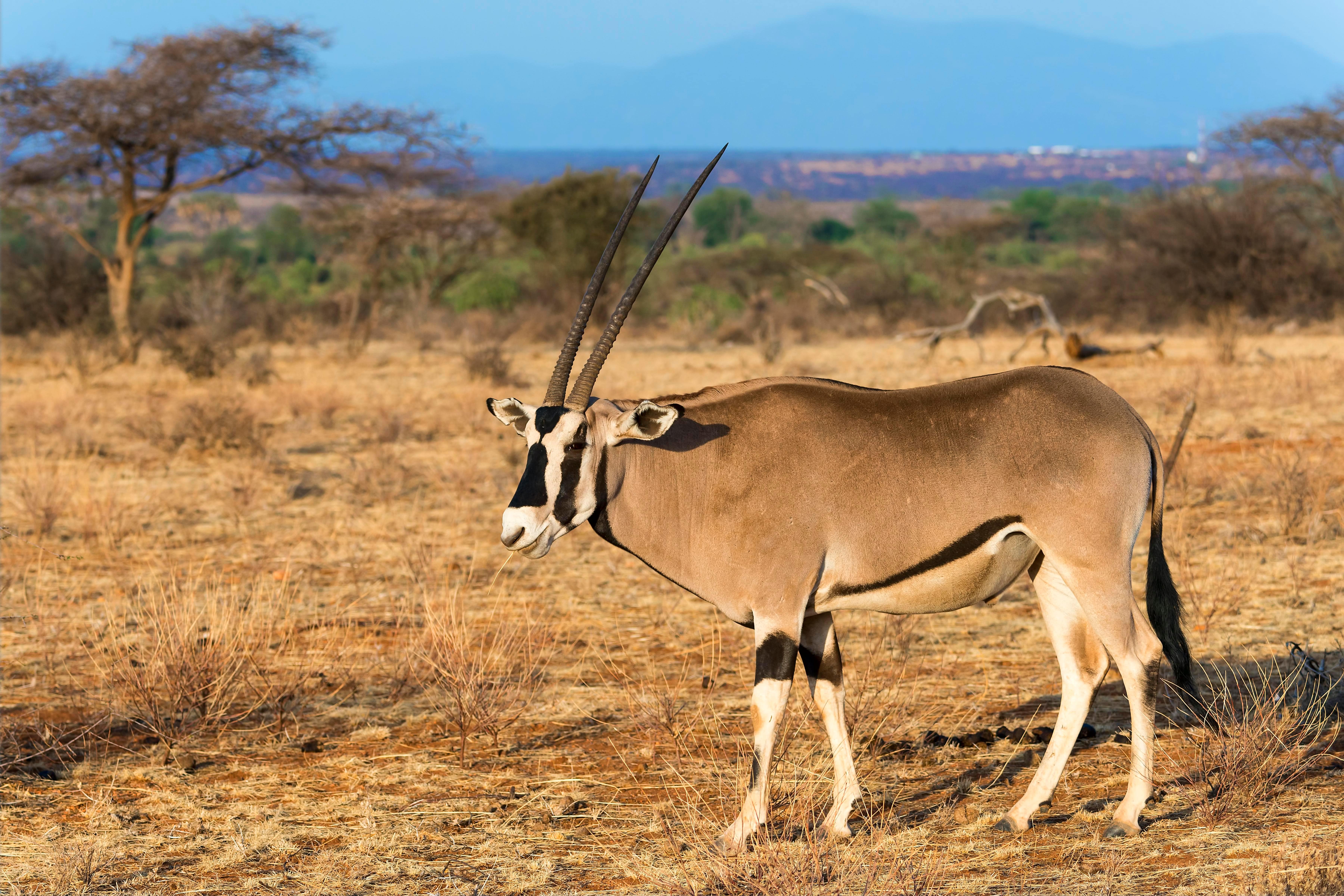
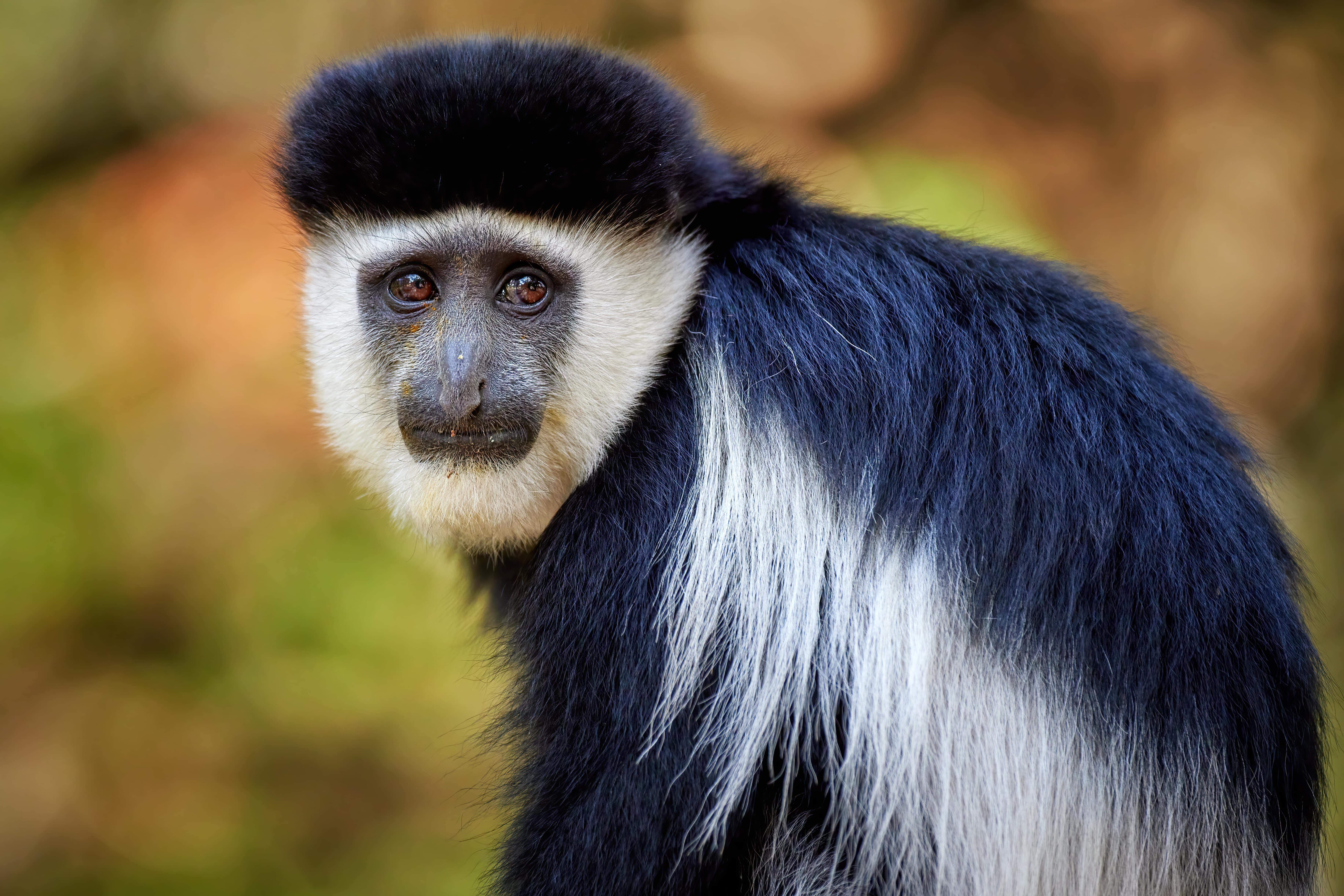
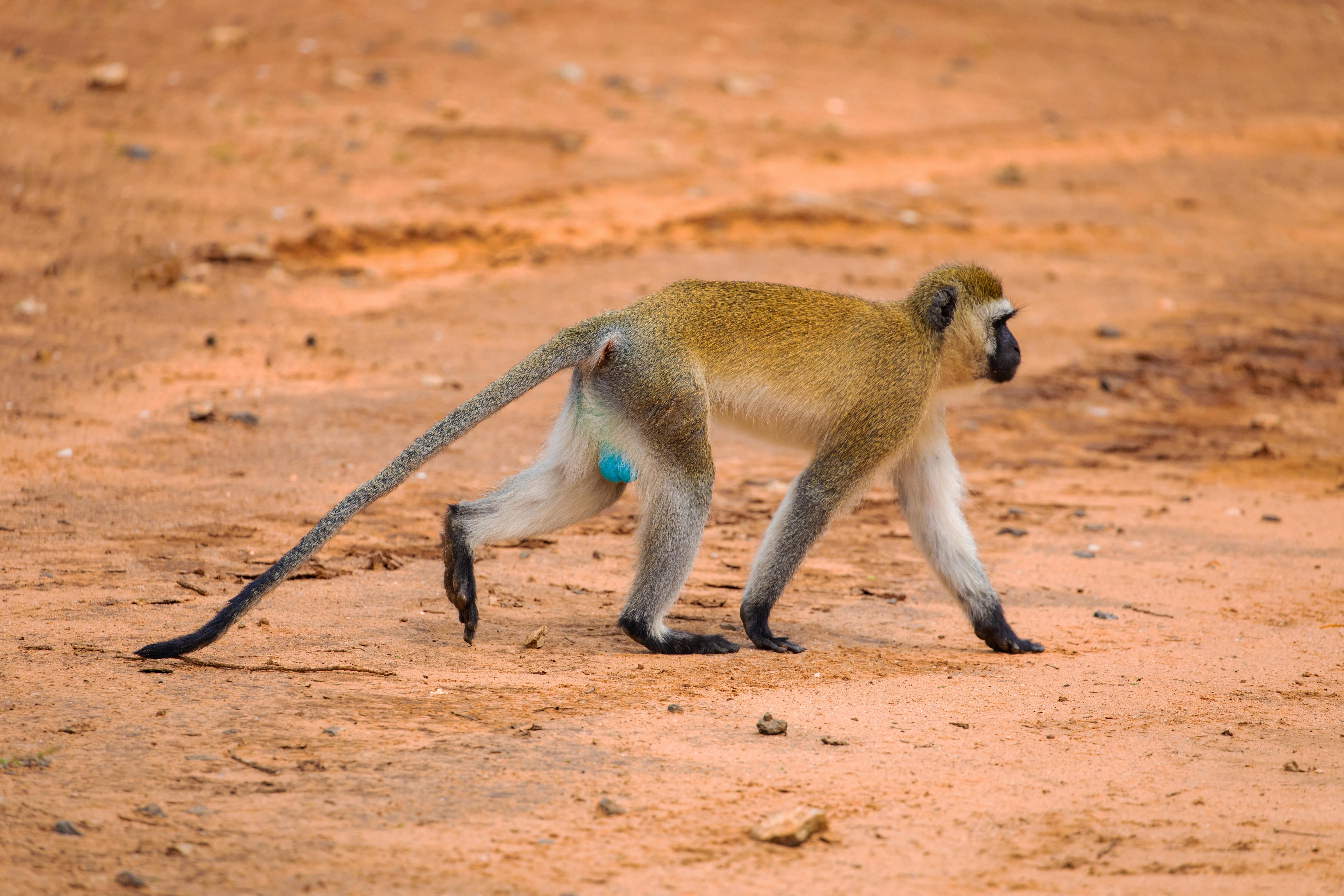
Some of these animals are endemic or primarily found within Ethiopia's highland ecosystems, which makes them particularly appealing to collectors interested in pursuing species that cannot be hunted elsewhere.
Hunters may encounter a mix of forest species, mountain animals, and traditional plains game depending on the region being hunted.
Although mountain nyala is the species most closely associated with Ethiopia, many hunters traveling to the country also hope to pursue giant forest hog.
These impressive animals inhabit dense forests and thick mountain vegetation, where they move quietly through heavy cover and are often difficult to locate. Mature boars can grow to remarkable size and are easily recognized by their large heads, facial "warts," and powerful build.
The giant forest hog represents one of Africa's most distinctive and unusual trophies. Hunting them often requires patience, careful tracking, and quick shooting opportunities when animals appear briefly in thick cover.
The opportunity to pursue both mountain nyala and giant forest hog during the same safari adds considerably to Ethiopia's appeal for serious collectors.
Ethiopia has one of the oldest hunting traditions in Africa. For centuries, wildlife formed an important part of the culture and livelihoods of people living throughout the country's mountains and valleys.
During the late nineteenth and early twentieth centuries, Ethiopia began attracting the attention of explorers and naturalists who were fascinated by the country's unique wildlife. The discovery and documentation of species such as the mountain nyala brought international interest to Ethiopia's highland ecosystems.
Over time, regulated hunting areas developed in certain regions of the country, allowing controlled hunting while protecting wildlife populations through permits and quotas. Today, hunting in Ethiopia remains carefully regulated and limited to specific areas, helping maintain populations of the country's distinctive wildlife species.
A typical hunting day in Ethiopia often begins before sunrise, especially when hunting mountain species. Professional hunters and trackers may start the morning glassing hillsides or forest edges as animals begin to move at first light.
Once a suitable animal is spotted, the hunt often turns into a careful stalk across uneven terrain. Depending on the location, hunters may move through dense forest, open alpine meadows, or steep mountain slopes. Hunts can involve significant walking, and patience is often required while waiting for the right opportunity.
Mountain scenery and demanding stalking conditions give an Ethiopian safari a character very different from hunting elsewhere in Africa.
Compared to other African hunting destinations, the number of safaris conducted in Ethiopia each year is relatively small.
A reason is that several of the country's most sought-after species occur only in limited geographic areas. Wildlife management systems therefore control the number of permits issued annually to ensure sustainable populations. Ethiopia has remained a specialized destination rather than a high-volume safari country.
Hunting permits for species such as mountain nyala are carefully controlled through quota systems, which limit the number of animals that can be harvested each year.
Mountain nyala hunts require careful advance planning, as only a limited number of hunting opportunities are available each year.
Hunters researching Ethiopia are often surprised by the cost of a mountain nyala safari. Compared to many plains game hunts in Southern Africa, Ethiopia hunts tend to be significantly more expensive. Hunters comparing Ethiopia with other destinations can review our African Hunting Safari Prices for a broader look at safari costs across Africa.
Several factors contribute to this. Mountain nyala occur only in a limited part of the Ethiopian highlands, and the number of hunting permits issued each year is relatively small. Because of this, only a limited number of safaris take place annually.
Hunts also require experienced professional hunters, specialized mountain concessions, and extended time in the field to locate mature bulls in rugged terrain.
Mountain nyala safaris are typically among the more specialized and expensive antelope hunts in Africa. For collectors interested in one of Africa's rarest spiral-horn antelope, however, mountain nyala remains a trophy that can only be pursued in its native Ethiopian highlands.
Ethiopia's most important wildlife habitats lie within protected areas such as national parks and conservation zones. These areas protect important habitat for many of the country's endemic species.
Regulated hunting, when properly managed, can contribute to conservation by creating economic incentives to maintain wildlife habitat and discourage illegal poaching.
In regions where hunting concessions operate, wildlife management programs often focus on maintaining healthy populations of key species while protecting the landscapes on which they depend.
Ethiopia's hunting areas lie in remote rural regions where local communities often face limited economic opportunities. In these areas, wildlife can come under pressure from illegal hunting or habitat loss when there are few incentives to protect it.
Regulated international hunting programs can help create economic value for wildlife by generating revenue for concession management, anti-poaching patrols, and local employment. Professional hunters, trackers, camp staff, and community members often rely on these hunting operations for income during the season.
When properly managed, these programs can provide a reason for local communities and land managers to maintain wildlife habitat and discourage illegal poaching.
Responsible hunting concessions are often seen as one of several tools that can help support wildlife conservation in remote parts of Africa.
Most mountain nyala hunts take place during Ethiopia's dry seasons, when cooler temperatures and reduced vegetation make glassing and stalking easier in the highlands.
The exact hunting months can vary depending on the region and concession, but safaris typically occur during periods when weather conditions allow hunters to move safely through mountainous terrain.
As certain hunting areas lie at high elevations, temperatures can be cooler than in other parts of Africa, particularly in the early mornings and evenings. Clear skies and dry conditions often provide the best visibility for spotting animals along forest edges and open slopes.
Understanding seasonal weather patterns and altitude conditions is an important part of preparing for the hunt.
Although hunters often travel to Ethiopia primarily for the safari itself, some choose to spend a few extra days exploring parts of the country after the hunt.
Ethiopia has a long and fascinating history, and several locations are occasionally visited by hunters who extend their trip. The historic city of Lalibela, known for its ancient rock-hewn churches, is one of the country's most famous cultural sites. Others visit Addis Ababa, where the National Museum and local markets offer a glimpse into Ethiopian history and daily life.
Hunters also enjoy spending a short time exploring the dramatic landscapes of the Ethiopian Highlands, which include some of the most striking mountain scenery on the African continent.
While these excursions are not the main reason hunters travel to Ethiopia, they can add an interesting cultural dimension to the overall trip.
Choosing the right destination is one of the most important decisions when planning African Hunting Trips, particularly for a specialized safari such as Ethiopia.
Ethiopia tends to appeal most to hunters interested in pursuing rare or endemic species in mountainous terrain. The hunts can be physically demanding, and the focus is often on a small number of specialized animals rather than large bags of plains game.
Hunters looking for distinctive trophies and dramatic mountain landscapes will find both in Ethiopia. Those who prefer easier terrain or a wider variety of plains game species may find that other African destinations better match their expectations.
Ethiopia is home to several huntable endemic species that cannot be legally pursued anywhere else, including mountain nyala, Menelik's bushbuck, and Nubian ibex. For serious collectors, these species represent the final pieces of specialised African collections. The difficulty, terrain, and limited availability make Ethiopia a destination chosen for rarity rather than convenience.
Yes. Ethiopia's hunts are among the most physically demanding in Africa. Highland hunts take place at altitude, often involving long uphill stalks over uneven ground. Hunters should be prepared for extended walking, thin air, and limited vehicle access during the hunt.
Ethiopia is best suited for experienced, well-prepared hunters and collectors who understand the challenges of remote, low-density hunting. It appeals to those pursuing specific endemic trophies rather than general plains game or high-volume safaris.
Ethiopia hunts should typically be booked 12 months or more in advance. Limited quotas, government permits, and seasonal access constraints make early planning essential, especially for hunters targeting specific endemic species.
Hunters should expect complex logistics, including internal travel, altitude considerations, firearm permits, and variable infrastructure depending on region. Physical preparation and careful planning are critical to a successful Ethiopian safari.
24 August 2025
Latest Blogs About Ethiopia
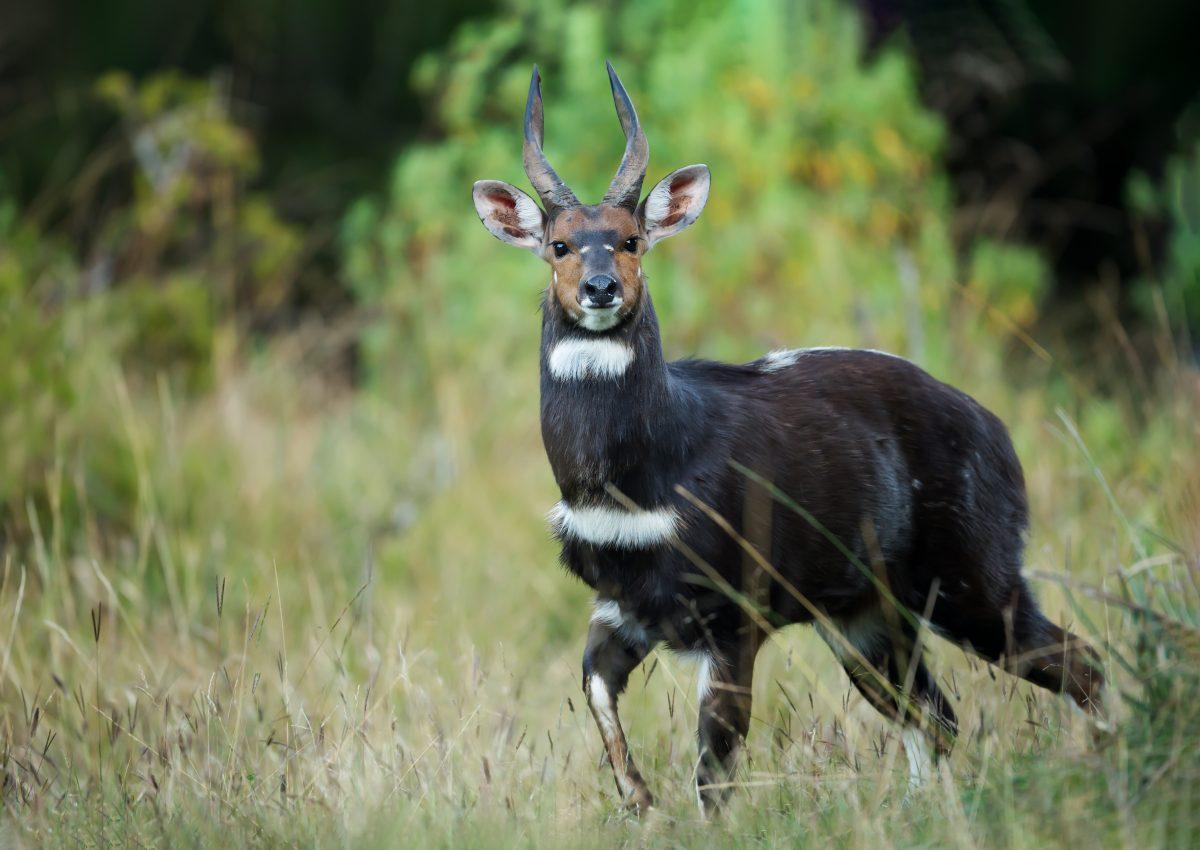
Why Menelik’s Bushbuck Is a Specialist Ethiopian Trophy
Search from our range of Hunts across various popular destinations in Africa.

Book Your Hunt