Designed by Hunters, for Hunters

Hunting Salt's dik-dik in Ethiopia is easy to underestimate---and that's usually where things start to go wrong.
On paper, it looks like a small addition to a safari. A light, opportunistic animal you take if the moment presents itself. But once you spend time in the field and begin to understand how these animals move, how quickly opportunities form, and how easily they disappear, it becomes clear that this is not a casual hunt.
For hunters considering hunting in Ethiopia, Salt’s dik-dik offers a very different kind of experience—often included as part of a broader plains game hunting safari, but built on precision, timing, and control rather than distance or physical effort.
For many hunters, it's closer to making a precise shot on a small whitetail window than anything you'd expect from a traditional plains game animal.
There's no long build-up to the shot. No extended opportunity to settle in and refine your position. Most encounters happen quickly, often at close range, and the window you get is smaller than expected. The target is limited, the angle is rarely perfect, and hesitation---more than difficulty---is what costs most opportunities.
The shot itself isn't complicated.
Getting it at the right moment---that's where it falls apart.
And that's usually the moment where the hunt starts to make sense.
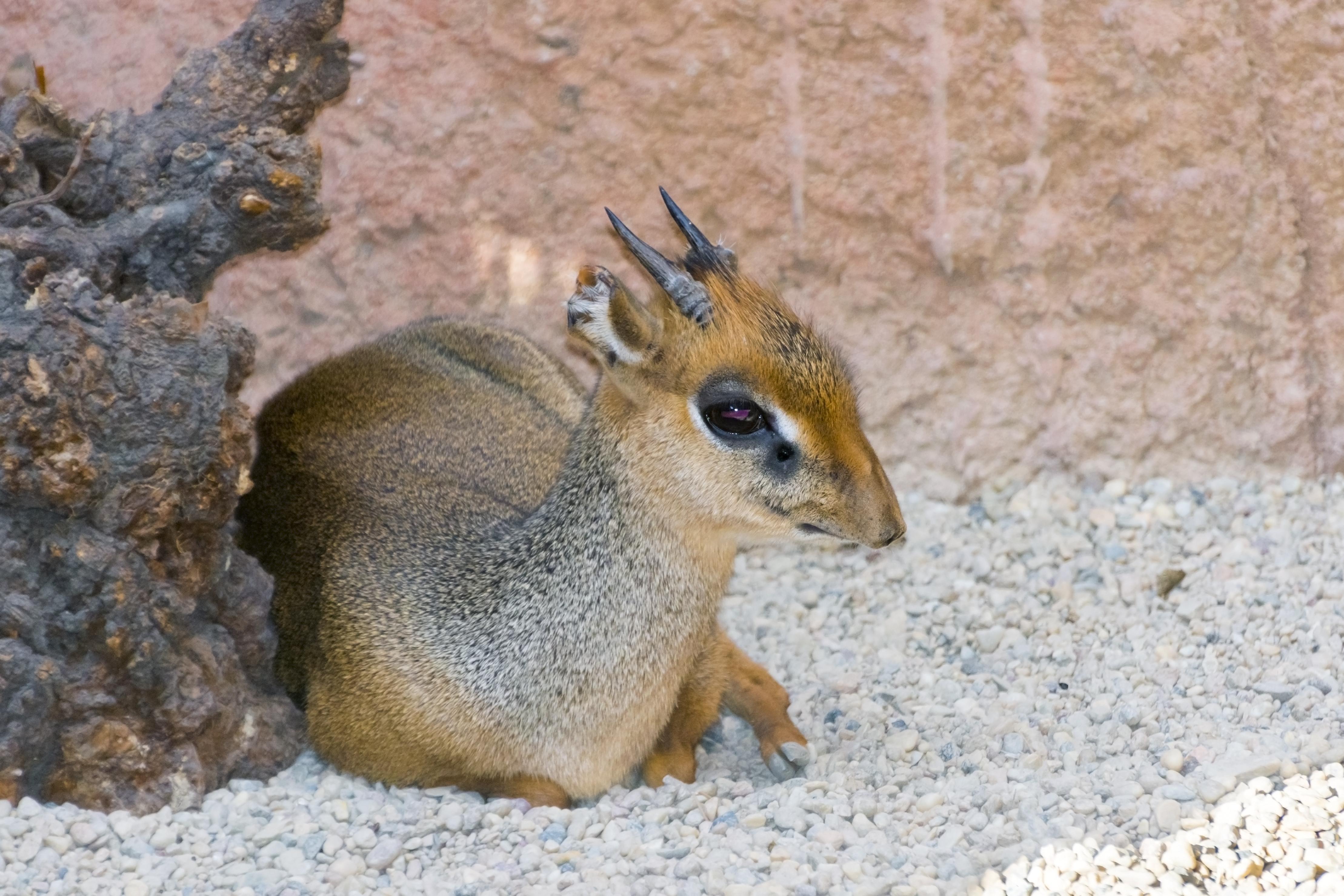
Salt's dik-dik is one of the smallest antelope species in Africa, found primarily in East Africa in dry bushveld, scrub, and lightly wooded areas.
Hunters comparing dik-dik hunting opportunities should understand how Salt's dik-dik differs from other small antelope found across Africa.
They are compact animals, typically standing around 30--40 cm (12--16 inches) at the shoulder, with proportionally large eyes and a short, pointed snout adapted for browsing.
Only males carry horns---small, straight, and often partially hidden by a tuft of hair on the forehead. Trophy quality is judged more on symmetry and visibility than length alone.
Their coloration blends perfectly into dry, sandy, and brush-heavy environments, making them far harder to spot than their size would suggest.
They are almost always found in pairs and maintain small, well-defined territories.
And once you understand that, the hunt starts to make more sense.
Most plains game hunting allows for some flexibility.
You can adjust position, wait for a better angle, or take advantage of multiple opportunities over time.
Salt's dik-dik doesn't give you that.
The small body size reduces everything:
• The vital zone is significantly smaller
• The margin for error is minimal
• The time to take the shot is often shorter
This is not a scaled-down version of a larger hunt.
It's a different kind of hunt entirely.
Encounters tend to be brief and often happen at close range, where any unnecessary movement immediately ends the opportunity.
And because they live in dense, low cover, visibility is often partially obstructed---forcing you to make decisions with incomplete information.
You're not solving a big problem.
You're solving a very small one---under pressure.
Shot placement for Salt's dik-dik is straightforward in theory---but extremely unforgiving in practice.
The vital zone is small and well-defined, but the margin for error is minimal. When hunters look into dik-dik shot placement, they're usually expecting simplicity. What they don't expect is how quickly that simplicity breaks down under real hunting conditions.
Most shots are taken at close range, but rarely under perfect visibility. You're often dealing with brush, partial exposure, and limited time to settle. The challenge is not identifying where to aim---it's being able to execute the shot before the window closes.
Because of the animal's size, even slight movement, hesitation, or over-adjustment can shift the outcome completely.
Waiting for a perfect broadside shot often means losing the opportunity.
The key is recognizing when the shot is already good enough---and taking it before it disappears.
Light calibers are typically preferred for dik-dik hunting.
This is not a situation where more power improves results. In fact, excessive caliber choice can create unnecessary complications, especially in close-range environments where shot placement is everything.
Most hunters use smaller, accurate rifles that allow for precise shot execution without excessive recoil or damage.
What matters here is not energy.
It's control, accuracy, and confidence in a very small window.
Salt's dik-dik are found in specific regions of East Africa, but for hunters planning a focused safari, Ethiopia offers a distinct and consistent environment for this species.
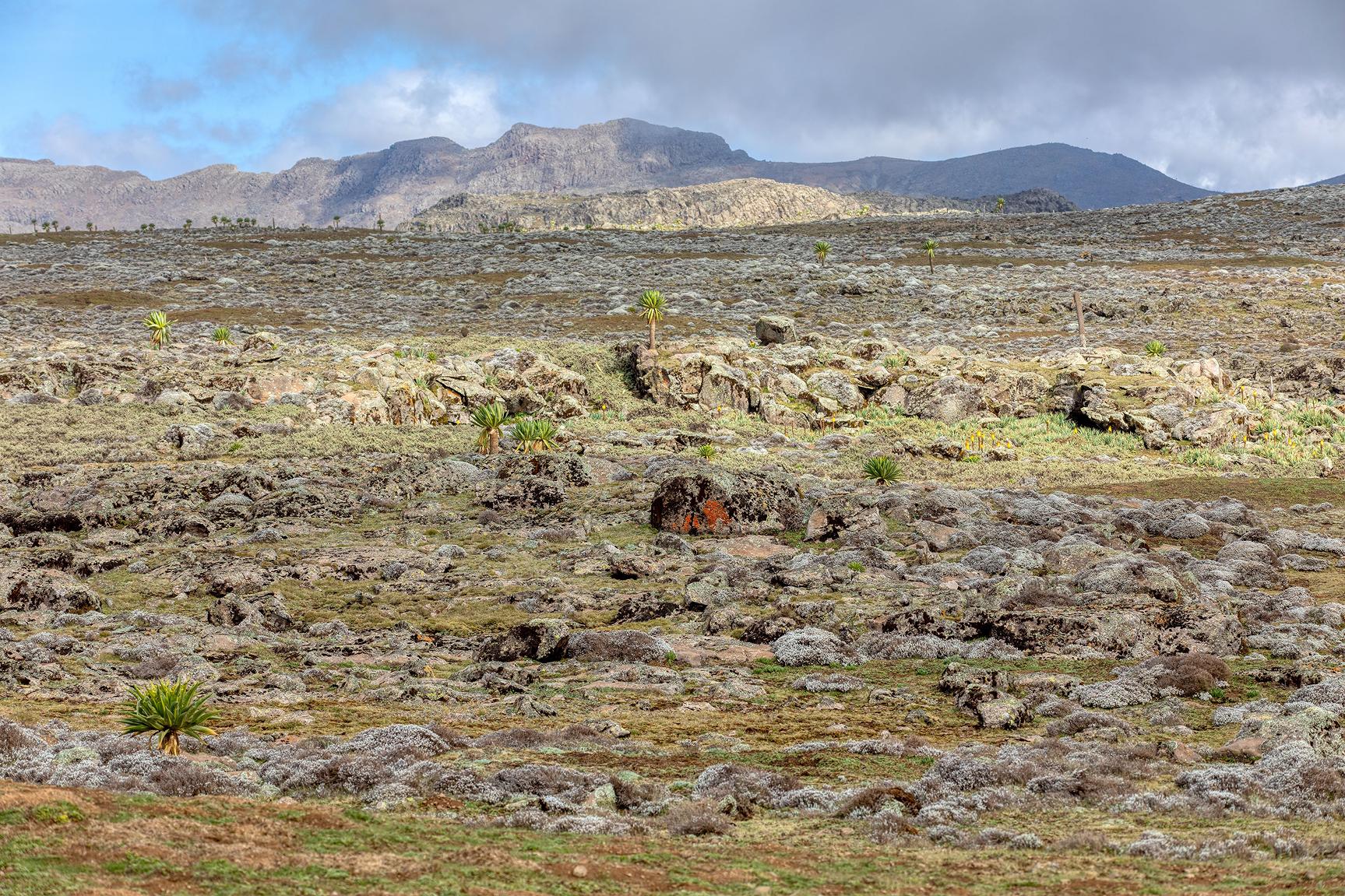
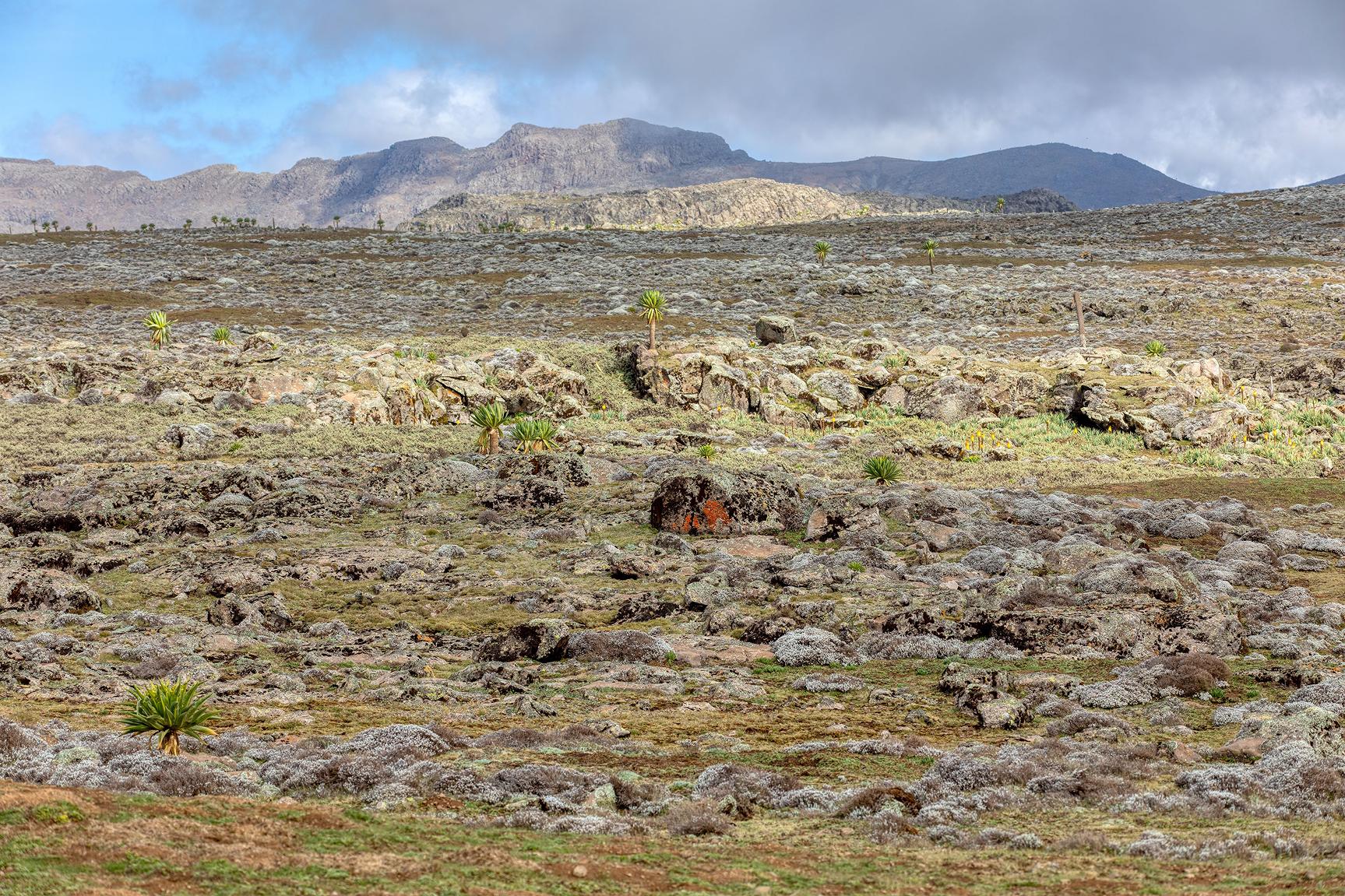
They are typically found in dry bushveld, scrub, and lightly wooded areas where vegetation provides constant cover without completely restricting movement. This type of terrain defines where to hunt dik-dik in Ethiopia---areas where visibility is limited, but animal presence is consistent.
This is not terrain suited to glassing or long-range hunting. Most encounters happen within close distances, often inside environments where animals are present but not immediately visible.
Because dik-dik maintain small territories and move within familiar patterns, success comes less from covering ground and more from understanding how to move through their environment without disrupting it.
You're not covering ground trying to find them.
You're moving carefully through spaces where they already exist---and waiting for the moment they reveal themselves.
With Salt's dik-dik, encounters don't build---they appear, and understanding this is central to how to hunt dik-dik in Ethiopia successfully.
Most of the time, you don't spot the animal clearly at first. You notice movement---low, quick, and easy to dismiss---something that doesn't quite match the surrounding bush. By the time your brain catches up and identifies what you're looking at, the opportunity is already forming.
There's no long stalk to rely on and no structured setup that repeats itself. Dik-dik hunting in Ethiopia is built on brief, unplanned moments where the situation is already at its best the second you recognize it.
What makes this difficult is not the shot itself, but how quickly everything develops---and how quickly it starts to fall apart again. You're often working with a partially visible animal, an imperfect angle, and a window that won't hold.
Most hunters don't struggle because the shot is hard.
They struggle because they're still processing the opportunity... while it's already disappearing.
And once it's gone, it doesn't come back.
You pick up movement ahead---low and subtle, the kind of shift you almost ignore.
At first, it doesn't register as an animal. Just something slightly off in the brush. Then it stops, and the outline begins to separate from the background.
That's when you realize what you're looking at.
The dik-dik is there---but not fully exposed. Just enough to identify, not enough to feel settled. You start adjusting, trying to open the angle slightly, telling yourself you've got a second to improve the situation.
For a moment, it feels controlled.
Then it moves. Not suddenly, not alarmed---just a small step that brings more cover between you and it. The window tightens without any real warning.
You wait for it to clear again.
It doesn't.
The shape breaks apart, blends back into the brush, and within a few seconds there's nothing left to work with. No sound, no signal, no clear exit.
Just gone.
And in most cases, that was the only real opportunity you were going to get.
Salt's dik-dik are generally available in regions where populations are stable, but they are not typically the primary focus of a safari.
They are most often taken opportunistically as part of a broader plains game hunt.
Quotas are usually sufficient, but actual opportunities depend heavily on visibility, awareness, and timing rather than population density alone.
You don't plan the hunt around them.
You recognize the opportunity when it appears.
Export and import of dik-dik trophies are generally straightforward, but as with all species, it's important to confirm details in advance.
Because of their small size, handling and preparation need to be done carefully to preserve trophy quality.
For hunters from the United States or Canada, proper documentation and coordination with experienced exporters ensure a smooth process.
As always, clarity before the hunt prevents complications after it.
A typical Salt's dik-dik hunt doesn't follow a structured pattern, which is why many hunters underestimate how dik-dik hunting actually works in Ethiopia.
Most encounters happen while moving through suitable habitat rather than targeting dik-dik directly. You're walking, scanning, and interpreting small details in the environment---movement, shape, contrast---without any clear buildup to the moment.
And then suddenly, there it is.
There's no predictable sequence you can rely on and no repeatable setup that gives you time to adjust. Unlike other plains game hunting scenarios, dik-dik hunting is built around brief, unplanned encounters that develop and disappear quickly.
For hunters trying to understand how to hunt dik-dik effectively, this is the key difference. Success doesn't come from following a system---it comes from recognizing a moment as it forms and acting before it breaks down.
Because once it's gone, there's nothing to reset.
And most of the time, that was the opportunity.
Most hunters dismiss dik-dik because of size.
It doesn't carry the visual weight of larger plains game, and it's often treated as an afterthought rather than a meaningful pursuit.
But that misses the point entirely.
This hunt is not about size.
It's about precision.
And for hunters who appreciate control, timing, and decision-making under pressure, it often becomes far more engaging than expected.
This is rarely a priority species on a first safari.
But once hunters gain experience and start looking beyond size and trophy weight, animals like dik-dik begin to stand out.
Not because they are bigger or more difficult in a traditional sense---but because they require a different kind of execution.
It becomes less about adding another animal...
And more about refining how you hunt.
This hunt suits hunters who are detail-oriented, controlled, and comfortable making quick decisions with limited information.
It favors those who don't need perfect conditions---but can recognize when a situation is already good enough.
If you enjoy precision over power, and tight shooting windows where timing matters more than distance, this is where dik-dik becomes interesting.
Salt's dik-dik hunting difficulty is often misunderstood, mainly because of the animal's size.
Physically, this is not a demanding hunt. You're not covering long distances or dealing with extreme terrain. But that's not where the challenge lies.
The difficulty in hunting dik-dik comes from how compressed everything is. The target is small, the window is short, and visibility is often limited by brush and terrain. Most opportunities don't develop into clean, structured situations where you have time to settle and think through the shot.
Instead, they appear quickly---often at close range---and begin to disappear just as fast.
For hunters wondering if dik-dik hunting is hard, the answer is not about physical effort. It's about how quickly you can recognize a viable opportunity and act before it breaks down.
And that's where most hunters fall behind.
The most common mistake is underestimating the hunt.
Hunters assume that because the animal is small, the shot will be easy.
In reality, the opposite is true.
Other mistakes include:
• Waiting for a better angle that never comes
• Over-adjusting position and losing the window
• Hesitating instead of committing when the opportunity peaks
This hunt doesn't reward patience in the traditional sense.
It rewards timing.
Whether Salt's dik-dik hunting is worth it depends entirely on what you're looking for out of a safari.
For hunters focused purely on size or trophy presence, it's probably not going to rank high on the list. This isn't an animal that stands out in photos or fills space in the same way larger plains game does.
But for hunters who value execution, awareness, and control, dik-dik hunting offers something very different.
If you're the kind of hunter who enjoys tight shooting windows, quick decisions, and situations where timing matters more than distance, this is where it starts to make sense.
The appeal of hunting dik-dik isn't in the scale of the animal---it's in how the opportunity unfolds. Encounters are brief, the margin for error is small, and success comes down to recognizing the moment and acting before it disappears.
It's quiet, fast, and often over before it fully registers.
And for the right hunter, that's exactly why it's worth it.
Search from our range of Hunts across various popular destinations in Africa.

Book Your Hunt