Designed by Hunters, for Hunters

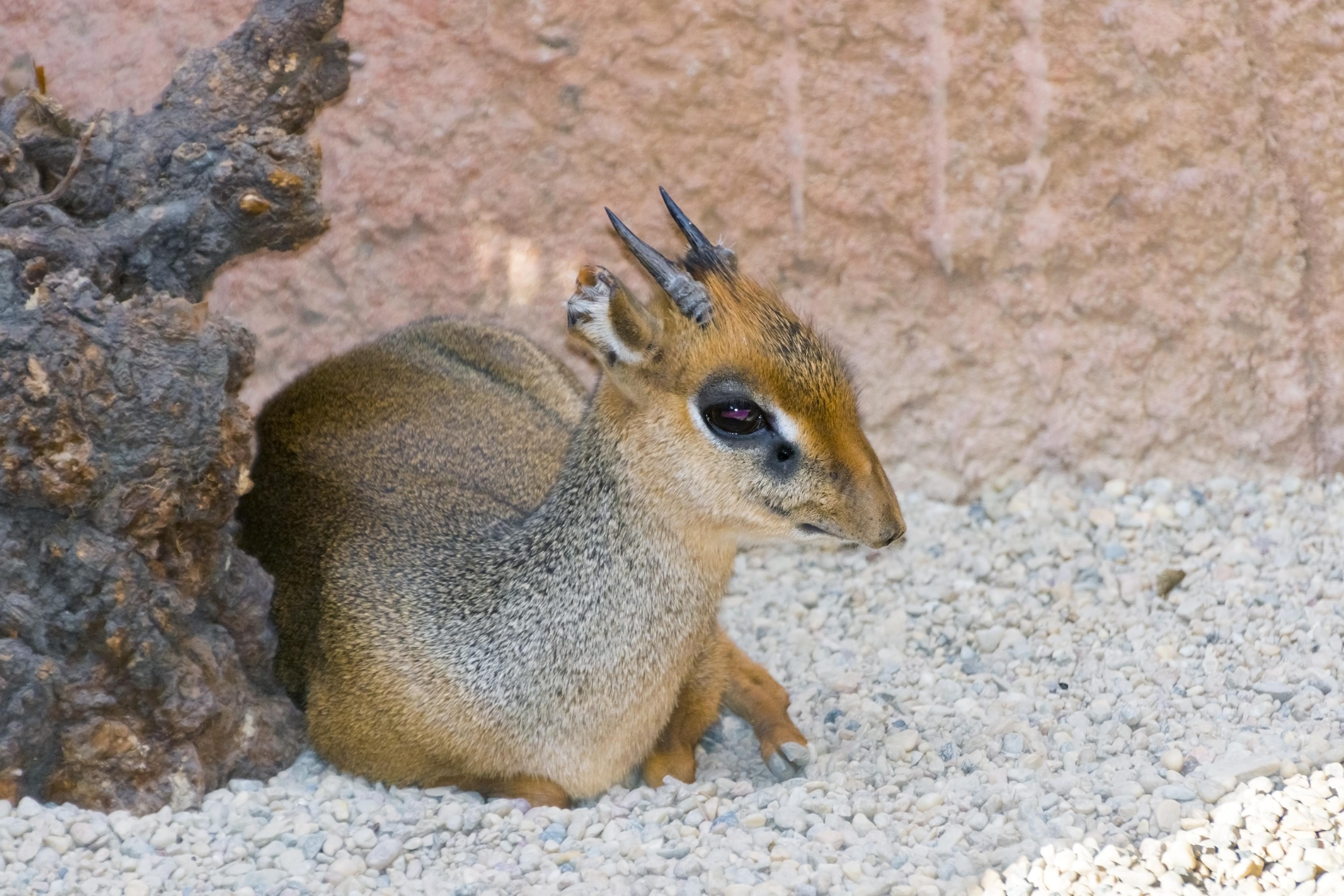
Salt’s dik-dik (Madoqua saltiana), named after British traveller Henry Salt who first documented the species in Abyssinia in the early 19th century, is a small antelope found in the semidesert, dry bushland, scrub, and thickets of the Horn of Africa. Its range covers Djibouti, Eritrea, Ethiopia, and Somalia, with marginal populations extending into northeastern Sudan and northern Kenya. Within Ethiopia, it occupies a wide elevational range from lowland semi-arid zones up to approximately 3,000 metres on stony slopes and scrubby hillsides.
Salt’s dik-dik has five recognized subspecies, each displaying distinct coat coloration across its range. Adults are reddish-brown to yellowish-grey on the upper body with lighter flanks and pale underparts. The face is characterized by large, dark eyes surrounded by a white ring, a soft elongated snout adapted for precise browsing, and a short erectile crest of hair on the forehead. Only males carry horns — small, slightly ridged, and pointed, often partially concealed by the forehead crest. The legs, nose, crest, and backs of the ears carry rusty-red tones, while the cheeks and neck present a peppery grey coloration.
Salt’s dik-dik is primarily crepuscular, most active at dawn and dusk to avoid the heat of midday. It is a highly selective browser, feeding on leaves, shoots, buds, flowers, and fruit of acacia and other dry-bush shrubs. It derives nearly all required moisture from its food, rarely needing to drink free water — an adaptation that allows it to survive in some of Africa’s most arid environments. It is water-independent and maintains small, stable territories that both animals in a pair know intimately.
Salt’s dik-dik is monogamous, forming lifelong pair bonds. Both male and female jointly defend a defined territory using scent glands below each eye, dung piles along territorial boundaries, and well-worn runs through dense cover. When alarmed, they erect their forehead crest and flee in a fast, zigzag pattern while emitting the sharp whistling call that gives the species its name. Predators include Leopard, Cheetah, Caracal, Jackal, Spotted Hyena, Eagle, and Python.
The gestation period lasts approximately 150–180 days. Females give birth to a single calf up to twice per year. The newborn is hidden in dense cover for the first two to three weeks of life and is able to eat solid food after the first week, though nursing continues for three to four months.
Salt’s dik-dik is classified as Least Concern by the IUCN, with populations considered stable across most of its range. Localised pressures from habitat loss and human settlement expansion exist in parts of Ethiopia.
Name:
Madoqua saltiana
Weight:
5.5–8.8 lbs (2.5–4 kg)
Shoulder Height:
13–16 inches (33–41 cm)
Range:
Horn of Africa — Ethiopia, Eritrea, Djibouti, Somalia; marginal Sudan and Kenya
Mating Season:
Year-round; up to two births per year
Gestation Period:
150–180 days
Life Span:
3–4 years in the wild; up to 10 years in captivity
Salt’s dik-dik hunting in Ethiopia requires a permit — confirm all requirements with your outfitter before the hunt
Hunting Salt’s dik-dik in Ethiopia is easy to underestimate — and that’s usually where things start to go wrong. On paper, it looks like a small addition to a safari. A light, opportunistic animal you take if the moment presents itself. But once you spend time in the field and begin to understand how these animals move, how quickly opportunities form, and how easily they disappear, it becomes clear that this is not a casual hunt. For hunters considering hunting in Ethiopia, Salt’s dik-dik offers a very different kind of experience — one built on precision, timing, and control rather than distance or physical effort. The shot itself isn’t complicated. Getting it at the right moment — that’s where it falls apart.
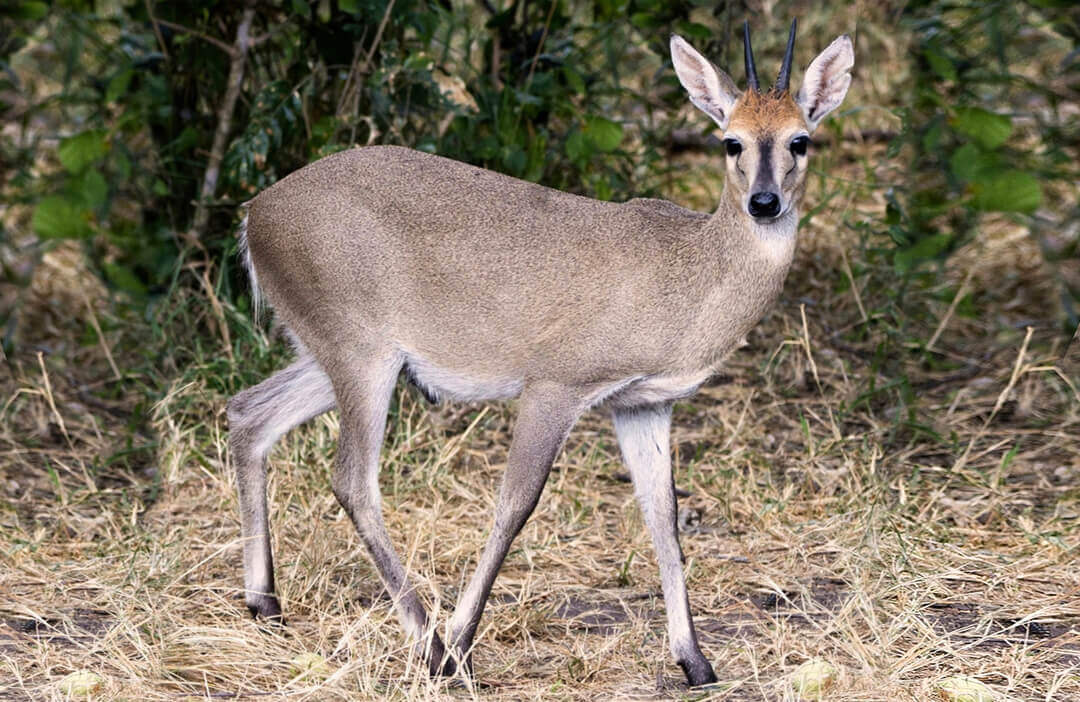
Salt’s dik-dik is one of Africa’s smallest antelope species, standing just 13–16 inches at the shoulder and weighing between 5.5 and 8.8 pounds. The coat varies by subspecies, ranging from reddish-brown to yellowish-grey on the upper body, with lighter flanks and pale underparts. Large dark eyes set in a white ring, a soft elongated snout, and a short erectile forehead crest are the most distinctive facial features. Only males carry horns — small, slightly ridged, and pointed, often partially hidden by the forehead crest. Hunters comparing dik-dik hunting opportunities should understand how Salt’s dik-dik differs from other small antelope found across Africa: it is highly adapted to arid environments, water-independent, and rarely visible for long in open terrain.
Unlike most plains game hunting in Africa, this is not a hunt built on visibility or repeated opportunities. The small body size reduces everything: the vital zone is significantly smaller, the margin for error is minimal, and the time available to take the shot is often shorter than on any other plains game species. Encounters tend to be brief, happening at close range where any unnecessary movement immediately ends the opportunity. Because Salt’s dik-dik lives in dense, low cover, visibility is often partially obstructed — forcing quick decisions with incomplete information. You’re not solving a big problem. You’re solving a very small one, under pressure.
Most Salt’s dik-dik encounters happen while moving slowly through suitable habitat rather than targeting the animal directly. Three practical methods are used. The first involves locating dung piles at territory boundary runs — well-worn paths through dense cover that dik-dik use habitually — and positioning for an ambush during early morning or late afternoon activity periods. The second involves carefully driving known habitat and stopping at sightings for a shot. The third is slow walk-and-stalk through low scrub and dry brush, scanning close to the ground where animals crouch or freeze in vegetation. Because dik-dik travel in pairs, a missed opportunity on the first animal sometimes allows a second look at its mate in the immediate vicinity.
The difficulty of hunting Salt’s dik-dik is almost always underestimated. The challenge is not physical — it lies in how compressed every opportunity is. The target is small, the window is short, and visibility is limited by brush and terrain. Most opportunities don’t develop into clean, structured situations where there is time to settle and think. Instead, they appear quickly — often at close range — and begin to disappear just as fast. For hunters who value precision, timing, and decision-making under pressure, Salt’s dik-dik often becomes far more engaging than expected. Few trophies in Africa demand the same level of composure within such a brief window. Success comes from recognizing a moment as it forms and acting before it breaks down.
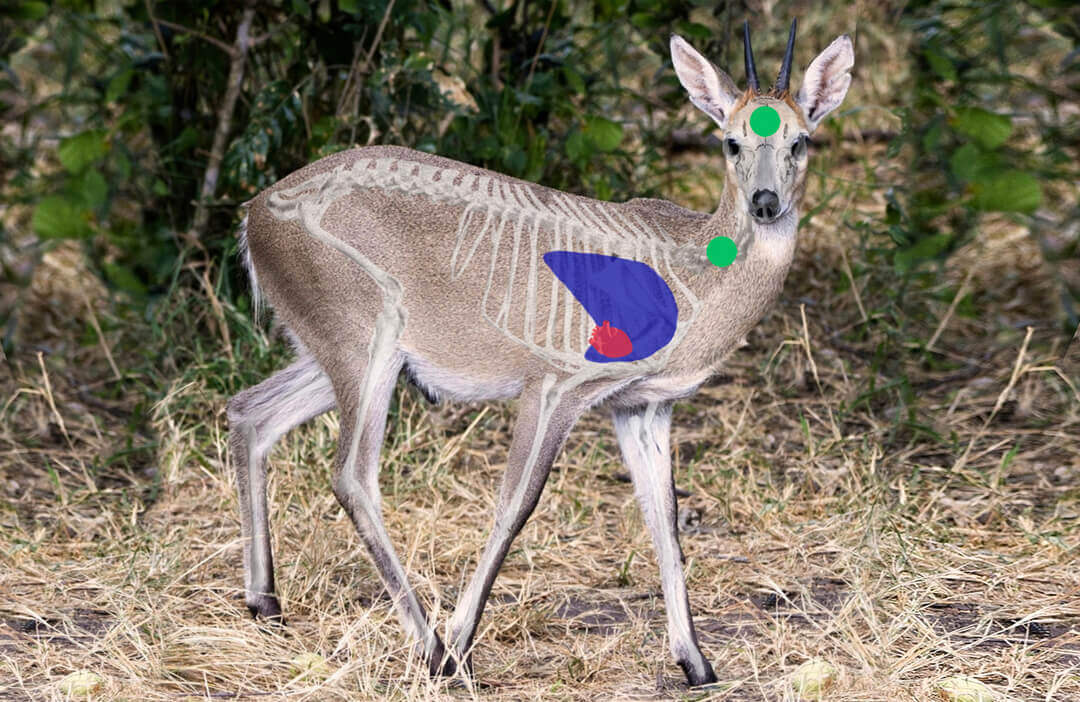
Shot placement for Salt’s dik-dik is straightforward in theory but extremely unforgiving in practice. The heart-lung area behind the shoulder is the recommended target when the animal is broadside. The vital zone is small and well-defined, but the margin for error is minimal. Most shots are taken at close range, rarely under perfect visibility, often through brush with partial exposure and limited time to settle. The challenge is not identifying where to aim — it’s executing the shot before the window closes. Because of the animal’s size, even slight movement, hesitation, or over-adjustment shifts the outcome completely. Waiting for a perfect broadside shot often means losing the opportunity entirely. The key is recognizing when the shot is already good enough — and taking it before it disappears.
Light calibers are the right choice for Salt’s dik-dik hunting. Any small caliber from 6mm to .243 Winchester is appropriate, with the .22 Hornet also being a popular and effective choice. Larger calibers can be used with light solid bullets if kinetic energy is kept minimal to avoid trophy damage. Excessive caliber introduces unnecessary complications in close-range environments where shot placement is everything. What matters is not energy — it is control, accuracy, and confidence within a very small and brief window. Hunters should use a rifle they are already comfortable shooting precisely, as familiarity with the platform matters more than caliber selection on this hunt.
Salt’s dik-dik hunting in Ethiopia requires the appropriate hunting permits. Hunters should confirm all permit and quota requirements with their outfitter well before the safari. Because dik-dik are often taken opportunistically as part of a broader plains game safari rather than as a standalone primary target, permit availability is typically manageable — but should never be assumed. For hunters from the United States or Canada, export and import of dik-dik trophies are generally straightforward, but because of the animal’s small size, careful skinning and preparation are important to preserve trophy quality. Confirm all export documentation and import requirements with a qualified shipping agent before the hunt, not afterward.
Search from our range of Hunts across various popular destinations in Africa.

Book Your Hunt