
Bongo and Forest Elephant Hunting Safari (13 Days) – Cameroon
Booking Season: 2026
Hunt Difficulty: Difficult

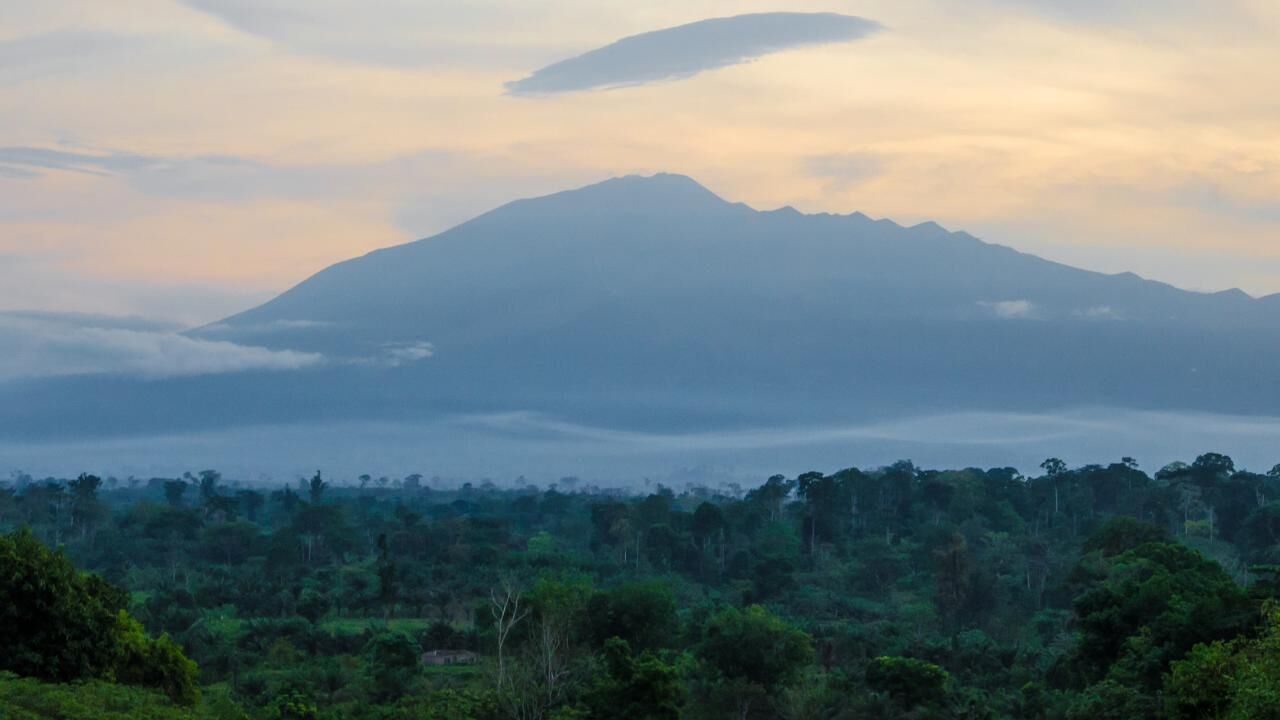

Hunting in Cameroon means choosing between two very different African hunting safaris: tracking bongo and forest game at close range in the southern and eastern rainforest, or pursuing Lord Derby eland, western roan and savanna buffalo across the dry woodlands of the north.
Our Cameroon hunting safaris include dedicated bongo and Lord Derby eland hunts, rainforest combinations and northern savanna packages. Most run for 10–15 days, with additional species depending on the concession's hunting quota.
American hunters also need to consider regional travel advisories, firearm arrangements and whether their intended trophies qualify for import into the United States.


Cameroon's hunting areas are divided between the dense rainforest of the south and east and the open woodland and savanna of the north. The terrain determines which species are available, how they're hunted and the conditions hunters face.
Southern and eastern rainforest: Hunting areas around Boumba and the wider Lobéké landscape offer thick vegetation, wet ground and limited visibility. Local trackers follow fresh spoor through forest where bongo, forest buffalo and other game may be encountered at close range.
Northern savanna: Hunting concessions around Bouba Ndjida, Bénoué and Faro lie outside the national parks. Woodland, grassland and river systems provide habitat for Lord Derby eland, western roan and savanna buffalo. Hunts involve longer tracking distances, with opportunities to glass animals in more open country.
The main hunting species are:
Rainforest
Bongo and forest sitatunga
Forest buffalo and forest elephant, where authorised
Giant forest hog and red river hog
Forest duikers
Northern savanna
Lord Derby eland
West African savanna buffalo
Western roan antelope
Western hartebeest and kob
Hippo in authorised river areas
A bongo hunter needs a rainforest concession; a Lord Derby eland hunter needs the northern savanna. The hunting area and its available quota determine which additional species are available.
Cameroon rainforest hunting is built around tracking animals through dense cover at close range.
Unlike open-country hunting, glassing plays a smaller role once the hunting party enters the forest. Trackers study spoor, feeding signs and movement along well-used paths. In thick vegetation, the hunter might hear an animal moving before seeing it.
The local tracking team is central to these hunts. Their familiarity with forest conditions, animal movement and the concession's network of tracks helps determine how the day unfolds.
A mature bongo bull carries heavy spiral horns, but finding one in Cameroon's dense rainforest is demanding. Trackers follow fresh spoor through thick vegetation, where visibility is limited and a clear shot may only present itself at close range. Identifying a mature bull and getting into position without disturbing it takes patience and an experienced tracking team.
Late April and early May are favoured periods, although rainfall and conditions in the concession influence the hunting.
Our bongo hunting in Cameroon page covers the available safaris, while bongo hunts in Africa provides a wider comparison of hunting destinations.

A mature bongo bull photographed after a Cameroon rainforest hunt. Photograph courtesy of Raquel, one of the outfitters working with Game Hunting Safaris.
Forest elephant hunting in Cameroon takes place in authorised rainforest concessions, where dense vegetation can bring hunters into close contact with these animals. Limited visibility makes tracking, identifying a suitable elephant and positioning for a clear shot demanding work for the PH and trackers.
Elephant hunting requires an available concession quota and special ministerial authorisation. Our forest elephant hunting in Cameroon page covers the available safaris and hunting arrangements.
Cameroon's forest buffalo are smaller than Cape buffalo but are hunted in much thicker cover. Tracking a bull through dense rainforest can lead to close-range encounters, with limited time to judge the animal and find a clear shooting position.
Forest buffalo hunts are offered in selected Cameroon concessions, sometimes alongside bongo or sitatunga. Hunters can compare these combinations on our forest buffalo hunting in Cameroon page.
Forest sitatunga inhabit swampy ground and forest-edge habitat, where tracking and approaching an animal can be difficult. Some Cameroon bongo safaris also offer sitatunga, provided both species are available in the concession. See our forest sitatunga hunting in Cameroon page for the available hunts.
Giant forest hogs favour dense forest, where fresh feeding signs don't always lead to an encounter. These large pigs are pursued on selected rainforest safaris, with details on our giant forest hog hunting in Cameroon page.
Red river hogs are another forest species pursued in suitable concessions, sometimes alongside bongo. Their movements through thick cover make encounters difficult to predict. See our red river hog hunting in Cameroon page.
Several forest duiker species are also available under the relevant hunting licence, with shotguns used for smaller game where authorised.
Rainforest hunting demands fitness. Humidity, wet ground and tangled vegetation make tracking tiring, even when relatively little distance is covered.
Cameroon savanna hunting takes place in concessions around the Bouba Ndjida, Bénoué and Faro ecosystems, outside the national parks. The country is a mixture of open grassland, woodland and riverine cover, where Lord Derby eland, western roan and savanna buffalo are pursued.
During the dry season, thinning vegetation makes tracking easier, while shrinking water sources influence where game moves.
Hunting Lord Derby eland in northern Cameroon involves following herd tracks across woodland and savanna, sometimes for several miles. Once the herd is located, the PH must identify a mature bull and work into shooting position without alarming the animals. Even after hours of tracking, the herd may move off before a shot presents itself.
January through March is a favoured period, when dry-season conditions make following spoor easier. Our Lord Derby eland hunting in Cameroon page covers dedicated eland safaris and combination hunts.
Cameroon's northern savanna buffalo differ from both forest buffalo and southern Africa's Cape buffalo in appearance and horn development. Hunting a mature bull involves tracking through woodland, tall grass and riverine cover, sometimes spending much of the day following fresh spoor.
Northern Cameroon safaris also offer combinations with western roan and Lord Derby eland, depending on the concession's quota. See our buffalo hunting in Cameroon page for the available hunts.
Western roan are hunted in northern Cameroon's woodland and grassland, where glassing and tracking help locate a mature bull. They are frequently included in longer safaris alongside Lord Derby eland and savanna buffalo. Our western roan hunting in Cameroon page covers the available hunts.
Other savanna species include western hartebeest, kob, harnessed bushbuck, reedbuck and warthog, subject to concession quota.
Hippo hunting in Cameroon is offered on selected northern savanna safaris, including combinations with Lord Derby eland. Hippo needs an available concession quota and special ministerial authorisation, and US import rules are covered below.
Crocodile hunting in Cameroon is not currently offered through our Cameroon safari packages. We have not confirmed an authorised commercial crocodile hunt with our outfitters.
Leopard hunting in Cameroon is not currently offered as a conventional trophy safari. Cameroon outfitters report that no leopard hunting quotas are available.
Cameroon's Ministry of Forests and Wildlife (MINFOF) sets the hunting season through annual government orders. In recent seasons, the authorised hunting periods have followed this pattern:
| Hunting area | Hunting season |
|---|---|
| Northern savanna | 1 December – 31 May |
| Southern and eastern rainforest | 1 December – 31 July |
These dates apply to authorised hunting areas, not national parks. Elephant, hippopotamus and lion require additional ministerial authorisation under the applicable hunting regulations.
The annual government order determines the actual opening dates, hunting zones and restrictions. Hunters arranging a Cameroon safari need the outfitter to confirm that their intended species and hunting dates are authorised for that season.
Cameroon's hunting concessions operate within designated hunting zones (ZIC) and community hunting zones (ZIC-GC). Each zone has its own wildlife allocation, which determines the species available for hunting.
Cameroon hunting packages commonly describe a big-game licence as allowing two animals from separate Group A species, such as Lord Derby eland, bongo, buffalo or roan, together with four animals from Groups B and C. The actual species available depend on the licence conditions and the concession's allocation.
The outfitter must confirm the licence category, available species and permits for the proposed safari. A licence allowance does not guarantee that every animal in the group is available in the hunting area.
For northern savanna safaris involving buffalo and large antelope, a .375-class rifle paired with a suitable medium-bore provides flexibility. In the rainforest, a rifle that handles well in thick cover, with sights suited to short-range shooting, is more practical.
Cameroon's hunting concessions provide employment for trackers, camp staff and other local workers. Hunting-zone revenues may also support nearby communities and wildlife protection, although the distribution of funds and anti-poaching activities varies by concession.
Hunters interested in these programmes can ask the outfitter which communities benefit and what conservation work takes place in the hunting area.
International hunters generally arrive in Cameroon through Douala International Airport or Yaoundé Nsimalen International Airport. From there, reaching camp depends on whether the safari takes place in the northern savanna or the southern and eastern rainforest.

Hunting camp accommodation in Cameroon. Photograph courtesy of Jaco, one of the outfitters working with Game Hunting Safaris.
Garoua is the principal gateway to northern Cameroon's hunting concessions around Bénoué, Faro and Bouba Ndjida. Hunters generally connect through a domestic flight before continuing by road to their hunting camp.
Road transfers can take several hours, depending on the concession, distance from Garoua and road conditions. Some camps are more remote than others, so the actual transfer arrangements need to be included in the safari itinerary.
Rainforest safaris usually begin with arrival in Douala or Yaoundé, followed by an onward journey towards the hunting areas in southern or eastern Cameroon.
Depending on the concession, reaching camp may involve a domestic flight, charter aircraft, a lengthy road transfer or a combination of these. Access becomes more demanding in remote forest areas, especially when rain affects roads and river crossings.
Hunters need the exact camp location, arrival airport and transfer arrangements before purchasing international flights.
American citizens require a Cameroon visa, obtained through the country's electronic visa system before travelling. Proof of yellow fever vaccination is also required for entry.
Malaria is a serious health risk throughout Cameroon. Hunters need medical advice about preventive medication and mosquito protection, especially when spending extended periods in remote forest or savanna camps.
French is widely spoken in Cameroon's hunting areas. Professional hunters and outfitters normally assist visiting clients with communication involving local trackers, camp staff and officials.
Hunters bringing their own rifles need advance firearm-import authorisation and must check ammunition restrictions with the outfitter and airlines. Rifle rental may be available, depending on the operator and hunting area.
Cameroon's security risks vary by region. The US Department of State currently rates Cameroon Level 2, Exercise Increased Caution, but advises against travel to the Far North, Northwest and Southwest Regions, and within 20 kilometres of the borders with Chad, Nigeria and the Central African Republic.
Northern savanna hunts: Garoua and the hunting concessions around Bénoué, Faro and Bouba Ndjida lie in the North Region, where crime and kidnapping are serious concerns. Hunters need to check the location of their concession and the roads used to reach camp, especially near the Chad border.
Rainforest hunts: Concessions in eastern Cameroon also require careful assessment, especially those close to the Central African Republic border. The camp's location and access routes determine which security risks apply.
Before committing to a safari, ask the outfitter about road transfers, security arrangements, camp communications and emergency evacuation procedures. Medical evacuation insurance must cover the intended hunting region.
American hunters should not assume that US consular assistance or emergency evacuation will be readily available in these remote hunting areas.
American hunters need to check trophy-import requirements for their intended species before committing to a Cameroon safari. An animal being legal to hunt in Cameroon does not automatically mean its trophy is eligible for entry into the United States.
Bongo, Lord Derby eland, western roan, forest buffalo, hippo and other game: These trophies are subject to Cameroon export documentation and US wildlife import procedures. CITES permits or additional restrictions depend on the species. Ask your trophy importer to confirm the requirements for your complete species list.
Forest elephant: Importing a forest elephant trophy into the United States requires a US Fish & Wildlife Service Endangered Species Act permit, the relevant CITES documentation and favourable conservation findings. Cameroon has been classified as CITES Category One, but that designation alone does not guarantee approval of an individual trophy.
Leopard and other restricted species: Leopard trophies from Cameroon face stringent US import restrictions. Crocodile and lion trophies also have species-specific requirements, and neither is offered on our Cameroon safaris.
After the hunt, trophies require preparation, Cameroon export documentation and international freight arrangements. US Fish & Wildlife Service Form 3-177 must be completed, and wildlife shipments normally enter through designated ports. Hides, skulls and other animal products must also comply with applicable USDA animal-health requirements.
Trophy shipments from Central Africa may involve additional handling and transit arrangements. Hunters should ask who manages dip and pack, export permits, freight and US customs clearance, and obtain an estimated shipping schedule from the exporter.
Confirm the import eligibility of every trophy with US Fish & Wildlife Service and your trophy importer before paying a deposit.
Cameroon hunting safaris generally run for 10–15 days, with bongo and Lord Derby eland hunts requiring enough time to locate and track a suitable animal. The duration depends on the concession, the primary species and whether additional game is included in the safari.
Prices depend on the hunting area, safari duration and how the outfitter structures the package. Some hunts include selected trophy fees, while others charge these separately. Government licences, domestic flights, charter transfers, firearm permits, trophy preparation and shipping can add to the final cost. Our guide to African hunting safari prices explains how these charges are calculated.
Bongo and Lord Derby eland hunts operate with limited concession quotas, so hunters planning around a preferred season need to enquire early. Ask for a written quotation showing the hunting days, licence allocation, trophy fees, transfers and any costs payable after the safari.
Cameroon safaris depend on the hunting concession, available quota and the operator's experience in that area. Before paying a deposit, ask:
Concession and hunting record: Which hunting zone will we use, how were last season's bongo or Lord Derby eland hunts, and have poaching or access problems affected the area?
Recent references: Can I speak with hunters who have used this concession during the past two seasons?
Species and licences: Which animals are available on the current quota, what does my hunting licence cover, and are additional species realistically available?
Camp access and security: How do we reach camp from Douala, Yaoundé or Garoua, and what arrangements are in place for transfers and emergencies?
Trophy imports: Which animals on my list are eligible for US import, and who handles CITES permits, dip and pack and shipping?
Total safari cost: What is included in the quotation, and which trophy fees, government charges, transfers or other expenses are additional?
Deposit and hunting terms: What happens if the primary animal isn't taken, an animal is wounded and lost, or the safari must be cancelled or postponed?
Whether you're pursuing bongo in the rainforest or Lord Derby eland in the northern savanna, we'll help you compare suitable concessions and available hunting packages.
Tell us your priority species, preferred dates and budget. We'll work with the outfitter to clarify hunting quotas, licence arrangements, camp access, trophy fees and the practical details of your safari.
Contact Game Hunting Safaris to discuss your Cameroon hunting plans.

12 October 2026

26 August 2026

20 January 2026

Search from our range of Hunts across various popular destinations in Africa.
Find A Hunt


