Africa Hunting Trip for Dwarf Buffalo & Sitatunga Cameroon
Booking Season: 2026
Hunt Difficulty: Difficult

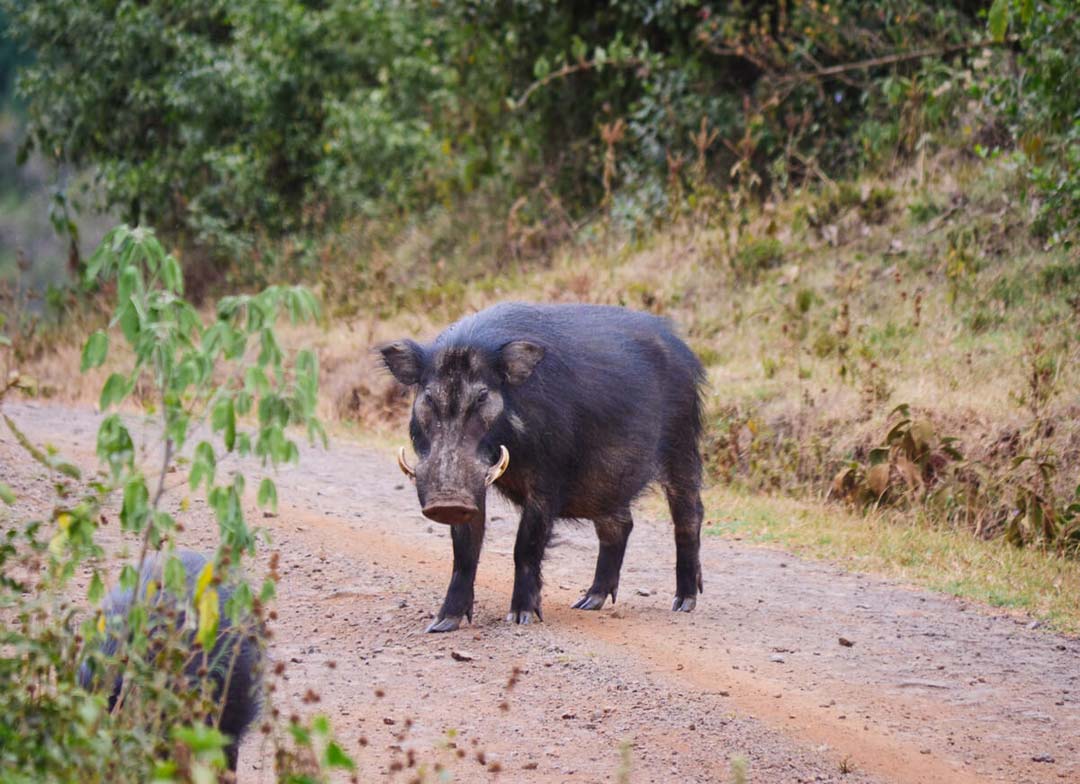
This is not a sales page. It is not written to convince you to hunt a giant forest hog in Cameroon. And it is not meant for first-time Africa hunters.
This page exists to answer a simple question honestly:
Because for many hunters, it isn’t.
For a broader understanding of how safaris here actually work, you should first look at hunting in Cameroon before focusing on any one species.
Available Giant Forest Hog Hunts
Africa Hunting Trip for Dwarf Buffalo & Sitatunga Cameroon
Booking Season: 2026
Hunt Difficulty: Difficult
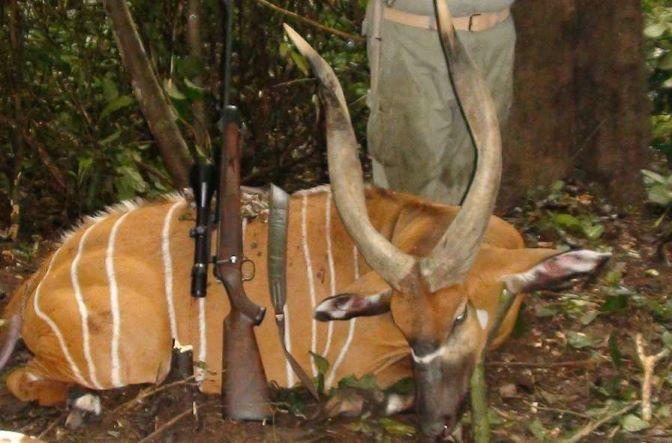
Bongo and Forest Elephant Hunting Safari (13 Days) – Cameroon
Booking Season: 2026
Hunt Difficulty: Difficult
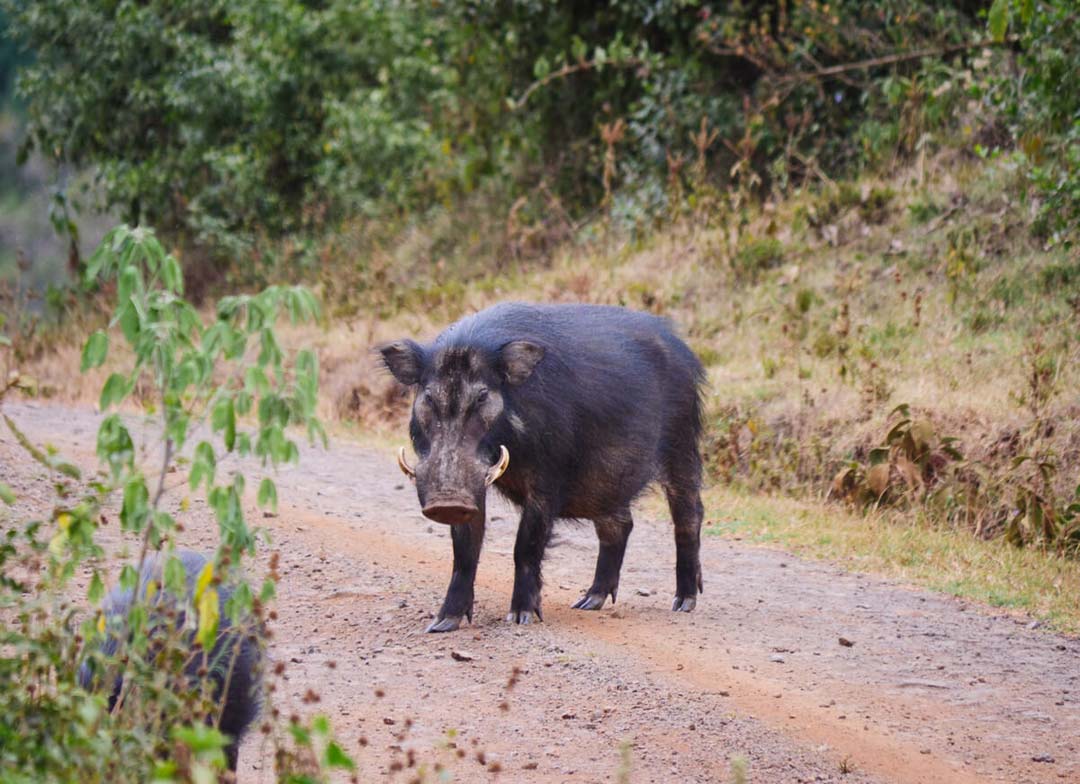
On paper, a giant forest hog does not look like a difficult animal to hunt.
It is often grouped mentally with other pigs—something you might add to a plains game hunting safari if the opportunity presents itself.
That assumption does not hold up in the forest.
In Cameroon, these animals live in dense cover where visibility is limited, movement is restricted, and encounters are rarely straightforward. You are not spotting animals at distance or planning long approaches. Most of the time, you are working through thick vegetation where the animal is aware of you long before you are aware of it.
That changes everything. This is not a species you “pick up” along the way. It is an animal that will test your patience, your awareness, and your ability to stay disciplined when nothing seems to be happening. And when it does come together, it often happens quickly—and without warning. For hunters who understand that going in, it becomes one of the more rewarding animals to pursue in this part of Africa.
For those who don’t, it quickly becomes frustrating.
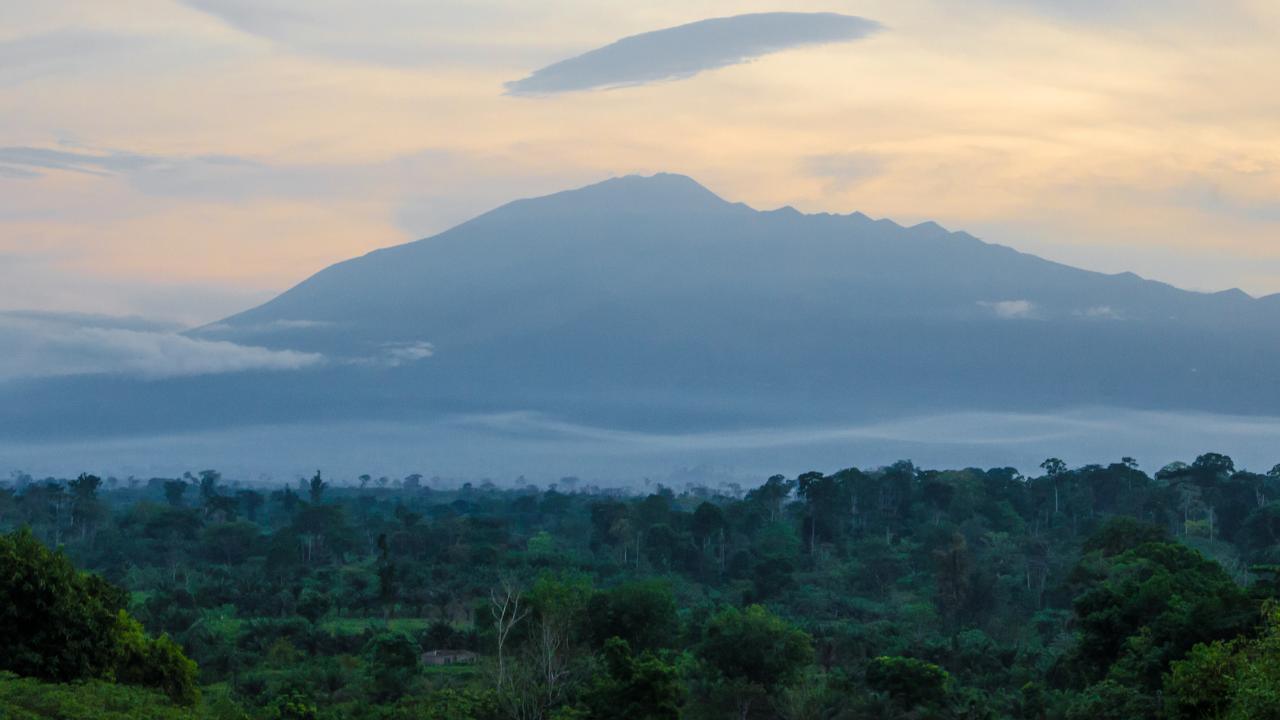
Giant forest hog hunting in Cameroon takes place in the southeastern rainforest concessions, often in the same areas where hunters pursue bongo and other forest species.
This is thick, humid country where movement is slow and visibility is limited to a few yards at best. The ground is uneven, the vegetation is constant, and even short distances take time to cover. You do not glass here. You do not plan long approaches. You move carefully, you watch the wind, and you pay attention to small details—because that is all the environment gives you. Very quickly, it becomes clear that this is not a place where you control the hunt.
The environment controls everything.
There are generally two ways this hunt unfolds, but neither is predictable.
The first is tracking.
Trackers pick up fresh sign—tracks, disturbed ground, feeding areas—and begin following it through thick cover. At times the sign is clear. At other times, it fades into ground where even experienced trackers have to slow down and read carefully.
You can spend hours on a track that never turns into an encounter. The second approach is more patient, but not necessarily easier.
Hunters may sit near feeding areas, forest clearings, or travel routes where hogs are known to move, especially in low-light conditions. But even when you are in the right place, visibility remains limited and movement can happen without warning. And that is the constant challenge. You are not trying to find an animal in open country. You are trying to pick up a brief moment—often through thick cover—before it disappears again.
Most of the time, the hog knows you are there first.
The hunt is about whether you can close that gap before it’s too late.
This is the part most hunters do not hear clearly enough.
Even on a well-run safari, with experienced trackers and a professional hunter who knows the area, giant forest hog hunting in Cameroon is often a 50/50 proposition at best.
That is not pessimism. That is reality. These animals move unpredictably, use thick cover to their advantage, and often disappear long before a clean shot presents itself. You can do everything right—track well, hunt hard, stay patient—and still never get a real opportunity. That uncertainty is exactly what attracts experienced hunters.
But it is also the reason many hunters leave disappointed.
The difficulty of hunting a giant forest hog in Cameroon is not obvious until you are in it.
On paper, it looks straightforward. In reality, almost everything works against you. Visibility is the first problem. In thick forest and riverine cover, you are often working with only a few yards of sight. You are not spotting animals—you are trying to detect movement before it disappears.
Then comes the movement itself. Tracking through this kind of terrain is slow, deliberate, and physically demanding. One careless step, one snapped branch, and the opportunity is gone before you even knew it was there.
But the real difficulty is in how these animals behave.
Giant forest hogs move unpredictably, often feeding or traveling in low light, and they use cover constantly. You can be on fresh sign and still never close the distance. Tracks don’t always lead to encounters. And when it finally comes together, it rarely feels controlled. A hog may appear suddenly in a gap in the brush, partially obscured, already moving. You don’t get time to evaluate. You react—or you miss the opportunity entirely.
That combination—limited visibility, difficult tracking, and brief encounters—is what makes this hunt far harder than most hunters expect.
Very few experienced hunters go to Cameroon with giant forest hog as the only objective.
Not because the animal isn’t worth pursuing—but because the reality of the hunt makes single-species focus risky.
With success sitting around fifty–fifty, building an entire safari around one unpredictable animal does not make much sense for most hunters traveling from North America. Time in the field is limited, and the environment does not guarantee opportunities.
That is why most safaris are structured around the rainforest ecosystem.
Species like bongo and sitatunga are pursued in the same concessions, often under similar conditions. The tracking, the terrain, and even the daily rhythm of the hunt overlap. You are not switching styles—you are committing to a type of hunting that applies across multiple species.
This changes how the safari feels. Instead of waiting on one moment that may never come, the hunt becomes a broader experience shaped by movement, conditions, and opportunity across the system. For many hunters, that is what makes the trip make sense. Pursuing bongo hunting alongside giant forest hog is not about adding animals to a list.
It is about giving the safari structure in an environment where nothing is guaranteed.
Giant forest hog hunting in Cameroon is not a short safari—and it is not structured for quick results.
Most hunts run between two and three weeks, and that time is not a luxury. It is necessary. The concessions are large, the terrain slows everything down, and opportunities do not come on demand. You are working within an environment where even finding the animal can take days. That has a direct impact on cost. You are not paying for volume or guaranteed action. You are paying for access—to remote areas, experienced trackers, and a system that gives you a realistic chance in a very difficult environment.
From a North American perspective, this matters. Travel time is significant, and once you are in camp, every day counts. With success sitting around fifty–fifty, this is not a hunt where you assume it will come together quickly. It may. But it often doesn’t.
And that is exactly why both the time commitment and the cost need to be understood before you book.
Giant forest hog hunting in Cameroon is not something you ease into.
It tends to suit hunters who have already spent time in Africa—those who understand how unpredictable a safari can be when you are dealing with wild, low-density animals in difficult terrain. These are usually hunters who don’t expect the hunt to unfold on a schedule, and who are comfortable when things don’t go to plan.
The hunters who get the most out of this are the ones who enjoy the process itself.
Long hours tracking sign that may or may not lead anywhere. Adjusting to changing conditions. Staying patient when nothing happens for days. And still being mentally sharp when an opportunity finally appears without warning. They are not chasing efficiency. They are chasing a challenge.
On the other hand, this hunt is rarely a good fit for first-time Africa hunters, or for anyone expecting a structured, predictable safari. If your expectations are built around consistent sightings, multiple shot opportunities, or a high likelihood of success, this environment will work against you.
Cameroon does not adapt to the hunter. It rewards the one who arrives prepared—and exposes the one who doesn’t.
Giant forest hog hunting in Cameroon makes sense for a very specific type of hunter.
If you are looking for a high-success, opportunity-driven safari, this is not it. There are better options elsewhere in Africa that offer more visibility, more encounters, and more predictable outcomes. But if you are looking for a challenging, low-density species in a difficult environment—where success is uncertain and every opportunity has to be earned—this hunt starts to make sense.
The key is understanding the trade-off. You are not trading money for certainty. You are trading it for access to a hunt that very few places still offer.
And for the right hunter, that is exactly the point.
Giant forest hog hunting in Cameroon is not designed to impress you.
It does not offer high success rates, clear opportunities, or the kind of structure many hunters are used to elsewhere in Africa. This is a hunt where things often don’t come together—and that is part of the reality you need to accept upfront.
You may spend days tracking without ever seeing the animal. You may sit in the right place, with the right wind, and still watch nothing appear. And when a mature hog finally does step out, it will likely happen quickly, in poor visibility, with very little time to react.
That is the nature of this hunt.
Even on a well-run safari, success often sits around fifty–fifty. Not because anything is being done wrong—but because the animal and the environment simply don’t allow for consistency. For some hunters, that is exactly the appeal. The difficulty, the unpredictability, and the fact that nothing is guaranteed make success feel earned in a way that easier hunts never do. For others, it becomes clear that there are better options elsewhere—hunts with more visibility, more frequent opportunities, and a higher likelihood of success.
Cameroon does not try to compete with those places. It offers something different.
And whether that difference is worth it depends entirely on the kind of hunter you are—and how honest you are about what you actually want from the hunt.
Search from our range of Hunts across various popular destinations in Africa.
Book Your Hunt