13-Day Bongo Hunting Safari in the Republic of Congo
Booking Season: 2026
Hunt Difficulty: Difficult

The bongo (Tragelaphus eurycerus) is the largest and heaviest African forest antelope. Pursuing this elusive species is a highly specialized form of African plains game hunting, primarily conducted in countries such as Cameroon, the Republic of Congo (Congo–Brazzaville), and the Central African Republic, with bongo hunting in Cameroon widely regarded as one of the most established and sought-after options.
Available Bongo Hunts
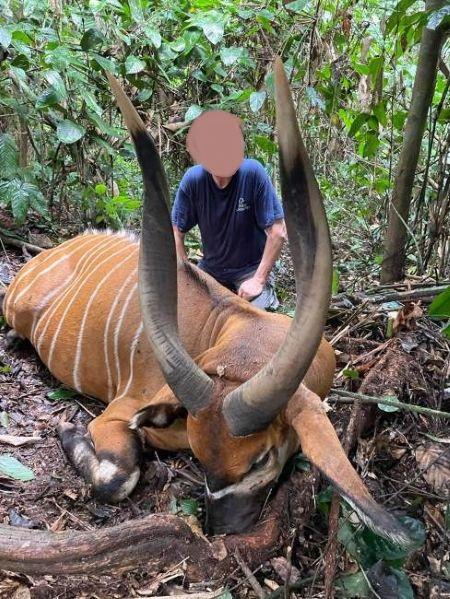
13-Day Bongo Hunting Safari in the Republic of Congo
Booking Season: 2026
Hunt Difficulty: Difficult

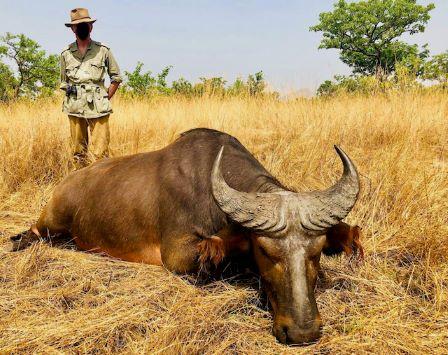
Africa Hunting Trip for Dwarf Buffalo & Sitatunga Cameroon
Booking Season: 2026
Hunt Difficulty: Difficult
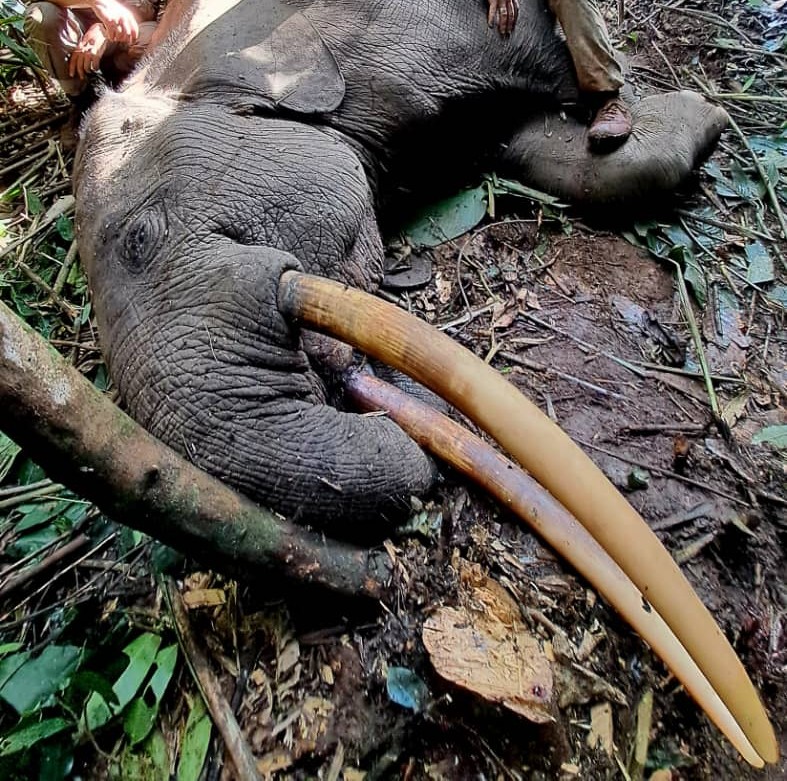
Bongo, Sitatunga & Forest Elephant Hunting in Cameroon
Booking Season: 2026
Hunt Difficulty: Moderate, Difficult
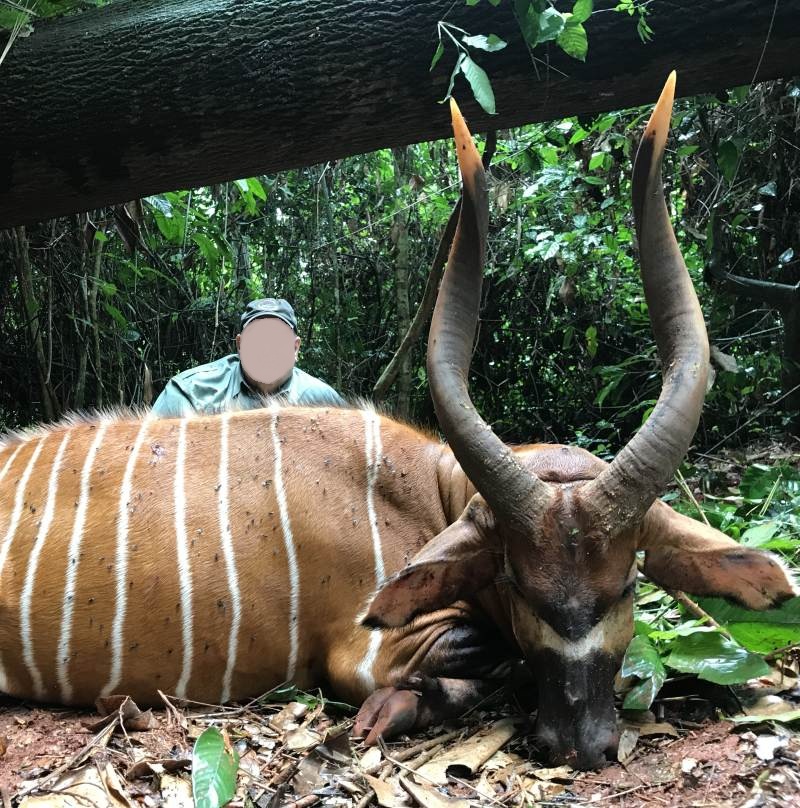
Hunt the Elusive Bongo & Sitatunga in Cameroon’s Rainforests
Booking Season: 2026
Hunt Difficulty: Difficult
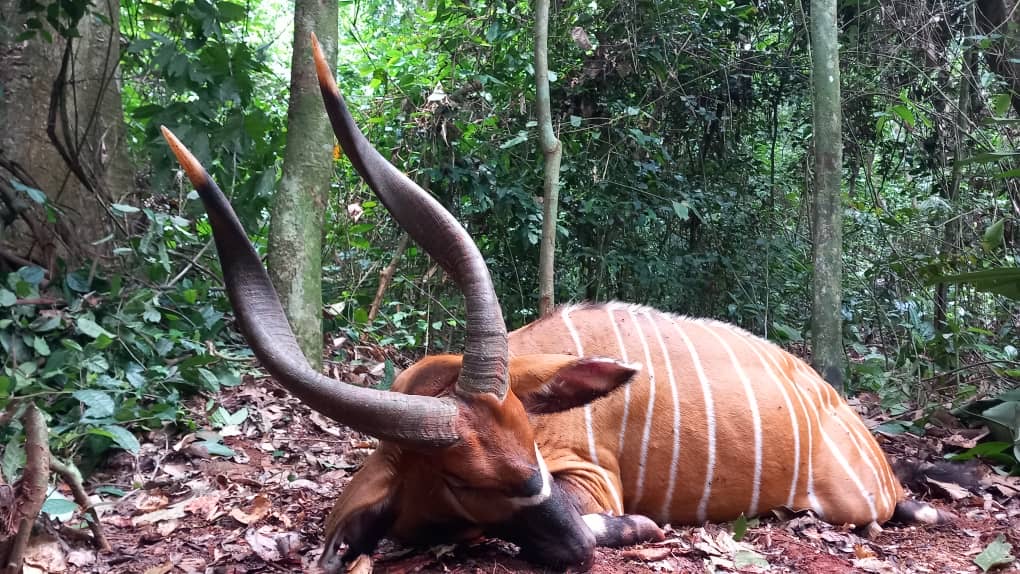
Hunt Bongo & Sitatunga in Boumba North, Cameroon
Booking Season: 2026
Hunt Difficulty: Difficult
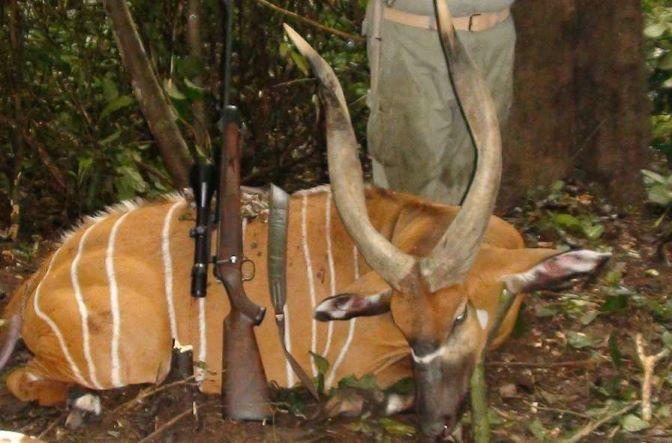
Bongo and Forest Elephant Hunting Safari (13 Days) – Cameroon
Booking Season: 2026
Hunt Difficulty: Difficult
There are two subspecies of bongo: the western or lowland bongo (Tragelaphus eurycerus eurycerus) and the eastern or mountain bongo (Tragelaphus eurycerus isaaci). The eastern bongo is listed as “critically endangered” by the IUCN and is not hunted, while the western bongo remains legally hunted in the countries mentioned above. The western bongo is currently classified as near threatened.
Often called the “Ghost of the Forest,” the Western or Lowland Bongo lives where most hunters never go, in the deep, wet rainforests of Central Africa. It’s hot, it’s humid, visibility is tight, and the animal is built for vanishing.
A Bongo safari feels less like a typical plains game hunt and more like a proper expedition. You’re dealing with remote concessions in countries like Cameroon, the Republic of the Congo, or the Central African Republic (CAR), where logistics matter as much as marksmanship. GHS helps hunters assess the outfitter, concession and camp setup, and work through the practical issues that can affect the hunt, permits, travel routing, charter flights and realistic timelines.
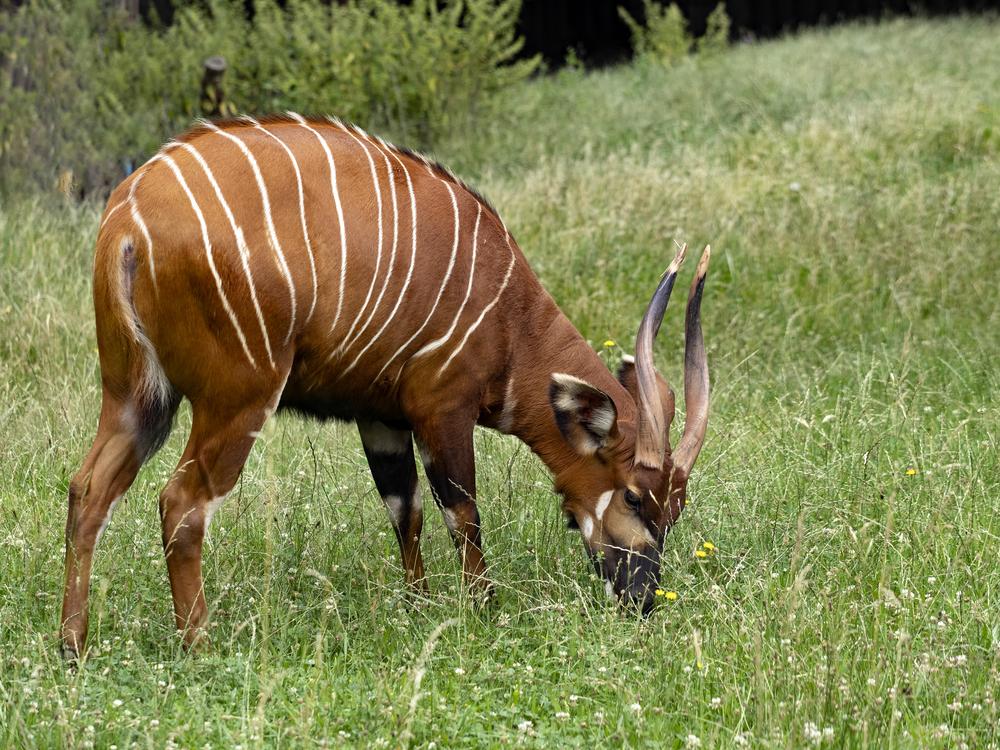
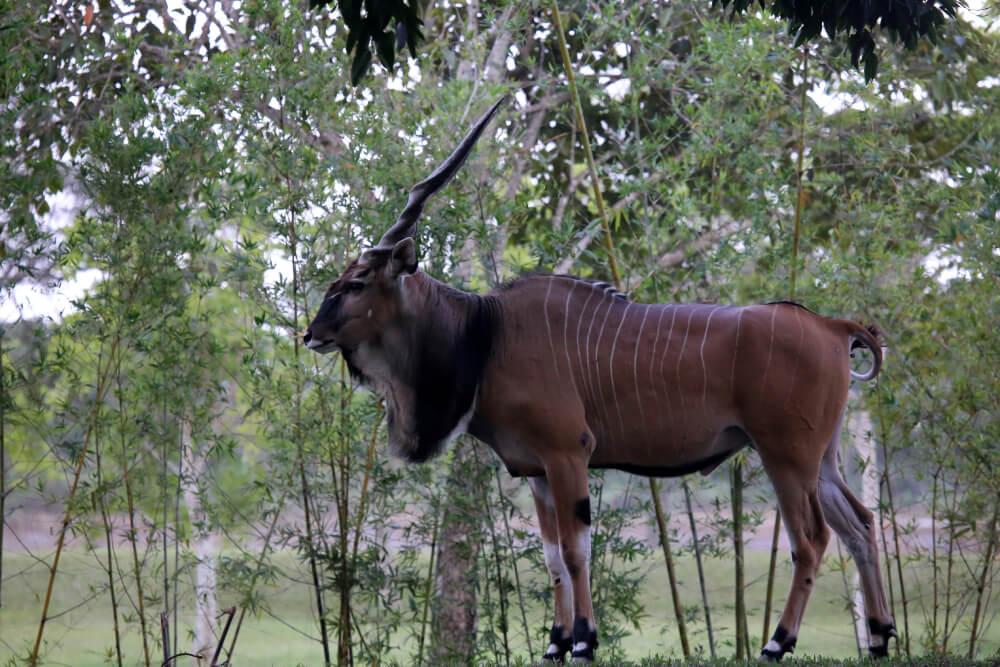
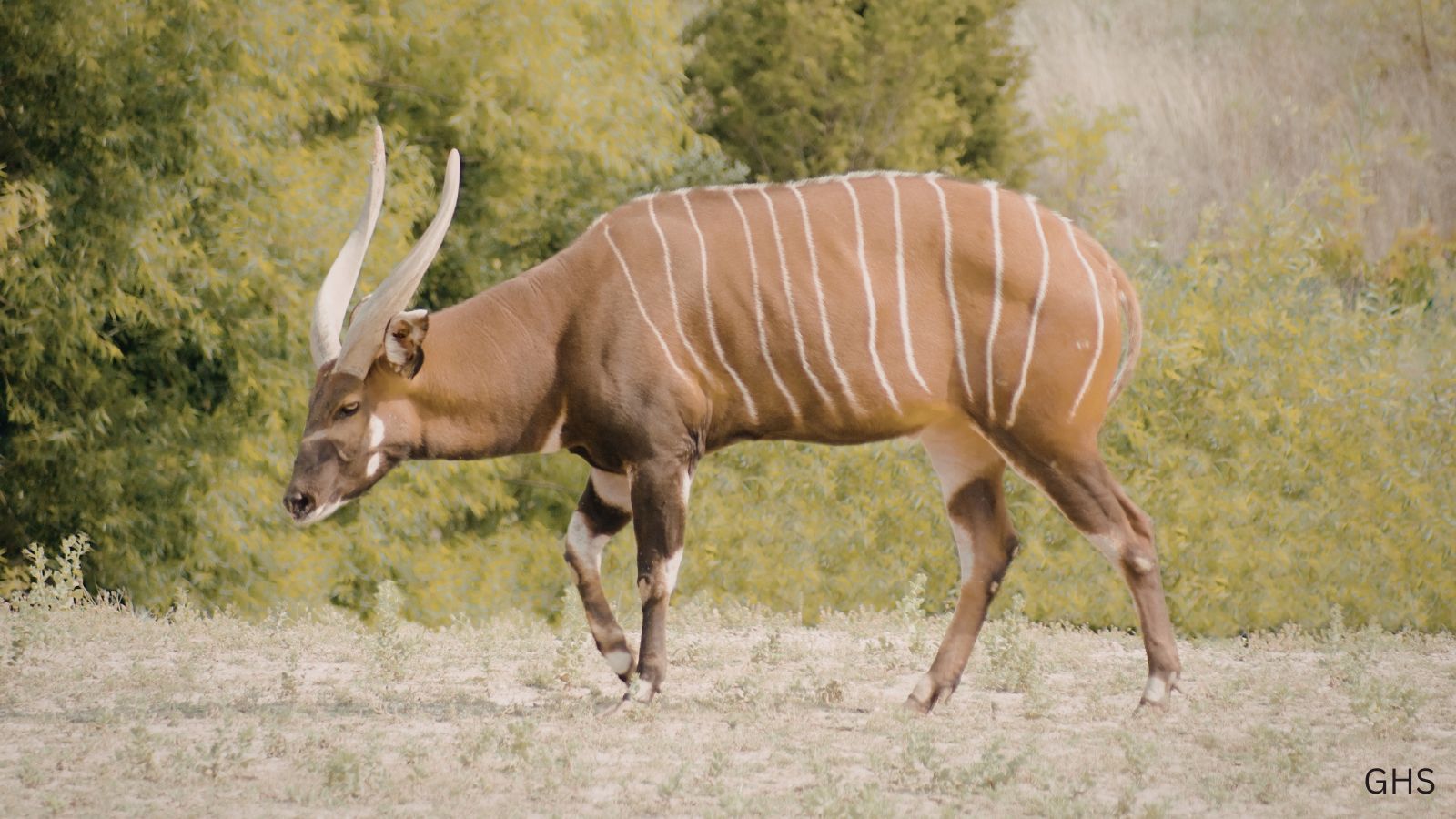
A mature bull Bongo is unforgettable. Think deep chestnut-red coat, crisp vertical white stripes, and heavy, lyre-shaped spiral horns with tips polished from years of rubbing trees. Trophy quality is not only inches on a tape, it’s age, mass, and character, and in the jungle you usually get seconds, not minutes, to decide. Bongos are largely nocturnal and crepuscular, moving in the dim light of dawn and dusk and bedding down in the thickest tangles during the day. In this habitat, you don’t glass from a hill. You read tracks in mud, broken vegetation, fresh dung, and subtle movement in a wall of green.
Actionable insight: Before you book, ask about the average shot distance in that specific concession. If you are not comfortable shooting fast at 20 to 30 yards in low light, you need range time. Practice off-hand, in shade, with quick target acquisition.
When a bull finally appears after days of working sign in thick forest, the opportunity can be over in seconds. This is one of those hunts you remember in detail, forever.
A bongo safari takes place in the rainforests of Central and West Africa, and choosing the right country matters because access, concession quality, logistics and hunting methods can differ considerably.
Prime destinations for legal, well-managed Bongo hunts commonly include Cameroon, the Republic of the Congo, and, when conditions allow, the Central African Republic (CAR).
Cameroon is often seen as the classic bongo destination, with established operations, experienced trackers and large forest blocks. Hunters comparing the wider safari environment, seasons, travel and other species can also review our Hunting in Cameroon destination guide. The Republic of the Congo offers unique hunting situations around forest clearings and mineral licks (often called bais), which can create rare opportunities to judge a bull more clearly. CAR can be spectacular in the right areas, but it requires careful vetting and a serious focus on current on-the-ground stability.
The lowest-priced option can become the most expensive once you factor in lost hunting days, poor logistics and avoidable frustration.
Bongo hunting seasons are planned as much by rainfall and access as by the calendar. In rainforest country, the right conditions need to give trackers enough sign to work with while still allowing the hunting team to move through the concession efficiently.
Some moisture can make fresh tracks easier to read, but prolonged heavy rain can turn roads and forest trails into mud and make already-remote hunting areas difficult to access. Conditions can also vary considerably between concessions, even within the same country.
There really isn’t one best month for every bongo hunt. Before booking, ask the outfitter when that particular concession has historically produced its best tracking conditions, road access and bongo activity.
Bongo hunts are among the more expensive specialized antelope hunts in Africa, but much of that cost has very little to do with the animal itself. You are paying for access to remote rainforest concessions, long hunting periods, specialized trackers and camp staff, difficult logistics and, in some areas, charter flights or extended road transfers.
A typical bongo safari is also considerably longer than many plains game hunts. You need enough time to locate fresh sign, work tracks and deal with days when weather, roads or animal movement simply do not cooperate. Cutting days to save money can be false economy on this kind of hunt.
The final price will depend on the country, concession, safari length, trophy-fee structure and what is included in the package. Hunters should compare the total cost of the safari, not simply the advertised daily rate or trophy fee.
For a broader breakdown of daily rates, trophy fees and other expenses across Africa, see our African Hunting Safari Prices guide.
There is no single method used on every bongo hunt. How the safari is conducted depends heavily on the country, concession and local conditions.
In some areas, trackers work fresh spoor through the forest, often with dogs where permitted and where that method forms part of the local hunting system. In other concessions, hunting may revolve more around forest clearings, mineral licks or bais, where bongo activity can be monitored and a bull may occasionally be judged before the final approach.
The common factor is that visibility is limited and opportunities are usually brief. Even where hunting revolves around a forest clearing, mineral lick or bai, the hunter still needs to be ready for close-range shooting and quick decisions. Before booking, ask how bongo are actually hunted in that concession. The answer tells you a great deal about the physical demands, likely shot opportunities and the type of safari you are buying
Bongo hunting appeals to hunters because it bears very little resemblance to a conventional African antelope hunt. Bongo hunting tests patience, fitness, shot discipline, and your ability to stay calm when things go loud and fast in tight cover.
It also offers a very different safari feel. Instead of open plains and long glassing sessions, you’re in dense forest, cutting distance, reading sign, and moving like a tracker, not a tourist.
A standard Bongo hunting safari typically includes accommodation, meals, drinks (as specified by camp), professional hunter, trackers, camp staff, on-territory transport, and field preparation of the trophy.
Bongo hunts are different from most other plains game hunts in Africa. While they fall into the antelope category, everything about the experience, from the terrain to the way the hunt unfolds, is on another level. These animals live in dense rainforest, where visibility is limited and conditions are often hot, humid, and physically demanding.
This is not a typical spot-and-stalk hunt. Much of the hunting may involve tracking on foot through thick cover, sometimes following fresh spoor for hours. Progress can be slow, and opportunities don’t come often. When they do, they tend to be quick and close, with very little time to adjust.
Shot placement matters as much as anything else, but the conditions make it more challenging. Shots are often taken at close range, sometimes in low light or through small openings in thick vegetation. That requires patience and discipline, and the ability to wait for a clear opportunity rather than forcing a shot.
A bongo hunt is not for everyone. It requires time, commitment, and a willingness to deal with difficult conditions. But for hunters who understand what they are getting into, it’s one of the most unique and rewarding experiences Africa has to offer.
Bongo are not considered dangerous game, and they are not aggressive by nature. However, the environment they live in can create situations that require careful handling. Dense forest, limited visibility, and close-range encounters mean that things can happen quickly.
A wounded bongo will usually move off rather than confront a hunter, but tracking in thick jungle conditions can be challenging. Following up on a shot requires focus and clear communication with your professional hunter and trackers, especially when visibility is limited.
The real challenge is not danger, it’s control. Keeping track of the animal, maintaining awareness in thick cover, and making the right decisions under pressure are what matter most. With the right approach and guidance, bongo hunts are safe, but they demand attention and discipline.
Bongo hunts are widely regarded as one of the most difficult plains game hunts in Africa. The challenge comes from a combination of terrain, conditions, and the nature of the animal itself.
The rainforest environment limits visibility and slows everything down. Tracking can take hours, sometimes days, before a proper opportunity presents itself. Hunters need to be prepared for long days on foot, often in heat and humidity that adds to the physical demands of the hunt.
Unlike open-country hunting, where animals can be spotted at distance, bongo are usually encountered at close range and often with little warning. This makes shot timing critical. There is rarely time to adjust once the opportunity appears, and hesitation or rushed decisions can quickly cost you the chance.
Success on a bongo hunt comes down to patience and persistence. It’s not about covering ground quickly, it’s about staying focused, trusting the process, and being ready when the moment finally comes.
On paper, shot placement on large antelope is relatively straightforward, and bongo follow the same basic anatomy. The reality in the rainforest is different. Like most large antelope, the vital zone sits behind the shoulder, and any experienced hunter will understand where that shot should go.
You are rarely looking at a full broadside animal in clear conditions. Most opportunities come through gaps in vegetation, at close range, and often for only a few seconds. Light can be low, angles are not always ideal, and there is very little time to adjust once the animal steps into an opening.
This is where theory and practice separate. Knowing where to aim is one thing, being able to execute that shot in thick cover, under pressure, is something else entirely. Waiting for a clear lane, avoiding deflection from branches, and resisting the urge to rush the shot are all part of the challenge.
A poorly placed shot in these conditions can quickly turn into a difficult follow-up in dense cover. That’s why discipline matters more than anything else. Take the shot when it’s right, not when it’s available.
The Western Bongo earns this title due to its elusive, largely nocturnal nature and its ability to disappear into dense rainforest despite its size and bright chestnut coat. Visibility is minimal, and successful hunts rely on tracking skill, not long-range glassing.
Common destinations for legitimate Bongo safaris include Cameroon, the Republic of the Congo, and select areas of the Central African Republic (CAR) when conditions allow. The right destination depends on concession quality, logistics, and current stability.
Bongo hunts are among Africa’s more exclusive safaris because of remote access, charter flights, and concession logistics. Costs vary by operator, duration, and trophy structure, so a tailored quote is the best way to see the real all-in total.
For close-range, thick-cover hunting, many hunters choose the .375 H&H for reliable penetration and authority. Optics should be low magnification with a wide field of view (often 1-6x), and strong light transmission helps in the dim canopy.
No. While tracking with indigenous hounds is a high-adrenaline and effective method in some areas, Bongo can also be hunted via slow spot-and-stalk, or from high seats and blinds near mineral licks and forest clearings (bais), depending on the concession.
Search from our range of Hunts across various popular destinations in Africa.

Book Your Hunt