Buffalo Hunting & Roan in the Savannah Cameroon
Booking Season: 2026
Hunt Difficulty: Difficult

Hunting Lord Derby Eland in Cameroon is one of the most exclusive and physically demanding safaris in Africa. As one of the world's rarest antelope, Lord Derby eland represents one of Africa's finest Eland Hunts, combining remote wilderness, challenging tracking and a truly free-range hunting experience.
If you're considering Hunting in Cameroon, explore our complete destination guide covering hunting areas, concession differences, travel logistics, available species and everything you need to know before planning your safari.
Cameroon is widely regarded as the **premier destination in Africa for hunting Lord Derby eland, not because it’s the easiest place to hunt them, but because it consistently offers the most authentic and reliable opportunities. Unlike Southern Africa, where common eland are widespread and often hunted in managed environments, Lord Derby eland are confined to a narrow belt across Central and West Africa. Cameroon sits at the core of that range, and more importantly, it has the infrastructure and experience to support serious hunts.
Available Eland - Lord Derby's Hunts
Buffalo Hunting & Roan in the Savannah Cameroon
Booking Season: 2026
Hunt Difficulty: Difficult
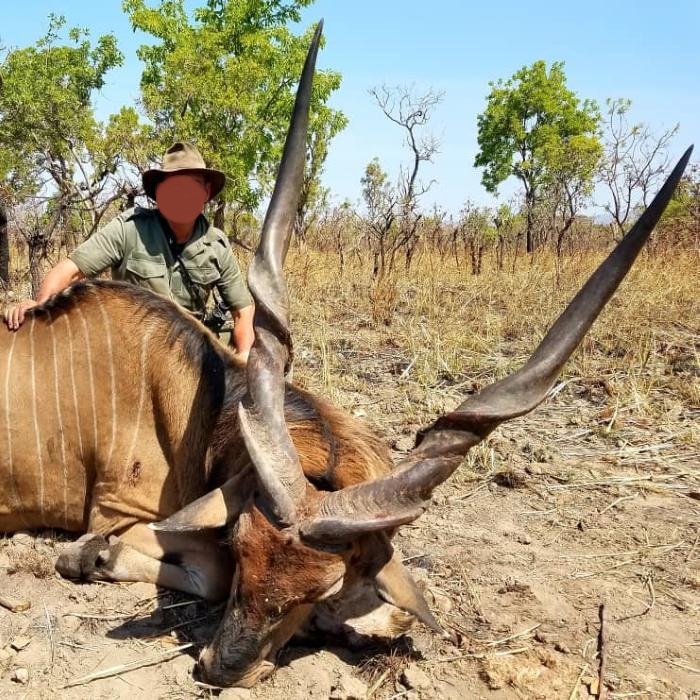
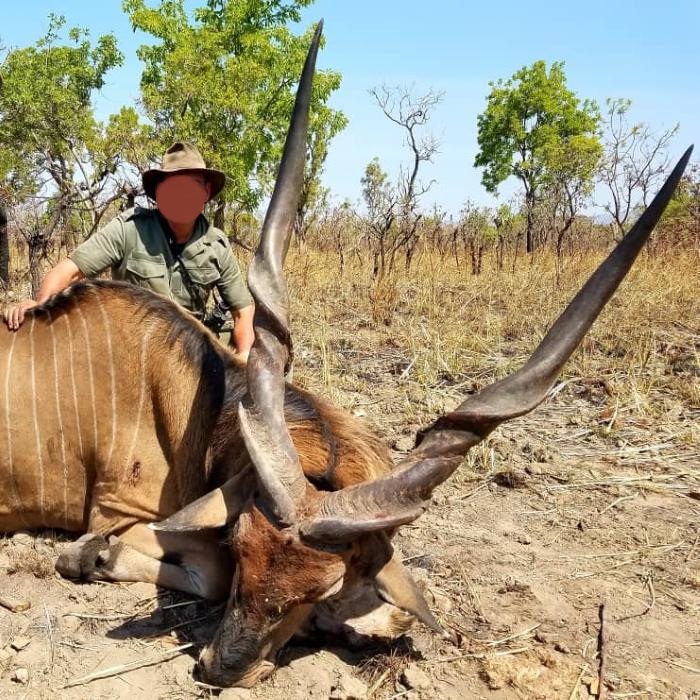
15-Day Lord Derby's Eland Hunting Safari in Cameroon
Booking Season: 2026
Hunt Difficulty: Difficult
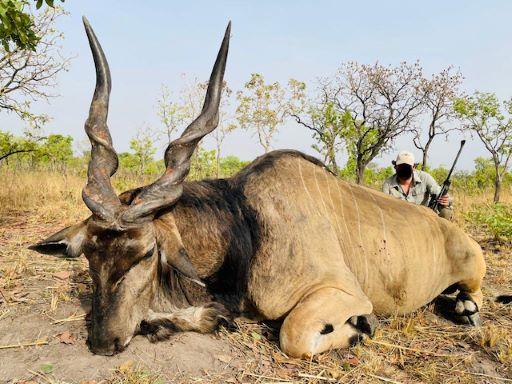
Hunt Giant Eland & 5 More Species in Cameroon: Djiboa Camp
Booking Season: 2026
Hunt Difficulty: Difficult
Hunting in Cameroon, Lord Derby Eland, Lion & More
Booking Season: 2026
Hunt Difficulty: Difficult
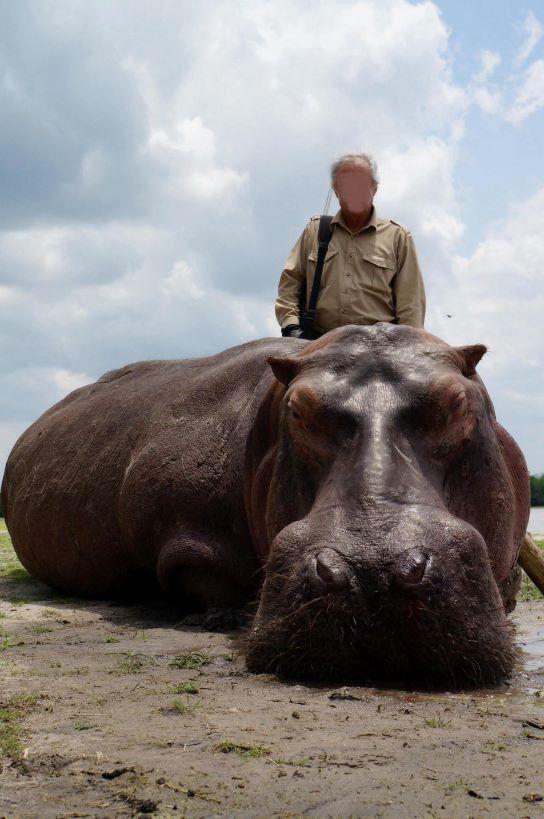
Hippo Hunting plus Lord Derby Eland 10 Days in the Savannah
Booking Season: 2026
Hunt Difficulty: Difficult
What sets Cameroon apart in practical terms:
Vast, unfenced concessions
These are not small properties, they are expansive wild ecosystems where animals move freely without artificial boundaries.
Stable populations of Western giant eland
Cameroon remains one of the few countries where hunters have a realistic chance of encountering mature, trophy-quality bulls on a consistent basis.
Highly experienced professional hunters
Many PHs in Cameroon specialize in this species and have spent years, often decades tracking the same herds. That level of familiarity matters.
Low hunting pressure
Compared to Southern Africa, there are fewer operators and less overall traffic, which keeps animals wary, wild, and unpredictable.
Most Lord Derby Eland hunts take place in the northern savanna woodland regions, often along the edges of protected national parks. This creates a true free-range environment where animals are not conditioned to vehicles or human presence.
The key difference is simple: You are not hunting a managed population, you are hunting a wild, naturally moving species in its original habitat.
That is why Cameroon continues to stand out as the top-tier destination for this hunt.
A Lord Derby Eland hunt in Cameroon is one of the most physically and mentally demanding plains game hunts in Africa — and it is often underestimated by first-time hunters to the region. On paper, it sounds straightforward.
In reality, it is a relentless tracking hunt where success depends on endurance, discipline, and timing.
Most days begin by cutting fresh tracks early in the morning, followed by hours of slow, deliberate tracking through dry savanna and woodland. It is not unusual to cover 5–10+ miles in a single day, often in hot, dusty conditions that wear you down over time.
What makes this hunt difficult is not just the distance, it is how you move and think throughout the day.
You are constantly:
Reading subtle sign in hard, dry ground
Adjusting your approach based on shifting wind
Slowing your pace as you close the distance
Staying mentally sharp despite fatigue
This is not passive hunting. It requires full engagement from the moment you pick up tracks. And when everything finally comes together, it happens quickly. After hours, sometimes days of tracking a specific bull, you may get only a few seconds to take the shot. There is rarely time to reset, reposition, or reconsider. That pressure is where most hunters struggle.
The biggest misconception is thinking this is simply a long walk. It’s not.
The real challenge is what happens after several hours of tracking, when fatigue starts to affect your judgment. That’s when small mistakes creep in — moving too quickly, misreading the wind, or rushing the final approach. Lord Derby eland are not forgiving animals. They are constantly aware, and once alerted, they do not stop and offer a second opportunity.
What catches many hunters off guard is the combination of pressure and timing: You may spend an entire day tracking a specific bull, only to get a brief, partially obscured shot window, with your PH making a split-second call
At that moment, there is no time to think through the shot, you are relying on preparation, instinct, and trust in your PH. Another key factor is selectivity. You are not evaluating multiple bulls and choosing the best one. In many cases, you are committing to a single mature bull, identified by tracks, stride, and herd behavior — long before you ever see him.
That level of commitment changes how the hunt unfolds.
Very high difficulty (long tracking days, limited opportunities)
10–14 day safari focused on a single mature bull
$25,000–$45,000+ total cost depending on outfitter and logistics
Best hunting window: January–April
Tracking-based hunt, not a high-volume shooting safari
This is not a high-volume safari, and it should not be approached like one. Encounters with Lord Derby Eland are limited, and mature bulls are even less frequently seen. It is entirely normal to spend several days tracking, learning patterns, and building a strategy around a specific animal.
Progress is often measured in small gains:
Getting closer to a herd without being detected
Confirming the presence of a mature bull
Understanding how that group is moving through the area
Success comes from staying consistent, not from covering more ground or pushing harder than necessary. And when the opportunity finally comes together, it is usually decisive. There is rarely a second setup, a second stalk, or a second shot. That is why experienced hunters describe this as: a one-opportunity hunt.
Not because you only see one animal, but because everything builds toward a single, critical moment where preparation, patience, and execution have to align. And that is exactly what makes it one of the most respected and rewarding hunts in Africa.
A Lord Derby Eland hunt in Cameroon sits firmly in the premium category of African safaris, not just because of the trophy, but because of the logistics, remoteness, and effort required to operate in these areas.
At a basic level, most hunts are structured as follows:
Daily rates: $1,500 – $2,500
Hunt duration: 10–14 days
Trophy fee: $15,000 – $25,000+
Typical total safari cost: $25,000 – $45,000+
But those numbers only tell part of the story.
The cost of a Lord Derby Eland hunt is not just about the animal, it reflects the entire hunting system behind it.
Key factors include:
Remote concessions
These areas require significant infrastructure, camps, vehicles, staff, anti-poaching presence, all operating far from major towns or supply routes.
Low hunting quotas
Very few bulls are taken each season, which keeps the hunt exclusive but also increases the cost per opportunity.
Specialized professional hunters
You are paying for experience, often decades of species-specific knowledge that directly impacts your chances of success.
Logistics and access
Charter flights, long road transfers, and remote camp operations all add to the overall cost.
This is where expectations often need adjustment. Beyond the core package, additional costs may include:
Charter flights to remote hunting areas
Trophy export, dip & pack, and shipping
Gratuities for PH and camp staff
Rifle permits and import/export paperwork
These can add several thousand dollars to the total safari cost, depending on the area and outfitter.
Compared to common plains game hunts in Southern Africa, this is a completely different category.
You are paying for:
Access to a rare and geographically limited species
A true free-range, low-pressure hunting environment
A hunt that requires time, skill, and persistence, not volume
There are very few places left in Africa where this type of experience still exists at scale.
Is It Worth the Cost?
For hunters looking for an affordable or high-volume safari, this hunt will not make sense.
But for those pursuing:
A top-tier, collector-level trophy
A physically demanding, experience-driven hunt
One of the last truly wild antelope safaris in Africa
The value becomes much clearer. This is not just a hunt you book, it’s one you plan for, commit to, and remember for the rest of your life.
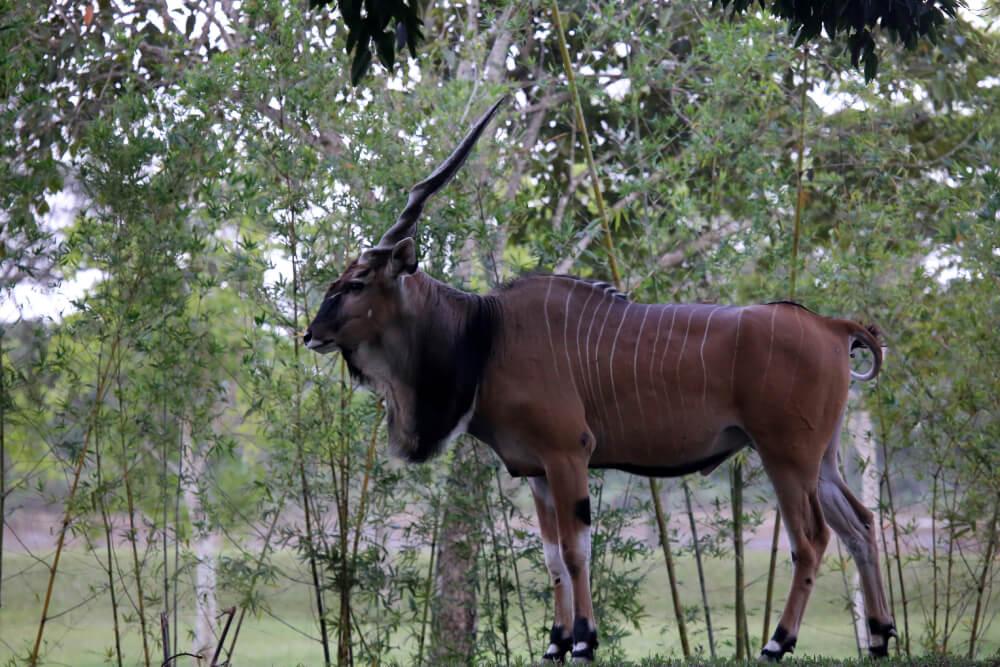
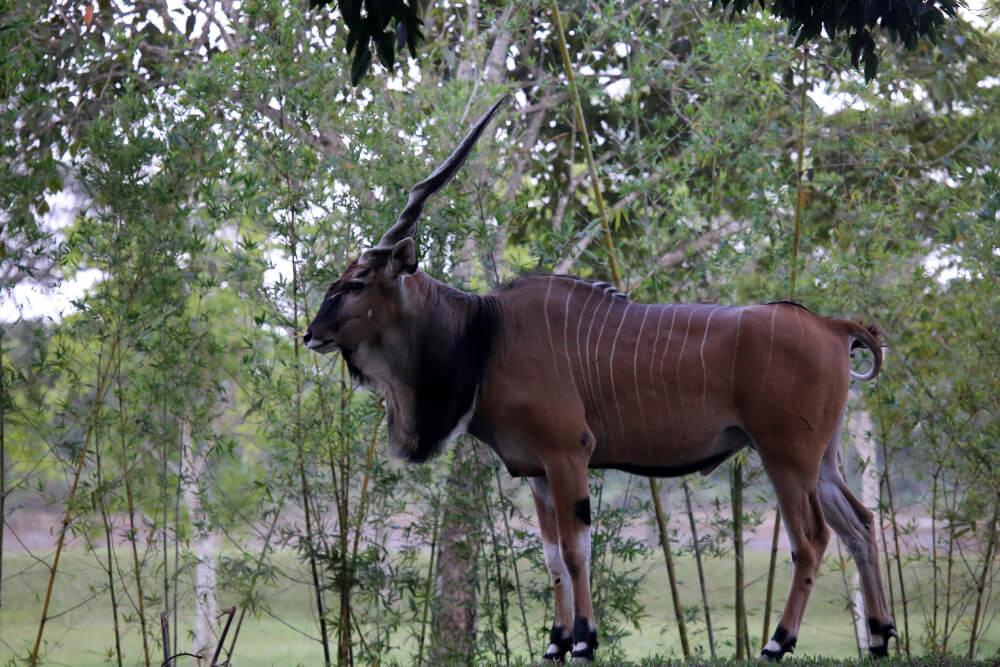
The Lord Derby Eland is the largest antelope in Africa — and one of the most prestigious trophies a hunter can pursue. To understand how this species compares across the continent, see our full fuide to eland hunting in Africa.
Key characteristics:
Massive body size (up to 2,000 lbs)
Long, spiral horns (often 40+ inches)
Extremely wary and difficult to approach
Found in very limited regions
They are rarely seen, and mature bulls are even harder to locate. This is not just another antelope , it is a true collector’s trophy.
A standard day on this hunt:
Early morning: Track pickup
Mid-morning: Long tracking session
Midday: Rest or reposition
Afternoon: Continue tracking or relocate herds
Most hunts involve:
Cutting fresh tracks
Following slowly and quietly
Closing distance carefully
Taking a quick shot when opportunity appears
Many successful bulls are taken after multiple days of tracking the same animal.
The Lord Derby Eland hunting season in Cameroon typically runs from December through May, but timing your hunt correctly can have a noticeable impact on both tracking conditions and overall success.
In general, the best months are January through April, when conditions are at their most favorable. As the season progresses, the environment changes in ways that directly benefit hunters. The ground becomes drier and more readable, making it easier to track animals over long distances. Vegetation begins to thin out, improving visibility and allowing you to close distance more effectively. At the same time, water becomes more limited, which naturally concentrates game and creates more predictable movement patterns.
This combination, trackable ground, better visibility, and more consistent animal movement, is what makes the mid-to-late season so productive. Early season hunts in December can still be successful, but they come with added challenges. The bush is often thicker, the ground holds less defined tracks, and animals tend to be more dispersed due to available water.
For experienced hunters, this may not be a dealbreaker. But for most, planning a hunt between January and April provides the best balance of conditions, opportunity, and overall experience.
A mature Lord Derby Eland bull represents one of the most impressive antelope trophies in Africa, not just in size, but in presence. From a measurement standpoint, a good bull will typically fall in the range of: 38 to 42 inches in horn length. Anything exceeding 42 inches is generally considered exceptional and highly sought after. But experienced professional hunters place far less emphasis on raw length than most first-time hunters expect.
What truly defines a quality trophy is a combination of:
Age → fully mature bulls with worn tips and developed character
Mass → heavy bases that reflect maturity and genetics
Horn shape → wide, even spirals with good symmetry
In many cases, a slightly shorter bull with strong mass and clear signs of age is far more desirable than a longer but younger animal. Another important factor is how these bulls are encountered. You are rarely judging multiple animals side by side. More often, your PH has already identified a mature bull based on tracks, stride length, and herd composition, long before you ever see him. By the time you get a visual, the decision window is short.
That is why trust in your PH is critical. Trophy quality on this hunt is not just about inches on a tape, it is about recognizing and committing to the right animal when the opportunity presents itself.
Many hunters group these two species together, but in reality, they represent completely different hunting experiences. The most important distinction starts with geography. The Lord Derby Eland is limited to Central and West Africa, with Cameroon being the primary destination. Common eland, on the other hand, are widespread across Southern Africa and are far more accessible. But the real difference is not just where you hunt them, it’s how the hunt unfolds.
A Lord Derby Eland hunt is a track-driven expedition, often requiring multiple days of following a specific bull through large, unfenced terrain. Encounters are limited, and every opportunity carries weight. By comparison, common eland hunts are generally more flexible. Depending on the country and area, they may involve tracking, glassing, or a combination of approaches, with more frequent sightings and shot opportunities.
Difficulty is where the gap becomes even clearer.
Lord Derby eland → physically demanding, low opportunity, high commitment
Common eland → moderate difficulty, more accessible, more forgiving
Availability also plays a major role. Lord Derby eland are limited and tightly controlled, making each hunt exclusive. Common eland are widely available across multiple countries, with far more options in terms of pricing and style. The simplest way to think about it:
Common eland is an excellent plains game hunt
Lord Derby eland is a specialist, high-effort, low-volume pursuit
If you are looking for a rare, physically demanding, and truly wild hunting experience, Lord Derby eland sits in a completely different category.
A Lord Derby Eland hunt in Cameroon is rarely a single-species safari. Most hunters choose to combine it with other West African species, turning the trip into a broader expedition. Depending on the concession and quota, additional species may include:
Bongo
Savannah buffalo
Roan antelope
Western hartebeest
Kob
What makes this combination unique is not just the species list, it’s the type of hunting experience. Unlike Southern Africa, where hunts can be structured around multiple short opportunities, Cameroon safaris are typically built around time, tracking, and progression. Each species adds depth to the overall experience rather than simply increasing numbers.
This means:
You are already operating in remote, game-rich areas
Additional species are pursued opportunistically or as part of a broader plan
The focus remains on quality and experience, not volume
For hunters, this is what makes Cameroon so appealing. Instead of booking multiple separate safaris, you are able to pursue several iconic, hard-to-access species within a single, well-structured hunt, something very few destinations in Africa can offer at this level.
A Lord Derby Eland hunt in Cameroon is not a typical safari, and it’s important to be honest about that upfront. This hunt is not a good fit if you are looking for a short, comfortable, or high-success-rate experience. It is likely not for you if:
You want a quick safari with guaranteed opportunities
You prefer seeing multiple animals before making a decision
You are not prepared for long days on foot in demanding conditions
You are working within a tight or inflexible budget
This is a hunt where time, effort, and uncertainty are part of the process. There are no shortcuts, and success is never manufactured. If your priority is convenience or volume, there are far better-suited options elsewhere in Africa.
This hunt is best suited to a very specific type of hunter, one who values experience over ease, and rarity over convenience. It is a strong fit if:
You have prior African hunting experience and understand how tracking-based safaris unfold
You are motivated by pursuing a rare, geographically limited species
You are comfortable committing to a physically demanding hunt with no guarantees
You are looking for something beyond the typical Southern African safari model
For many hunters, Lord Derby eland represents a progression hunt, something pursued after gaining experience with more accessible species. It also appeals to those building a collection of Africa’s most iconic and challenging trophies. In simple terms:
If you are looking for an efficient, high-volume safar, this is not it
If you are looking for a serious, experience-driven hunt that few people attempt, this is exactly where it fits
For the right hunter, this is not just another trip. It is a bucket-list level expedition that stands apart from almost anything else in Africa.
The most common mistake on a Lord Derby Eland hunt is simple: Rushing the shot
After hours, and often days of tracking a specific bull, the final opportunity rarely unfolds perfectly. Visibility may be limited, the animal may be moving, and the window to shoot is often measured in seconds. This is where experience matters most. A good professional hunter is not just guiding, he is:
Reading the bull before you see it
Confirming maturity instantly
Positioning you for the highest-percentage shot
Controlling the pace of the final approach
By the time you are on the sticks, most of the real decisions have already been made. Your role in that moment is not to overthink, it is to execute cleanly and decisively. Hesitation, second-guessing, or rushing the shot are the most common reasons opportunities are lost. On this hunt, trust in your PH is not optional , it is a critical part of success.
In Cameroon, hunting is not separate from conservation — it is one of the primary reasons these wild areas still exist. The regions where Lord Derby Eland are hunted are vast, remote, and expensive to maintain. Without sustainable hunting revenue, there would be little incentive or funding to protect them.
Hunting contributes directly to:
Anti-poaching operations that protect wildlife year-round
Employment and income for local communities living alongside these areas
The preservation of large, unfenced ecosystems that would otherwise be vulnerable to agriculture or encroachment
For species like the Lord Derby Eland, this is especially important. They require extensive, undisturbed habitat, something that can only be maintained if the land itself holds long-term economic value. Well-managed hunting concessions provide that value. In practical terms, this means that a properly conducted safari is not just sustainable, it is often a key part of keeping these ecosystems intact.
Whether this hunt is “worth it” depends entirely on what you are looking for. If your priority is convenience, high success rates, or a relaxed safari experience — this is not the right hunt. But if you are evaluating it from the perspective of experience, rarity, and challenge, the answer becomes much clearer.
This hunt requires:
Time
Physical effort
Financial commitment
There are no shortcuts, and no guarantees. But what you get in return is something very few hunts can offer:
Access to a geographically limited, highly sought-after species
A true free-range hunting environment
An experience built on tracking, patience, and execution, not volume
For many experienced hunters, this is not just another safari, it is a defining hunt. One that stands apart because of what it demands, and what it delivers. In the end, this is not about ticking a box. It is about choosing a hunt that means something, and for the right hunter, Lord Derby eland in Cameroon does exactly that.
How difficult is Lord Derby Eland hunting?
Very difficult, both physically and mentally. A typical hunt in Cameroon involves long tracking days, often covering 5–10+ miles in hot, dry conditions. More importantly, success depends on patience and timing, as shot opportunities are limited and often brief. This is not a high-volume hunT, it is a focused pursuit of a single mature bull, which adds to the overall difficulty.
What caliber is recommended for Lord Derby Eland?
Most outfitters recommend a minimum of .300 caliber, but many professional hunters prefer something larger, such as a .338, for added stopping power. The Lord Derby eland is a large, heavy-bodied animal, and shots are sometimes taken under pressure or at less-than-perfect angles. Proper bullet selection and shot placement are just as important as caliber.
How many miles will I walk per day?
Most hunters should expect to walk 5–10+ miles per day, depending on tracking conditions and how far animals have moved overnight. Some days may be shorter, while others can extend beyond that range if tracking a specific bull. The terrain, heat, and pace of the hunt make it more demanding than the distance alone might suggest.
Is Cameroon safe for hunting safaris?
Yes, established hunting areas in Cameroon are remote, professionally managed, and operated by experienced outfitters. Hunters are typically in controlled concessions with trained staff, trackers, and professional hunters who are familiar with the area. As with any international travel, proper planning and working with a reputable outfitter are essential.
Can beginners hunt Lord Derby Eland?
In most cases, no, this hunt is best suited for experienced hunters. The physical demands, limited opportunities, and need for quick, confident decision-making make it more appropriate for those who have already completed at least one African safari or have experience with tracking-based hunts. For first-time hunters, there are more accessible options that provide a better introduction to hunting in Africa.
How long does a typical Lord Derby Eland hunt take?
Most safaris are structured as 10 to 14-day hunts, allowing enough time to locate, track, and evaluate a mature bull. Shorter hunts significantly reduce your chances of success, as this is a species that often requires multiple days of consistent tracking before a shot opportunity presents itself.
Search from our range of Hunts across various popular destinations in Africa.
Book Your Hunt