Designed by Hunters, for Hunters

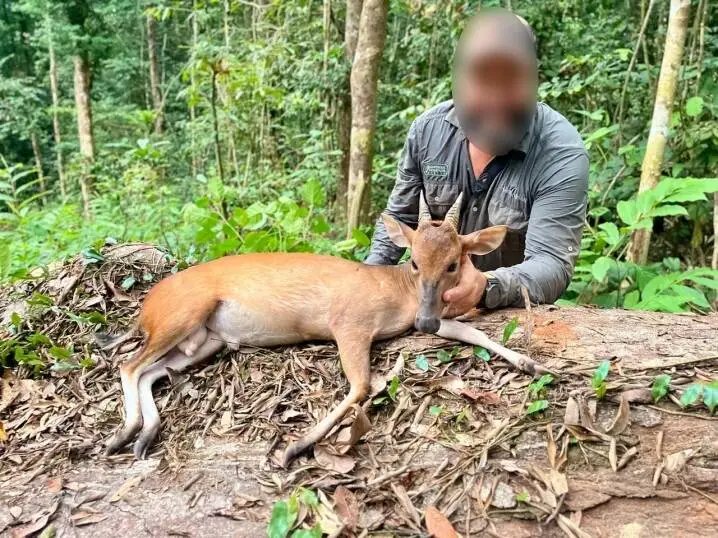
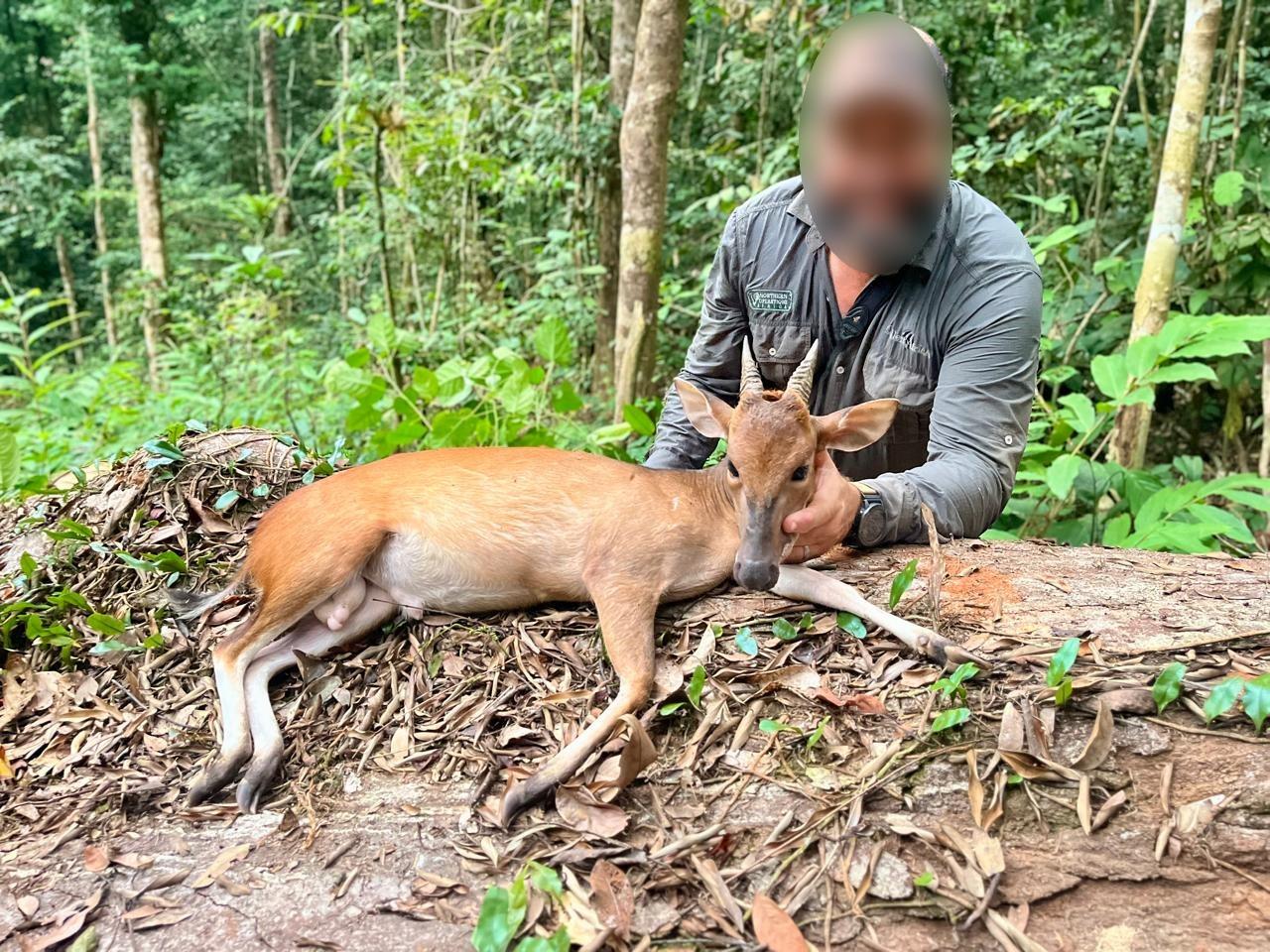
Ogilby’s duiker hunting in Cameroon is not a primary reason most hunters travel to the country, but it represents one of the more specialized opportunities available within a rainforest safari. Most hunters come to Cameroon in pursuit of species such as bongo or forest buffalo, with smaller forest antelope encountered as part of the broader experience.
For American hunters used to structured plains game safaris, this is an important distinction. Cameroon operates very differently. Hunts are built around one primary species, with additional animals taken depending on time in the field, location, and conditions.
For a full breakdown of how these safaris are structured, see our guide to hunting in Cameroon.
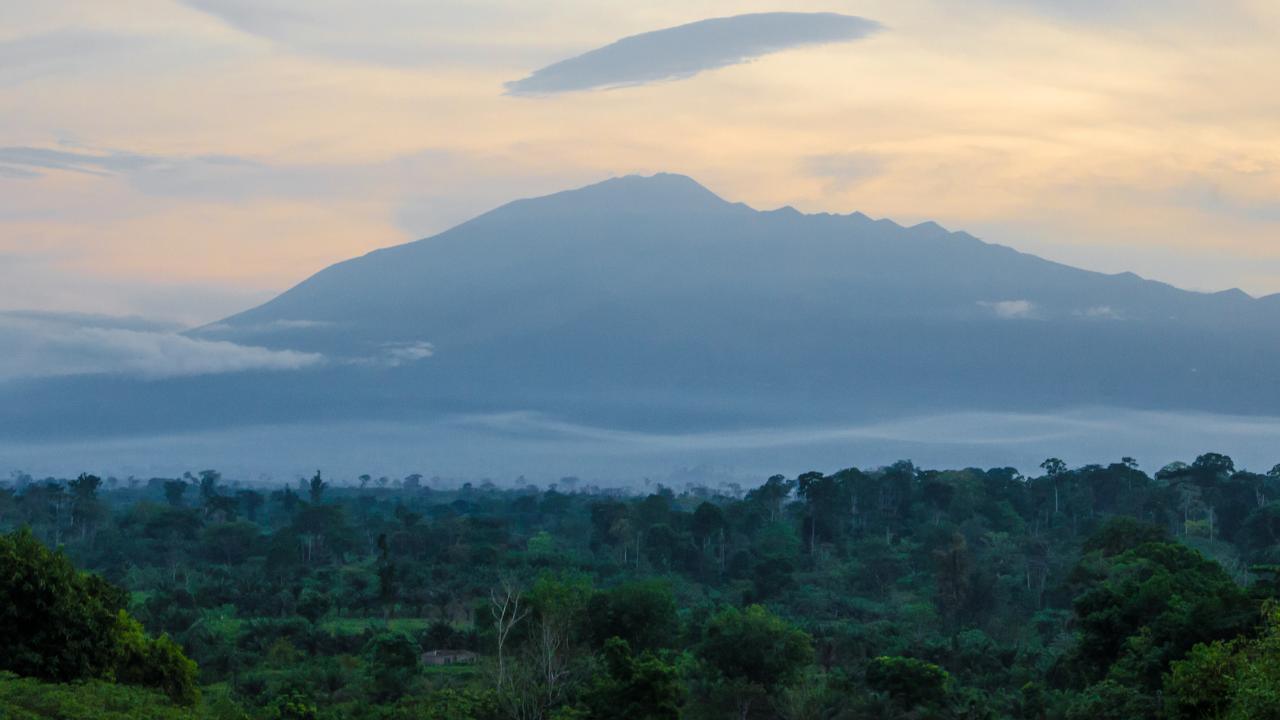
Ogilby’s duiker are found in Cameroon’s dense rainforest regions, primarily in the southern parts of the country where thick vegetation and low visibility define the hunting environment.
They are typically associated with deep forest areas with minimal disturbance, dense vegetation and heavy ground cover, and remote concessions with low hunting pressure. Unlike some other duiker species, Ogilby’s duiker are not encountered consistently across all hunting areas. Their presence depends heavily on the specific concession and habitat conditions. Not all hunting areas in Cameroon offer realistic opportunities for this species, making concession selection an important factor when considering this type of hunt.
Cameroon remains one of the few places where this type of forest hunting is still conducted in large, low-pressure areas, allowing for the possibility of encountering more specialized species like Ogilby’s duiker.
Ogilby’s duiker are not typically pursued as a dedicated target species. Most encounters occur while moving through forest terrain during the course of a broader safari. Hunters may encounter them along forest trails and natural movement paths, near feeding areas within dense vegetation, and during early morning or late afternoon movement.
In rainforest concessions, hunting is conducted on foot, often covering long distances each day in challenging conditions. Encounters are brief and unpredictable. Visibility is extremely limited, and animals often appear suddenly before disappearing into cover.
The likelihood of encountering Ogilby’s duiker depends heavily on time spent in the field, as well as being in the right area where the species is present. Opportunities for this species tend to come later in a safari rather than early, as increased time in the field improves the chances of being in the right place under the right conditions.
Ogilby’s duiker are best viewed as a specialist species rather than a standard opportunity.
They are not commonly encountered, not available in all concessions, and are of interest to hunters focused on forest species diversity.
Compared to more frequently encountered species such as blue duiker hunting in Cameroon, Ogilby’s duiker are less predictable and more dependent on specific habitat conditions. Within the range of duiker species available in Cameroon, they are often considered a niche species — one that may only be encountered under the right combination of time, location, and conditions. Among the lesser-known forest antelope, Ogilby’s duiker are often regarded as one of the more specialized species due to their limited distribution and habitat requirements.
Availability can vary significantly between concessions, and not all operators will have access to areas where this species is present. In practical terms, Ogilby’s duiker should not be viewed as a species most hunters specifically plan for, but rather as a potential addition that may be encountered under the right conditions during a longer rainforest safari.
Most hunters who take Ogilby’s duiker are already on dedicated bongo hunts, where extended time in the forest increases the likelihood of encountering a wider range of forest antelope.
Ogilby’s duiker are well adapted to dense rainforest environments and are difficult to encounter consistently.
Hunters should expect extremely limited visibility, short and unpredictable encounters, few clear shot opportunities, as well as a very realistic possibility of not encountering one at all. Unlike more commonly encountered species, Ogilby’s duiker are not present in all areas, which adds an additional layer of uncertainty to the hunt.
Encounter rates can vary significantly depending on concession, habitat, and local conditions. Even in suitable areas, the chances of encountering this species on a single safari remain low and depend heavily on time spent in the field. Many hunters complete a full safari without encountering this species, even when hunting in suitable areas.
Ogilby’s duiker hunting in Cameroon is best suited to hunters already committed to a rainforest safari who understand that not all species are encountered consistently. It appeals most to those pursuing bongo or other primary forest species, where extended time in the field increases the likelihood of encountering less common animals.
For American hunters in particular, this type of safari requires a shift in expectations, away from structured hunting days toward a more fluid, experience-driven approach. For some hunters, it represents an opportunity to experience a wider range of forest species rather than a specific goal.
This type of hunting also suits those who are comfortable with uncertainty and who value the overall experience of hunting in dense rainforest conditions.
This type of hunting is not well suited to hunters expecting predictable opportunities or a structured safari experience. Ogilby’s duiker should not be viewed as a reliable or repeatable opportunity. Even in suitable areas, encounters are inconsistent and depend heavily on time in the field and local conditions.
Hunters focused on specific outcomes or building a structured species list may find this type of hunting frustrating. Those who approach the hunt with fixed expectations are less likely to appreciate the nature of rainforest safaris.
Ogilby’s duiker are not a primary reason hunters travel to Cameroon, but they represent one of the more specialized opportunities within a rainforest safari. Encounters are uncommon, conditions are demanding, and success is never guaranteed. In many cases, even experienced hunters may not encounter this species during a full safari.
For those who do, it is often the result of time in the field, being in the right area, and taking advantage of a brief and unpredictable opportunity. Understanding how Ogilby’s duiker fit into the broader structure of a Cameroon safari helps set realistic expectations and ensures the experience is approached correctly from the start.
Can you hunt Ogilby’s duiker in Cameroon?
Yes. Ogilby’s duiker can be hunted in Cameroon within regulated rainforest concessions, although availability depends on the specific hunting area.
Is Ogilby’s duiker a primary hunting species?
No. It is considered a specialist or opportunistic species encountered during broader forest safaris.
How difficult is Ogilby’s duiker hunting?
It is challenging due to low visibility, limited availability, and unpredictable encounters.
Search from our range of Hunts across various popular destinations in Africa.

Book Your Hunt