
Bongo, Sitatunga & Forest Elephant Hunting in Cameroon
Booking Season: 2026
Hunt Difficulty: Moderate, Difficult

This is not a sales page.
It is not designed to convince you to book a forest elephant hunt in Cameroon.
And it is definitely not written for first-time Africa hunters.
This page exists to answer a very specific question honestly:
Because for most hunters, the answer is no.
For a broader understanding of what to expect, read our guide to hunting in Cameroon before considering this specific hunt.
Available Forest Elephant Hunts
Bongo, Sitatunga & Forest Elephant Hunting in Cameroon
Booking Season: 2026
Hunt Difficulty: Moderate, Difficult
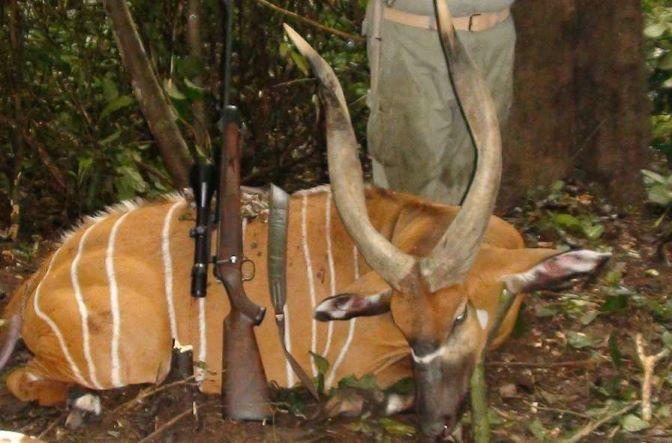
Bongo and Forest Elephant Hunting Safari (13 Days) – Cameroon
Booking Season: 2026
Hunt Difficulty: Difficult
Most hunters researching elephant hunts picture open country, long glassing sessions, and the ability to evaluate ivory at distance.
That mental picture comes from savanna hunts. Forest elephant hunting in Cameroon is the opposite.
You are in dense rainforest where visibility can collapse to just a few yards. There are no long-range decisions, no time to study a bull from a distance, and very little room for adjustment once things start to happen.
You follow tracks. You trust your trackers. And when it comes together, it happens quickly.
This is not a “bigger is better” elephant hunt. It is a hunt defined by pressure, both physical and mental, and by how you handle the moment when it finally arrives.
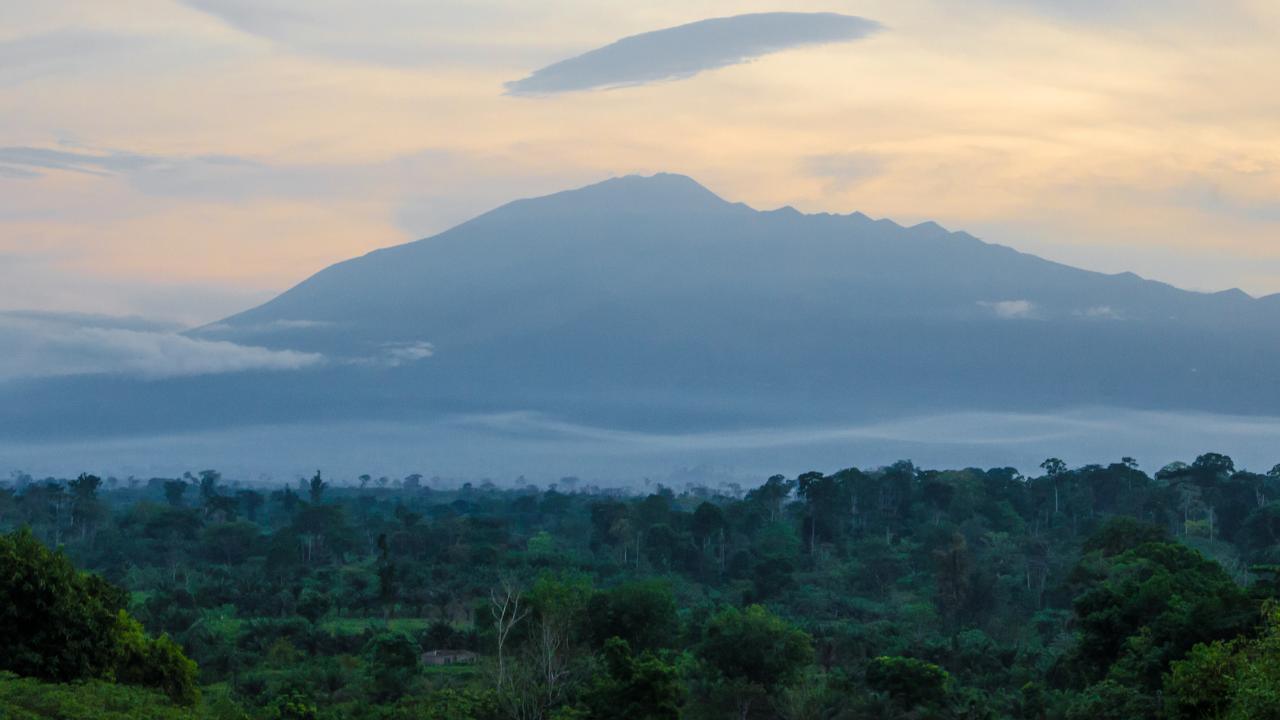
Forest elephant hunting in Cameroon happens in the southeastern rainforest concessions, close to the borders of Central African Republic and Republic of the Congo.
These areas are remote enough that the travel alone begins to filter hunters out. Getting to camp often involves multiple flights followed by long vehicle transfers, sometimes over rough roads that slow everything down.
Once you arrive, the environment takes over. Humidity sits heavy, movement is slower, and even simple tasks require more effort than they would in open country.
This is not a place that adapts to the hunter. The hunter adapts to it.
A forest elephant hunt is built on tracking, and patience.
Trackers will often start by checking natural movement corridors, old logging paths, or feeding areas where elephants pass through. When fresh spoor is found, everything changes. The pace slows, communication drops, and the team begins working carefully through the forest.
Hours can pass like this.
Sometimes the track fades. Sometimes the wind shifts. Sometimes the elephant simply disappears into terrain where following becomes impossible.
And sometimes, after all that effort, it comes together.
At that point, there is no drawn-out setup. You may catch a glimpse of grey through thick cover, hear movement before you see it, or suddenly realize just how close you are.
Decisions are made quickly. Shots are taken at close range. And the margin for error is small. In most cases, shots are taken inside 20 to 30 yards, often through gaps in thick vegetation where visibility can disappear just as quickly as it appears.
This is where expectations need to be adjusted early.
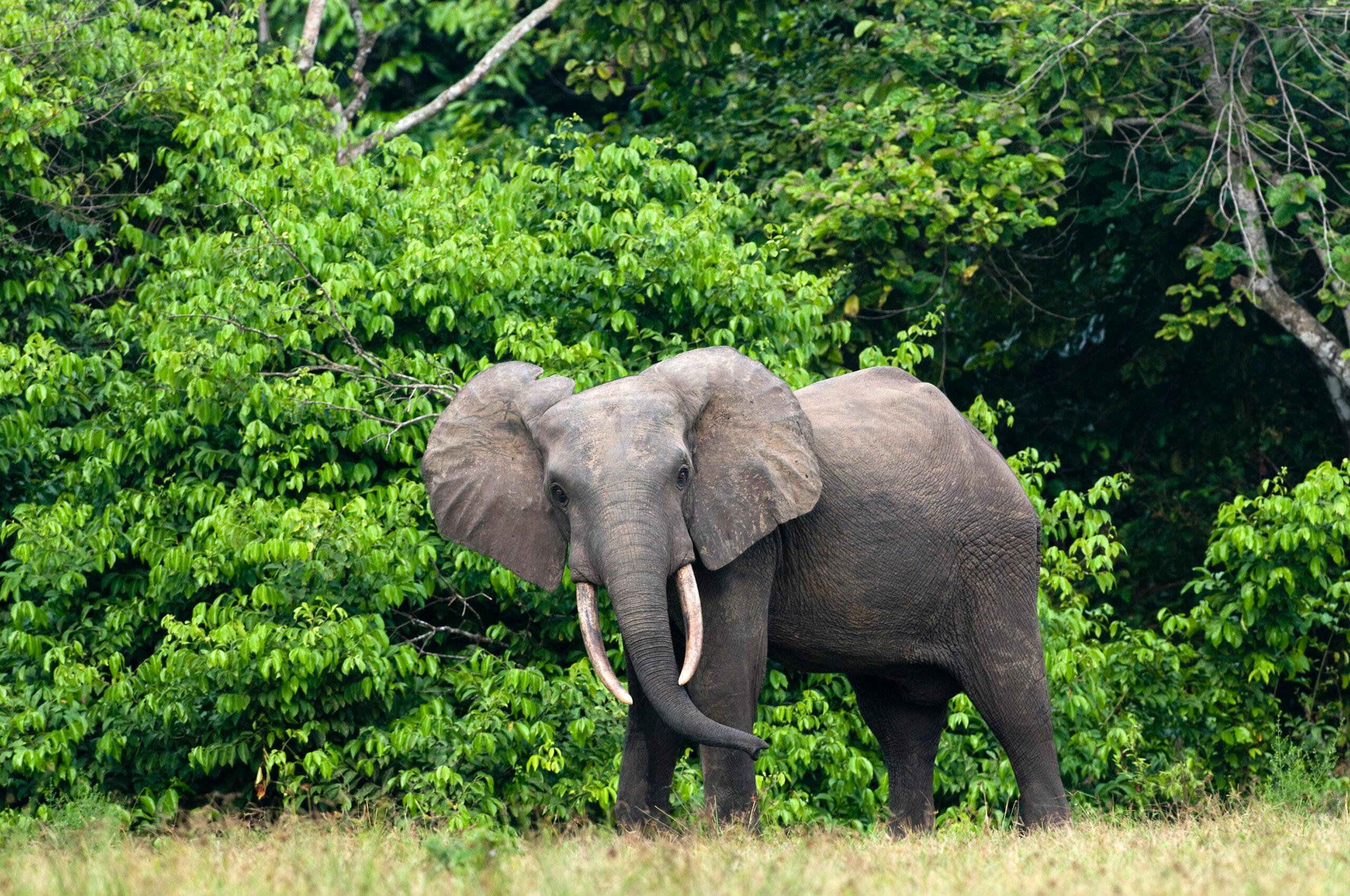
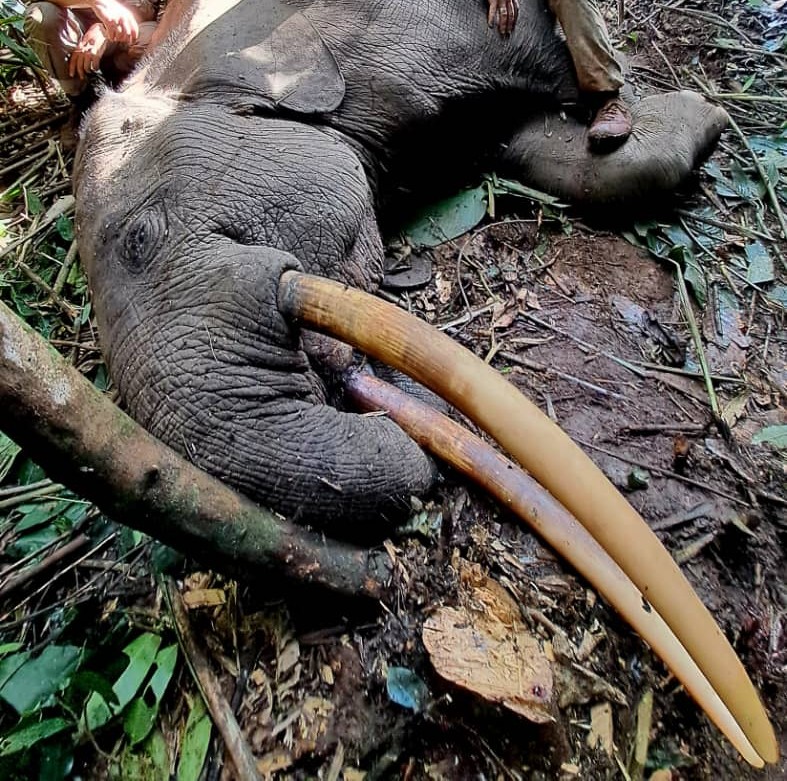
The African forest elephant is smaller than its savanna counterpart, and its ivory reflects that. Tusks are typically thinner, straighter, and far more difficult to judge in dense vegetation.
You are not evaluating a bull at 80 yards with time to compare shape and weight.
You are often making a decision based on a brief, partially obscured view, sometimes seconds, not minutes.
If your priority is maximizing ivory size, you should be looking at other elephant hunts in Africa.
If your priority is the experience, the tracking, the pressure, the closeness of the encounter, then this hunt starts to make sense.
One of the biggest mistakes hunters make is focusing only on the hunt itself and not on what comes after.
Forest elephant hunting in Cameroon operates under strict quotas and international regulations. Exporting trophies involves CITES permitting, and for hunters from the United States and Canada, import rules can complicate the process further.
Timelines are rarely short. Paperwork needs to be correct. And delays are not uncommon.
This is not a detail to figure out later, it is part of the decision from the start.
There are more efficient elephant hunts in Africa. This is not one of them.
The difficulty comes from a combination of factors that build on each other. The terrain limits visibility, which increases pressure during the encounter. The climate adds fatigue, which affects decision-making. And the nature of tracking in dense forest means that opportunities are never guaranteed, no matter how experienced the team is.
Even experienced dangerous game hunters are often surprised by how quickly things escalate once an elephant is located.
In open country, you manage distance. In the forest, distance disappears.
Most hunters do not travel to Cameroon for forest elephant as a single-species hunt.
In reality, these safaris are almost always built around the rainforest ecosystem itself. Species like bongo, sitatunga, and forest buffalo are not just “add-ons” — they are part of how the entire hunt is structured.
This matters more than most hunters realize.
The terrain, the pace, and the difficulty of tracking in dense forest mean that putting all your focus on one animal is rarely the most effective approach. Even on a well-run safari, opportunities can be limited, and days can pass without a clear encounter.
By building a hunt around multiple rainforest species, you are not just increasing your chances of success, you are aligning with how hunting in this environment actually works.
It also changes the psychology of the safari.
Instead of waiting for a single moment, the hunt becomes a broader experience shaped by movement through the forest, adapting to conditions, and taking opportunities as they develop across different species.
For many experienced hunters, this is what ultimately justifies the trip.
Not just the chance at a forest elephant , but the opportunity to hunt one of the most demanding ecosystems in Africa, properly and without shortcuts.
Most forest elephant hunts in Cameroon are not built around a single species.
Animals like bongo and sitatunga are often part of the same safari, and in many cases, they become just as important as the elephant itself. Hunting these species requires the same patience, the same ability to move quietly through dense cover, and the same acceptance that opportunities may be limited.
For hunters who understand this environment, pursuing bongo hunting or sitatunga alongside elephant is often what makes the entire safari worthwhile.
This is not a short or casual safari.
Forest elephant hunts typically run between two and three weeks, and that time is necessary. The size of the concessions and the nature of tracking mean that success depends on time in the field.
Even on a well-run safari with experienced trackers and a strong concession, success is never guaranteed and can depend heavily on conditions, timing, and how the hunt unfolds day by day.
Costs reflect that reality. Logistics, staffing, anti-poaching presence, and limited quotas all contribute to making these hunts expensive compared to more accessible destinations.
You are paying for access to a remote system, not convenience.
This hunt filters hunters naturally.
It tends to suit those who already understand Africa, hunters who have spent time in the field, who are comfortable around dangerous game, and who don’t expect the environment to adapt to them.
In Cameroon, things work differently. The terrain dictates the pace, the conditions are often uncomfortable, and success is never guaranteed — no matter how experienced the team is.
Hunters who appreciate this tend to enjoy Cameroon the most. They are usually the ones who value the process itself: long hours tracking, reading sign, adjusting to changing conditions, and staying patient when things don’t come together quickly.
They are not looking for efficiency. They are looking for something that feels earned.
On the other hand, this hunt is rarely a good fit for first-time Africa hunters, or for anyone expecting a structured, predictable safari. If your expectations are built around comfort, consistency, or maximizing opportunity, there are better destinations to consider.
Cameroon does not try to be accommodating.
It rewards the hunter who arrives prepared, and exposes the one who doesn’t.
Forest elephant hunting in Cameroon is not designed to impress you.
It does not offer easy opportunities, predictable results, or the kind of comfort many modern safaris provide. It asks more from the hunter — physically, mentally, and in terms of expectations.
You may spend days following tracks without seeing the animal. You may get one real opportunity after hours of effort. And when it happens, it will likely be fast, close, and final. That is the reality. For hunters, that is exactly what they are looking for, a hunt that feels earned, not arranged.
For others, it becomes clear that there are better options elsewhere. Larger ivory can be found in more open country. Easier hunts exist with shorter durations and more consistent outcomes.
Cameroon does not try to compete with those destinations. It offers something different. And whether that difference is worth it depends entirely on the kind of hunter you are, and the kind of hunt you are actually looking for.
Search from our range of Hunts across various popular destinations in Africa.

Book Your Hunt