Bongo and Forest Elephant Hunting Safari (13 Days) – Cameroon
Booking Season: 2026
Hunt Difficulty: Difficult

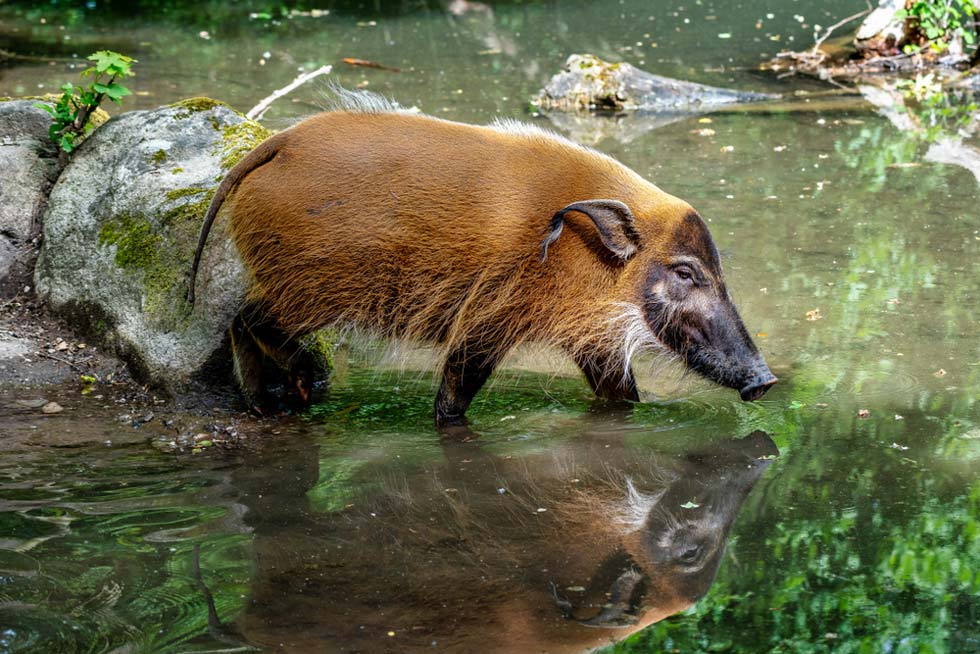
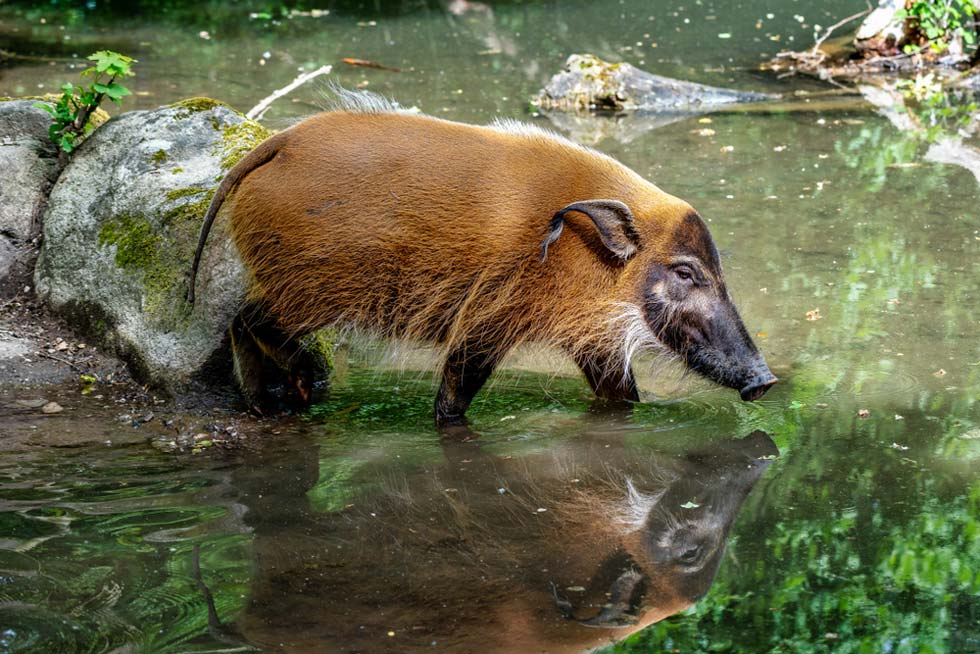
Hunting Red River Hog in Cameroon is one of the most unique and least understood hunting experiences in Africa.
This is not a typical plains game hunt. It takes place in dense forest and transitional cover, where visibility is limited, movement is unpredictable, and shot opportunities happen fast. Most hunters encounter red river hog as part of a broader safari — but those who understand the hunt often consider it one of the most memorable species in Central Africa.
If you’re researching Red River Hog hunting in Cameroon, this guide breaks down exactly what to expect, including cost, difficulty, hunting methods, and whether it’s worth adding to your safari.
Available Red River Hog Hunts
Bongo and Forest Elephant Hunting Safari (13 Days) – Cameroon
Booking Season: 2026
Hunt Difficulty: Difficult
Hunting in Cameroon, Lord Derby Eland, Lion & More
Booking Season: 2026
Hunt Difficulty: Difficult
A red river hog hunt in Cameroon is best understood as a situational, experience-driven hunt, not a high-volume opportunity.
Difficulty: Moderate to high, driven by visibility, timing, and shot execution rather than physical endurance
Success Rate: Moderate, heavily dependent on conditions, bait activity, and patience
Hunt Length: Typically 10–14 days as part of a broader safari
Average Cost: $20,000 – $45,000+ total safari investment
Best Time to Hunt: January through April, when conditions are drier and movement is more predictable
Hunt Style: Baiting and ambush in dense forest, with occasional opportunistic encounters
What’s important to understand is that this is not a “numbers” hunt. You are not evaluating multiple animals per day or creating repeated shot opportunities. Instead, the hunt is built around positioning, timing, and being ready when a brief opportunity presents itself. For hunters used to open-country safaris, this shift in pace and environment is often what makes the experience so memorable.
Cameroon stands out as one of the few places in Africa where red river hog can be hunted consistently in true, undisturbed habitat. This is not a marginal or incidental species here, it is part of a functioning ecosystem that supports regular movement and realistic hunting opportunities.
What matters on the ground:
Extensive, continuous forest systems
These areas allow red river hog to behave naturally, following established feeding patterns and travel routes without artificial pressure.
Large, unfenced concessions
You are hunting animals that are not contained or managed, which directly affects how they move and how the hunt unfolds.
Low hunting pressure
Compared to more developed safari regions, these areas see fewer hunters, which keeps animals wary and encounters more authentic.
Integration with high-value species
Red river hog hunts are often conducted alongside species like bongo and buffalo, meaning you are already operating in prime, game-rich areas.
Most hunts take place in dense forest and transitional edge habitat, where visibility is limited and movement happens along predictable but narrow corridors. This is what many hunters don’t fully appreciate: You are not searching for animals across open ground, You are intercepting movement in a controlled environment
That distinction is critical. It shifts the hunt from one of distance and visibility to one of timing, setup, and execution — and that is exactly why Cameroon remains one of the most reliable places to pursue this species properly.
Red river hog hunting in Cameroon is built around controlled setups, patience, and timing, not covering ground. This is one of the biggest adjustments for hunters coming from plains game safaris. Most hunts follow a structured process that unfolds over several days.
Your PH and trackers begin by identifying active areas, feeding zones, water sources, and established travel routes. From there, bait sites are placed strategically and monitored to confirm consistent movement patterns. Once activity is confirmed, hunts are conducted from carefully positioned setups, typically during early morning or late afternoon when movement increases.
What makes this hunt different is the environment you are operating in:
Visibility is often under 50 yards
Animals may appear silently, with little warning
Shot opportunities are close, but often partially obscured
Encounters develop quickly and without buildup
You are not stalking into position over distance. You are waiting for a controlled opportunity and reacting immediately when it presents itself. The entire encounter, from first sight to shot, may only a few seconds. For many American hunters, this is the defining shift: Less movement, more precision. Less time to decide, more need to execute
Red river hog hunting in Cameroon is not physically exhausting, but it is technically and situationally demanding. The difficulty does not come from distance or terrain covered. It comes from the conditions you are hunting in.
Key challenges include:
Dense, low-visibility environments
Short, often imperfect shot windows
Animals that move quickly through cover
The need to wait for the right moment rather than force it
You are not walking miles looking for opportunities. You are managing timing, positioning, and readiness in a controlled environment where things happen quickly. This is where many hunters misjudge the hunt. It feels slower, until it isn’t. Opportunities can take time to develop, but when they do, they require immediate decision-making and clean execution.
That combination is what makes the hunt deceptively difficult.
The biggest misconception is that this is an easy add-on species that “just happens” during a safari. In reality, red river hog require specific conditions and deliberate effort. What many hunters underestimate is how different the shot scenario is compared to open-country hunting.
You are often dealing with:
Partial visibility through brush
Animals moving through gaps rather than standing still
Limited time to identify the animal and take the shot
Angles that are not always ideal
This creates pressure, not from physical fatigue, but from decision speed and shot execution. Another common mistake is underestimating patience. You may sit multiple sessions without an opportunity, then suddenly have one appear with no warning. Hunters who stay focused and ready tend to succeed. Those expecting a slower setup often miss their chance.
Red river hog hunting in Cameroon is almost never structured as a standalone safari. The reality is that these hunts take place in remote, high-cost concessions, where the logistics, travel, staff, anti-poaching, and camp operations, are built around multi-species safaris. Because of this, red river hog are typically pursued as an add-on species, alongside animals such as bongo, buffalo, or plains game. That’s not a limitation, it’s actually part of the value.
You are already hunting in prime habitat with experienced professional hunters, which creates the opportunity to pursue red river hog without needing a separate trip.
Success rates for red river hog hunting in Cameroon are best described as moderate and highly condition-dependent. This is not a guaranteed hunt, and it should not be approached with that expectation. Your chances of success are influenced by several practical factors, including consistent activity at bait sites, weather and seasonal conditions, and how much time is available within your overall safari. Just as important is your ability to respond when an opportunity presents itself.
Even in well-managed areas, you should expect:
Limited shot opportunities
Brief, fast-moving encounters
The possibility of multiple sessions without seeing a shootable animal
This is normal for this type of hunting. What improves your chances is not pushing harder, but staying consistent. Hunters who remain patient, follow their PH’s guidance, and stay mentally engaged during every setup tend to perform better when the moment comes.
In most cases, success comes down to being ready for a short window after a long period of waiting.
The key to understanding this hunt is knowing how it fits into your overall safari. Red river hog is not a species you typically build a hunt around. It does not offer high volumes of opportunities, and it is not structured to produce repeated chances. Instead, it should be viewed as part of a broader, experience-driven safari.
This hunt is not about:
Maximizing numbers
Creating controlled or repeatable shot opportunities
Focusing the entire safari on a single species
Instead, it’s about:
Taking advantage of the right opportunity when it presents itself
Adding a unique and very different hunting experience to your safari
Being prepared to act quickly when the moment comes
For most experienced hunters, success is not measured only by whether a shot is taken. It’s measured by the opportunity to hunt this species properly, in its natural environment, under real conditions.
When viewed that way, red river hog becomes less about outcome, and more about the quality of the experience itself.
Understanding the difference between red river hog hunting and traditional plains game hunting is critical, especially for hunters traveling to Cameroon for the first time.
While both are technically classified as plains game, the experience in the field is completely different. Plains game hunting typically involves more open terrain, greater visibility, and a higher volume of encounters. Hunters are often moving, glassing, and evaluating multiple animals over the course of a day. Red river hog hunting operates under a different set of conditions entirely.
You are working in dense cover where visibility is limited, movement is controlled, and opportunities are far less frequent. When they do occur, they develop quickly and require immediate execution. You are not comparing animals or waiting for the “perfect” setup. You are responding to a single, often brief opportunity, where timing and positioning matter more than anything else. For American hunters, this is the biggest adjustment: You are trading volume for experience and replacing repetition with precision
Once that shift in expectation is understood, the hunt becomes far more logical, and far more rewarding.
Red river hog are rarely the primary reason hunters travel to Cameroon, but they often become one of the most worthwhile additions to the safari. Most hunts are structured as part of a larger, multi-species safari, which means the majority of your cost is already committed before red river hog are even considered.
Typical cost structure:
Daily rates: $1,500 – $2,500
Trophy fee: $1,500 – $3,500
Total safari investment: $20,000 – $45,000+
But focusing only on price misses the point. The real value of red river hog is opportunity, not cost. You are already hunting in remote, high-quality concessions — often pursuing species like bongo or buffalo. Adding red river hog allows you to maximize that environment without significantly increasing your overall spend.
There are very few places in Africa where you can access this type of forest hunting under these conditions. Because of that, red river hog are often considered one of the best: Experience-per-dollar additions to a Central African safari
Not because they are expensive —
but because they add something completely different to the hunt.
A mature Red River Hog is not judged the same way as antelope — and this is something many first-time hunters misunderstand. There is no focus on inches or formal scoring systems. Instead, a quality trophy is evaluated based on overall character, maturity, and visual impact.
The key indicators include:
Tusks → length, thickness, and outward curve
Facial development → pronounced features and structure
Coloration → deep red coat with strong contrast markings
Body maturity → full size, heavier build, and presence
What experienced professional hunters prioritize most is age and development, not just appearance in isolation. In many cases, a slightly smaller but fully mature boar is far more desirable than a younger animal with cleaner features. Another important factor is how the animal is encountered. You are rarely comparing multiple hogs side by side. Most opportunities happen quickly, often in low visibility, which means the decision is made in seconds, not minutes.
That’s why trust in your PH matters, they are often judging maturity before you even clearly see the animal. Ultimately, this is not a measurement-driven trophy.
It is one defined by character, rarity, and the experience of the hunt itself.
One of the biggest advantages of hunting in Cameroon is the ability to combine red river hog with a range of high-value West African species. Most hunters do not travel to Cameroon for a single animal, they build a multi-species safari that takes advantage of both forest and savanna environments.
Common combinations include:
Bongo
Savannah buffalo
Roan antelope
Western hartebeest
What makes this unique is not just the species list, it’s the diversity of hunting conditions within a single safari.
You may:
Hunt dense forest in the morning
Move into more open savanna later in the hunt
Shift between baiting, tracking, and opportunistic setups
This creates a more complete experience compared to single-environment safaris in other parts of Africa. For many American hunters, this is a major advantage. Instead of booking multiple trips, you are able to pursue several challenging and uncommon species within one well-structured safari. Red river hog fits naturally into this model, not as the primary focus, but as a high-value addition that expands the overall experience.
Whether red river hog hunting in Cameroon is worth it depends entirely on what you value in a hunt. If your goal is a primary, high-profile trophy or a safari built around frequent shot opportunities, this will likely not meet your expectations. But that’s not what this hunt is designed for. Red river hog adds a completely different dimension to a Cameroon safari, one that most hunters don’t fully appreciate until they experience it.
It offers a shift away from open-country hunting into dense forest conditions, where encounters are closer, faster, and far less predictable. Success is not driven by volume, but by timing and execution. More importantly, this is a hunt that fits into the broader structure of a Central African safari.
You are already investing in:
Remote concessions
Experienced professional hunters
Access to species like bongo and buffalo
Adding red river hog is less about cost, and more about maximizing the opportunity while you are there. For experienced hunters, it becomes one of the most memorable parts of the trip, not because it is the hardest or most prestigious, but because it is different, fast-paced, and highly situational.
If you approach it with the right expectations, it is often one of the highest-value additions you can make to a Cameroon safari.
How difficult is red river hog hunting in Cameroon?
Red river hog hunting is generally considered moderate to challenging, but not for the same reasons as plains game. The difficulty comes from limited visibility, fast-moving animals, and very short shot windows. You are often shooting at close range, under pressure, with little time to adjust. It is less about physical endurance and more about timing, awareness, and quick execution.
Is red river hog hunting done at night?
Most hunts take place during early morning or late afternoon, when activity levels are higher. In some areas, hunting may extend into low-light conditions depending on regulations and outfitter practices, but it is not typically a full night hunt in the same sense as traditional predator hunting. Your PH will determine timing based on recent movement and conditions.
Can you hunt red river hog as a standalone safari?
In most cases, no. Red river hog are typically hunted as part of a multi-species safari in Cameroon, alongside animals such as bongo, buffalo, or plains game species. Because of the logistics and cost of operating in these remote areas, it is far more practical, and more valuable to include them as part of a broader hunt rather than building a trip around them alone.
What caliber is recommended for red river hog?
Common medium calibers such as .270, .308, or .30-06 are more than sufficient for red river hog hunting. Shot placement is far more important than caliber choice, especially given the close-range and often fast-moving nature of the shot opportunity. Many hunters prefer a rifle they are extremely comfortable with, as reaction time is often limited.
Are red river hog dangerous?
Red river hog are not classified as dangerous game, but they can be aggressive if wounded or cornered. Like most wild pigs, they are tough animals with strong survival instincts. Proper shot placement and following your PH’s guidance are important to ensure a clean and controlled outcome.
What is the best time of year to hunt red river hog in Cameroon?
The most consistent hunting conditions are typically between January and April, when drier conditions improve access and make animal movement more predictable. During this period, bait sites tend to be more effective, and visibility conditions improve slightly compared to the greener early season.
How far are most shots when hunting red river hog?
Most shots are taken at close range, often between 20 and 60 yards. Because of dense vegetation, shots may be partially obscured, and animals are often moving when the opportunity presents itself. This makes preparation and quick target acquisition important.
Search from our range of Hunts across various popular destinations in Africa.
Book Your Hunt