Buffalo Hunting & Roan in the Savannah Cameroon
Booking Season: 2026
Hunt Difficulty: Difficult

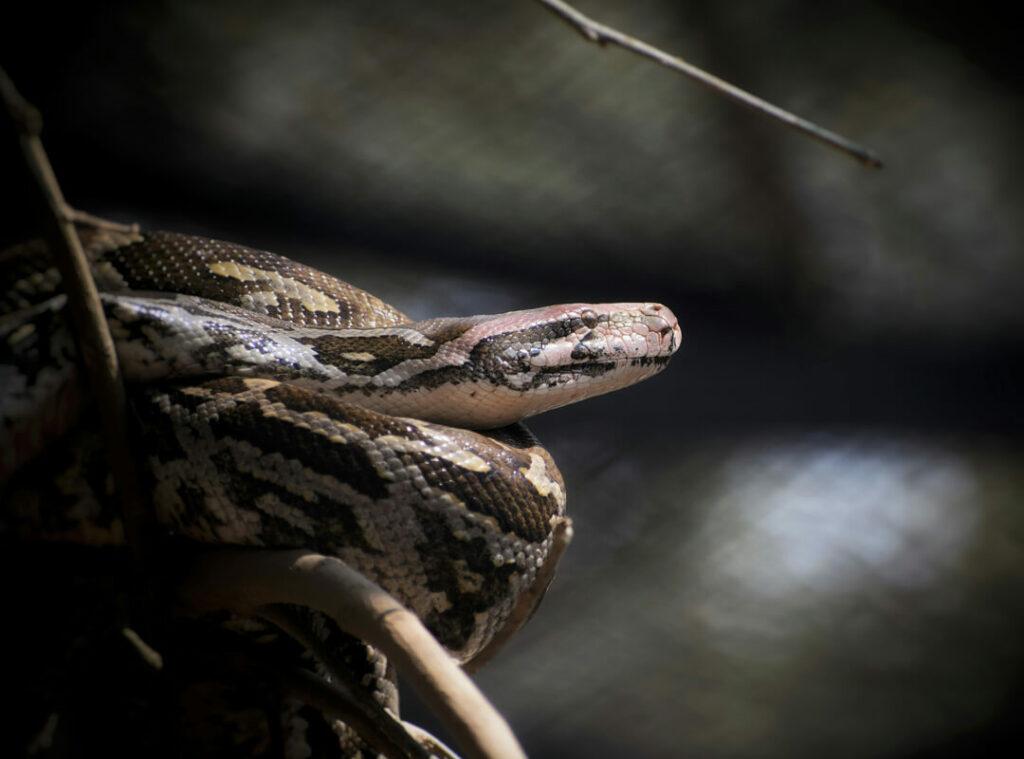
Central African rock python hunting in Cameroon is not a common or widely structured safari objective, but it represents one of the more unusual and specialized opportunities available within certain rainforest hunting areas. Most hunters traveling to Cameroon are focused on primary species such as bongo or forest buffalo, with encounters involving species like python occurring only under specific conditions.
For American hunters used to structured plains game safaris, this is an important distinction. Cameroon operates very differently. Hunts are built around one primary species, with additional opportunities developing depending on time in the field, location, and circumstances.
For a full breakdown of how these safaris are structured, see our guide to hunting in Cameroon.
Available African Rock Python Hunts
Buffalo Hunting & Roan in the Savannah Cameroon
Booking Season: 2026
Hunt Difficulty: Difficult

Hunting in Cameroon, Lord Derby Eland, Lion & More
Booking Season: 2026
Hunt Difficulty: Difficult
Central African rock python are found in parts of southern Cameroon where dense rainforest, river systems, and wetland environments create suitable habitat. These environments are very different from the more open savanna regions found in northern Cameroon and play a major role in how and where this species may be encountered. They are typically associated with Riverbanks and slow-moving water systems, Swampy or low-lying forest areas, and dense vegetation with limited visibility.
These conditions are not evenly distributed across all hunting areas. Python are far more likely to be encountered in concessions that include permanent water sources, floodplains, or thick riverine vegetation. Unlike traditional game species, python are not distributed in predictable hunting zones and are not consistently encountered across concessions. Their presence depends heavily on habitat, seasonal conditions, and local prey availability.
This means that not all hunting areas in Cameroon offer realistic opportunities for this species. In many cases, even within suitable regions, encounters remain highly dependent on time spent in the right type of terrain. This type of opportunity is largely limited to West and Central Africa, with Cameroon being one of the more accessible destinations where these encounters may occur.
In most safaris, opportunities arise only in specific areas where suitable conditions exist, and even then, sightings are uncommon and unpredictable.
Central African rock python are not actively tracked in the same way as larger game animals. Most opportunities occur opportunistically during the course of normal hunting movement through suitable habitat.
Hunters may encounter them while moving through dense forest or along game paths, near water sources, riverbanks, or swampy areas, or during periods of increased activity linked to environmental conditions. Encounters are rare and typically brief. In many cases, hunters may only become aware of a python at very short range, requiring quick decision-making.
In some areas, local trackers may identify signs of python activity or suitable habitat, but there is no standardized or reliable method of locating them consistently. Unlike structured hunts, there is no predictable pattern or daily expectation of encountering this species. Opportunities tend to develop unexpectedly and depend heavily on time in the field, local knowledge, and being in the right place at the right time. In many cases, encounters are more likely later in a safari, once significant time has been spent in suitable habitat.
Central African rock python should not be viewed as a primary or reliable hunting objective in Cameroon. Encounters are uncommon, highly situational, and depend on a combination of habitat, timing, and time spent in the field rather than any structured hunting approach. Unlike traditional game species, python are not actively targeted in a consistent way. Their presence is tied closely to specific environmental conditions, and even in suitable areas, there is no guarantee of encountering one during a safari.
Most hunters do not travel to Cameroon specifically for python. Instead, it is best understood as a highly opportunistic species that may be taken if encountered while pursuing other primary animals. In reality, the majority of successful encounters occur during extended time in the field on dedicated bongo hunts, where hunters are moving through the type of terrain where python may be present. Even then, opportunities remain unpredictable and should be viewed as a possibility rather than an expectation.
For most hunters, this is not a species that influences the decision to book a safari, but rather an uncommon possibility that adds to the overall experience. For this reason, Central African rock python are best approached as a secondary or incidental opportunity within a broader rainforest safari, rather than a species to plan a hunt around.
Central African rock python are extremely unpredictable and among the most difficult species to encounter during a Cameroon rainforest safari. Unlike traditional game animals, there is no reliable method of locating or tracking them consistently.
Difficulty is not defined by hunting skill alone, but by a combination of timing, environmental conditions, and time spent in suitable habitat. Even experienced hunters may spend an entire safari in ideal terrain without encountering a python. Encounters, when they do happen, are typically brief and unexpected. There is no pattern to when or where they will appear, and opportunities often come without warning, requiring immediate awareness and quick decision-making.
Unlike species such as bongo or forest buffalo, where structured hunting approaches improve success rates over time, python are largely independent of hunting pressure or tracking ability. Success depends far more on being in the right place under the right conditions than on any repeatable method. For this reason, Central African rock python hunting should be viewed as highly uncertain. Even under good conditions, the likelihood of encountering one remains low, and hunters should approach the opportunity with realistic expectations from the outset.
Central African rock python hunting in Cameroon is best suited to hunters who are already committed to a rainforest safari and understand that opportunities for this species are entirely situational rather than planned.
It tends to appeal most to those with a specific interest in unusual or less traditional African game, particularly hunters who value the unpredictability of the experience over structured outcomes. In many cases, it is not about targeting a specific animal, but about being present in the right environment long enough for rare opportunities to develop. For American hunters in particular, this type of hunting requires a shift away from the structured, outcome-driven approach common in plains game safaris. Instead, success is defined more by time in the field and exposure to the environment than by a specific result.
Hunters who approach this type of safari with flexibility and realistic expectations tend to get the most out of it, while those focused on guaranteed opportunities or specific targets are less likely to find it rewarding.
This type of hunting is not well suited to hunters expecting a structured or predictable experience. There is no consistent pattern to encounters, and no reliable way to plan specifically for this species within a fixed timeframe. It is also not appropriate for those looking to target a specific animal with a high likelihood of success. Central African rock python should not be approached as a guaranteed or even probable outcome, and hunters focused on certainty or building a structured plan around a specific species may find this frustrating.
Hunting in southern Cameroon’s rainforest often involves long hours on foot in dense, humid environments, uneven terrain, and challenging conditions. Reaching the types of areas where these encounters may occur typically requires a reasonable level of mobility and endurance. It may also not be a good fit for hunters who are uncomfortable around snakes. Encounters, when they happen, are often at close range and can be sudden, which requires a level of composure that not all hunters are comfortable with.
Finally, there is no single standardized approach to equipment or shooting scenarios for python. Opportunities tend to occur at close range and in dense vegetation, and the method used can vary depending on the situation, terrain, and professional hunter’s approach. Hunters expecting a clearly defined or repeatable setup may find this aspect of the hunt unpredictable.
Central African rock python are not a primary reason hunters travel to Cameroon, but they represent one of the more unusual and least predictable possibilities within a rainforest safari. Their presence adds a different dimension to the experience, one that is not structured, planned, or guaranteed.
Encounters are rare, unpredictable, and entirely dependent on conditions. For those who do encounter one, it is typically the result of time in the field, local knowledge, and being in the right place at the right moment rather than any deliberate hunting approach. What makes this opportunity unique is that it falls outside the normal expectations of an African hunt. Unlike traditional game species, there is no clear strategy, no repeatable method, and no reliable way to increase success beyond spending time in suitable habitat.
For some hunters, this uncertainty is exactly what makes it appealing. It becomes part of the broader experience of hunting in Cameroon’s rainforest — where not every outcome is controlled, and where rare encounters can happen without warning.
Understanding the role of Central African rock python within a Cameroon safari helps set realistic expectations from the start and ensures the hunt is approached with the right mindset. It is not a species to plan around, but one that, if encountered, becomes a memorable and unexpected part of the overall safari.
Can you hunt Central African rock python in Cameroon?
Yes, but opportunities are rare and typically occur opportunistically during broader rainforest safaris.
Is python hunting a primary safari objective?
No. It is not structured as a primary hunt and should not be planned as such.
How likely are you to encounter a python?
Encounter rates are very low and depend heavily on environmental conditions and time spent in the field.
Search from our range of Hunts across various popular destinations in Africa.

Book Your Hunt