
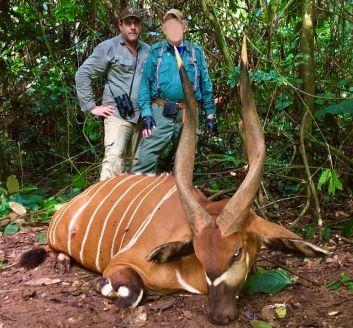
A hunter accustomed to open country usually wants to get closer. Two hundred yards becomes one hundred. One hundred becomes fifty. With every step, the shot should become easier.
Cameroon’s rainforest can turn that logic on its head.
An animal may be ten yards away and completely hidden. The hunter can hear branches moving, the trackers may know approximately where it is standing, and dogs may be barking only a few steps ahead. None of that means there is a shot. Between the rifle and the animal is a wall of leaves, vines and branches with no opening large enough for a bullet.
This is what separates rainforest Hunting in Cameroon from hunting in Africa’s open savanna. Distance stops being the concern. The challenge becomes seeing enough of the animal, identifying it correctly and finding a clear path through the vegetation before the opportunity disappears.
A bongo provides one of the clearest examples. The trackers may have followed the spoor of what they believe is a mature bull, but the PH still needs to confirm the animal. At close range, the hunter may see nothing more than a patch of orange hide moving behind the vegetation. The horns may remain hidden, the body angle may be unclear and there may be no way to tell exactly what lies between the muzzle and the animal.
The spoor, its size and the way the animal is travelling can tell the hunting team a great deal. It can give them good reason to continue the track and prepare for an encounter. It cannot replace seeing enough of the bongo to make the decision.
Moving a few feet in search of a better angle may expose the hunter. Staying still may mean watching the only opportunity disappear without ever seeing the horns.
In Cameroon, ten yards may be the closest shot a hunter has ever faced. It may also be one of the most difficult.
Ten Yards Means Something Different in Cameroon
In open country, a hunter can usually see what lies between him and the animal. A branch, patch of grass or bush can be identified before the rifle comes up. In Cameroon’s rainforest, ten yards may contain several layers of vegetation, and each one can hide a different part of the animal.
The first movement might be a leaf shaking or a vine being pushed aside. A section of orange hide may appear and disappear. The hunter knows the animal is there, but he may still be unable to find the shoulder, confirm its position or determine which direction it is facing.
The temptation is to treat close range as permission to shoot through the cover. It is not. Responsible hunting requires the hunter to identify the animal positively, know what lies between the rifle and the target and understand what is behind it. A bullet may be deflected by a branch that is difficult to see in the poor light, while a small opening through the first layer of leaves may be blocked farther ahead.
Even if the bullet reaches the animal, it may pass through and continue into vegetation the hunter cannot see beyond. The hunter therefore needs more than a glimpse of orange hide and a gap in the nearest leaves. He needs a clear path to the correct animal, a clearly identified aiming point and reasonable confidence about where the bullet will travel after the shot.
Low light beneath the canopy makes the problem worse. Horns can disappear against dark vegetation, shadows can hide the angle of the body and the animal’s outline may never become complete. Even when the PH and trackers believe they have followed a mature bull, a glimpse of hide is not enough to confirm what is standing ahead.
Moving for a better angle carries its own risk. One step may open a narrow shooting lane, but it can also move a branch, catch a vine or place the hunter where the animal can see him. At ten yards, there is little time between gaining a view and losing the opportunity completely.
The hunter may have closed the entire distance successfully and still be forced to lower the rifle. In Cameroon’s rainforest, that is not a failed stalk. It is what happens when being close and having a shot are two different things.
The Trackers See a Forest the Hunter Doesn’t
To the visiting hunter, the ground may look untouched. Leaves cover the forest floor, roots cross one another and many animals may have used the same narrow trail. The tracker sees disturbances that the hunter may not yet know how to recognize.
A leaf turned over may expose a lighter surface beneath it. Mud pressed from the edge of a track may still be damp. A bent stem, scuffed root or broken strand of vegetation can help show where an animal passed and how recently it was there. None of these signs means much on its own. Read together, they can allow an experienced tracker to follow an animal through country that appears to hold no spoor at all.
The hunter may not even realize that the tracking team has stopped. A tracker may crouch over a mark partly hidden beneath the leaves, look several yards ahead and then move to one side in search of the next sign. When the spoor disappears, the team may spread out until someone finds where the animal changed direction or left the easier ground.
This is not guesswork, although it can look that way to someone unfamiliar with the forest. The trackers are comparing the direction of travel, the condition of the spoor and every disturbance ahead, no matter how small. They may disagree, return to the last certain sign and examine the ground again before continuing.
Their value becomes even clearer when the animal is close. The trackers may notice that the spoor is fresher, hear movement the hunter misses or recognize that the animal has slowed, turned or begun circling. Their pace changes. Voices drop. Hand signals replace conversation, and each person becomes more careful about where he places his feet.
The tracker can bring the hunting party to within yards of the animal, but he cannot make the vegetation open. He may know that the bongo is standing just ahead while the hunter sees nothing but leaves. That is the strange reality of hunting Cameroon’s rainforest: the men following the spoor may understand exactly what is happening without anyone having a shot.
You Are Not Moving Through the Forest Alone
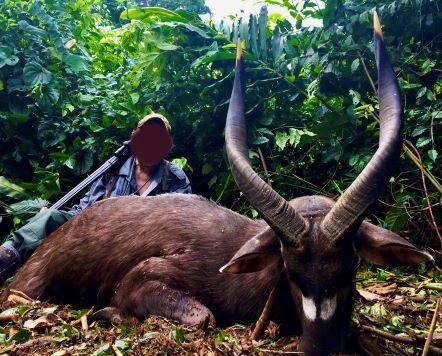
An American hunter accustomed to hunting alone, with a friend or alongside a guide may need time to adjust to the size of a Cameroon hunting team. Depending on the concession and hunting method, the party entering the forest may include the Professional Hunter, local trackers, dog handlers and other members of the hunting operation.
Back at camp, an even larger group keeps the safari functioning. Camp staff, drivers, skinners and other workers support a hunt taking place far from the roads and services the visiting hunter normally takes for granted. By the time the spoor is being followed, several people may already have contributed to placing the hunter in that part of the forest.
More people do not make movement easier. Everyone must pass through the same narrow openings without snapping branches, catching vines or crowding the trackers. A mistake made by someone farther back can still warn an animal ahead.
When the spoor is older, the party may move with relative freedom. As the signs become fresher, the formation changes. Conversation stops, spacing increases and anyone who does not need to be near the front may remain farther behind.
The trackers lead because they are reading a forest that is almost invisible to the visiting hunter. The PH stays close enough to understand what they are seeing and make the hunting decisions. The hunter must remain within reach without interfering with the men following the spoor. Dog handlers need to be ready when their dogs are required, although when and how dogs are used can differ between hunting operations.
In southeastern Cameroon, some hunting teams work with Baka trackers whose knowledge of the forest has been developed over generations. They understand its animal paths, sounds and small changes in a way that cannot be learned during a visiting hunter’s safari. Depending on the area, other local forest trackers may fill the same role. Their identity and background differ, but their knowledge is central to how the hunting party moves and interprets what is happening ahead.
Game Hunting Safaris works with Mayo Oldiri Safaris, one of Cameroon’s largest and longest-established hunting operators. Operating in the country since 1997, Mayo Oldiri conducts safaris in both the southern rainforest and northern savanna. Its forest operations provide a practical example of why hunting in Cameroon depends on a complete team, with Professional Hunters, local trackers, dog handlers, camp staff and transport crews all contributing to the safari.
The relationship may be unfamiliar to a hunter arriving from the United States. The tracker at the front may speak little or no English, and much of the communication may pass through the PH using a few words, gestures and changes in movement. The hunter may not understand what has been seen or heard until the entire party stops. At that point, his job is not to take control. It is to be ready, remain quiet and follow the instructions being passed back to him.
For a hunter accustomed to making most decisions himself, this can feel unfamiliar. He cannot push ahead because he thinks the animal is close or move sideways because he sees what appears to be a better opening. The success of the approach depends on knowing when to move, when to remain still and when to trust the people who understand the forest to control the pace.
Rain Can Erase One Track and Reveal Another
Rain does not simply make the hunter wet. It changes what the tracking team can see, hear and follow.
A heavy downpour can wash away the edges of a track, flatten disturbed leaves and remove signs the trackers have been following. Spoor that was clear a few minutes earlier can become difficult to read. Water gathers in depressions, mud shifts underfoot and the forest floor begins to look as though nothing has passed through it.
The same rain can also give the trackers a new starting point. Any track, bent plant or disturbance made after the rain must be fresh. The forest has effectively been reset. When the team cuts spoor on the wet ground, it may know that the animal passed after the downpour rather than several hours earlier.
Wet leaves also change the way the hunting party moves. Dry leaves crack beneath a boot and vines scrape against clothing. After rain, the forest floor may become quieter. The hunter can place his feet with less noise, but the advantage comes with another problem: roots, logs and slopes become slippery. A fall or badly placed step can make more noise than the dry leaves ever would.
Rain changes what can be heard ahead as well. During a downpour, water striking the canopy can cover the sound of an animal moving and make communication between trackers difficult. Once it passes, dripping vegetation continues to create movement and noise throughout the forest. A shaking branch may be caused by the bongo, falling water or someone farther along the tracking line.
Rain therefore creates a constant trade-off. It may help the team judge that a track is fresh and move more quietly, but it can also erase the spoor, reduce visibility and hide the sounds that warn everyone the animal is close.
By the time the team catches up, the hunter may be soaked, his hands may be wet and water may be running across the rifle or optic. Any opportunity that follows may arrive quickly, making it important that the rifle can be mounted and the sight picture found without hesitation.
Dogs Can Find the Animal Without Creating a Shot
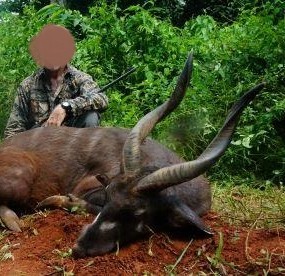
Dogs may be used during some Bongo Hunts in Cameroon once the trackers believe they are close to the animal. These are generally small local hunting dogs, sometimes described as Basenji-type dogs, although the breed and makeup of the pack differ between hunting areas. Their value comes from their ability to move through dense vegetation and work with handlers who understand their barking and behaviour.
The dogs may remain under control while the trackers follow the spoor and judge whether the bongo is close. Releasing them too early could lead to a long chase through country the hunting party cannot cross at the same speed.
Once released, the dogs may catch up and pressure the bongo into stopping to face them. Their barking tells the handlers that the encounter has become stationary, or at least that it is taking place within a smaller area. It also gives the hunting party a direction through vegetation that may still hide everything ahead.
The dogs are not there to overpower an animal weighing several hundred pounds. Their job is to occupy its attention and, if the bongo holds, give the hunter and PH time to approach. It is dangerous work. A bull can strike at a dog with its horns, break away without warning or turn the encounter into another chase.
To the hunter, the barking may sound close enough for an immediate shot. In the rainforest, hearing the encounter and seeing it are two different things. The bongo may be standing only a few yards from the dogs while remaining hidden behind several layers of vegetation.
The PH still must identify the bull, understand where the dogs and handlers are positioned and find a safe shooting lane. The dogs moving around the animal can make that decision harder, not easier. Where possible, the handlers may need to control or call them away once a clear opportunity develops.
The bongo may leave before that opening appears. The dogs may follow, forcing the hunting party to reposition and begin closing the distance again. Contact has been made, but the hunter still has no shot.
A bongo held ten yards away by barking dogs can feel impossibly close. Until the hunter can see the correct animal, identify an aiming point and place a bullet safely, those ten yards may as well be one hundred.
Frequently Asked Questions
How close are shots when hunting bongo in Cameroon?
Shots can be very close, but there is no standard distance. A hunter may encounter a bongo within a few yards or get an opportunity farther away across a forest opening. Dense vegetation often matters more than measured distance. Even at ten yards, the hunter may be unable to identify the bull, see the correct aiming point or confirm that the bullet has a clear path.
Are dogs used on every bongo hunt in Cameroon?
No. Hunting methods differ between concessions and operators. Some teams use dogs after trackers have followed suitable spoor and believe the bongo is close. Other hunts may involve tracking without dogs, waiting near salt licks or watching forest openings. Hunters should ask the operator how bongo are normally hunted in the specific concession they are considering.
What rifle and optic are suitable for Cameroon’s rainforest?
The rifle must be dependable, quick to shoulder and familiar to the hunter. A low-powered scope with a wide field of view can help the hunter acquire an animal quickly at close range, while open sights may also be suitable for someone experienced in using them. Whatever the setup, the hunter should practise mounting the rifle and finding the aiming point without relying on extra time or a perfect stance. Final rifle and ammunition choices should always be discussed with the PH before the safari.
How should an American hunter prepare for rainforest hunting?
Physical preparation matters because the hunter may spend hours walking over wet ground, fallen trees and tangled vegetation. Equipment should be simple, waterproof where necessary and tested before travelling. Just as importantly, the hunter must be prepared to follow the pace and instructions of a larger tracking team rather than make every decision himself.
Our guide to The Unwritten Rules of Hunting Africa’s Rainforests explains more about clothing, equipment and movement in this environment. Cameroon also differs considerably from more conventional Hunting Trips, making it important to discuss fitness, hunting methods and likely field conditions with the operator before booking.
About the Author
Pierre van Wyk is the co-founder of Game Hunting Safaris. He works with Professional Hunters and safari operators across Africa to help hunters from the United States and Canada understand how different hunting areas, species and methods shape a safari long before they arrive in camp. Pierre believes the most useful hunting information begins where the brochure ends, with what happens once the hunter leaves the vehicle.