
Hunting in Cameroon, Lord Derby Eland, Lion & More
Booking Season: 2026
Hunt Difficulty: Difficult

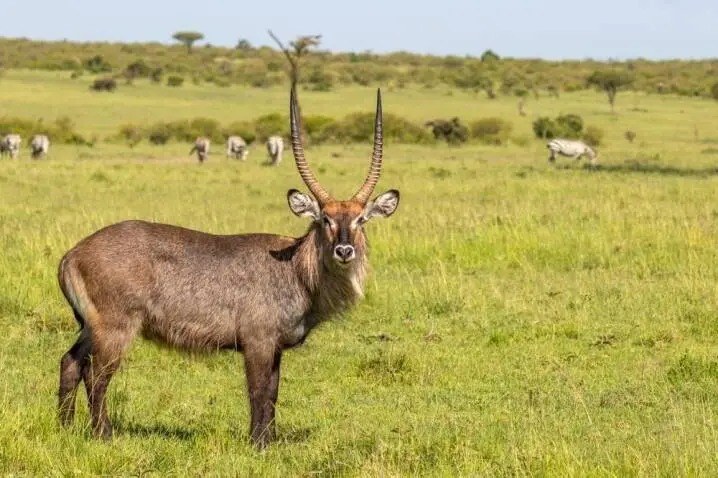
Defassa waterbuck hunting in Cameroon is very different from the waterbuck hunts most hunters are familiar with in Southern Africa, and understanding that difference early is important when planning a safari. This is not an open-country plains game hunt where animals are glassed at distance and approached across open terrain. In Cameroon, hunting takes place in dense, humid environments where visibility is limited, movement is slower, and shot opportunities are often brief and unpredictable.
For hunters coming from the United States or Canada, this shift in conditions is one of the biggest adjustments. The hunt is less about covering ground quickly or selecting from multiple animals, and more about patience, positioning, and taking advantage of limited opportunities when they present themselves.
This is one of the key differences between hunting safaris in Cameroon and more familiar Southern African destinations, where visibility and opportunity tend to be far more controlled.
Available Defassa Waterbuck Hunts
Hunting in Cameroon, Lord Derby Eland, Lion & More
Booking Season: 2026
Hunt Difficulty: Difficult
The Defassa waterbuck is the western subspecies of waterbuck, found across Central and West Africa, including regions like Cameroon. While closely related to the common waterbuck hunted in Southern Africa, the differences between the two are significant from a hunting perspective.
In countries such as South Africa and Namibia, waterbuck hunts are typically take place in more open environments where visibility allows for better trophy assessment and more controlled approaches. In contrast, Defassa waterbuck in Cameroon are encountered in far more restrictive terrain, often along river systems and dense vegetation zones where movement is limited and visibility is reduced.
Key differences that affect the hunt include:
Habitat that is thicker, wetter, and more difficult to navigate
Less predictable movement patterns due to pressure and environment
Shorter encounter windows, often requiring quicker decision-making
Limited ability to judge trophy quality before taking a shot
Because of these factors, Defassa waterbuck are not usually hunted as a primary, standalone species in Cameroon. Instead, they are more often taken opportunistically during a broader safari where the primary focus is on another species. For hunters used to selecting animals from multiple options or taking time to evaluate trophies in open terrain, this represents a very different type of hunting experience—one where conditions dictate the opportunity rather than the hunter controlling the pace of the encounter.
Defassa waterbuck in Cameroon are typically found along river systems, floodplains, and transitional zones where dense forest begins to open into more navigable terrain. These environments provide access to water, cover, and feeding areas, but they also create some of the most challenging hunting conditions on the continent.
Unlike open savanna environments, where hunters can glass from distance and plan stalks with clear visibility, hunting in these areas is conducted at much closer range and often without full visual confirmation of the animal until the final moments.
In practice, this means:
Tracking is slower, more methodical, and often interrupted by terrain
Movement is dictated by vegetation density rather than strategy alone
Visibility may be limited to small shooting lanes through thick cover
Wind and approach routes are harder to manage in confined spaces
In many cases, tracks are followed for extended periods without a clear visual, and final encounters often happen at close range with limited time to assess the animal. Encounters are rarely clean or predictable, and in many cases hunters will only briefly glimpse an animal before needing to make a quick decision under pressure.
These same environments often overlap with areas where bongo are pursued, particularly in forest-edge systems and riverine corridors. For hunters focused on that primary objective, our bongo hunts page explains how these rainforest safaris are typically structured and why these overlap zones are so important.
From a purely behavioral standpoint, waterbuck are not considered one of Africa’s most difficult plains game species. In open environments, they are often hunted successfully with controlled stalks and clear shot opportunities. In Cameroon, however, the environment changes the equation entirely.
The difficulty of the hunt is not driven by the animal alone, but by the conditions in which it is pursued:
Shots are typically taken at shorter distances, often under tight time pressure
Shooting angles are frequently obstructed by vegetation, requiring quick adjustments
Tracking can take hours with limited or inconsistent visual contact
Heat, humidity, and terrain add a constant layer of physical fatigue
Hunters expecting multiple shot opportunities similar to Southern Africa will often find conditions here far more restrictive. Unlike open-country hunting, where a hunter may pass on an animal and wait for a better opportunity, Cameroon often does not offer that luxury. Opportunities can be brief, and hesitation may mean not seeing that animal again.
Success depends less on long-range shooting ability and more on:
Reading the situation quickly
Trusting the professional hunter’s guidance
Being prepared to take a shot when a narrow window opens
In practical terms, a typical encounter may involve tracking for several hours through dense cover, followed by a brief shot opportunity that lasts only a few seconds. This is where preparation and decision-making become more important than ideal conditions. In these conditions, close coordination with an experienced professional hunter is critical, as positioning and shot timing are often guided in real time.
For many hunters, this is where the real challenge lies, not in finding the animal, but in executing under conditions that are far less controlled than what they may be used to elsewhere in Africa.
Trophy evaluation in Cameroon is different from what most hunters are used to in more open environments.
In this environment there:
Is limited time to assess horn size and shape
Are fewer repeat opportunities
Is a greater emphasis on maturity rather than measurement
Hunters should approach this as an opportunity-based hunt rather than a record-focused pursuit.
Defassa waterbuck are rarely the primary reason hunters travel to Cameroon. Most safaris are structured around a specific primary species, with additional animals taken as opportunities arise depending on the concession, terrain, and quota availability. This means approaching waterbuck as an opportunity rather than a guaranteed objective when planning a Cameroon safari.
Waterbuck fall into this secondary category, an animal that may be encountered and taken under the right conditions, rather than one that is specifically scheduled or guaranteed.
Hunting in Cameroon operates on a very different model from Southern African plains game safaris:
Safaris are longer in duration
Concessions are remote and logistically complex
Daily rates reflect the scale and exclusivity of the hunt
Understanding pricing in Cameroon requires looking at the safari as a whole, rather than focusing on a single species, as most hunts are structured around broader expedition logistics. In many cases, availability is limited by concession quotas, which means opportunities for specific species can vary from season to season. The cost of the safari is driven by the overall expedition, not by the waterbuck itself.
This type of hunt is best suited to hunters who already have a clear understanding of how African safaris work and what to expect in low-volume, concession-based environments.
In practical terms, this includes:
Hunters with prior Africa experience who are comfortable with tracking-based hunts rather than high-opportunity setups
Those already planning a Cameroon safari around a primary species and looking to take advantage of additional opportunities in the field
Hunters who are physically prepared for long days in heat, humidity, and uneven terrain
Those who value the process of the hunt, reading tracks, adapting to conditions, and making decisions in real time—over the number of animals taken
For many North American hunters, this type of experience represents a shift away from structured, high-success-rate hunts toward something more unpredictable and condition-driven. Those who enjoy that challenge tend to get the most out of it.
This is not a suitable hunt for every hunter, and understanding that upfront is important.
It is generally not a good fit for first-time Africa hunters who are still learning how safari logistics, tracking, and shot opportunities typically work, hunters expecting frequent encounters or the ability to choose between multiple animals before taking a shot, those looking for shorter, highly structured plains game safaris with predictable outcomes, and anyone prioritizing comfort, convenience, or lodge-style experiences over time spent in the field.
Cameroon operates on a very different model from destinations like South Africa or Namibia. Hunts are longer, more physically demanding, and far less predictable. Hunters who arrive expecting variety and volume are often disappointed. Those who understand the nature of the hunt, and are prepared for it, are far more likely to find it rewarding.
Are waterbuck dangerous?
Waterbuck are not classified as dangerous game, but like any wounded animal, they can be unpredictable—especially in thick cover. In Cameroon’s dense environments, visibility is limited, which can make follow-up situations more cautious than in open terrain.
Can you hunt waterbuck in Cameroon specifically?
Yes, waterbuck can be hunted in Cameroon, but they are not typically the primary focus of a safari. Most hunts are structured around a specific primary species, with waterbuck taken opportunistically.
What is the difference between Defassa and common waterbuck?
The main differences are habitat, distribution, and hunting conditions. Defassa waterbuck are found in Central and West Africa and are hunted in thicker environments compared to Southern Africa.
How much does waterbuck hunting in Cameroon cost?
Waterbuck is not usually the primary cost driver. Costs are determined by the overall safari structure, including daily rates and logistics.
Is waterbuck hunting in Cameroon difficult?
Yes—primarily due to the environment. Dense vegetation, limited visibility, and physically demanding conditions make the hunt more challenging than in open-country settings.
Search from our range of Hunts across various popular destinations in Africa.

Book Your Hunt