Hunting Safari in SA 10 x Nights Plains Game Combination
Booking Season: 2025
Hunt Difficulty: Difficult

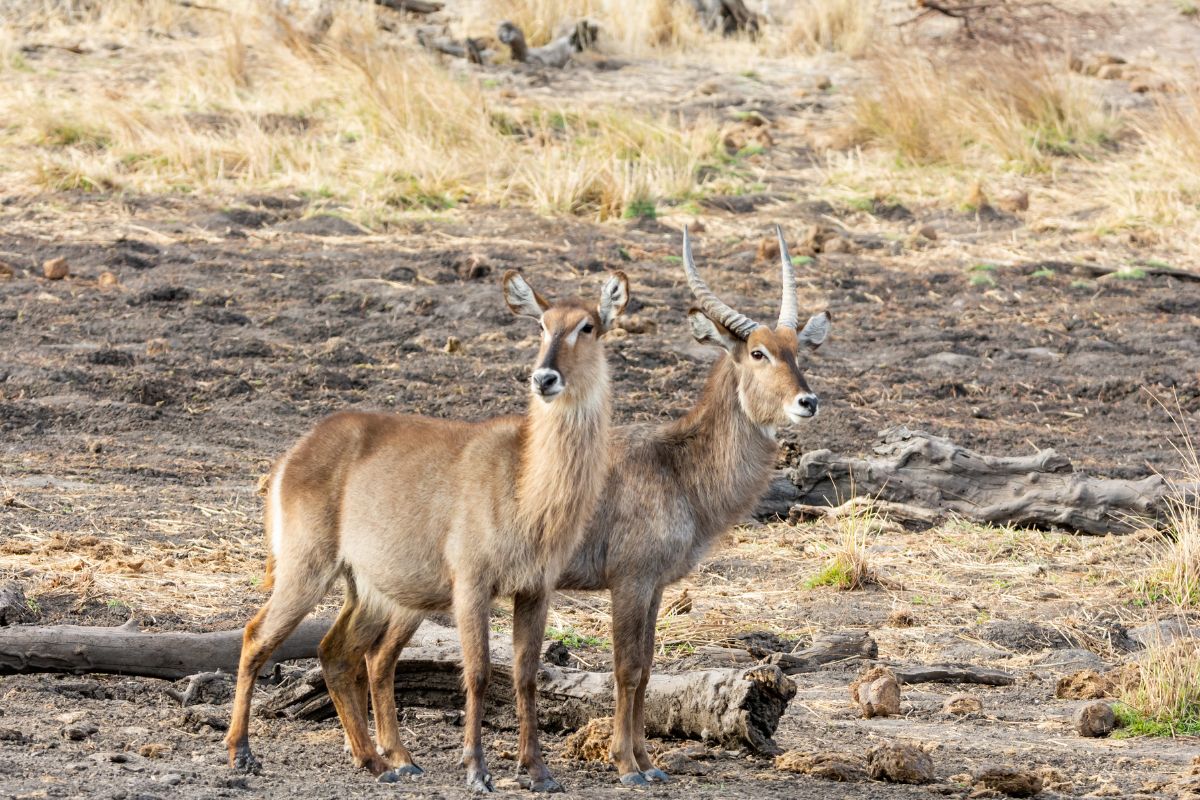
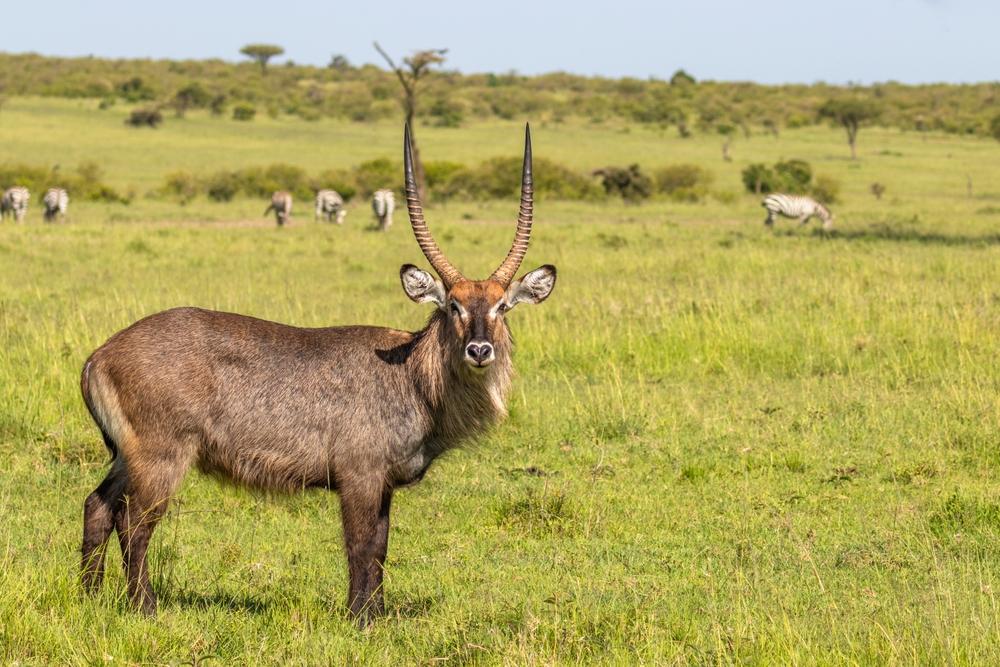
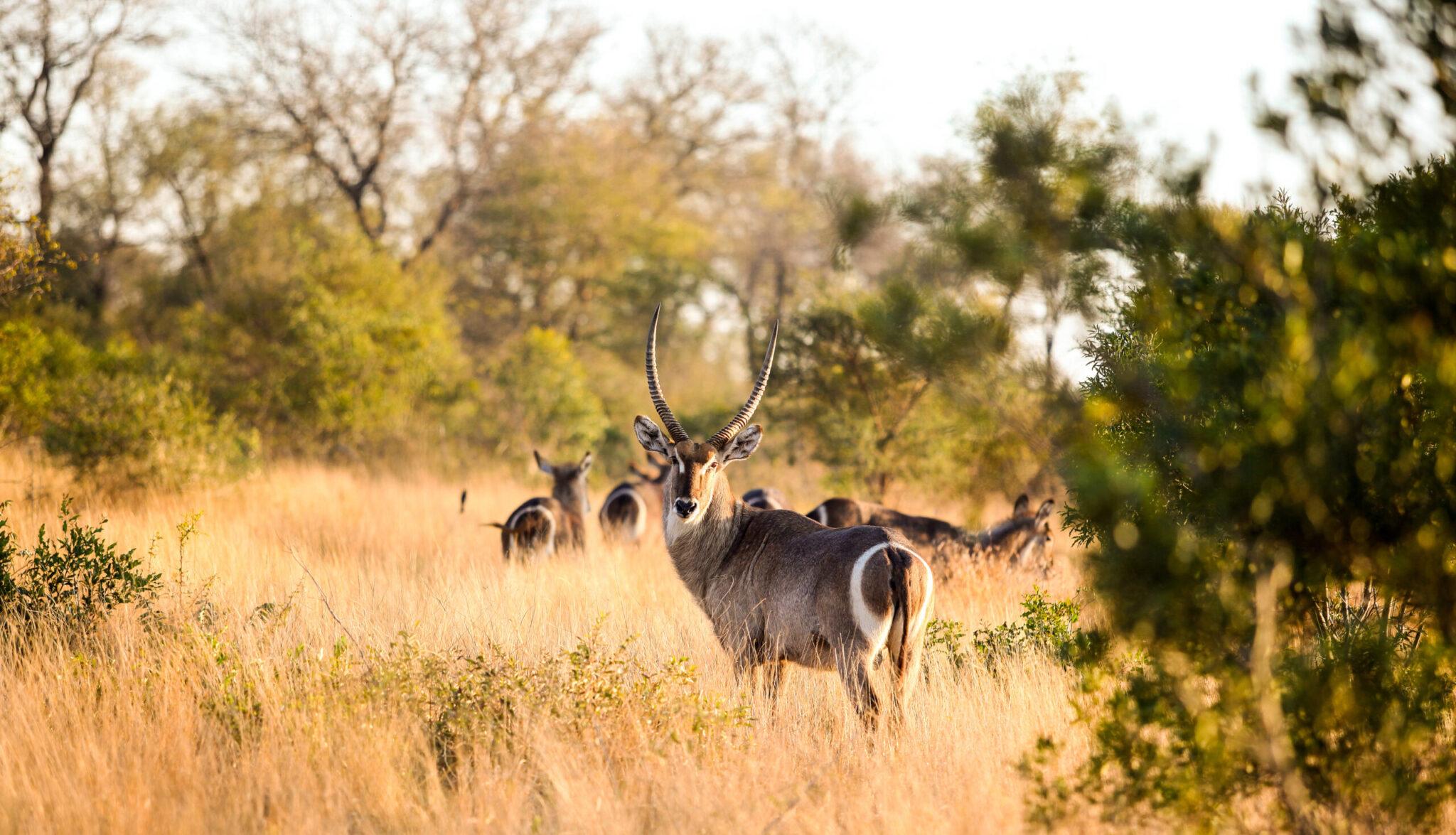
The Waterbuck is an antelope with large ringed horns that arch backward. It has a shaggy brownish-gray coat with a distinctive white marking on its rump. This large African antelope is water-dependent and prefers habitats inclusive of water, such as rivers, marshes, wetlands, and lakes.
The Waterbuck has two subspecies, namely the Common Waterbuck (Kobus ellipsiprymnus ellipsiprymnus) and the Defassa Waterbuck (Kobus ellipsiprymnus defassa). While the Common Waterbuck is widely distributed across Southern and Eastern Africa, the Defassa Waterbuck is found in East and Central African regions. The Common Waterbuck has an oval-shaped ring on its rump, whereas the Defassa Waterbuck has a solid marking and is also slightly smaller in stature.
When it comes to Waterbuck hunts, hunters have a distinct advantage over their prey, knowing that these water-dependent animals are most likely going to be found around water sources, making this walk-and-stalk safari just slightly less challenging.
Medium to large caliber rifles (.270 to 30-caliber rifles) are recommended for this safari.
Waterbuck hunts often form part of an African plains game safari, with numerous other species also harvested on the hunt. Hunts can take from 3-4 full hunting days or more, but when other plains game species are added, they generally have 7-10 hunting days.
Available Common Waterbuck Hunts
Hunting Safari in SA 10 x Nights Plains Game Combination
Booking Season: 2025
Hunt Difficulty: Difficult
Plains Game Hunt in South Africa 8 x Trophy Animals
Booking Season: 2025
Hunt Difficulty: Moderate, Difficult
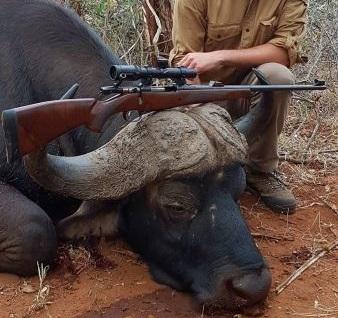
Cape Buffalo Cow & Plains Game Hunting Safari in South Africa
Booking Season: 2026
Hunt Difficulty: Moderate, Difficult
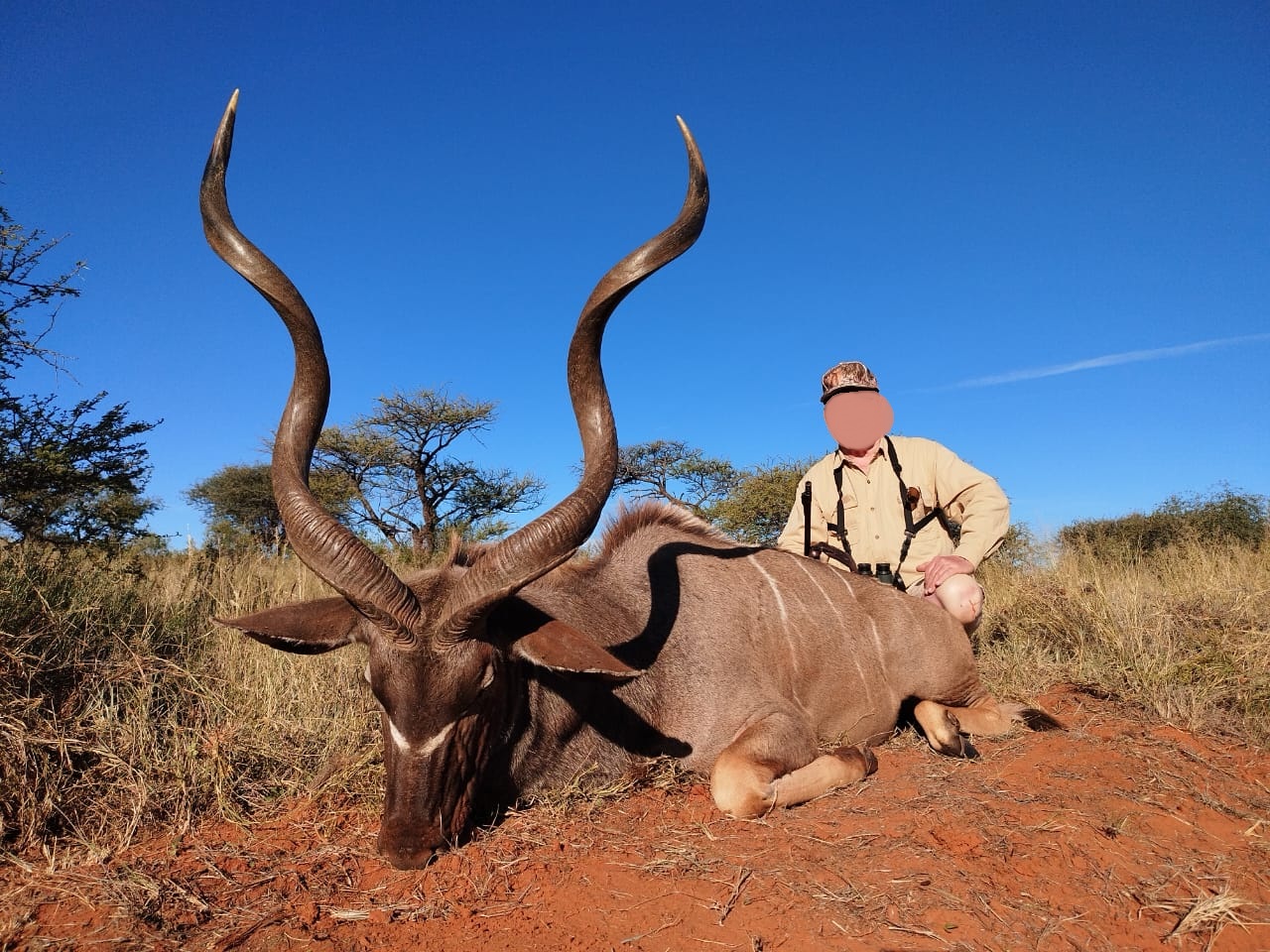
Family Hunting Adventure: Plains Game in Limpopo
Booking Season: 2026
Hunt Difficulty: Moderate
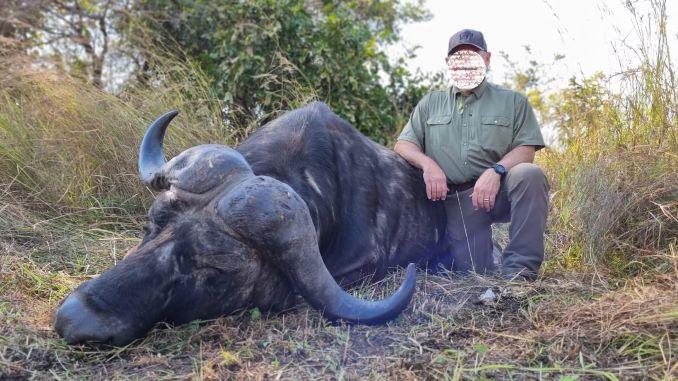
12-Day Cape Buffalo & Plains Game Safari in Niassa
Booking Season: 2026
Hunt Difficulty: Difficult
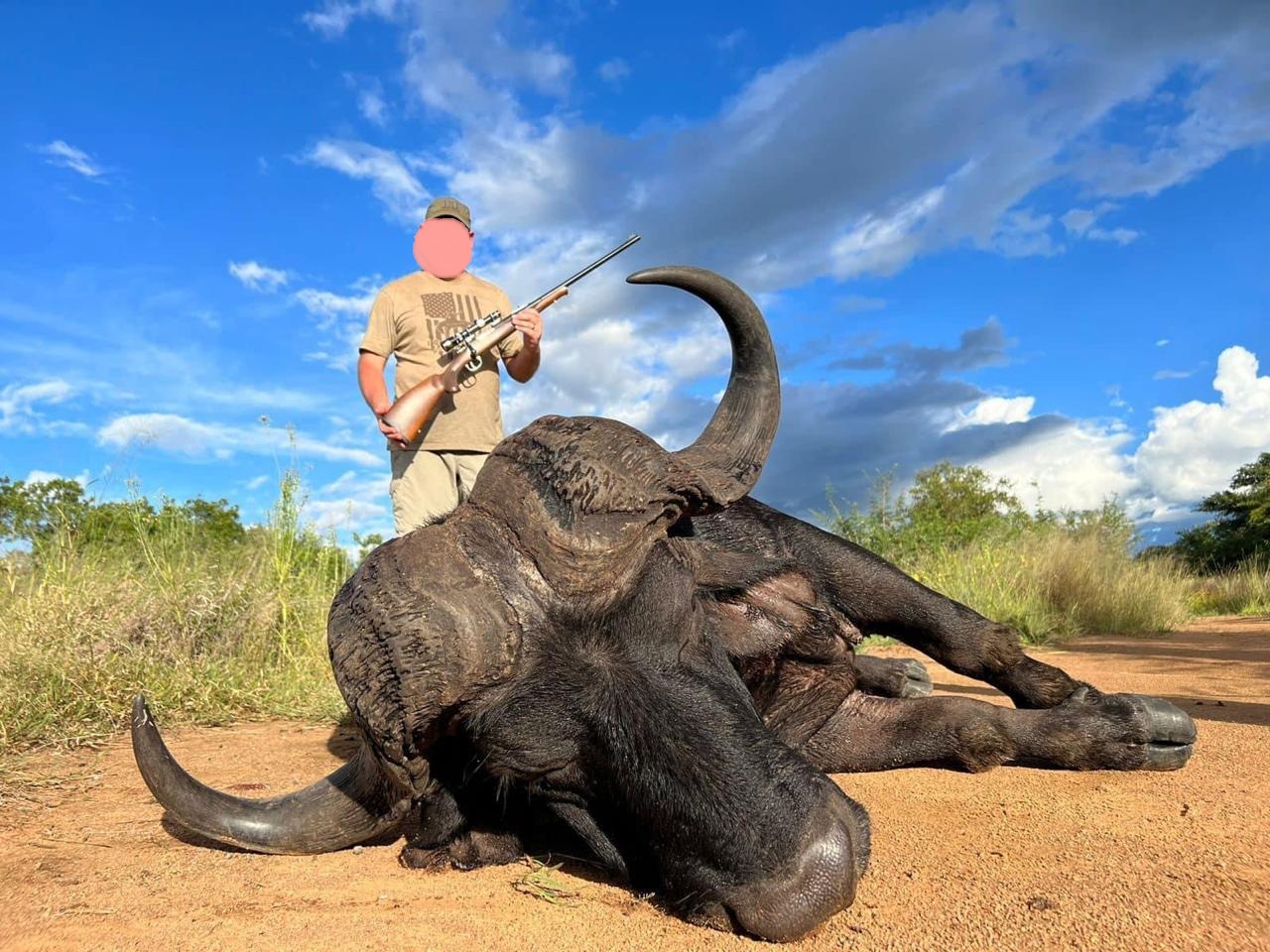
Cape Buffalo & Plains Game Hunting in South Africa
Booking Season: 2026
Hunt Difficulty: Difficult
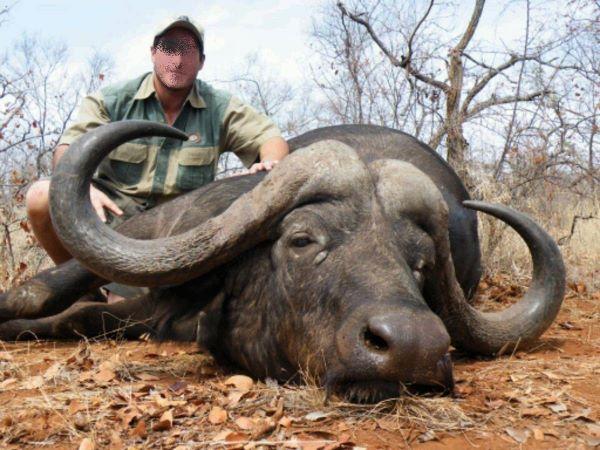
Cape Buffalo, Sable & Roan Hunting Safari in South Africa
Booking Season: 2026
Hunt Difficulty: Moderate, Difficult, Extreme

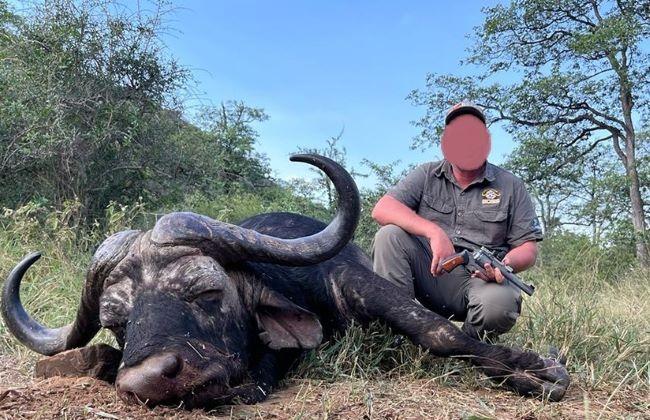
Cape Buffalo, Plains Game & Night Hunting in South Africa
Booking Season: 2026
Hunt Difficulty: Moderate, Difficult
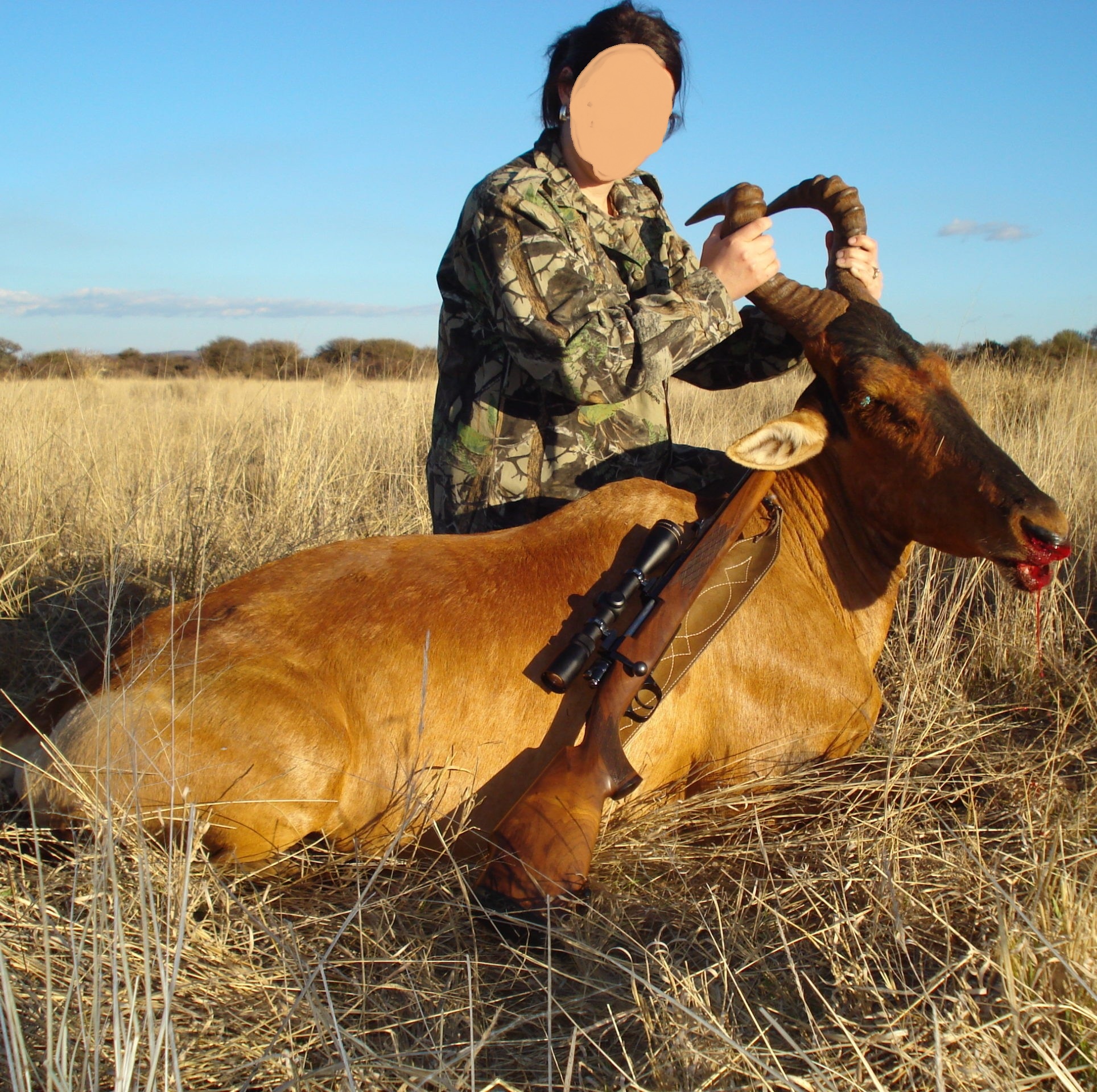
Hunting in SA: Tsessebe, Impala, Waterbuck & 2 More Species
Booking Season: 2026
Hunt Difficulty: Moderate

Plains Game Hunting in SA, Trophy Sable and 4 Species
Booking Season: 2026
Hunt Difficulty: Moderate
When considering a Waterbuck hunt, hunters need to decide which species of Waterbuck they wish to target, as this would narrow down the country of choice for the hunting safari.
The Common Waterbuck is found in South Africa, Namibia, Mozambique, Botswana, Zambia, Zimbabwe, Malawi, Tanzania, Kenya, Ethiopia, and Somalia, with many of these regions offering Waterbuck hunting packages. The Defassa Waterbuck inhabits many African regions, including Ethiopia, Kenya, Tanzania, South Sudan, Sudan, Zambia, Chad, Angola, the Republic of Congo, Gabon, Senegal, the Central African Republic, Uganda, and Cameroon.
These large, prized antelopes are hunted in various African regions, with popular hunting destinations including:
South Africa: The Limpopo province, which is renowned for its array of African plains game species, as well as the Midlands in KwaZulu-Natal
Namibia: The lush Caprivi region, with its ample water supply, provides the perfect habitat for the Waterbuck
Zambia: The Luangwa Valley is a popular destination for Waterbuck hunting in this African destination
Botswana: The water-rich Okavango Delta and surrounding floodplains are a popular Waterbuck hunting location
Mozambique: Mozambique’s Matetsi region, Niassa Reserve, and Zambezi Valley are popular hunting areas
Tanzania: Both species of Waterbuck inhabit Tanzania, with the Common Waterbuck hunted in the Selous and Maasailand regions, while the Defassa Waterbuck is hunted in the North of the country.
Some African hunting destinations, like South Africa and Zimbabwe, permit hunting year-round, while others have specific hunting seasons. However, the peak time to hunt Waterbuck is during the dry season, when the vegetation is shorter and tracking is easier.
Waterbuck hunting is best undertaken early morning or late afternoon when these antelopes are more active and more likely to be found around water holes as they graze and drink during these cooler times of the day.
When it comes to hunting in Africa, many hunters are after unusual trophies to display back home in their trophy rooms, and the Waterbuck is a great antelope to have on display. A large-sized antelope with striking ringed horns and a shaggy coat, the markings on its rump make it a unique and sought-after trophy to hunt.
African hunts need some adventure and challenge for game hunting enthusiasts, and a Waterbuck hunt ticks both boxes. On these safaris, hunters set off across diverse and rugged terrain, with dense vegetation at times, tracking and stalking a wary and alert antelope across bodies of water and through wet conditions, resulting in the ultimate hunting trophy when harvested.
A hunter’s skills are tested, with exceptional stalking skills required, with patience and perseverance needed to harvest this trophy.
A standard African plains game safari will include the basic service offerings such as accommodation, meals, drinks, a professional hunter, camp staff, trackers, on-territory transport, and field preparation of the trophy.
Exclusions and optional extras when Waterbuck hunting in Africa:
Waterbuck are one of the most underestimated plains game species in Africa. While often compared to kudu or eland, they offer a very different hunting experience.
They are typically found near water sources and prefer thicker cover, making visibility more challenging and requiring a more careful, patient approach. Mature bulls are resilient animals, and even well-placed shots may require follow-up tracking.
For many hunters, waterbuck represent a balance between accessibility and challenge, making them an excellent choice as part of a broader African safari.
Waterbuck are not considered the most difficult plains game species, but they are far from easy.
They rely heavily on habitat for protection and are often encountered in areas where stalking conditions are less predictable. Shots are rarely taken in completely open terrain, and positioning becomes an important part of the hunt.
A mature bull can absorb a poorly placed shot and travel significant distance, which is why discipline and patience are still essential throughout the process.
Waterbuck are known for their heavy skin and strong build, which can make them more forgiving of marginal shots—but also more difficult to recover if placement is poor.
The ideal shot is into the heart-lung area just behind the shoulder, roughly one-third up the body. Because of their anatomy, shots placed too far back can result in longer tracking distances.
Angles play an important role, especially in thicker terrain where visibility is limited. Waiting for a clear, controlled opportunity is always the best approach.
For a more detailed breakdown, see our guide to shot placement for large antelope.
Waterbuck do not require extreme calibers, but they do benefit from sufficient energy and proper bullet selection.
Most hunters are well-equipped with medium calibers that offer a balance between accuracy and stopping power. The key factor is not caliber alone, but the ability to place the shot correctly under real hunting conditions.
Consistency and familiarity with your rifle will always matter more than chasing larger calibers.
Waterbuck can be hunted throughout much of the year, but conditions play a major role in how the hunt unfolds.
During drier periods, animals are more predictable as they stay closer to water sources, making them easier to locate. In wetter conditions, thicker vegetation can make spotting and stalking more difficult.
Timing your hunt to match your preferred hunting style—whether more open visibility or a more challenging tracking experience—can make a significant difference.
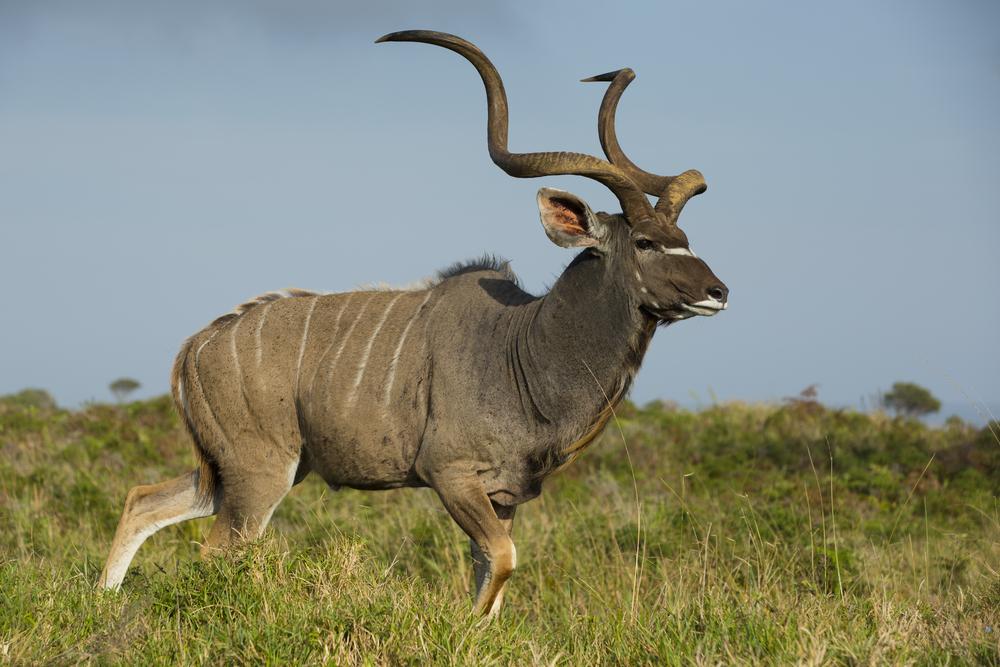
Waterbuck and kudu are often hunted on the same safari, but they offer different challenges.
Kudu are typically associated with open hillsides and longer-range spotting, while waterbuck are more closely tied to thicker cover and water systems.
Waterbuck hunts tend to involve shorter-range encounters and more deliberate stalking, while kudu hunts often focus on locating and judging bulls from distance.
The choice depends on the type of experience you are looking for rather than one being objectively better than the other.
For hunters traveling from the United States, waterbuck hunts are straightforward to plan and commonly included as part of a plains game safari.
Most American hunters either bring their own rifle or use a quality outfitter-provided option. Professional hunters are experienced in guiding international clients and will assist with the practical aspects of the hunt, from arrival through to time in the field.
Because waterbuck are widely available in several countries, they are often included as part of a broader hunting package rather than a standalone safari.
Waterbuck hunting is well suited to hunters who want a balanced African hunting experience without focusing solely on one high-demand species.
It is a strong option for those looking to build a varied trophy list while still experiencing a hunt that requires thought and patience. It is less suited to hunters who are looking for a highly specialized or single-species safari, where the entire focus is on one rare or difficult animal.
The cost of a waterbuck hunt can vary significantly depending on several key factors, including location, hunting area, and how the safari is structured.
In many cases, waterbuck are included as part of a broader plains game safari rather than pursued as a standalone species. This means overall cost is often influenced more by the full hunting package than by a single animal.
Other factors such as trophy quality, accessibility of the hunting area, and the level of exclusivity also play a role. Well-managed areas with strong populations and mature bulls typically require more time and planning, which can affect how a hunt is structured.
For most hunters, the best approach is to match the experience to their expectations rather than focusing on generalized estimates.
Judging a waterbuck goes beyond simple measurements. While horn length is often the first thing hunters notice, it is only one part of evaluating a mature bull.
Shape, symmetry, and the overall condition of the horns all contribute to the quality of the trophy. Mature bulls typically show heavier bases, well-developed rings, and a balanced structure that reflects age and experience.
Body size and behavior can also provide important clues. Older bulls tend to be more solitary and cautious, often found in thicker cover or less pressured areas.
In the field, the guidance of an experienced professional hunter is essential. Judging a waterbuck correctly requires more than numbers—it comes down to recognizing maturity and making the right decision in the moment.
Not all waterbuck hunts are the same, and choosing the right area and approach can make a significant difference to your experience.
The key is not simply finding availability, but understanding how the hunt is structured, how the area is managed, and what level of quality and effort is required to take a mature bull. These factors often matter more than any single detail on paper.
At Game Hunting Safaris, the focus is on matching each hunter with the right opportunity based on their expectations, experience, and the type of hunt they are looking for. In some cases, that may mean recommending a specific area or approach. In others, it may mean advising against a hunt that is not the right fit.
That approach is intentional. The goal is not volume, but ensuring that every hunt delivers the kind of experience serious hunters expect when traveling to Africa.
Whether it’s finding waterbuck hunts, stalking, or walking and stalking at dawn, we’re here to deliver the experience of a lifetime with integrity and precision.
✉️ Contact us today to speak with an expert and plan your tailored waterbuck hunting adventure.
🌍 Browse our active hunting listings and secure your preferred species and dates.
Search from our range of Hunts across various popular destinations in Africa.

Book Your Hunt