Designed by Hunters, for Hunters

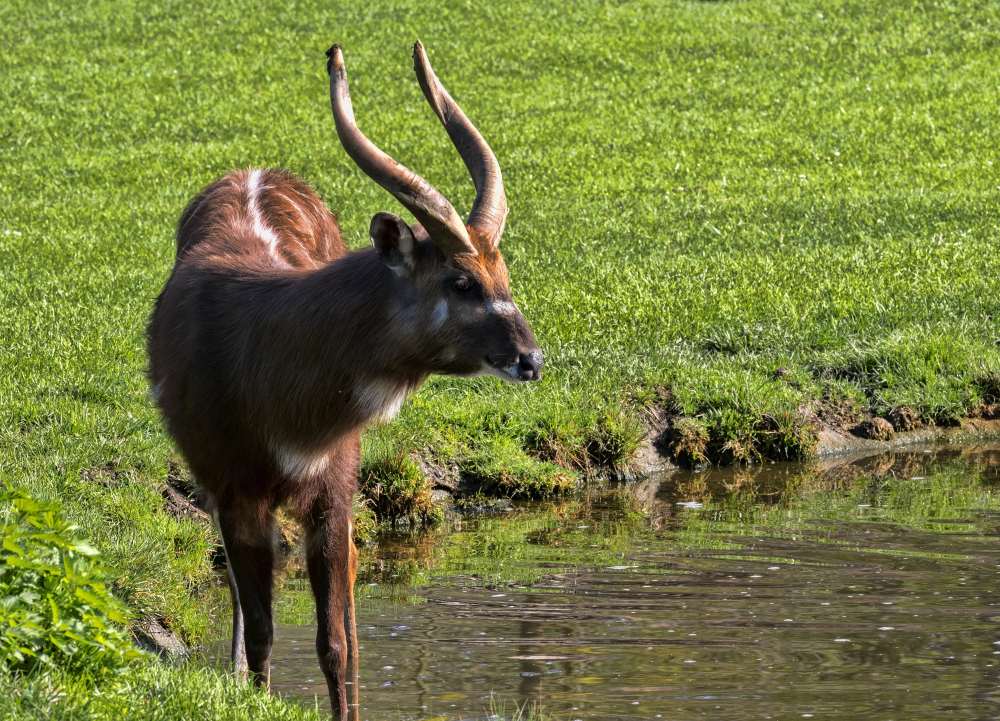
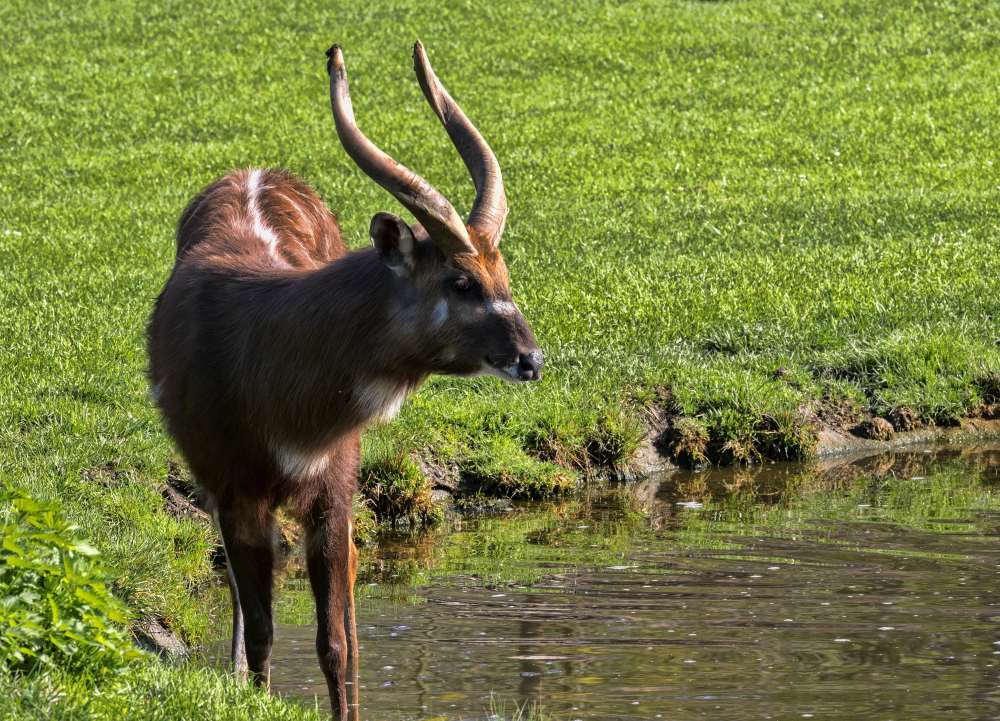
When hunters think about Sitatunga, they usually picture papyrus swamps in East Africa, where patient hours are spent watching narrow channels and reed beds for one of Africa's most elusive antelope. While those hunts have earned their reputation, Forest Sitatunga hunting in Cameroon offers something entirely different.
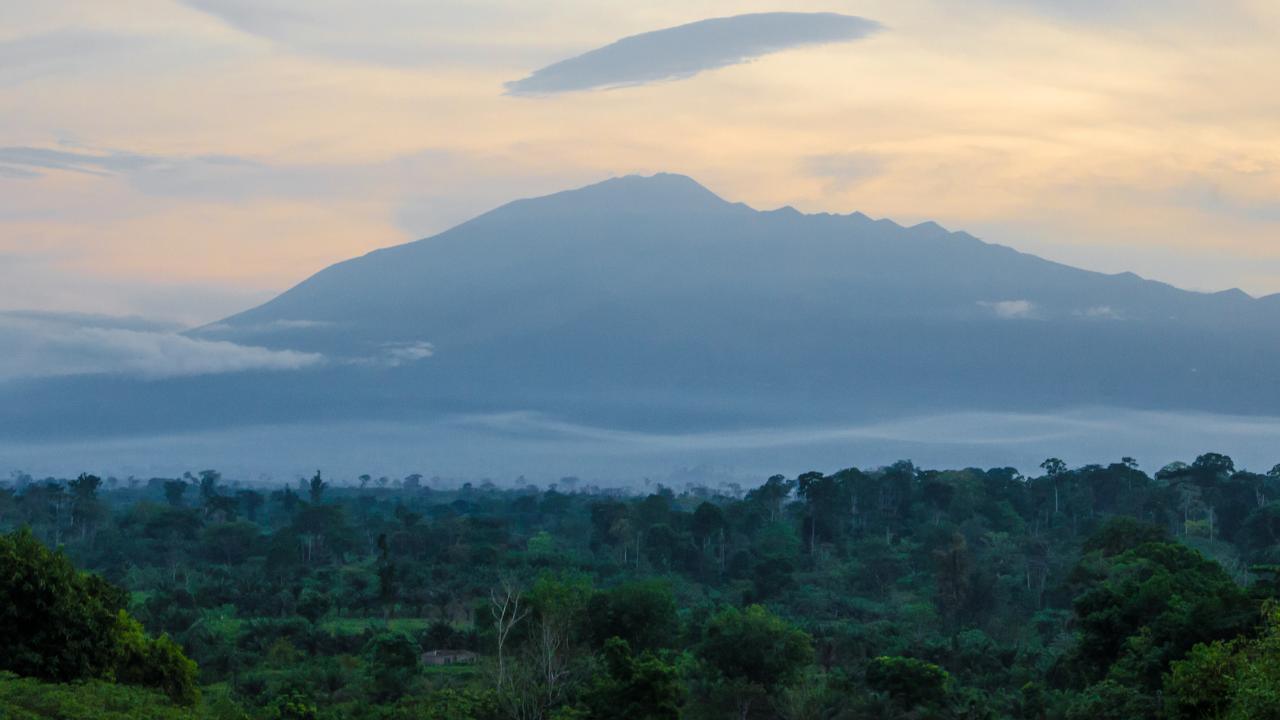
Deep within the Congo Basin rainforest, the Forest Sitatunga has adapted to a world of towering trees, flooded forest, tangled vegetation and ancient game trails. Rather than scanning open wetlands, hunters move quietly beneath the forest canopy, relying on experienced Baka trackers to interpret subtle signs that would go unnoticed by almost anyone else.
Understanding the difference between these two safaris is important. While our guide to Sitatunga Hunts explores the species throughout Africa, and our Hunting in Cameroon destination guide explains what makes this remarkable country unique, this page focuses on one of the continent's most specialised hunting adventures: pursuing the Forest Sitatunga in the rainforests of southeastern Cameroon.
Every hunting environment teaches its own lessons. Open plains reward good glassing, mountains demand endurance, and papyrus wetlands test a hunter's patience. The Congo Basin rainforest plays by a completely different set of rules.
In southeastern Cameroon, the forest dictates almost every decision made during the hunt. Towering trees limit visibility, dense undergrowth narrows game trails, and the thick canopy softens both light and wind. Even experienced hunters quickly realise that techniques which work in more open country simply don't apply here.
Instead of searching vast landscapes through binoculars, attention shifts to what lies only a few metres ahead. Fresh tracks pressed into soft ground, a recently broken vine or a narrow crossing through flooded forest often reveal far more than the distant horizon ever could.
The rainforest also changes the pace of the hunt. There is little value in trying to cover long distances quickly. Progress is measured in careful steps rather than kilometres, with frequent pauses to listen, observe and allow the forest to settle again. It is a slower style of hunting, but one that rewards patience and careful observation in ways few other African safaris can.
Perhaps that is what surprises most first-time hunters. They arrive expecting to hunt an antelope. They leave with a completely different appreciation for the rainforest itself. Before long, they realise the Forest Sitatunga is only one part of a much larger ecosystem, and understanding that environment becomes just as important as finding the animal.
One of the first things hunters notice in the Congo Basin is how little they can actually see. Unlike hunting on open plains or even in papyrus wetlands, the rainforest rarely offers long views. Instead, it teaches hunters to trust something they seldom rely on elsewhere in Africa, their ears. A branch snaps somewhere ahead and the birds suddenly become restless high in the canopy.
Something splashes through shallow water before the forest falls silent once again. Your tracker quietly raises his hand and nobody speaks.
In the rainforest, these small changes often reveal far more than movement in the distance. Long before a Forest Sitatunga becomes visible, the forest itself often announces that something has changed.
Sometimes the sound belongs to a troop of monkeys feeding overhead. Sometimes it is a group of duikers slipping through the undergrowth. Occasionally, it is exactly what every hunter hopes for, a mature Forest Sitatunga moving cautiously through the flooded forest.
Learning to recognise those subtle differences becomes part of the hunt. After a few days, most hunters realise they are no longer listening only for animals. They begin listening to the forest itself.
For many American, Canadian and international hunters, one of the biggest surprises in Cameroon has nothing to do with the Forest Sitatunga itself. It is watching a Baka tracker quietly notice details that seem almost impossible to see.
To an untrained eye, the rainforest often appears unchanged. Every tree looks the same. Every game trail seems to disappear into the undergrowth. Yet an experienced tracker sees something completely different.
A freshly bent stem. Mud disturbed by a careful hoof. Leaves that have settled differently after an animal passed only minutes earlier. These small details tell a story that most hunters would simply walk past.
Visibility inside the rainforest is often measured in metres rather than hundreds of metres. By the time the hunter notices movement ahead, the tracker may already have been following the animal's passage for several minutes.
It doesn't take long before roles begin to change. Rather than searching every gap in the forest, the hunter starts watching the tracker instead. A raised hand, a slight change in direction. A quiet glance into the undergrowth. Before long, those subtle movements become far more important than spoken instructions.
Like many of Africa's greatest hunting traditions, pursuing the Forest Sitatunga is a true team effort. The professional hunter guides the safari, while the remarkable fieldcraft of the Baka trackers provides the local knowledge that can make all the difference.
These same tracking skills are equally important when pursuing other rainforest species. Whether following the cautious movements of a Forest Sitatunga or tracking one of the world's most sought-after spiral-horned antelope on a Bongo Hunting in Cameroon safari, success comes from understanding the forest rather than trying to overpower it.
It is this combination of experienced professional hunters, knowledgeable local trackers and one of Africa's last great rainforests that makes southeastern Cameroon unlike any other hunting destination on the continent.
Unlike the papyrus swamps of East Africa, where hunters may spend long periods watching reed beds or narrow channels, Forest Sitatunga hunting in Cameroon is an active hunt that unfolds one careful step at a time.
Each morning begins by searching for fresh sign. Experienced trackers look for recent tracks, feeding areas and well-used game trails that wind through flooded forest and dense vegetation. Once fresh spoor is found, the pace immediately changes.
Rather than trying to cover ground quickly, the hunting party slows to match the rhythm of the forest. Every step is deliberate. Every pause has a purpose. Progress is often measured in metres rather than kilometres as the professional hunter and trackers constantly read the ground ahead.
Forest Sitatunga rarely offer long opportunities. A mature bull may appear for only a few seconds as it slips between trees or crosses a narrow opening before disappearing back into thick cover. Hunters quickly learn to be prepared, because when the opportunity finally comes, there is often very little time to react.
This style of hunting demands concentration rather than speed. There are no high seats overlooking open marshes and very few chances to study an animal from a distance. Instead, success comes from working as a team, trusting experienced trackers and moving quietly enough that the forest reveals its secrets one step at a time.
Although they share the same name, a Forest Sitatunga hunt in Cameroon and a sitatunga hunt in East Africa are two completely different hunting experiences. Neither is better than the other. They simply appeal to different hunters.
Hunters considering Sitatunga Hunting in Uganda, usually picture vast papyrus wetlands, where patient hours are spent watching reed beds, narrow channels and natural openings. The emphasis is on quietly observing the swamp and waiting for a mature bull to reveal itself.
Cameroon offers almost the opposite experience. Here, the hunt takes place beneath the dense canopy of the Congo Basin rainforest, where visibility is limited and success depends on experienced trackers, careful movement and understanding the forest itself. Rather than waiting for wildlife to emerge, hunters actively follow fresh sign through one of Africa's oldest ecosystems.
For hunters who dream of a traditional papyrus swamp safari, Uganda and Tanzania offer an unforgettable wetland hunting experience. For those seeking a true rainforest expedition, where every day is shaped by dense forest, expert Baka trackers and close encounters beneath the canopy, Forest Sitatunga hunting in Cameroon offers something found nowhere else in Africa.
The right choice depends less on the trophy and more on the kind of safari you want to remember.
For many hunters, pursuing the Forest Sitatunga is only the beginning of the adventure. A safari in southeastern Cameroon offers the rare opportunity to hunt within one of Africa's last great rainforest ecosystems, where several iconic species share the same ancient forests and game trails.
A classic Cameroon rainforest safari can often be combined with Bongo Hunting in Cameroon, giving hunters the chance to pursue two of Africa's most elusive spiral-horned antelope on the same expedition. While the Forest Sitatunga favours flooded forest and swamp edges, the bongo moves through dense rainforest, creating two very different hunting experiences within the same concession.
Depending on the area and the hunting licence, hunters may also have opportunities to pursue species such as Lord Derby eland, Western buffalo, Red River Hog and several forest duiker species. Each adds another dimension to the safari and showcases the remarkable diversity of wildlife found within the Congo Basin.
What makes these combinations so rewarding is that they are not separate hunts stitched together. Every day unfolds beneath the same rainforest canopy, guided by the same professional hunters and Baka trackers, with each species revealing a different side of one of Africa's oldest ecosystems.
Success in this environment depends on more than simply understanding the animals you are hunting. Light filters differently beneath the canopy, sounds carry in unexpected ways, and every game trail tells a story for those who know how to read it. These are lessons shared across every rainforest hunt, whether your goal is a Forest Sitatunga, a giant bongo or another of Cameroon's remarkable forest species. If you would like to learn more about how this unique environment shapes every safari, our guide to The Unwritten Rules of Hunting Africa's Rainforests explores the fieldcraft, traditions and challenges that make rainforest hunting unlike anywhere else in Africa.
One of the reasons experienced hunters are drawn to Cameroon is that it still feels much as parts of Africa did decades ago. The rainforest has not been reshaped to suit visitors, and the hunt is dictated by the landscape rather than a timetable.
Days begin before sunrise as the hunting party prepares to enter the forest. There are no long views across open plains, no predictable routes and very few guarantees. Instead, every day unfolds according to what the rainforest reveals, whether that is fresh spoor crossing a narrow trail, the distant call of monkeys high in the canopy or the sudden appearance of a Forest Sitatunga slipping silently through the trees.
It is this sense of uncertainty that makes the hunt so rewarding. Success cannot be rushed, and the forest never gives away its secrets easily. Hunters who embrace that reality often discover that the memories they take home extend far beyond the trophy itself.
Cameroon remains one of the few places where a safari still feels like a genuine expedition. For those prepared to exchange certainty for discovery, it offers one of Africa's most authentic hunting adventures.
Forest Sitatunga hunting in Cameroon is one of Africa's more specialised safaris, and the overall cost reflects the scale and remoteness of the operation rather than simply the trophy itself.
Unlike many plains game hunts, rainforest safaris require experienced professional hunters, skilled Baka trackers, remote camps, specialised logistics and large hunting concessions where wildlife is carefully managed under strict government quotas.
Hunters should also expect costs such as trophy fees, government licence fees, charter or road transfers and, in some concessions, community development or anti-poaching contributions. These funds play an important role in protecting wildlife, supporting local communities and ensuring these vast rainforest areas remain viable for future generations.
While a Cameroon rainforest safari represents a significant investment, many hunters see it as far more than a single-species hunt. It is an opportunity to explore one of Africa's last great wilderness areas while pursuing some of the continent's rarest and most iconic forest game.
It can be, but hunters should understand that it is very different from a traditional plains game safari. Forest Sitatunga hunting takes place in remote rainforest where visibility is limited and success depends on patience, teamwork and experienced trackers rather than spotting game from long distances.
For hunters looking for an authentic expedition into one of Africa's last great wilderness areas, Cameroon offers an unforgettable introduction. If you're still deciding which safari best suits your hunting goals, our guide to African Hunting Trips compares the different types of safaris available across the continent.
The biggest difference is not the animal itself but the environment in which it is hunted. Forest Sitatunga live beneath the dense rainforest canopy of the Congo Basin, while East African sitatunga are typically hunted in papyrus wetlands in countries such as Uganda and Tanzania. The result is two completely different hunting experiences.
Yes. Forest Sitatunga is often hunted as part of a traditional Cameroon rainforest safari. Depending on the hunting concession and licence, hunters may also pursue species such as Forest Buffalo Hunting in Cameroon, Lord Derby eland, Red River Hog, bongo and several forest duiker species, creating one of Africa's most diverse and rewarding expedition-style safaris.
Most days involve steady walking through rainforest, swamp edges and uneven ground rather than covering long distances. Good general fitness is helpful, but patience and the ability to move quietly are often more important than endurance alone.
The best time depends on local conditions and the specific hunting concession, but most safaris are planned during the legal hunting season when access to remote rainforest areas is most reliable. Your outfitter will recommend the most suitable dates based on current conditions.
The cost reflects the remoteness of the operation rather than simply the trophy. Large hunting concessions, experienced professional hunters, Baka trackers, remote camps, transport logistics, government licence fees and conservation or anti-poaching contributions all form part of operating a responsible rainforest safari.
Most opportunities occur at relatively close range because of the dense rainforest vegetation. Hunters should be prepared for brief shooting opportunities, often through narrow gaps in the forest, making good preparation and confidence with their rifle especially important.
For many hunters, it is about far more than adding another species to their trophy room. Forest Sitatunga hunting offers the chance to experience one of Africa's last great rainforest wildernesses, hunt alongside experienced Baka trackers and become part of a hunting tradition that has changed very little over generations.
Search from our range of Hunts across various popular destinations in Africa.

Book Your Hunt