
Hunt Eland, Kudu, Nyala & Bushbuck on this SA Spiral Horn Hunt
Booking Season: 2026
Hunt Difficulty: Difficult

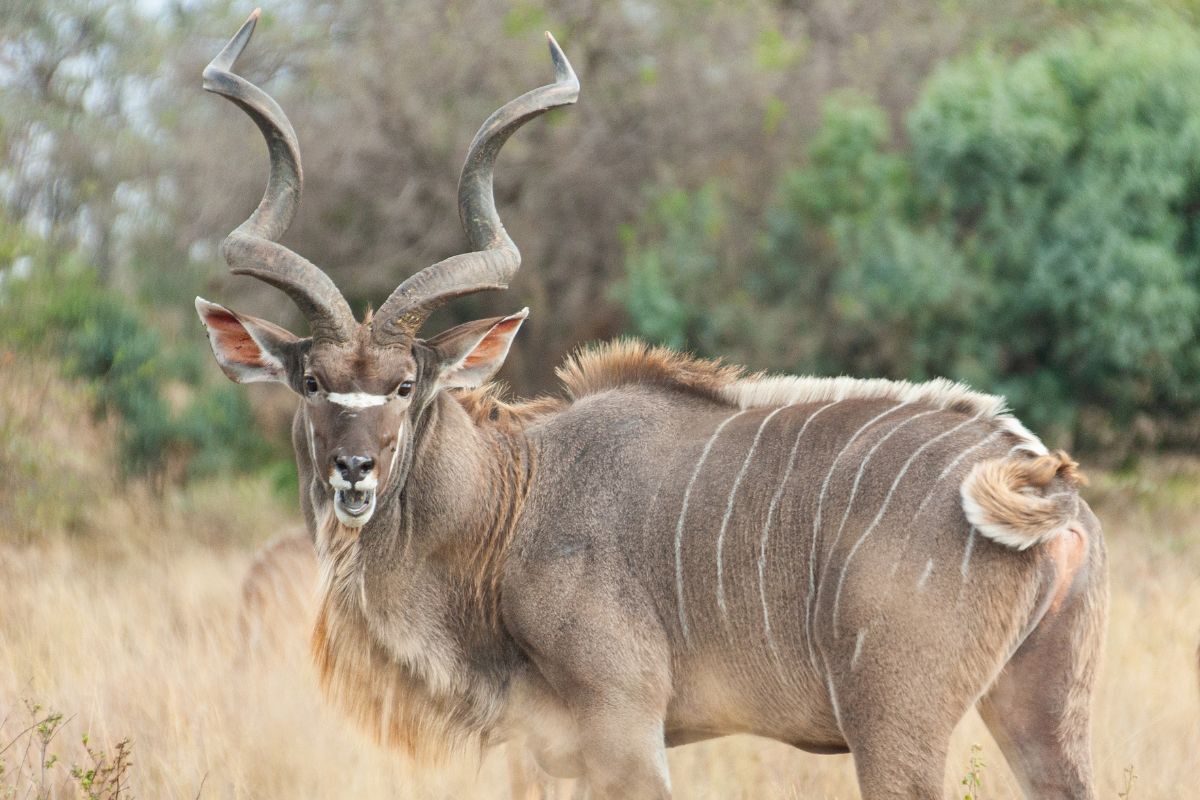
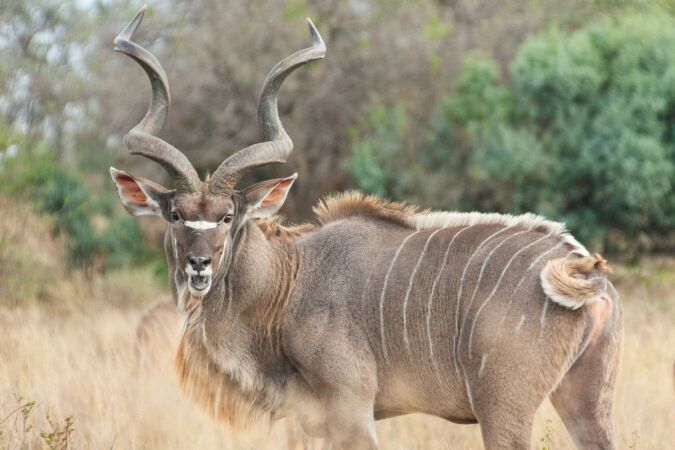
Kudu hunting in Africa is one of the classic plains game experiences. Greater kudu are known for their long spiral horns, exceptional camouflage and ability to disappear into surprisingly little cover, earning mature bulls the familiar nickname “Africa’s Gray Ghost.”


For international hunters, particularly those visiting Africa for the first time, greater kudu sits high on the trophy list. The appeal is not only horn length. A mature bull combines size, character and a style of hunting that rewards patience, glassing and careful stalking.
Africa is home to two kudu species: the greater kudu (Tragelaphus strepsiceros) and the lesser kudu (Tragelaphus imberbis). Greater kudu occur across much of southern and eastern Africa, while lesser kudu are associated mainly with the drier bush country of East and northeast Africa.
The greater kudu is the larger animal, with mature bulls generally carrying longer, more open spiral horns. Bulls over 50 inches are highly desirable, while genuinely exceptional animals can push well beyond 60 inches. Lesser kudu are smaller, with tighter spirals and a distinctly different body pattern and habitat preference.
Kudu hunts are commonly included in broader plains game hunting safaris in Africa, where they often become one of the main objectives of the trip.
Greater kudu are famous for their heavy spiral horns, but judging a mature bull involves more than simply estimating inches. Horn length, depth of curl, mass, tip shape and the overall maturity of the bull all matter in the field.
A bull in the 50-inch class is a very respectable kudu, while bulls pushing into the mid-50s are excellent trophies in many hunting areas. A genuine 60-inch kudu is an exceptional animal and should never be treated as an expected result simply because a hunting area has produced one before.
Trophy potential also varies between countries, regions and individual concessions. South Africa, Namibia and Zimbabwe all produce outstanding greater kudu, but recent results from the specific hunting area are far more useful than relying on a country-wide average.
Some extraordinary greater kudu have exceeded 60 inches by a considerable margin, with a very small number of exceptional animals reaching the 70-inch class. Those bulls are outliers, not a realistic benchmark for an ordinary kudu safari.
The determining factor for a Kudu hunt would be the specific species being harvested.
South Africa is widely regarded as one of the best destinations for kudu hunting in South Africa, particularly in the Eastern Cape and Limpopo provinces where large trophy bulls are commonly taken.
Kudu hunting in Zimbabwe in areas such as Matetsi and the Zambezi Valley can produce large Greater Kudu trophies. Namibia’s central and northern regions also offer excellent opportunities for kudu hunting in Namibia, and the country is known for producing impressive spiral-horned bulls. Botswana also offers good-quality Kudu bulls.
East Africa is the best region to hunt the Lesser Kudu. Due to hunting restrictions and political instability, Ethiopia and Tanzania are recommended for quality Lesser Kudu hunts. Tanzania’s Maasailand provides a popular option for this sought-after trophy, while Kudu hunts in Ethiopia are popular in the Omo Valley and Bale Mountain regions.
For visiting hunters from the United States and Canada, South Africa, Namibia, and Zimbabwe remain the most popular destinations for Greater Kudu hunting due to strong populations, experienced outfitters, and consistent trophy quality.
The best time to hunt kudu is early morning or late afternoon when this antelope is more active.
Countries such as South Africa allow kudu hunting throughout the year, and hunting in South Africa offers one of the most flexible and accessible seasons for international hunters, although the best time is typically during the dry months from May to August when vegetation is thinner and visibility improves.
Other destinations such as Mozambique, Namibia, Zimbabwe, Zambia, Tanzania, Ethiopia, and Uganda have shorter hunting seasons.
Kudu hunts are most commonly conducted using spot-and-stalk hunting. Professional hunters glass hillsides, valleys, and thick bush before beginning a careful stalk on foot.
In some areas, particularly during dry seasons, hunters also ambush kudu near waterholes or along regular travel routes between feeding and bedding areas.
The kudu is one of Africa’s most iconic plains game species and is highly sought after for its long spiral horns and striking appearance.
When it comes to Kudu hunting safaris, they can be quite challenging as this antelope has earned the nickname “Africa’s gray ghost” due to its camouflage skills. Not only that, but this antelope has exceptional hearing, making stalking kudu quite challenging.
Kudu hunts test a hunter’s patience, perseverance, and fitness with long walks through difficult terrain. Many hunters fall short of claiming this trophy as Africa’s gray ghost often evades even experienced hunting parties.
Kudu hunting is widely regarded as one of the most challenging plains game hunts in Africa. Mature bulls are extremely cautious animals with exceptional hearing and eyesight, making them difficult to approach undetected.
Professional hunters often spend hours glassing hillsides and thick bush before beginning a careful stalk, and even experienced hunters sometimes return from safari without harvesting a mature kudu bull.
A kudu can be found on the first morning or keep a hunting party working for several days. If a mature bull is a priority, it is better to allow enough hunting time rather than build the safari around the assumption that kudu will be taken quickly.
For a typical plains game safari where kudu is one of the main objectives, five to seven hunting days is a sensible starting point, with longer safaris giving hunters more flexibility to be selective about trophy quality and pursue additional species. Terrain, kudu density, weather and trophy expectations can all affect how long the hunt actually takes.
Kudu are large antelope and require adequate rifle calibers to ensure an ethical harvest. Popular choices include:
These calibers provide enough energy for clean shot placement while remaining comfortable rifles for extended plains game hunts.
Proper kudu shot placement is critical when hunting large antelope, as wounded animals can travel long distances through dense bush. As with most large antelope species, the preferred shot is the heart-lung area located just behind the shoulder when the animal is standing broadside.
A well-placed shot into the lower third of the shoulder will typically reach the heart and lungs, ensuring a quick, humane harvest. Understanding correct shot placement for large antelope is essential for ethical hunting and successful recovery.
A standard Kudu hunting safari will form part of an African plains game hunt and include the basic service offerings such as accommodation, meals, drinks, professional hunter, camp staff, trackers, on-territory transport, and field preparation of the Kudu trophy.
The cost of a kudu hunt depends on the country, hunting area, safari length and how the hunt is structured. In many southern African destinations, kudu may be hunted as part of a plains game package or added to a safari using a daily-rate and trophy-fee structure.
Hunters should look beyond the kudu trophy fee when comparing options. Daily rates, accommodation, transport, trophy preparation and the number of other species included can all have a greater effect on the final safari cost than the price of the kudu itself.
Trophy expectations can also influence pricing in some hunting areas, particularly where fees are structured according to horn size. Before booking, it is worth confirming whether the kudu price is fixed, size-based or already included in the safari package.
For a broader breakdown of daily rates, trophy fees and the other expenses involved in planning a safari, see our guide to African hunting safari prices.

Search from our range of Hunts across various popular destinations in Africa.
Find A Hunt


