Buffalo Hunting & Roan in the Savannah Cameroon
Booking Season: 2026
Hunt Difficulty: Difficult

Western roan hunting in Cameroon is not a typical African safari.
This is one of the last places in Africa where you can hunt the true West African western roan antelope in vast, unfenced wilderness. It’s remote, physically demanding, and far less predictable than hunts in Southern Africa — but for the right hunter, that’s exactly the appeal. Before committing to a western roan hunt, it’s worth understanding what hunting in Cameroon actually involves, as the country itself plays a major role in shaping the experience.
If you’re considering this hunt, it’s also worth understanding how it compares to other roan antelope hunts across Africa.
Available Western Roan Hunts
Buffalo Hunting & Roan in the Savannah Cameroon
Booking Season: 2026
Hunt Difficulty: Difficult
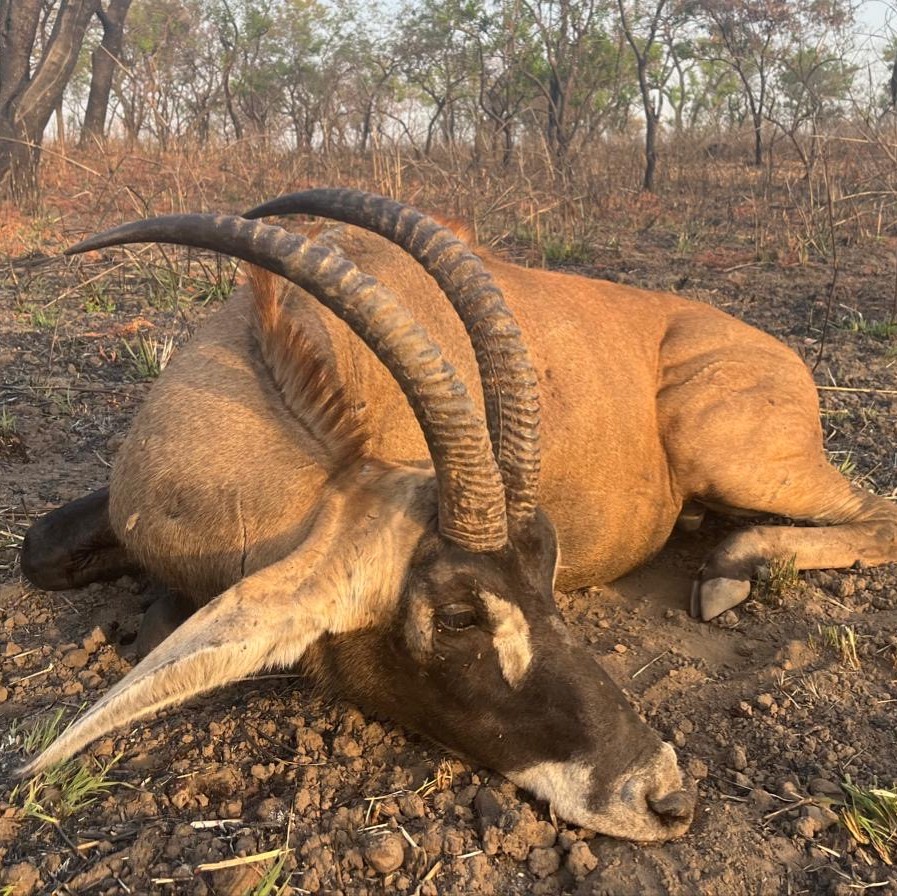
Game Hunting in Cameroon: Roan, Buffalo & 4 More Species
Booking Season: 2026
Hunt Difficulty: Difficult
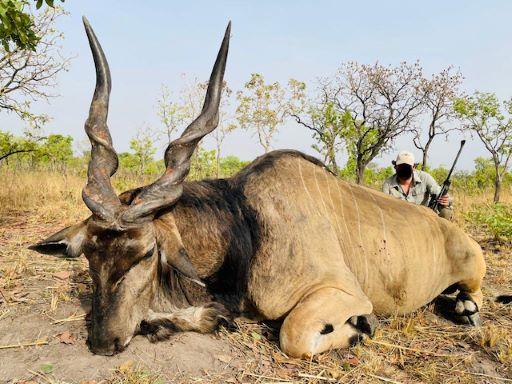
Hunting in Cameroon, Lord Derby Eland, Lion & More
Booking Season: 2026
Hunt Difficulty: Difficult
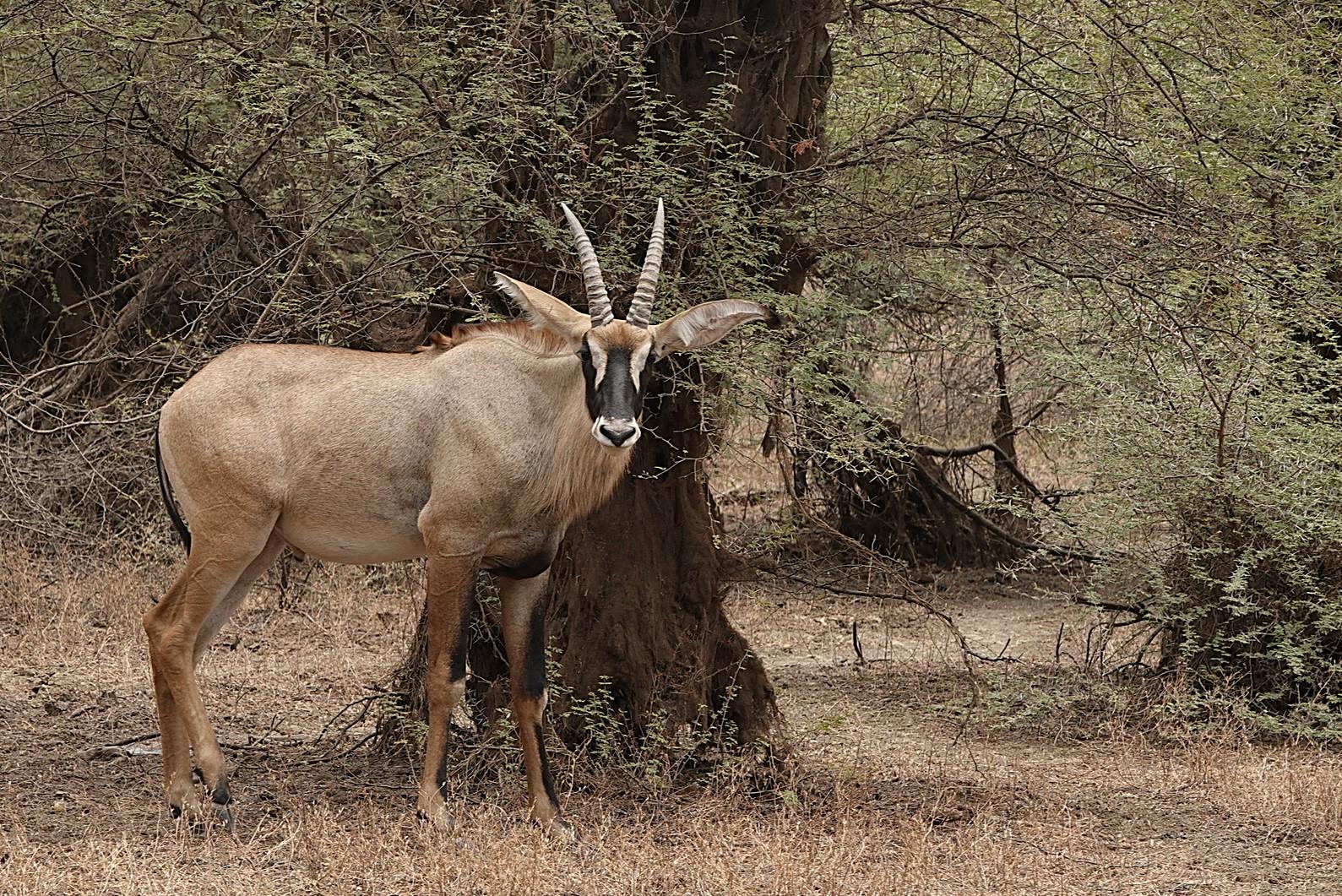
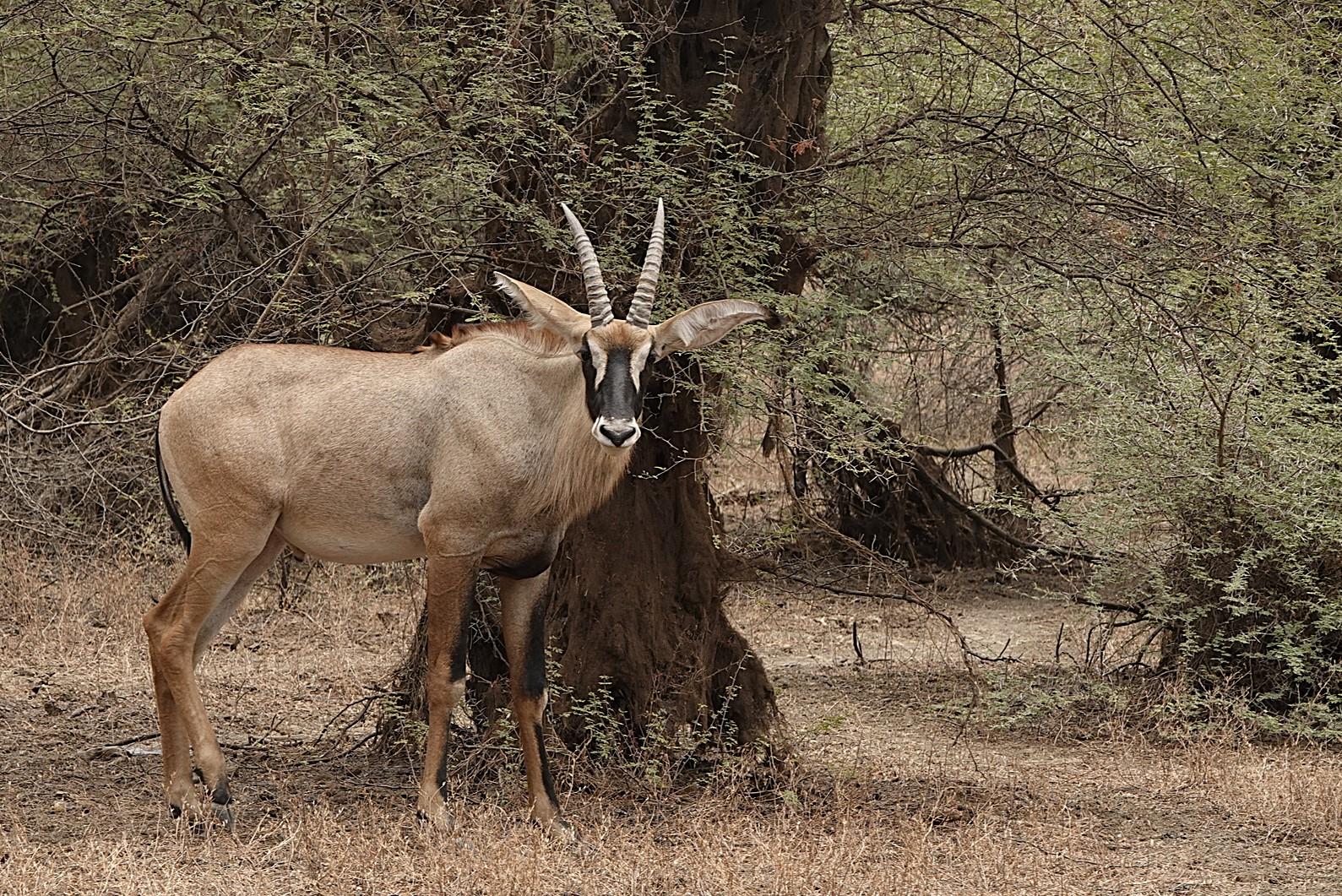
The western roan subspecies is found in West Africa, and Cameroon remains one of the few countries where regulated, fair-chase hunting is still available.
Unlike roan hunts in countries like Namibia or South Africa:
You are hunting a different subspecies
In massive, wild concessions
With far less infrastructure and comfort
This is not a managed ranch hunt — it’s a true expedition-style safari. Understanding what it’s like when hunting in Cameroon is essential before making a decision.
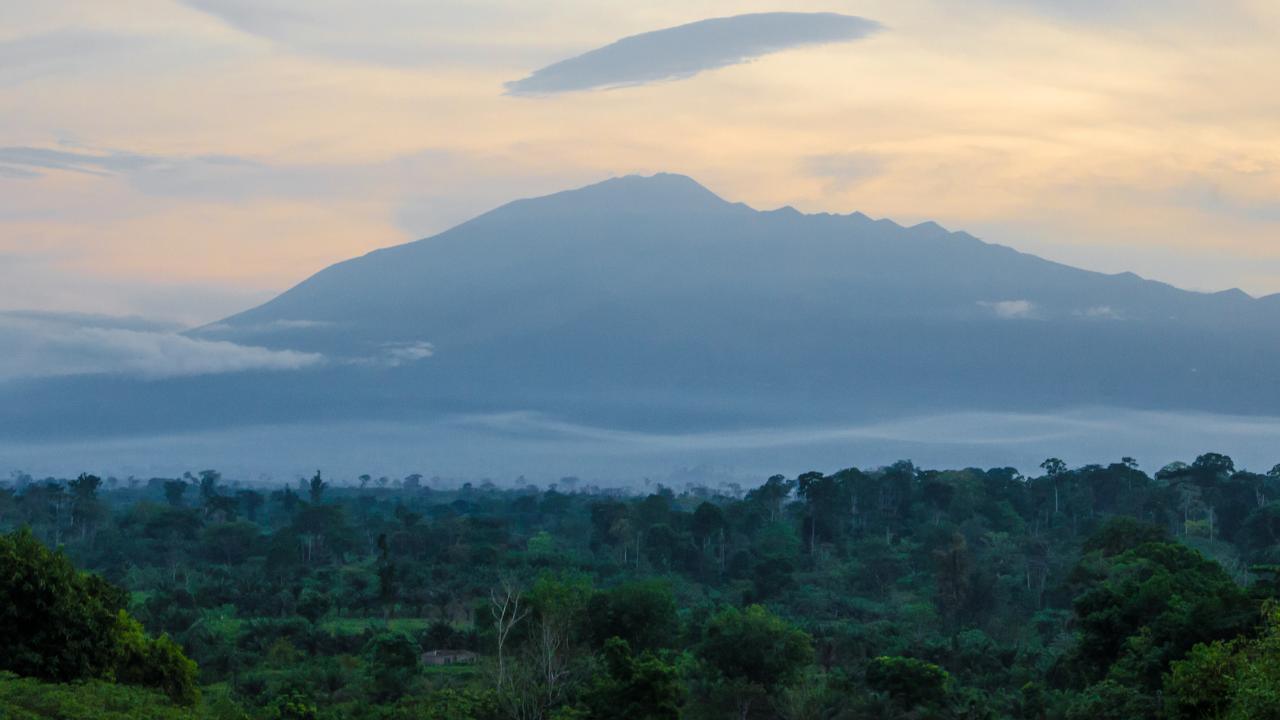
Most western roan hunts take place in the northern regions of Cameroon, typically in vast savannah concessions accessed via Garoua.
What makes these areas different is their scale and lack of development. These are not fenced properties or managed hunting blocks — they are expansive, wild landscapes that can stretch across hundreds of thousands of acres. Wildlife moves freely, and hunting pressure is spread over enormous areas. In the same concessions, you’ll encounter species like buffalo, kob, and western hartebeest, all sharing the same habitat. It’s a functioning ecosystem, not a controlled environment.
The practical reality is simple: you are not covering small areas and rotating properties. You are hunting a single, massive concession — and covering real distance to find the right animal.
A western roan hunt in Cameroon is built around a combination of glassing and tracking, with most days starting early to take advantage of cooler temperatures and increased animal movement.
Typically, you’ll begin by covering ground with a vehicle, glassing open areas and road systems for signs of roan. Once animals are located — or fresh tracks are found — the hunt quickly shifts to being on foot. From that point on, it becomes a tracking exercise. You may follow spoor for extended distances, adjusting to wind, terrain, and visibility, often closing the final distance slowly in open savannah conditions.
This is not a passive hunt. Days are long, conditions can be hot and dry, and a significant amount of time is spent walking. Some days produce opportunities, others don’t — and that unpredictability is part of the experience. Patience plays a bigger role here than most hunters expect. It’s not about volume or quick success — it’s about working through conditions until the right opportunity presents itself.
This is one of the more expensive plains game-style hunts in Africa — and understanding why helps set the right expectations.
A typical western roan safari in Cameroon runs between 10 and 15 days, with daily rates generally falling in the $1,500 to $2,000 range. Trophy fees for western roan are usually around €2,000, but the full cost of the hunt goes well beyond that. In reality, most hunters should expect a total investment in the range of $25,000 to $35,000 or more.
The reason for this is not just the animal itself, but the logistics. Northern Cameroon is remote, and reaching camp often involves charter flights, ground transfers, and significant operational support. On top of that, there are government fees, permits, and export costs that need to be factored in. This is very different from a typical Southern African safari, where infrastructure is more developed and access is easier. In Cameroon, you are paying for access to a remote, wild hunting area — not just the opportunity to take a single animal.
For most hunters, the key is to view this as a full expedition rather than a single-species hunt. Once you understand that, the pricing starts to make more sense.
Most western roan hunts in Cameroon are not structured around a single animal — and they shouldn’t be.
This is a true West African safari, and the value of the experience comes from the variety of species available in the same vast concessions. You are already committing to a long, remote hunt, so it makes sense to approach it as a broader expedition rather than a single-species trip. In the same areas where western roan are found, you’ll often encounter species like Lord Derby eland, savannah buffalo, kob, western hartebeest, and bushbuck. These animals are not add-ons in the typical sense — they are part of the same ecosystem, often encountered during the same tracking days.
A well-structured safari usually allows you to remain flexible. You might head out in the morning focused on roan, only to cut fresh buffalo tracks or come across a mature hartebeest bull. In these situations, having multiple species on your license gives you options rather than forcing you to pass opportunities. This is one of the biggest differences between hunting in Cameroon and more structured Southern African safaris. You are not moving between properties or targeting pre-selected animals — you are hunting what the land gives you.
For most hunters making the trip, the goal is not just to take a western roan, but to experience a full West African safari. That usually means building a package that includes at least two or three additional species, both to maximize the opportunity and to justify the time and cost of getting there.
Western roan are not typically judged the same way as their Southern African counterparts. While horn length is still a factor, a mature bull is defined more by age, body condition, and overall presence than by measurement alone. In Cameroon, hunting conditions and opportunity play a much bigger role than selective trophy picking. You may not get multiple chances to compare animals side by side, and decisions are often made in the moment.
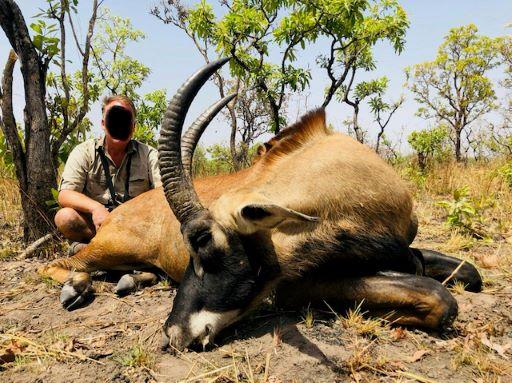
For most hunters, the goal should be a fully mature bull with solid horn shape and character. A well-earned animal in this environment carries far more value than chasing specific inches.
This is the part most hunters underestimate.
Western roan hunting in Cameroon is not technically complex — but it is physically and mentally demanding in a way that catches people off guard. You will cover ground. Some days that means steady walking in heat and dust, following tracks that don’t always lead to an opportunity. Other days may feel slow, with long periods of glassing or tracking without seeing the animal you’re after. That’s the nature of hunting in large, unfenced concessions.
Success depends heavily on conditions — wind, visibility, fresh spoor, and timing all play a role. You may get close quickly, or you may spend hours working a track only to lose it or run out of light. There are no guarantees here. You can do everything right and still have to wait for the right chance.
And that’s really the point. This is not a numbers-driven hunt — it’s a process. When it does come together, it feels earned in a way that more structured safaris often don’t.
This hunt is not for everyone — and being honest about that upfront saves a lot of disappointment.
If you’re looking for a short, comfortable safari with predictable outcomes, there are better options elsewhere. The same applies if your priority is high success rates with minimal physical effort. Hunters new to Africa, or those unsure about hunting in remote environments, may find this experience more demanding than expected. Conditions are less controlled, logistics are more complex, and the pace of the hunt can feel slow compared to Southern African safaris.
It’s also not a good fit if you’re not prepared for full hunting days on foot. Even when using a vehicle to locate animals, the real work happens on the ground. There’s nothing wrong with choosing an easier or more structured hunt — it just means this one may not align with what you’re looking for.
The hunting season for western roan in Cameroon typically runs during the dry months, from January through March.
This period offers the most consistent conditions. Vegetation is thinner, making it easier to spot animals, and water availability becomes more limited, which helps concentrate game in certain areas. From a practical standpoint, it also makes tracking more effective. Dry ground holds spoor better, and visibility in the bush is significantly improved compared to earlier in the season. Outside of these months, hunting becomes more unpredictable. Thicker vegetation, scattered water sources, and changing weather patterns can all make locating and approaching animals more difficult.
For most hunters, timing the safari within this dry window is one of the most important factors in setting realistic expectations.
For the right hunter — absolutely.
But this isn’t a hunt you measure in convenience, comfort, or even success rates. It’s about something different entirely. It’s about pursuing a rare West African subspecies in a truly wild environment, where nothing is controlled and very little is guaranteed. It’s about long days, unpredictable conditions, and moments that have to be earned rather than expected.
That’s exactly why it appeals to a certain type of hunter. If you’re looking for efficiency or a straightforward safari, there are better options elsewhere. But if you’re after a hunt that feels authentic — where the experience matters as much as the outcome — then Cameroon offers something very few places still can.
Getting to the hunting areas in northern Cameroon is part of the experience — and something that needs to be planned properly.
Most hunters travel internationally via Europe before connecting into Cameroon. From there, reaching camp typically involves additional domestic flights or charter aircraft, followed by ground transfers into remote concessions. Compared to Southern African destinations, logistics are more complex and less standardized. Travel times are longer, connections need to be carefully coordinated, and moving with firearms requires additional preparation.
For many hunters, this is their first exposure to truly remote African hunting. Understanding the journey beforehand helps set realistic expectations and avoids unnecessary stress.
Before committing to a western roan hunt in Cameroon, it’s worth taking a step back and being clear about what you want from the experience.
Make sure you’re comfortable with the physical demands and the pace of this kind of hunting. This is not a short trip, and it’s not built around quick results. It’s also worth planning the safari as a broader experience rather than focusing on a single animal. Most hunters who get the most out of Cameroon approach it as a multi-species hunt, taking advantage of what the area offers rather than limiting themselves to one objective.
Finally, the choice of operator matters more here than in more developed hunting destinations. Experience in the region, knowledge of the concessions, and realistic communication upfront can make a significant difference in how the hunt unfolds. While Cameroon is a remote and less-traveled hunting destination, safaris are conducted in established concessions with experienced professional hunters and support teams on the ground. For most international hunters, the key is working with operators who understand the logistics, permits, and local conditions, ensuring the hunt runs safely and as planned.
This is one of those safaris where expectations shape the outcome. Go in with the right mindset, and it can be one of the most rewarding hunting experiences available in Africa. For a broader understanding of how safaris are structured, costs, and logistics across the country, it’s worth exploring hunting in Cameroon in more detail before booking.
Most safaris range between $25,000 and $35,000 or more, depending on duration, species included, and logistics such as charter flights.
It is a physically demanding hunt that involves tracking on foot, long days, and variable conditions. Success is not guaranteed and often requires patience.
The dry season from January to March offers the most consistent conditions, with better visibility and easier tracking.
Medium to large calibers such as .300 Win Mag, .338, or similar are commonly used, depending on hunter preference and shot placement.
Yes — most hunters include species like Lord Derby eland, buffalo, or kob as part of a broader safari.
Hunting areas are typically remote and well-managed by professional outfitters. As with any destination, working with experienced operators and understanding travel logistics is important is important before planning your safari.
Search from our range of Hunts across various popular destinations in Africa.

Book Your Hunt