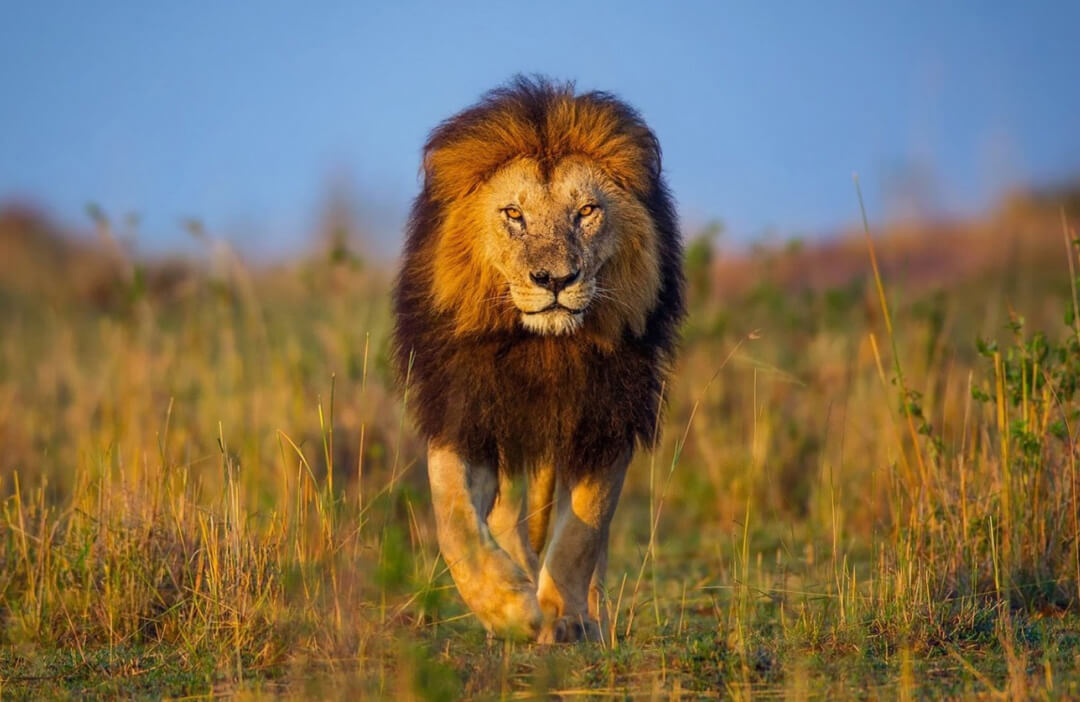
Designed by Hunters, for Hunters


The African lion is one of the continent's most iconic predators, with mature males often weighing between 180 and 230 kilograms. Known for their territorial behavior and dominance, lions require careful tracking and disciplined shot placement.
In Ethiopia, lion populations occur in remote and less pressured ecosystems. This results in more natural behavior patterns, but also means hunts can be physically demanding and require extended tracking over large areas, which is typical of lion hunting in Ethiopia.
For hunters comparing lion hunts in Africa, Ethiopia offers a far more remote and traditional experience than most mainstream safari destinations.
Lion hunting in Ethiopia is typically conducted through tracking rather than baiting, which differs from many southern African countries. This means hunters must locate fresh spoor and follow it until an opportunity presents itself.
Encounters can happen quickly and often at closer distances in thicker cover. Shot placement must be precise, particularly when visibility is limited or when the animal is partially obscured by vegetation.
Most professional hunters recommend a minimum caliber of .375 H&H for lion hunting in Ethiopia. However, larger calibers such as .416 Rigby or .458 Lott are often preferred for added stopping power in close-range situations.
Bullet selection is important, with controlled expansion bullets typically used to ensure adequate penetration while minimizing the risk of insufficient performance on dangerous game.
Lion hunting in Ethiopia is primarily conducted in remote regions such as the Omo Valley, parts of the Bale region, and other designated hunting concessions.
These areas are characterized by:
• Thick bushveld and riverine systems
• Rugged, undeveloped terrain
• Low hunting pressure compared to southern Africa
Each region presents different challenges, but all require a strong emphasis on tracking and patience.
This is not a high-volume or predictable lion hunt. Days are typically spent tracking spoor across difficult terrain, often covering long distances on foot.
Because baiting is not the primary method, hunters should expect fewer controlled setups and more dynamic encounters. Opportunities may come quickly and require calm decision-making under pressure.
This type of hunt is better suited to experienced hunters who are comfortable with uncertainty and physically demanding conditions.
Lion hunting in Ethiopia usually begins early in the morning, with trackers and the professional hunter searching for fresh spoor in areas where lions have moved during the night.
Once a track is found, the hunt becomes a process of following that spoor on foot, often over long distances. This can take several hours, depending on terrain and how recently the lions have passed through the area.
As the distance closes, the pace slows significantly. The final approach is cautious and deliberate, especially in thicker cover where visibility is limited and encounters can happen quickly.
Unlike baited hunts in other countries, opportunities are less controlled. When a shot presents itself, it is often brief and requires immediate, confident decision-making.
Not every day results in an opportunity, and multiple days may be spent tracking without a shot. This is part of the reality of lion hunting in Ethiopia and should be expected.
The best time to hunt lion in Ethiopia is generally during the dry season, when water sources become limited and animal movement becomes more predictable.
During this period:
• Tracking conditions improve due to drier ground
• Visibility increases as vegetation thins
• Lions concentrate more around water and prey movement areas
Lion hunting in Ethiopia is strictly controlled through a limited quota system. Only a small number of permits are issued each year, and these are typically allocated to specific hunting concessions.
As a result, availability is extremely limited, and hunts often need to be booked well in advance. This is not a destination where last-minute lion hunts are commonly available.
International hunters considering lion hunting in Ethiopia should carefully evaluate trophy import regulations before booking.
Import permits can be complex and, in some cases, restricted depending on the hunter's home country. This is particularly relevant for hunters from regions where lion imports are tightly regulated.
Working with experienced outfitters and ensuring all documentation is in place before the hunt is essential.
Compared to countries like Zimbabwe, Tanzania, or Mozambique, Ethiopia offers a very different lion hunting experience.
It is less structured, more remote, and significantly lower in volume. While other destinations may offer more predictable outcomes and established systems, Ethiopia appeals to hunters looking for a rarer and less conventional hunt.
This comes with trade-offs, including lower availability, more complex logistics, and less certainty around outcomes.
Lion hunting opportunities across Africa vary significantly depending on the country, quota systems, and hunting methods used.
While Ethiopia offers a rare and highly specialized experience, most lion hunts take place in more established destinations where systems, availability, and logistics are more predictable.
Hunters who are still exploring their options or looking for a broader overview of available hunts may want to review current lion hunting opportunities across Africa before making a final decision.
Lion hunting in Ethiopia should be considered a challenging hunt with no guaranteed outcomes. Success rates are generally lower than in more established lion hunting destinations.
The combination of low densities, large hunting areas, and tracking-based hunting means that hunters must be prepared for physically demanding conditions and the possibility of not securing a trophy.
Lion hunting in Ethiopia is not a typical choice, and for most hunters, it will not be the right option.
This is a hunt that appeals to a very specific type of hunter — someone who values rarity, remote wilderness, and a less structured experience over predictability and higher success rates.
The trade-off is clear. Ethiopia offers a more authentic and low-pressure environment, but with that comes limited availability, more complex logistics, and a higher level of uncertainty compared to more established lion hunting destinations.
For international hunters, this decision should be made carefully, particularly when considering permit availability and trophy import requirements.
For those who understand these realities and are specifically looking for a less conventional lion hunt, Ethiopia can offer a unique experience. For most others, more established countries will provide a more practical and predictable option.
Lion hunting in Ethiopia is not suited for hunters looking for a structured or high-success safari experience. Opportunities are limited, and hunts can involve long periods of tracking with no guarantees.
It is also not ideal for many international hunters, particularly those requiring straightforward trophy import processes. Regulations and permitting can be complex, and in some cases, importing lion trophies may be restricted or delayed depending on the hunter's home country.
Hunters looking for a more predictable lion hunt with clearer systems and logistics may be better suited to countries like Zimbabwe or Mozambique.
Search from our range of Hunts across various popular destinations in Africa.

Book Your Hunt