Designed by Hunters, for Hunters

Hunting Menelik's bushbuck in Africa is not something most international hunters actively plan for---but once you understand the animal and where it lives, it becomes one of the more unique antelope experiences you can have on the continent.
For hunters considering hunting in Ethiopia, Menelik's bushbuck offers one of the most unique and region-specific antelope experiences in Africa.
Hunters familiar with bushbuck hunts elsewhere in Africa will quickly realize that Menelik’s bushbuck offers a far more specialized and terrain-driven experience. This is not just another bushbuck.
It's a subspecies that exists almost entirely within Ethiopia, shaped by the country's highland terrain, dense cover, and unique ecosystems. Because of that, it behaves a little differently---and feels very different once you're actually in the field.
At first glance, it may resemble other bushbuck you've seen across Africa. But that similarity fades quickly.
The darker coloration, heavier markings, and the environments it inhabits set it apart. This is an animal tied closely to place---and you feel that immediately when you start hunting it.
Like all bushbuck, it relies on cover, awareness, and subtle movement rather than speed or herd behavior.
But here, in Ethiopia, those traits are amplified by terrain that naturally gives the animal an advantage.
This is not a hunt built on visibility.
It's built on interpretation.
The Menelik's bushbuck is a distinct subspecies of bushbuck found primarily in Ethiopia, particularly in the highlands and forested regions.
Hunters comparing bushbuck hunting opportunities should understand how Menelik's bushbuck differs from other subspecies found across Africa.
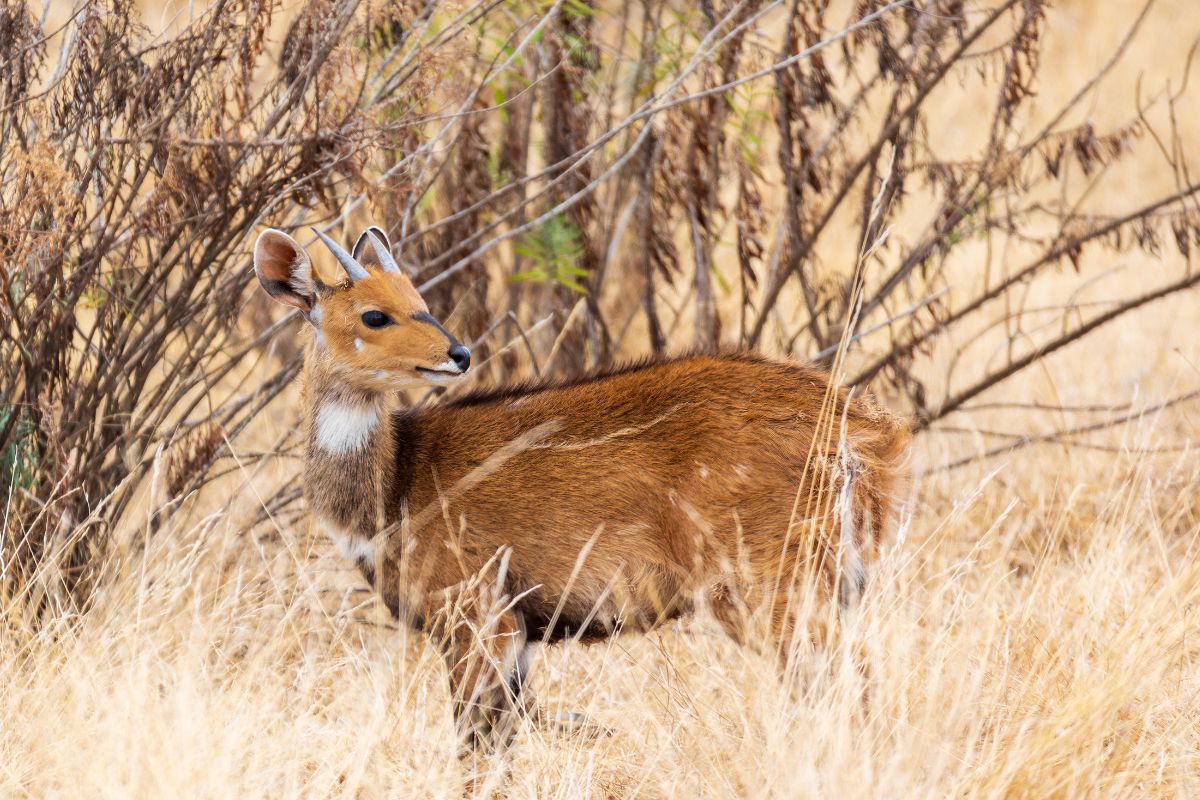
Rams are typically darker than other bushbuck varieties, often appearing almost charcoal grey to deep brown, with well-defined white markings and spotting.
They carry the classic bushbuck spiral horns---tight, sharp, and proportionate---but the visual impact of the animal comes more from contrast and coloration than horn size alone.
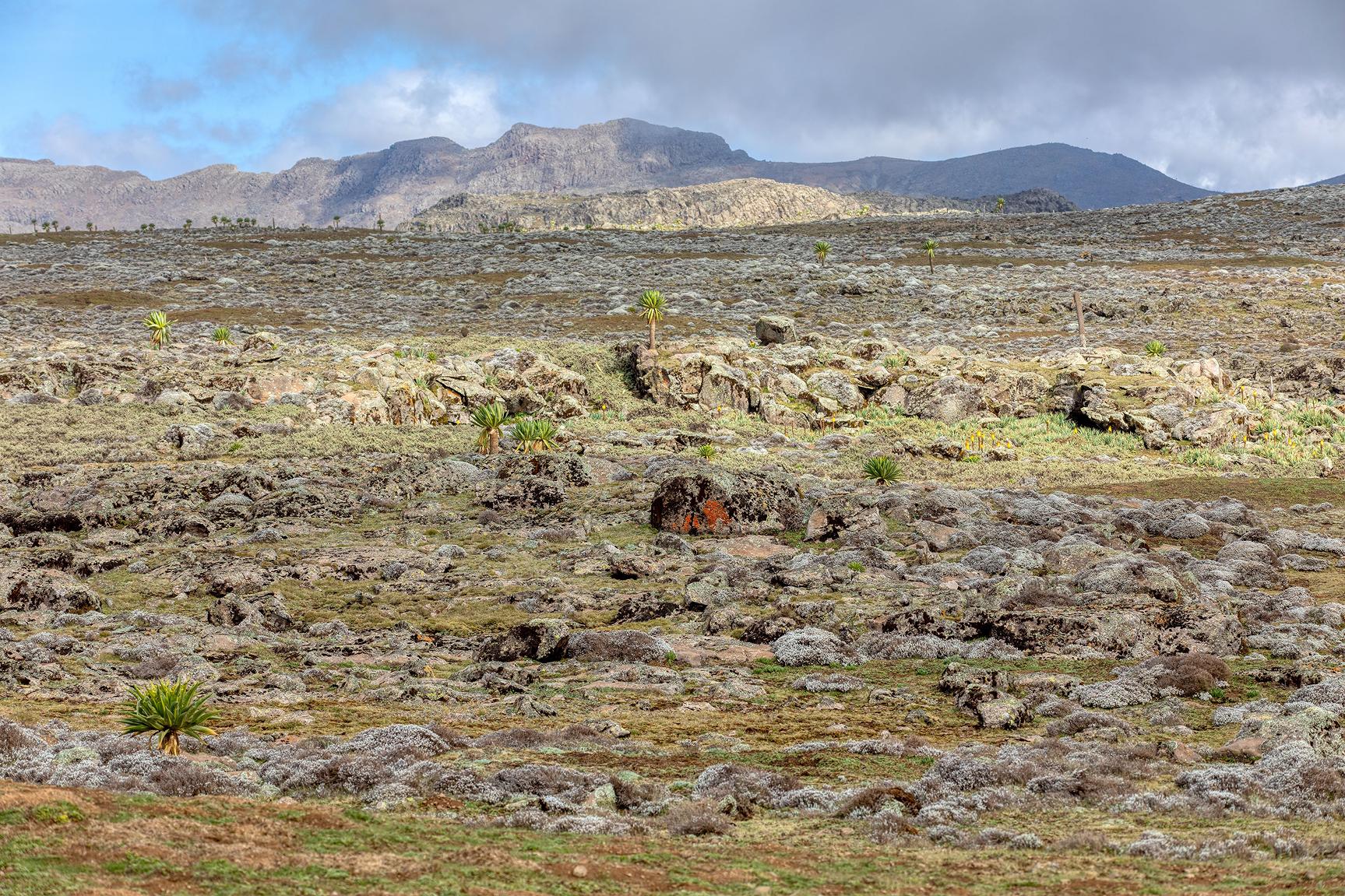
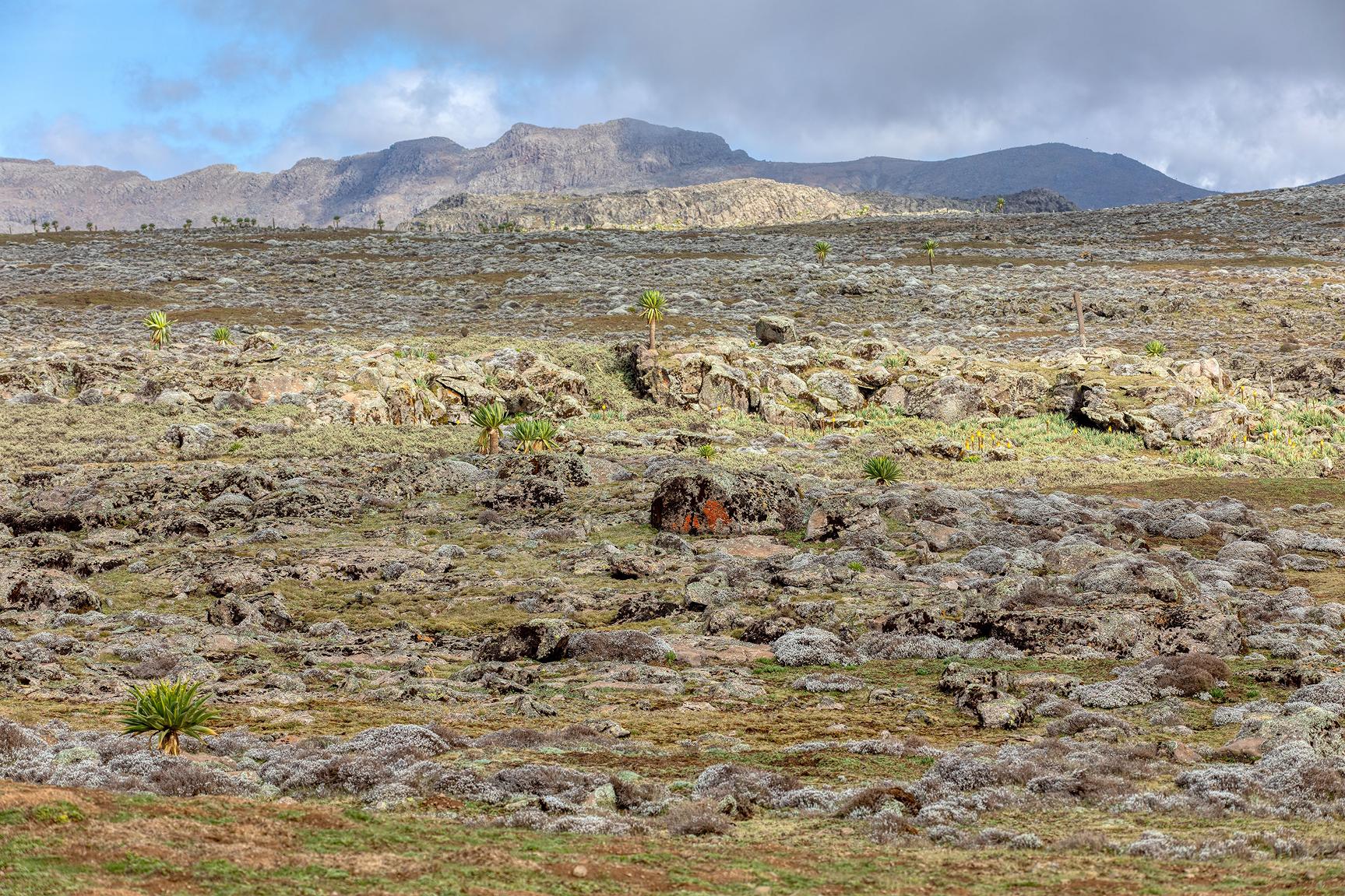
This subspecies is strongly associated with highland forest edges, dense riverine cover, and broken, mountainous terrain.
Unlike more common bushbuck populations in southern Africa, these animals are far more tied to elevation and thicker, less accessible environments.
They are browsers, feeding on leaves, shoots, and low vegetation, and they spend most of their time in or near cover.
You rarely see them in the open for long.
Most bushbuck hunts across Africa follow a similar pattern.
You move slowly through suitable habitat, glass edges, and wait for movement or a brief opportunity.
That still applies here---but the context changes everything.
Menelik's bushbuck are not just a variation of the same animal.
They are shaped by a completely different environment.
The terrain is steeper. The vegetation is thicker. The visibility is more limited. And because of that, the interaction feels more contained, more controlled---and often more difficult to read in real time.
In many Ethiopian concessions, you're working in broken highland terrain where visibility can drop to 20--40 meters, and animals use shadow and elevation to disappear without ever needing to run.
This is less about covering ground.
It's about understanding small pockets of terrain where the animal already has the advantage.
You're not just hunting a bushbuck.
You're hunting a bushbuck that belongs to Ethiopia---and that difference matters.
Shot placement follows the same fundamentals as any bushbuck.
The vital zone is well-defined, and a properly placed shot will be effective.
What complicates things is not anatomy---it's presentation.
You're often dealing with partial visibility, thick brush, and angled shots through small gaps.
In many cases, you'll only have a few seconds through a gap in vegetation before the animal shifts position or disappears completely.
The window you get is rarely perfect, and it doesn't last.
And like most bushbuck, they don't stand exposed for long.
You may only see part of the animal clearly---and that's where decision-making becomes critical.
Waiting for a perfect broadside opportunity often means losing the shot entirely.
Light to medium calibers are more than sufficient for Menelik's bushbuck. This is not a heavy-bodied animal, and trying to compensate with more power usually adds complexity without improving the outcome.
Most hunters use standard plains game calibers they're already comfortable with, and that's usually the right approach. What matters here is not energy---it's control, shot placement, and the ability to take a shot confidently within a limited window.
In this type of hunting, precision will always matter more than power.
Menelik's bushbuck are almost exclusively found in Ethiopia, which makes this a highly destination-driven species. You're not choosing between multiple countries or regions---you're deciding whether or not to hunt Ethiopia.
Within the country, they are typically found in controlled hunting areas where habitat, elevation, and vegetation create the right conditions for stable populations. Most hunts take place between 1,500--3,000 meters (5,000--9,800 ft), where terrain, slope, and vegetation density naturally limit visibility and movement.
This is not wide-open plains game hunting. You spend more time working through terrain, reading cover, and identifying movement within confined spaces. In a full safari, it's not uncommon to see only a handful of mature, shootable rams, often encountered opportunistically while hunting other species.
In practical terms, this is not a species you plan a hunt around with guaranteed expectations. In many cases, you may only encounter one or two real opportunities over the course of an entire safari---and that's if conditions and timing come together. In most situations, the animal is aware of you long before you feel close to it.
This is a slower, more deliberate hunt, but not in the sense of covering long distances or glassing animals from far off. Most of the time, you're working within environments where visibility is limited and opportunities don't present themselves clearly or with much warning.
You're often dealing with tight shooting lanes and inconsistent light, where animals blend into shadow and terrain before your brain has fully processed what you're seeing. It's common to move through an area that feels quiet and uneventful, only to realize---sometimes a moment too late---that something was there all along.
The encounters themselves are usually brief. You might catch a shape, a line, or a slight shift in shadow that doesn't quite match the surroundings, and by the time it registers, the opportunity is already fading. Nothing dramatic happens. The animal doesn't bolt or give a clear signal.
It's just there---and then it's gone.
Most hunters don't lose these opportunities because the shot is difficult. They lose them because the moment never fully presents itself in a clear way, and by the time it's recognized for what it is, it's already passed.
You catch movement along the edge of thick cover, but at first it's not even clear what you're looking at---just a dark shape sitting in shadow that doesn't quite match the surrounding terrain. As you watch, the markings begin to separate from the background, and you recognize the ram.
There's no panic and no sudden movement. He's aware---but not alarmed.
You start to adjust your position slightly, trying to open the angle and get a clearer view through the brush. For a moment, it feels controlled, like you have time to improve the situation. Then he takes a step. Not away---just slightly forward, enough to bring more vegetation between you and him and narrow what little visibility you had.
You hesitate, expecting him to step clear again, but he doesn't.
Instead, the window closes almost without you noticing. The shape breaks apart into shadow, the outline disappears, and within seconds there's nothing left to work with. No sound, no sudden movement---just absence.
Most hunters walk away from that moment expecting another chance. In reality, that first look is often the only real opportunity you're going to get.
The opportunity doesn't collapse.
It fades, and then it's gone.
This is not a high-volume species.
Availability is limited and tied directly to Ethiopia's hunting concessions and quota systems.
In many areas, quotas are low and encounters are unpredictable, which is why most animals are taken opportunistically rather than as a primary target. It's not something you force---it's something that happens if you're paying attention when the moment comes.
Most hunters do not pursue Menelik's bushbuck as a standalone objective.
It is typically taken as part of a broader Ethiopian safari.
And in many cases, it becomes one of the more memorable parts of the experience.
With a species like Menelik's bushbuck, it's important to approach trophy import with a bit more attention than you would for common plains game. While export and import are generally possible, this is not a high-volume species, and that can introduce additional variables depending on the outfitter, exporter, and destination country.
The key is to confirm everything upfront---before the hunt is booked---not afterward. That includes export capability from Ethiopia, handling by a qualified shipping agent, and import requirements specific to your home country. For hunters from the United States or Canada, that typically means ensuring all documentation aligns properly before anything leaves Africa.
Unlike more common species, you can't assume the process will be routine. It usually works---but only if it's handled correctly from the start.
Most hunts begin by working through suitable habitat---slowly, deliberately, and with constant attention to detail.
You're not pushing animals.
You're trying to exist within their environment long enough for a moment to appear.
In many cases, encounters happen while transitioning between areas or focusing on other species---not from actively targeting bushbuck alone. That's often what catches hunters off guard.
Because of that, it's not a reliable primary target in the way more common plains game species are. The hunt rarely unfolds in a structured or repeatable way, and trying to force the situation usually works against you.
Success comes from reading terrain, noticing subtle movement, and acting before the situation changes.
There is very little structure to rely on.
And very little warning when things shift.
Most hunters simply aren't aware of it. It's not widely marketed, it doesn't show up in standard plains game packages, and it doesn't carry the same recognition as more well-known species. Because of that, it tends to get overlooked---not because it lacks value, but because it lacks visibility.
But that usually changes once you encounter it in the field. The setting, the behavior, and the way the hunt unfolds feel different from what most hunters expect. And for those who have already experienced Africa and are starting to look beyond the obvious species, it often becomes one of the more memorable parts of the entire safari.
This is not typically a species that makes the list on a first trip to Africa. Most hunters are focused on more familiar plains game, where visibility is better and opportunities are easier to manage.
Menelik's bushbuck tends to become relevant later---usually when you've already experienced those hunts and start paying attention to animals that offer something different in how they're found, approached, and taken. It's less about adding another species, and more about changing the type of interaction you're looking for.
In many cases, it's not even a planned priority. It becomes something you recognize once you're in the environment and start noticing how these animals move, where they position themselves, and how quickly opportunities come and go. And once that clicks, it's hard to ignore.
This hunt suits hunters who pay attention to detail and are comfortable operating in environments where visibility is limited and opportunities are not clearly defined. It favors those who can read subtle movement, interpret incomplete information, and make decisions without waiting for a perfect setup. You're often working with brief windows, partial views, and situations that don't fully come together---and being able to act within that uncertainty is what separates success from hesitation.
It's not a physically demanding hunt, and it doesn't rely on speed or endurance. What matters here is awareness, composure, and timing. Hunters who are patient in the right way---not waiting for something better, but recognizing when a situation has already reached its best point---tend to do well.
Physically, this is not a demanding hunt, but that's not where the challenge lies. The difficulty comes from interpretation---working in environments where the animal has the advantage and where opportunities don't present themselves clearly. You're often dealing with limited visibility, brief windows, and situations that never fully come together in a clean, predictable way.
Most encounters feel incomplete. You see part of the animal, a shift in movement, or a shape that requires quick confirmation---and by the time everything makes sense, the moment is already changing. That's where most hunters hesitate. They wait for clarity, for a better angle, or for the situation to improve. But with Menelik's bushbuck, it rarely does. And that hesitation is usually what costs the opportunity.
Most missed opportunities follow the same pattern. Hunters hesitate at the wrong moment---waiting for a slightly better angle, a clearer view, or more time to settle in. In doing so, they make small adjustments that feel harmless but are enough to shift the situation.
The ram doesn't bolt or show obvious alarm. Instead, he simply steps once, uses the terrain or cover to his advantage, and disappears before the shot ever materializes. Nothing feels rushed, and nothing looks like it went wrong---but the opportunity is already gone.
Most hunters don't lose these animals because they can't make the shot. They lose them because they expect the situation to improve, when in reality it has already reached its best point.
For most hunters, this isn't something they think about early on---mainly because it's not a species that gets much attention. But that tends to change once you see how it fits into the overall experience on the ground. This isn't a hunt driven by horn size or recognition. It's about engaging with an animal that is closely tied to its environment, where terrain, cover, and behavior all shape how the encounter unfolds.
At the same time, there's an element of rarity that's hard to ignore. Menelik's bushbuck are not widely hunted, and very few make it into trophy rooms compared to more common plains game species. That's not because they lack quality---it's because of where they live, how they're hunted, and how limited the opportunities are.
What makes it stand out is the type of interaction. It's quieter, less predictable, and often over before it fully comes together. There's less structure to rely on, and fewer chances to correct mistakes. For hunters who have already experienced Africa and are starting to value how a hunt feels rather than just what it produces, that combination of rarity and experience is usually what makes it worth doing.
This hunt is not suited for hunters who prefer fast-paced shooting, expect multiple opportunities, or rely on having time to build a perfect setup. Menelik's bushbuck doesn't operate that way. It doesn't offer repeat chances, and it doesn't wait for situations to improve. What you see is usually what you get---and if that moment passes, it's gone without warning. Hunters who are used to adjusting, repositioning, or waiting for a better angle often find themselves just a step behind. This hunt doesn't reward hesitation. It rewards awareness, timing, and the ability to act before the opportunity quietly disappears.
Search from our range of Hunts across various popular destinations in Africa.

Book Your Hunt