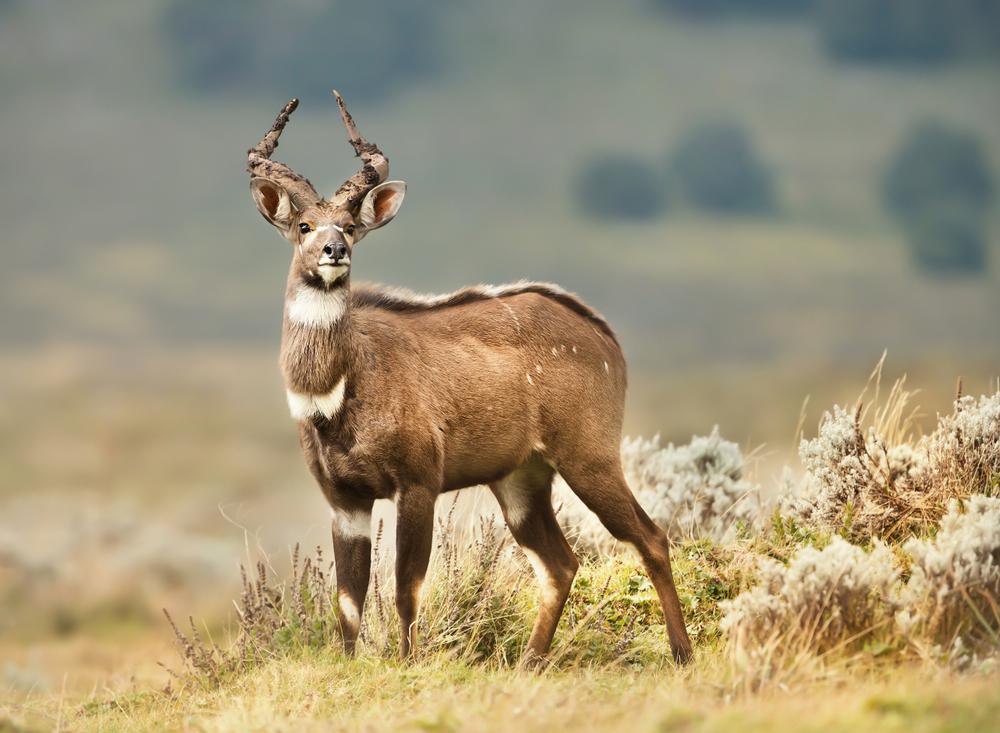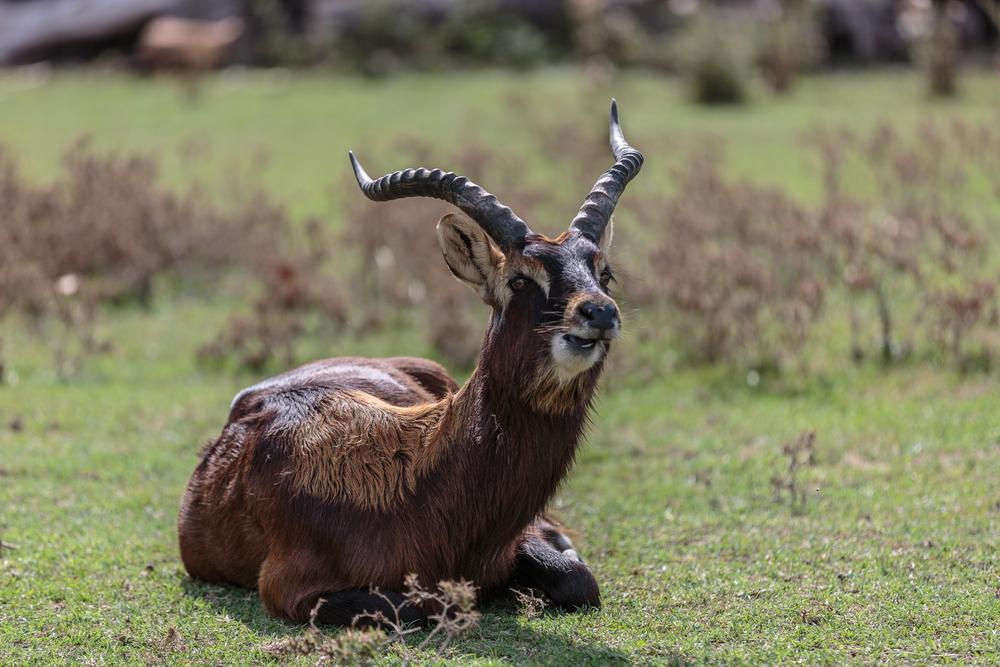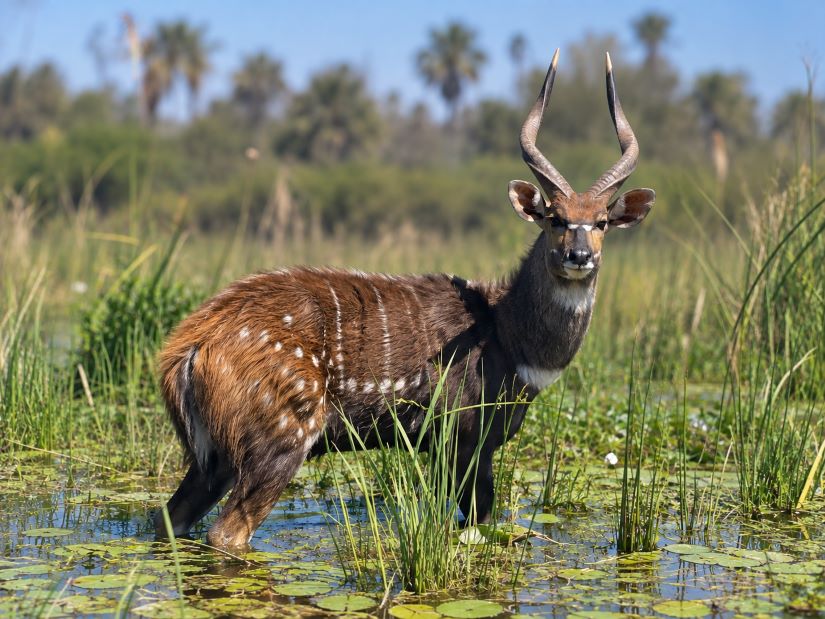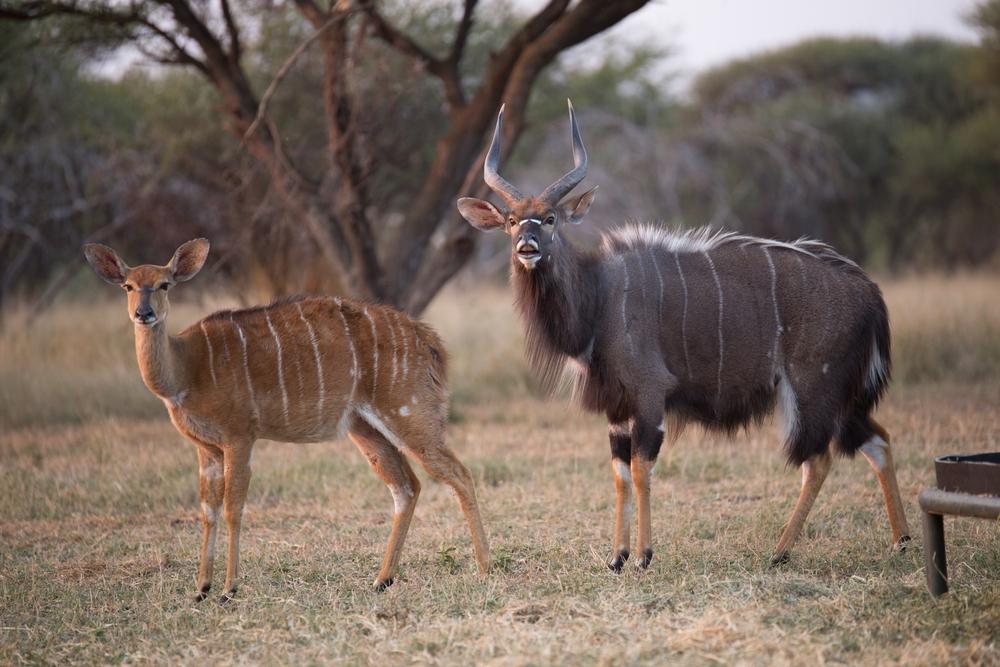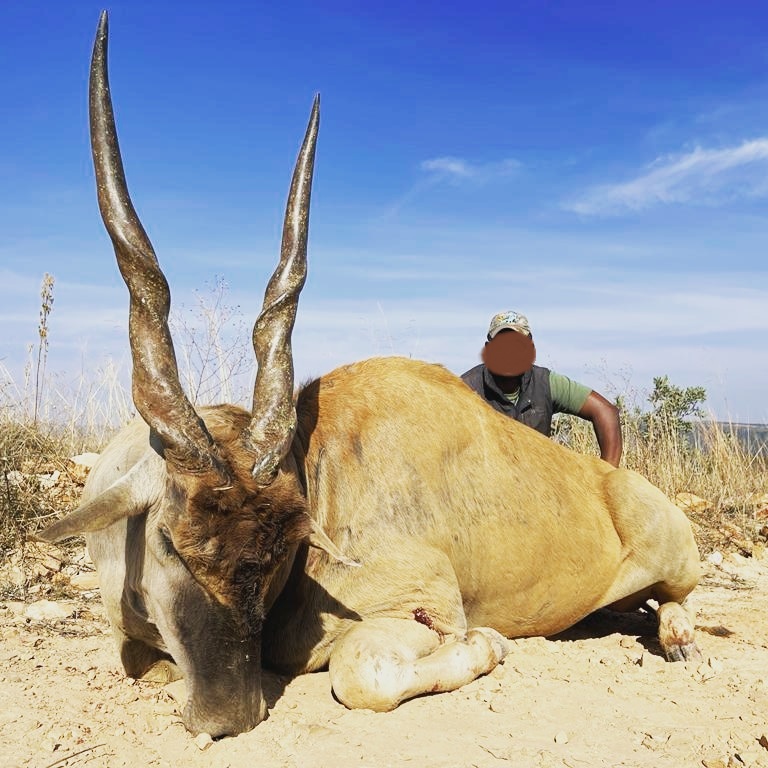
Hunt Eland, Kudu, Nyala & Bushbuck on this SA Spiral Horn Hunt
Booking Season: 2026
Hunt Difficulty: Difficult

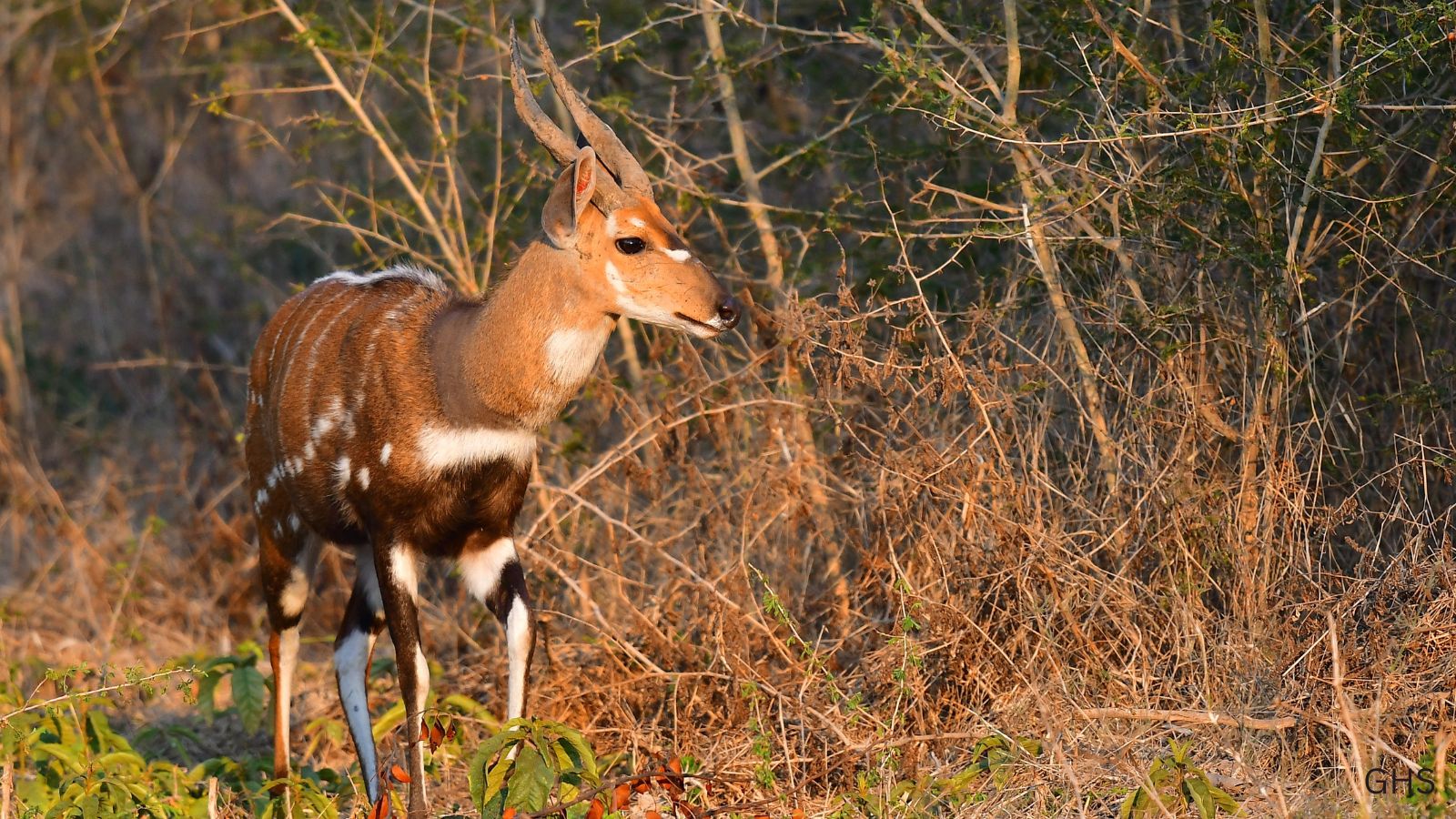
Bushbuck hunts challenge even the most seasoned trackers, earning this spiral-horned antelope a reputation as one of Africa’s most exciting trophies.
At Game Hunting Safaris, we’ve seen plenty of hunters arrive in Africa expecting an easy walk-and-stalk, only to be humbled by the sheer cunning of this medium-sized antelope. Often called the “poor man’s buffalo,” the bushbuck is aggressive, tough, and notoriously difficult to spot in the dense riverine bush it calls home.
For us, planning a safari isn’t just about getting you on a plane: it’s about ensuring you’re prepared for the reality of the hunt. Whether you’re looking to complete your Spiral Horn Slam or you simply want the thrill of dangerous game on a smaller scale, understanding this animal is non-negotiable.
We handle the logistics, vetting the outfitters, sorting the permits, and managing the camps, so you can focus on the shadows, waiting for that tell-tale flash of white spots. For those planning an African hunting safari, bushbuck offer a very different challenge compared to more visible plains game speci
Available Bushbuck Hunts
Hunt Eland, Kudu, Nyala & Bushbuck on this SA Spiral Horn Hunt
Booking Season: 2026
Hunt Difficulty: Difficult
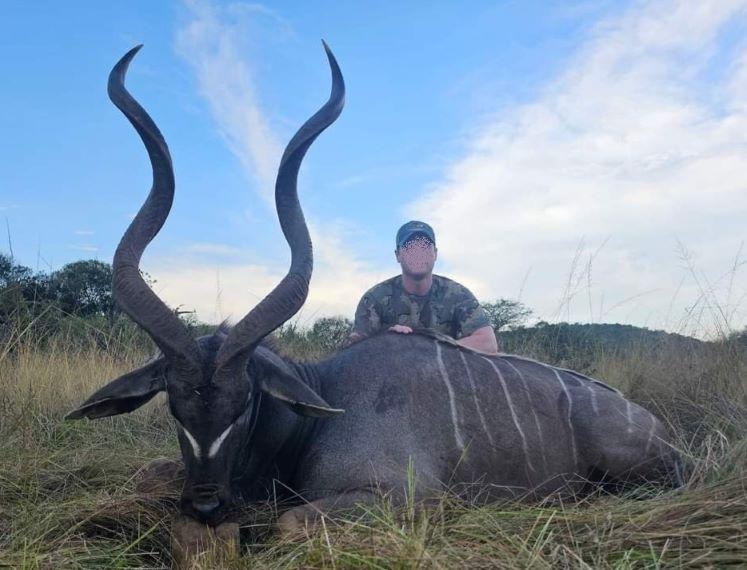
African Plains Game Safari in South Africa 6 Trophies KwaZulu Natal
Booking Season: 2026
Hunt Difficulty: Moderate

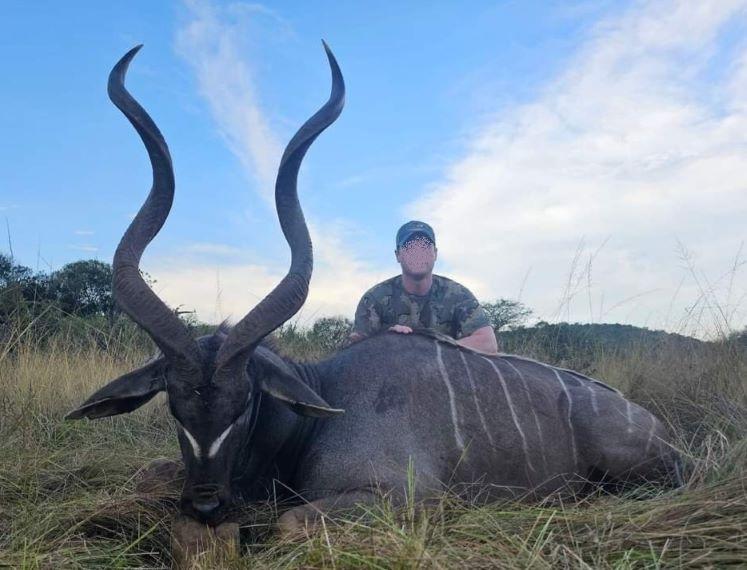
South African Plains Game Safari Trophy Nyala plus 5 Species
Booking Season: 2026
Hunt Difficulty: Moderate, Difficult
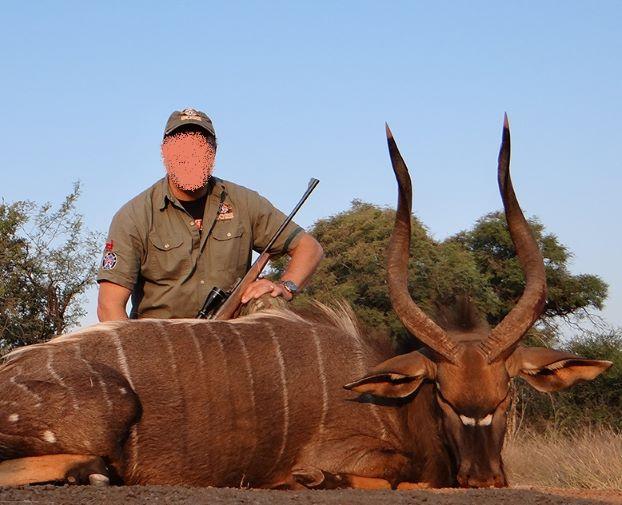
Plains Game Hunting in South Africa, 10 days x 10 x Species
Booking Season: 2025
Hunt Difficulty: Moderate
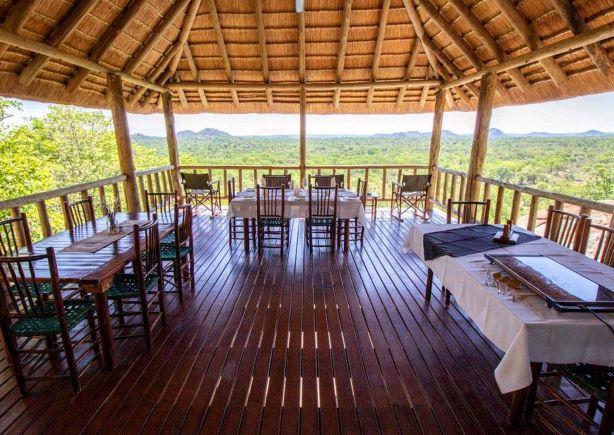
African Plains Game Hunt, plus Night Critters 10 Days in SA
Booking Season: 2025
Hunt Difficulty: Moderate, Difficult
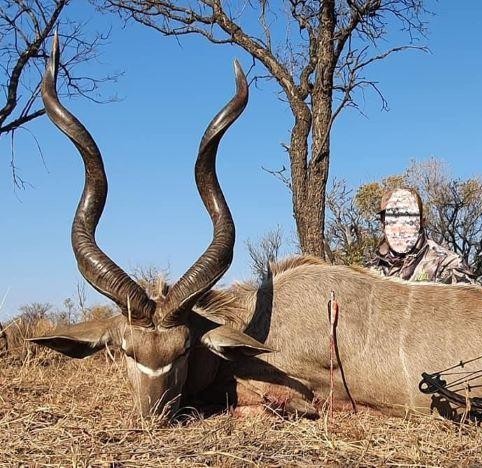
Spiral Horn Hunting Package in South Africa for 8 days
Booking Season: 2026
Hunt Difficulty: Moderate
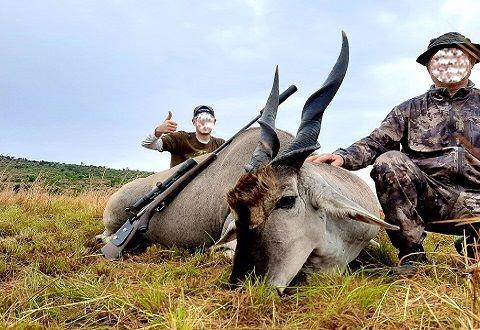
African Hunting Safari in the Waterberg SA Spiral Horn Slam
Booking Season: 2026
Hunt Difficulty: Moderate, Difficult
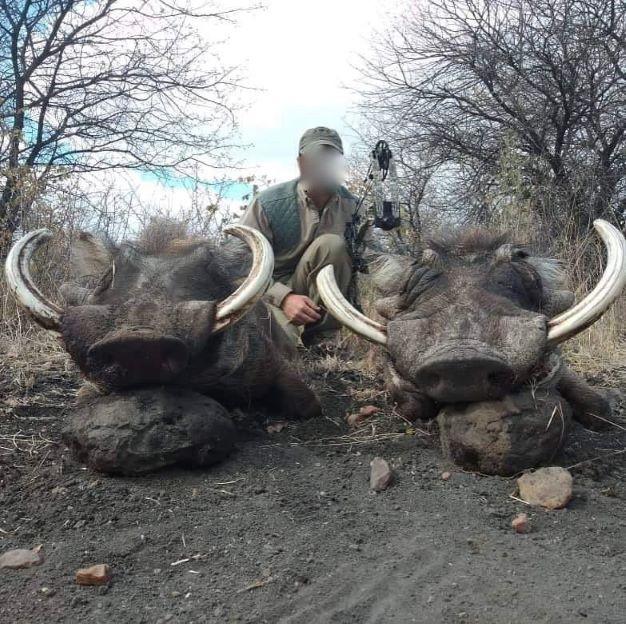
7-Species, 10-Day African Hunt in Tanzania
Booking Season: 2026
Hunt Difficulty: Difficult
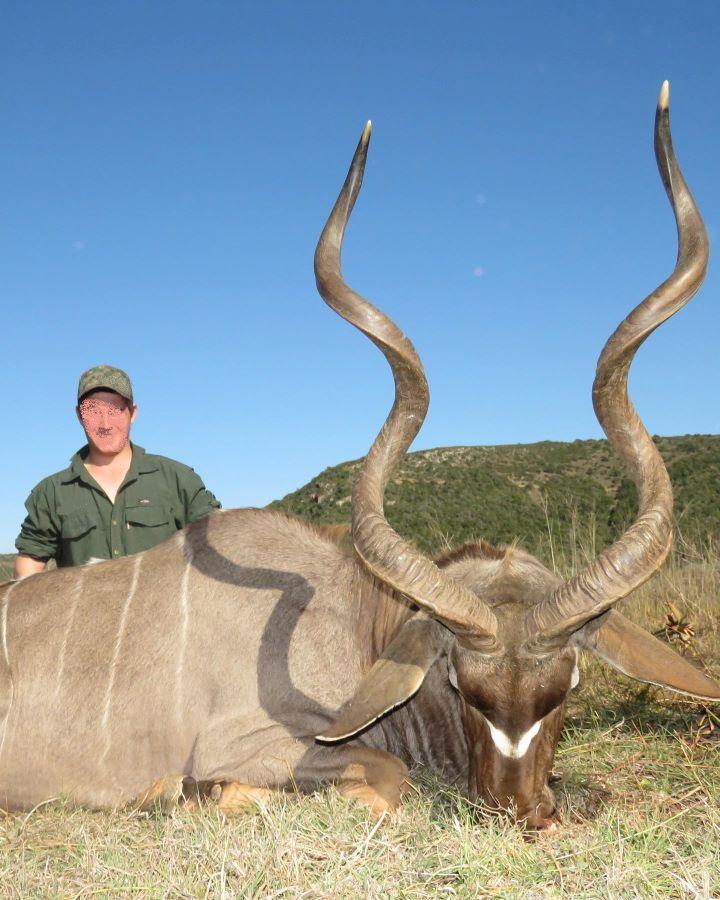
10 Day African Plains Game Hunt 7 Species in South Africa
Booking Season: 2026
Hunt Difficulty: Moderate, Difficult
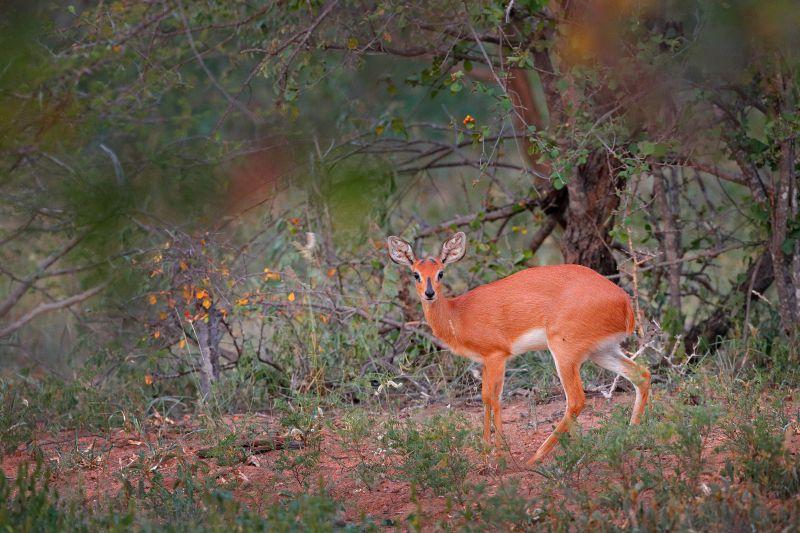
5-Species Plains Game Safari in Tanzania
Booking Season: 2026
Hunt Difficulty: Moderate
The bushbuck (Tragelaphus scriptus) is widely regarded as the “Prince of Antelope,” a title it earns not through size, but through attitude and aesthetics. Unlike herd-dwelling impala or open-plains blesbok, the bushbuck is a solitary creature that thrives in the shadows.
We often tell clients that hunting them feels less like hunting an antelope and more like pursuing a leopard. They’re cryptic, silent, and they vanish into cover that seems too thin to hide a rabbit.
This animal commands respect. It’s the smallest member of the spiral-horned antelope family (which includes Kudu, Eland, and Nyala), but pound-for-pound, it’s arguably the most dangerous. When wounded or cornered, a bushbuck won’t hesitate to charge, and their horns are needle-sharp.
That aggression is why many professional hunters (PHs) approach a downed bushbuck with the same caution they’d give a lion.
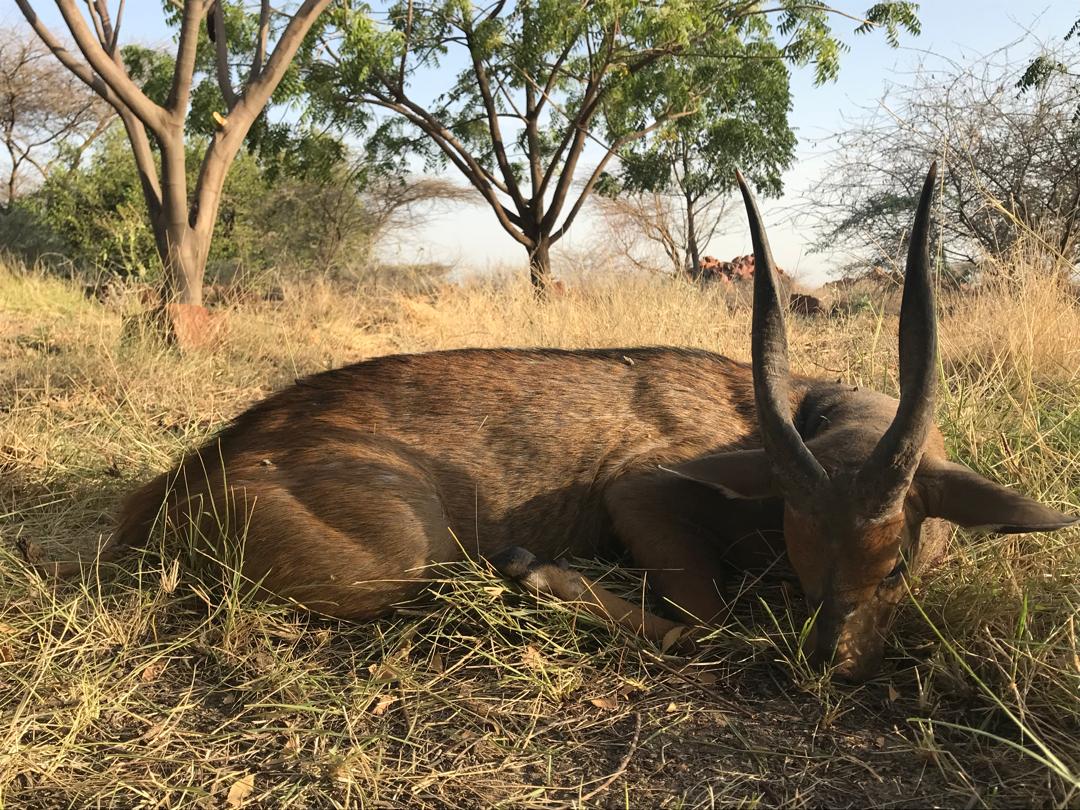
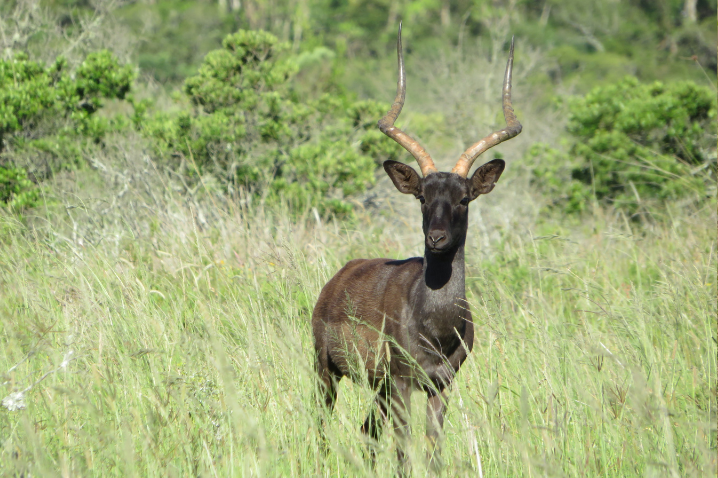
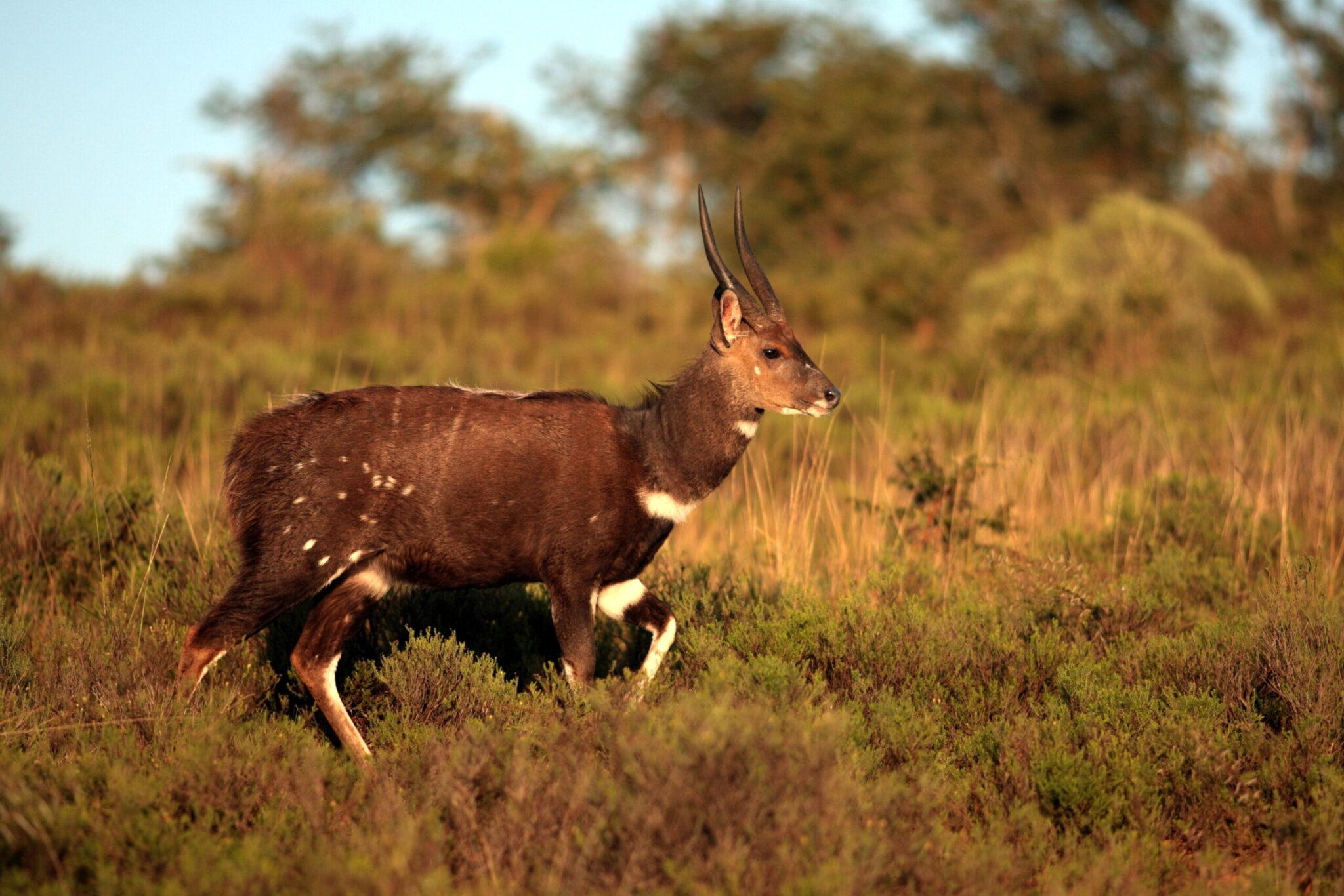
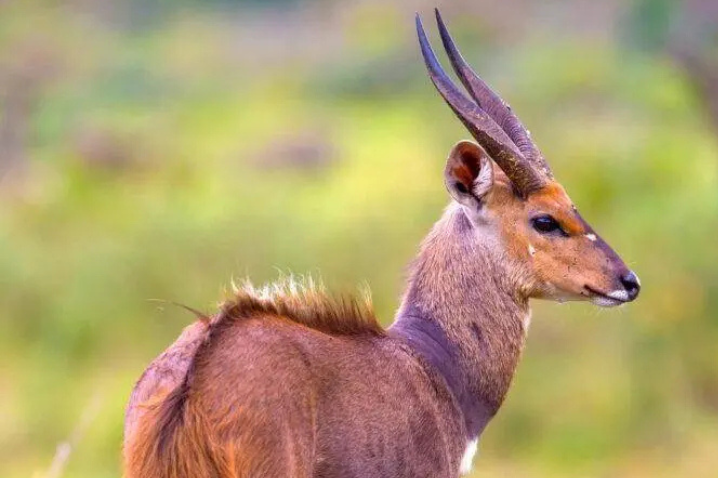
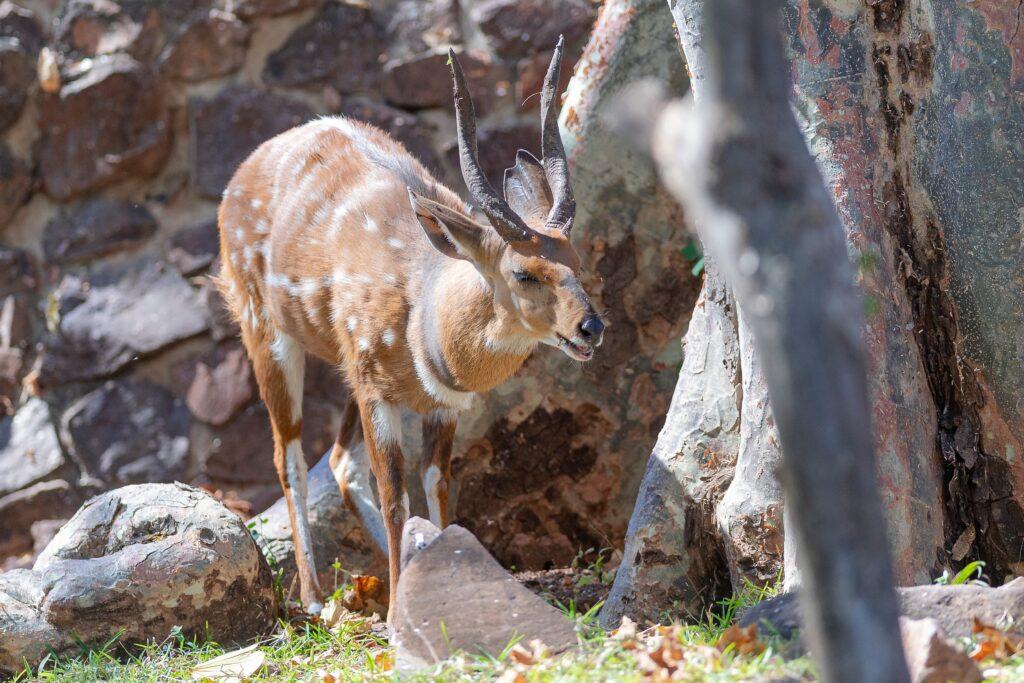
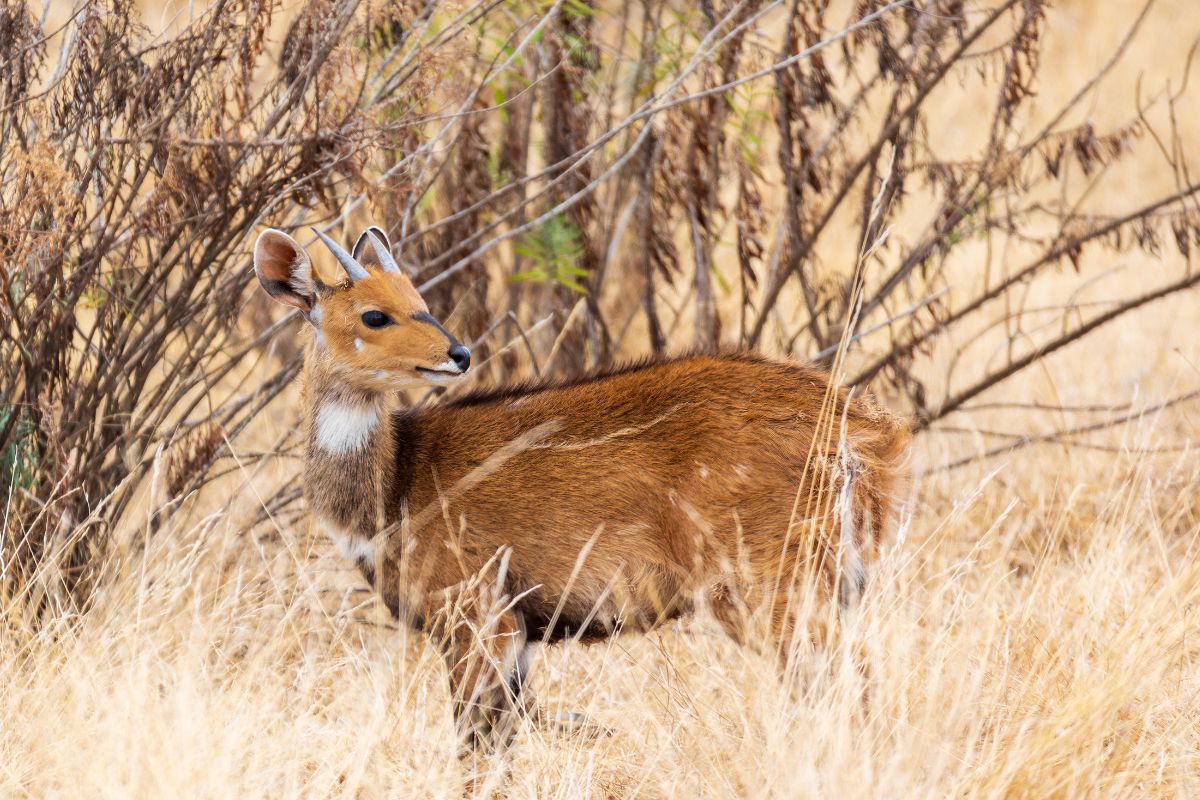
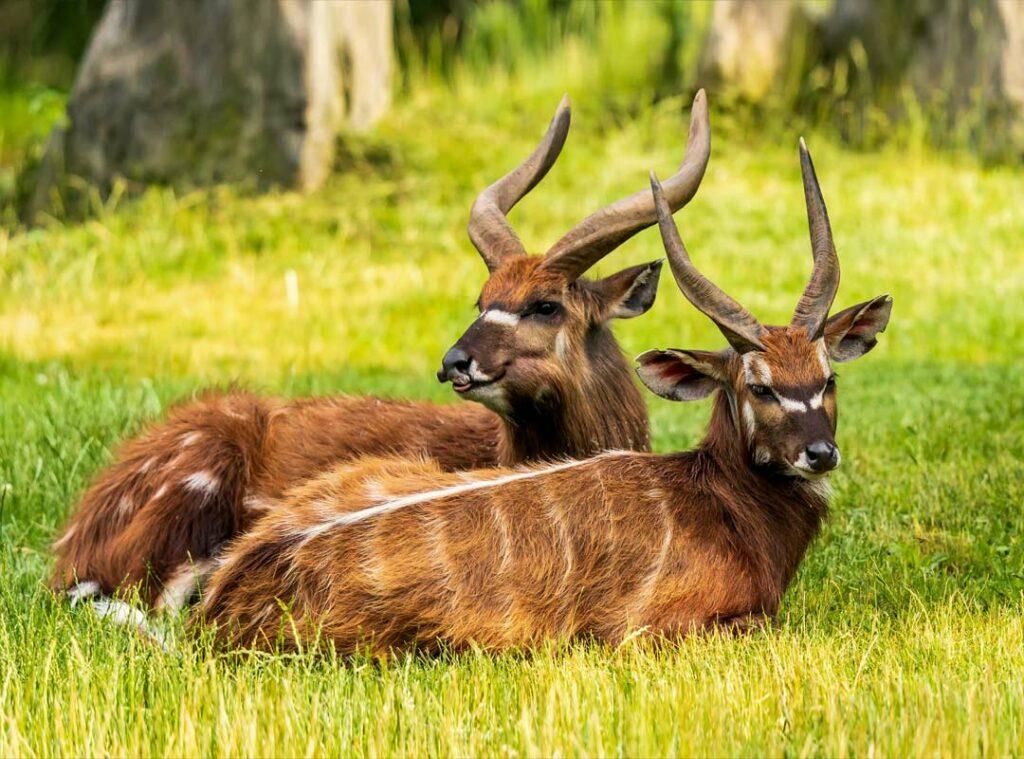
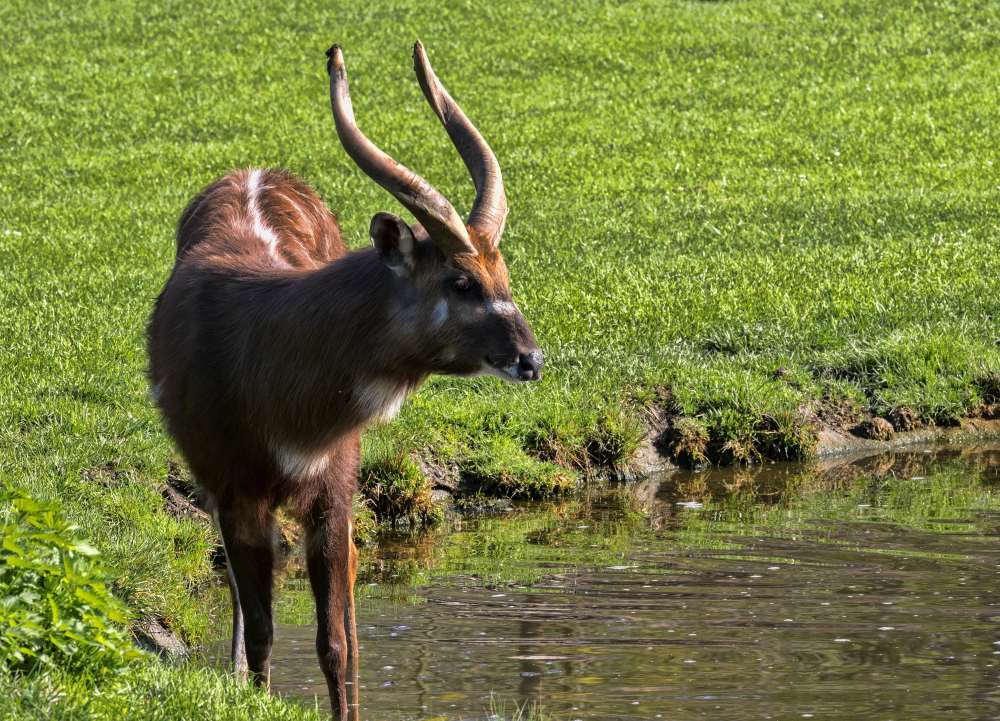
When you’re behind your glass, identifying a mature ram takes a keen eye. Bushbuck are sexually dimorphic, meaning rams and ewes look noticeably different. Rams are darker, ranging from chestnut brown to deep charcoal in older Cape bushbuck, while ewes are a lighter reddish-brown.
Both sexes show geometric white patches on the ears, legs, and throat, plus a variable number of white spots or stripes along the flanks.
A trophy-quality ram is defined by the horns. You’re looking for horns that spiral up and out, with a thick base and sharp tips. A solid trophy sits around 14 to 15 inches, and anything over 16 inches is exceptional.
Key indicators of an old, trophy ram include:
This matters because you often only have seconds to judge the animal before it slips back into the thickets. Knowing what 15 inches looks like helps prevent later regret.
Bushbuck are creatures of the edge. They avoid open ground and favour riverine forests, dense thickets, and coastal bush, anywhere cover is thick enough to swallow them. They’re water-dependent, so successful bushbuck hunts usually happen near water sources, drainage lines, and green belts.
Behaviour-wise, they’re mostly nocturnal but can move in the early morning and late afternoon. During the heat of the day, they lie up in the deepest shade. They’re territorial and solitary, typically alone or in pairs (a ram with an ewe).
Because they’re solitary, you’re dealing with one set of very sharp eyes and ears. If you spook a bushbuck, it often gives a sharp, dog-like bark. If you hear that bark, the stalk is usually done for that specific animal.
Actionable advice: Study images of bushbuck in dense cover. Train your eye to pick up parts of the animal, an ear twitch, white “leggings,” or the glint of a horn, rather than waiting to see the whole body.
Bushbuck hunts get addictive because the variety is real. There are distinct regional forms across Africa, each with a different look and a slightly different hunting feel. If you’re planning a Spiral Horn Slam, being specific about the subspecies and region is key.
The Cape Bushbuck (Tragelaphus scriptus sylvaticus) is the darkest of the lot. Found mainly in South Africa’s Eastern Cape and KwaZulu-Natal, mature rams can look almost black. They often carry fewer white spots than northern varieties, and the hunting is typically close-quarters in coastal forest or dense valley bushveld.
Further north into Limpopo and towards Zimbabwe, you encounter the Limpopo Bushbuck (Tragelaphus scriptus roualeyni). These rams are usually a bit lighter, often showing more spotting, and horns can present slightly wider. Hunting them in thick river valleys is classic Africa, big trees, heavy undergrowth, and other game drifting through the same lanes.
Why this matters: If you want a specific look for your trophy room, for example, the deep charcoal of a Cape ram, you need to book the right province. The wrong area means you simply won’t see that animal.
In the Zambezi region (Namibia, Zambia, Zimbabwe), the Chobe Bushbuck (Tragelaphus scriptus ornatus) is a standout. The coat can be a brilliant reddish-chestnut with bold white stripes and spots, which makes it highly sought after by collectors.
Further north, the Nile and Harnessed bushbuck (West and Central Africa) take patterning to another level. Harnessed bushbuck can look almost painted, with a grid of white stripes against a red coat. These hunts are more specialised and can take place in places like Cameroon or the Central African Republic.
Quick fact: Bushbuck taxonomy is debated by biologists, with some splitting them into two main groups (Scriptus and Sylvaticus). For hunters, the practical takeaway is the visual difference and the region.
Actionable advice: Be specific about what you want. Don’t ask for “bushbuck” in general. Tell us “I want a dark Cape ram” or “I’m after a Chobe bushbuck” so we can match you to the right outfitter quickly.
You can’t rush a bushbuck hunt. It’s a patience game. Because they don’t herd, you’re hunting specific individuals in specific territories. If you’re walking at a normal hiking pace, you’re moving too fast.
The most common and effective method is spot and stalk along riverbeds and drainage lines. Get to a vantage point early, glass the edges where thick bush meets open sandbanks or grass, and wait for a ram to step out to feed or warm up.
Once spotted, the stalk is the hard part. Riverine bush is noisy and wind in valleys swirls. It’s not unusual to crawl for the final stretch just to stay hidden and downwind.
When vegetation is too thick for a clean stalk, still hunting and ambush tactics often win. You identify high-activity zones, tracks, droppings, worn paths, and set up overlooking a clearing, waterhole, or trail in the late afternoon.
It can feel slow, then it happens fast: you might sit for hours and see nothing, then a ram appears ten minutes before last light. It’s also a strong strategy if crawling through thorns isn’t your idea of a good time.
Actionable advice: Invest in quality optics. You’ll spend most of the hunt behind binoculars. 8x42 or 10x42 from a reputable brand makes a real difference in low light.
With bushbuck hunts, it’s not “less is more”. It’s “right is more”. You don’t need heavy mountain kit, but you do need gear that works in thick brush and gloomy shade.
Bushbuck aren’t huge, but they’re tough and tenacious. You don’t need a cannon, but avoid light varmint calibres.
The sweet spot: .30-calibre rifles are ideal. A .308 Winchester or .30-06 Springfield is close to perfect. A 7mm Rem Mag or .300 Win Mag is fine too, especially if you’re combining the hunt with other plains game, but use a premium, heavy-for-calibre bullet.
Bullet choice: Prioritise penetration and weight retention. Bonded bullets or partitions are a good fit. An exit wound helps massively if the ram makes it into thick cover.
Actionable advice: Practise shooting off sticks. Most African shots are taken from sticks, not a bench. Get comfortable until it feels automatic.
This is the part that matters most. Do not wound a bushbuck. They have a reputation for circling back and ambushing during a follow-up, and there are recorded incidents of hunters and PHs being gored by wounded rams.
On many African antelope, the vitals sit further forward and lower than some hunters expect.
The perfect shot: Follow the back line of the front leg up about one-third into the body. If the angle allows, put the bullet through the shoulder blade to break the mechanics and drive into the heart and lungs.
Quartering shots: If quartering towards you, place the shot just inside the shoulder point. If quartering away, aim to reach the opposite shoulder.
If the shot isn’t perfect and the animal runs, safety protocols kick in immediately.
Actionable advice: Study anatomy diagrams before you fly. Aim low, aim forward, and focus on breaking the animal’s mechanics for a quick, humane finish.
Bushbuck hunts are a rite of passage. They bridge the gap between plains game and dangerous game, offering a hunt that’s mentally demanding, physically accessible, and deeply rewarding. Whether you’re after a dark Cape ram or the bold patterning of a Chobe bushbuck, the experience sticks with you.
At Game Hunting Safaris, we remove the variables that cause stress. We know which concessions hold trophy rams. We know which outfitters run ethical, safe operations. And we know how to get your trophy home without paperwork headaches.
Don’t leave your safari to chance or a quick Google search. If you’re ready to test yourself against the Prince of Antelope, let’s talk.
✉️ Contact us today for a consultation and we’ll match your dates with a vetted outfitter and prime timing for bushbuck (often May through August).
🌍 Browse our active hunting listings and secure your preferred dates and region.
Often referred to as the “poor man’s buffalo,” bushbuck are notoriously aggressive and tough. Unlike herd animals that flee, a wounded or cornered bushbuck in dense riverine cover may charge. Their needle-sharp horns and the thick habitat they live in make them one of the most dangerous spiral-horned antelope to pursue.
The sweet spot is the .30-calibre family, such as the .308 Winchester or .30-06 Springfield. Use premium, heavy-for-calibre bonded bullets or partitions that ensure deep penetration and, ideally, an exit wound, rather than rapidly expanding ballistic tips.
While total safari costs depend on the outfitter and package, bushbuck trophy fees are commonly quoted separately and can vary widely by country and subspecies. Rare regional varieties can carry higher trophy fees than more common forms, and daily rates are typically calculated separately.
The biggest differences are colour and region. The Cape Bushbuck, found in South Africa’s Eastern Cape and KwaZulu-Natal, is typically the darkest, with mature rams sometimes appearing almost black. The Chobe Bushbuck, found in the Zambezi region, is known for a richer reddish-chestnut coat with bold white stripes and spots.
Yes. Bushbuck venison is often regarded as excellent eating in camp. It’s typically tender, lean, and flavourful, and many hunters rate it among their favourite African game meats.
Aim for the vital triangle by following the back line of the front leg about one-third of the way up the body. A shot through the shoulder blade is ideal when the angle allows, as it anchors the animal and drives into the heart and lungs for a quick, humane finish.
Search from our range of Hunts across various popular destinations in Africa.

Book Your Hunt