Designed by Hunters, for Hunters

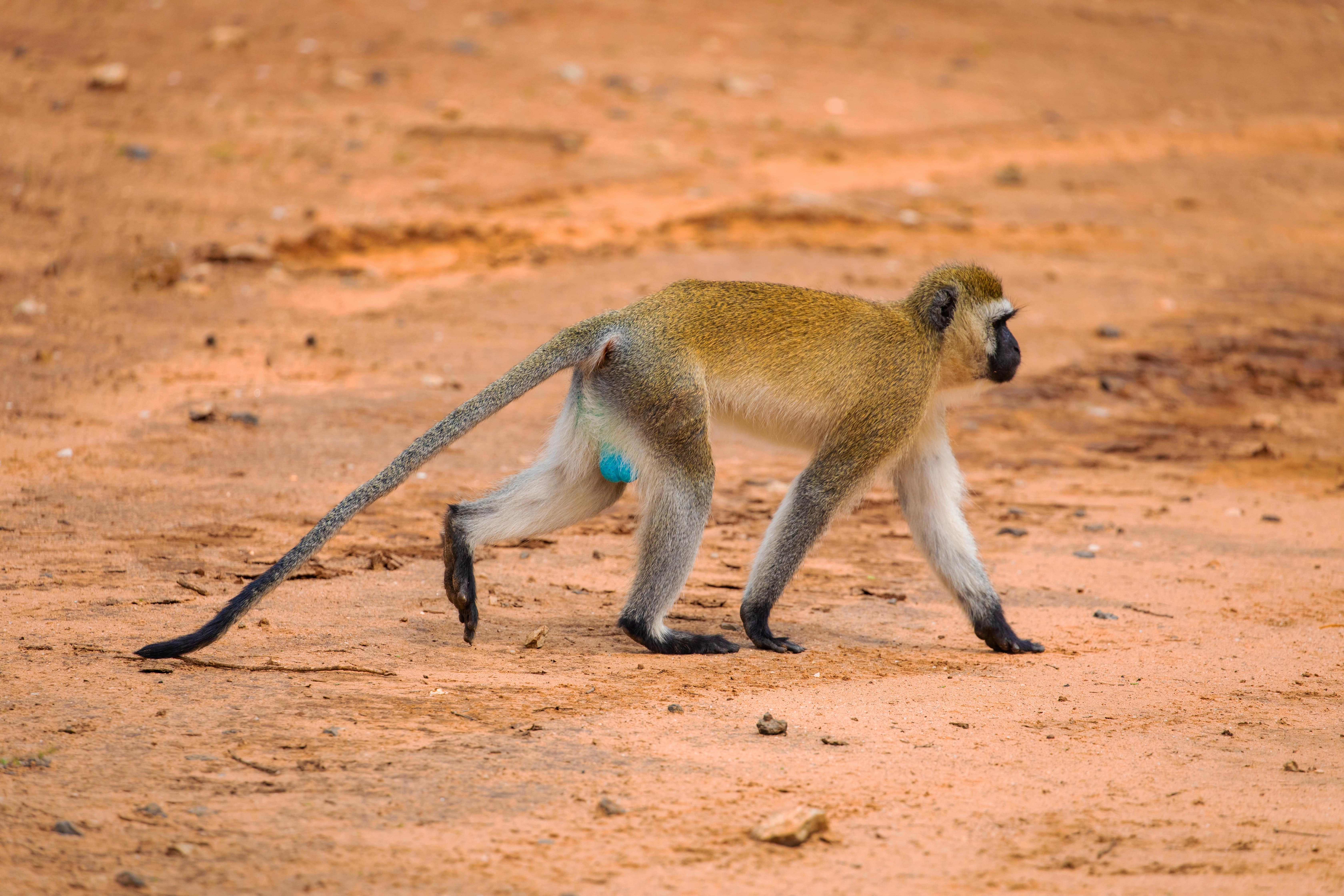
The grivet monkey is one of the more commonly encountered primates in Ethiopia, but that familiarity can be misleading. Unlike species that stay tucked away in thick cover, grivets live out on the edges---moving between water, open ground, and farmland where visibility is better, but nothing stays still for long.
You don't really find them by tracking. Most of the time, you notice them because something has already moved.
A flicker along a riverbank. A shape where there wasn't one a moment ago. A group that looks settled, then suddenly isn't. What you thought you were looking at splits into two or three animals going different directions, and by the time you try to sort it out, it's already changing again.
This is where grivet monkey hunting in Ethiopia separates itself. It doesn't build. It happens.
Compared to species like Chacma baboon, where you can sometimes read behavior and work into a position, grivets don't give you that. They react first. They move early. And they don't stay exposed.
They're not rare. But they're not easy either---and that's what tends to catch people off guard.
Most hunters don't arrive looking for them. But the ones who've spent time in Africa more than once usually pay attention when they show up.
Shot placement isn't complicated. Getting the shot is.
The target is small, and it's almost never presented cleanly. You're often looking at a partial view---an angle through grass, a body moving across an opening, or an animal that pauses just long enough to make you think you have time.
You don't.
Most misses come from timing, not marksmanship. Waiting for a perfect picture that never comes, or rushing one that was never quite there.
The challenge is knowing the difference.
Light calibers are more than enough.
What matters here is:
How quickly you get on target
How steady you stay under pressure
How cleanly you break the shot
There's no advantage in overthinking equipment. This comes down to control, not power.
Grivet monkeys are typically encountered in:
Riverine systems
Edges of agricultural areas
Open woodland near water
Transitional ground between wild habitat and cultivation
These are places where animals are used to moving---and used to reacting quickly.
You'll often see them where two environments meet. That's also where things happen fastest.
Nothing... and then too much at once.
You can move through good ground for hours without seeing anything. Then suddenly there's movement---more than you expected, and less time than you need.
A small group appears. One stops, another keeps going, a third turns back. There's no single animal to focus on, no clean sequence to follow. Everything is happening at the same time, and none of it lasts.
This is where most opportunities fall apart.
Not because the shot is difficult in distance---but because it's unclear in the moment:
Which one do you commit to?
Is that opening enough?
Do you wait half a second longer---or take it now?
That half-second is usually the difference.
Wait, and they're gone.
Rush it, and you were never properly on.
There's no second setup. No chance to replay it. What you see is what you get.
There isn't really a "grivet hunt" in the traditional sense.
They're encountered while you're doing something else:
Moving between areas
Working along water
Crossing through farmland edges
You're not following them. You're moving through country where they exist---and staying aware enough to recognize the moment when it presents itself.
That moment doesn't last long.
They can be encountered throughout most of the year.
Drier conditions help, mainly because visibility improves and movement becomes easier to pick up. Early mornings and late afternoons tend to produce more activity, especially near water and feeding areas.
Grivet monkeys are generally treated as a management species in Ethiopia.
Hunting depends on:
Area-specific permissions
Local quotas
Landowner requirements
They're not something you typically book a safari around. They're part of the environment---and taken when the opportunity makes sense.
Import rules vary by country and should always be confirmed in advance.
Grivet monkeys are not widely handled as traditional export trophies, and this is something that needs to be clarified before including them in any plans.
This sits in a different space.
There's no buildup like plains game, and no fixed positioning like arboreal species. You're not working toward a moment---you're reacting to one.
It's fast, slightly chaotic, and often over before it properly settles.
That's also why it stands out.
It makes sense when you're already there.
When you're moving through the right kind of country, and you're open to taking the opportunity when it presents itself.
It's not something you schedule. It's something you recognize.
Are comfortable making quick decisions
Don't need a structured setup
Appreciate opportunities that don't repeat
It tends to resonate more with hunters who've spent time in Africa before---those who understand that not everything worth taking is planned in advance.
Physically, it's not demanding. You're not covering extreme ground or pushing through difficult terrain.
What makes it difficult is how quickly things unfold---and how little time you have to make a clean decision.
Most hunters underestimate this.
The shot itself is not complex. The situation around it is. Multiple animals moving, no clear focal point, and just enough time to convince yourself you have a better option---before everything disappears.
That hesitation is where most opportunities are lost.
It's not a test of endurance.
It's a test of how quickly you can recognize a shot that won't improve.
On paper, it doesn't stand out.
It's not a primary species. It's not something most hunters travel for. And it's easy to overlook when you're focused on larger, more established animals.
But that's also exactly why experienced hunters tend to pay attention to it.
There are very few species where the opportunity is entirely unscripted---where nothing builds toward the shot, and nothing repeats if you miss it. You either recognize the moment for what it is, or you watch it disappear.
For hunters who have already experienced the more structured side of African hunting, this becomes something different.
Not bigger. Not more important.
Just less predictable---and, because of that, often more satisfying than expected.
It's rarely the reason for the trip.
But it's often one of the animals that stays with you afterward.
This is not suited for hunters who prefer a controlled environment.
If you rely on:
Time to prepare the shot
A clear, single target
Repeatable opportunities
this will feel rushed and uncertain.
There's no guarantee of a better chance. No ability to reset. And no clear moment where everything lines up perfectly.
For some hunters, that lack of structure feels frustrating.
For others, it's exactly what makes it worth paying attention to.
Grivet monkeys are found across several parts of Africa, but hunting opportunities vary depending on local regulations and how the species is managed within each country.
Ethiopia remains one of the more consistent places where hunters encounter them in a hunting context, particularly in areas where agricultural pressure and wild habitat overlap.
Hunters comparing options should review grivet monkey hunting opportunities across Africa before making a final decision.
Grivet monkeys are not taken for size or measurement, and that's part of what makes them different.
What stands out is their appearance. The contrast between the dark face, lighter body, and subtle markings gives them a look that is immediately recognizable once you've seen one up close. It's not dramatic in the way some species are---but it's distinct.
For hunters who have spent time collecting more traditional plains game, this represents something outside that pattern.
It's not a centerpiece trophy. It doesn't compete with larger animals on scale. But it adds something different to a collection---something that reflects time spent in the field noticing opportunities that aren't always obvious.
In many cases, it becomes a reminder of a moment rather than a planned objective.
And for experienced hunters, those are often the pieces that carry the most meaning later on.
Not because they're rare---but because of how they're encountered.
They live where things are always shifting---between wild ground and human pressure. That creates movement, awareness, and very little predictability.
You don't track them.
You don't set up for them.
You notice them---and decide, quickly, whether it's worth taking the opportunity.
And more often than not, that decision has to be made before you're completely ready.
Search from our range of Hunts across various popular destinations in Africa.

Book Your Hunt