
For American hunters planning their first safari, Namibia is often one of the easiest African destinations to navigate. The country offers reliable infrastructure, straightforward travel logistics, excellent hunting concessions, and a wide variety of game species. If you are still researching whether the country is right for your safari, we recommend reading our complete guide to Hunting in Namibia before planning your trip.
This guide focuses on the practical side of planning a Namibian safari, including travel routes, firearm permits, hunting regions, budgets, equipment, and what U.S. hunters should expect before arriving in camp.
[DYNAMIC-BLOGTABLEOFCONTENT]
Key Takeaways
- Namibia offers U.S. hunters reliable infrastructure, varied hunting regions and safari options ranging from plains game in the central and southern regions to dangerous game in the Zambezi Region.
- Pick your region by objective: Central Highlands/Kalahari for classic plains game, Damaraland/Kaokoveld for rugged free-range stalks, and the Zambezi (Caprivi) for dangerous game.
- Dial in your shooting: practice 120–250-yard shots from sticks and pack a .270–.300 for plains game and a .375 H&H+ for buffalo with premium bullets.
- Handle rules right: carry CBP Form 4457, respect airline ammo limits (~11 lbs), and coordinate CITES and export so trophies ship to your U.S. taxidermist in 6–12 weeks.
- Time and budget smartly: hunt May–October for thinner cover and predictable wind, and budget $4,500–$8,500 for plains game or $25,000–$45,000 for Cape buffalo.
- Game Hunting Safaris vets outfitters, confirms quotas and permits, and manages travel and trophy shipping so your Namibia Hunting Safaris stay seamless from booking to wall space.
Why Hunt In Namibia
Landscape, Game Density, And Access
Namibia's central highlands, Kalahari sands, and western escarpments hold high game densities and broad visibility for effective glassing. Access is straightforward, with a mix of free-range conservancies and large, well-managed private lands. That balance gives us flexible packages when hunting in Namibia from affordable plains game packages to focused trophy hunts.
Safety, Stability, And Skilled Professional Hunters
Namibia is known for political stability, strong wildlife laws, and professional PH standards. Most outfitters belong to NAPHA and run tight operations with seasoned trackers and safe field practices. We prioritize concessions with clear land tenure and transparent success data, so you know what you're getting before you fly.
Conservancies And Community-Based Conservation
Community conservancies anchor Namibia's conservation model. Your hunt fees support anti-poaching and local livelihoods while incentivizing healthy, huntable populations. We connect you with outfitters who invest back into conservancies and practice ethical quotas, good for game and good for your odds.
Key Regions And Habitats
Central Highlands And Kalahari: Classic Plains Game
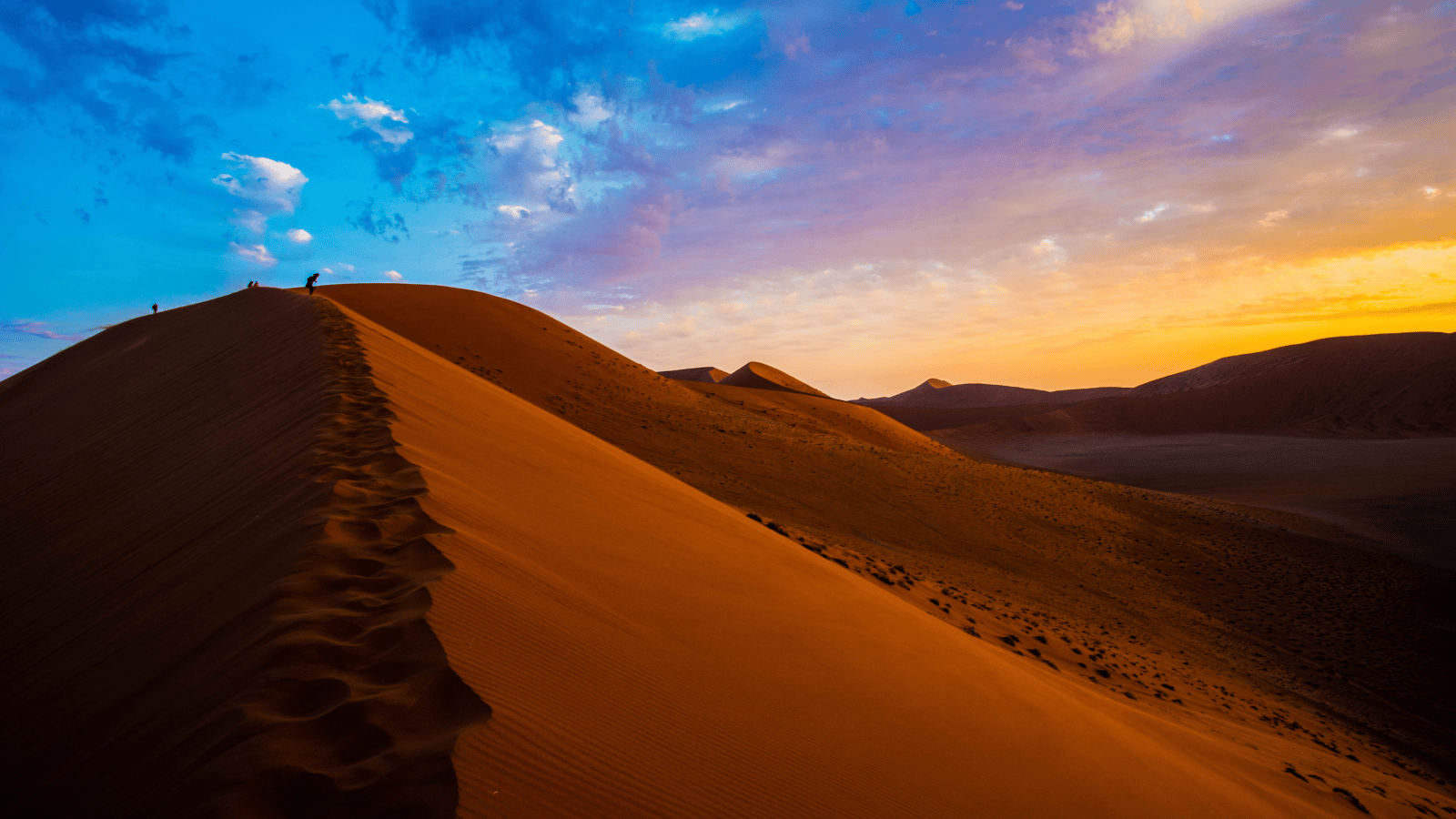
Rolling hills, thornbush, and red-sand dunes create prime stalking conditions for Kudu Hunts and Gemsbok Hunts, while hartebeest, blue and black wildebeest, springbok, and warthog provide excellent plains game hunting opportunities throughout the region. Shots are usually 120–250 yards from sticks. It's ideal for first-time Hunt in Africa plans and family-friendly add-ons like photo game drives.
Damaraland And Kaokoveld: Rugged, Free-Range Terrain
Dry, rocky, and wild. Expect long hikes, glassing ridges, and careful stalks on Hartmann's mountain zebra, oryx, and big kudu ghosts. Wind can be tricky. Fitness and steady shooting matter here, and the rewards feel earned, true free-range hunting.
Zambezi (Caprivi) Strip: Riverine Concessions And Dangerous Game
The Zambezi Region (formerly the Caprivi Strip) is Namibia's premier dangerous game hunting area. Vast floodplains, papyrus channels, riverine forests, and mopane woodlands provide ideal habitat for buffalo, elephant, hippo, and crocodile, creating one of the most diverse hunting environments in southern Africa.
Hunters travel to the region for exceptional Buffalo Hunting in Namibia, where free-ranging herds move through extensive wilderness areas and traditional tracking remains the foundation of the hunt.
Beyond buffalo, the region supports excellent Hippo Hunts along its river systems and productive Crocodile Hunts in the waterways and floodplain channels. For hunters seeking a true dangerous game experience, the Zambezi remains one of the most compelling destinations for Dangerous Game Hunts in Africa.

Species And Seasonality
Plains Game Highlights And Typical Difficulty
Gemsbok (oryx) and springbok are common and great value: wildebeest and hartebeest challenge your shooting on the move: kudu can be cagey, often the hardest. We see high success rates across well-managed areas. Most rifle shots fall between 120–250 yards: practice from sticks is key.
Dangerous Game Overview And Suitability
Big Game Hunting in Namibia is concentrated largely around species such as Cape buffalo, elephant and leopard, with opportunities varying by concession and quota. We recommend .375 H&H or larger, solids and premium softs, and comfort with quick follow-up shots. Elephant and leopard are available in select concessions: both demand patience and tight PH guidance. If you've taken elk, moose, or big bears, you're ready to step into this with the right prep.
Quotas, Tags, And CITES/Import Considerations
Namibia runs strict quotas, especially in the Zambezi. Buffalo generally doesn't require CITES, while leopard and elephant involve CITES/export and U.S. import permits. U.S. rules change, before you book, we confirm current USFWS guidance, available tags, and expected timelines for export and delivery.
Permits, Ethics, And Fair Chase
Licensing Requirements And Trophy Export Basics
We help secure your hunt contract, permit numbers, and temporary rifle import on arrival with Namibian Police at Hosea Kutako International. Bring your U.S. CBP Form 4457 for re-entry. IATA limits ammo to about 11 lbs (5 kg), in checked baggage, original packaging. For trophies, our outfitters handle field prep and coordinate dip-and-pack, veterinary docs, and export: we arrange forwarding to your U.S. taxidermist.
Field Ethics, Shot Placement, And Follow-Up
Fair chase comes first: stalks on foot, shots from sticks, and controlled ranges. Aim tight behind the shoulder on plains game: be patient on kudu. On buffalo, expect a quartering-away opportunity, break the far shoulder with premium bullets. Your PH leads the follow-up: we plan for disciplined recovery every time.
Planning, Budget, And Logistics
Best Time To Go And Weather By Month
Hunting runs year-round, but May–October (dry season) offers thinner cover, cool mornings, and steady tracking. November–April is green and warm with chance of rain, great for photography, still good hunting. For buffalo, late dry season concentrates herds near water: wind is more predictable.
Choosing An Outfitter And Concession Type
Through Game Hunting Safaris, we match you to free-range conservancies, large low-fence ranches, or government concessions in the Zambezi. We vet PH credentials, quota history, recent trophy photos, and client references. You'll see real success rates, daily rates, and trophy fees before you commit.
Travel, Firearms Compliance, Budget, And Gear Essentials
Typical routes: U.S. to Windhoek via Frankfurt, Doha, Addis, or Johannesburg. Firearms travel under airline rules, locked hard case, unloaded, ammo in factory boxes, declare at check-in. Budget ranges: 7-day plains game packages from about $4,500–$8,500 plus trophies: Cape buffalo hunts often run $25,000–$45,000 all-in, depending on trophy fee and days. Pack broken-in boots, sun layer, light gloves, rangefinder, binoculars (8x or 10x), and a quality shooting sling. A .270, .30-06, or .300 Win. Mag. covers most plains game: .375 H&H+ for buffalo.
Hunters comparing these costs with other destinations can review our African Hunting Safari Prices before setting a final budget.
Sample 7-Day Safari Itinerary
Arrival, Paperwork, And Rifle Check
Land in Windhoek (WDH), clear immigration, then temporary rifle import with NAMPOL. We'll be waiting. Drive 2–5 hours to camp, settle in, confirm zero at 100 yards, review the plan, and get an early night.
Typical Hunting Days And Midday Strategy
Up before first light. Coffee, then trucks to glassing points. We stalk on fresh tracks, using wind and shade. Midday we rest, check rifles, or sit water in the Kalahari for a mature gemsbok. Late afternoon brings moving herds and prime kudu windows.
Field Care, Dip-And-Pack, And Departure
Caped and salted in camp, horns tagged with your details. We coordinate dip-and-pack and export agents: you get tracking updates. Expect 6–12 weeks for export readiness, then freight to your chosen U.S. taxidermist. Depart WDH with your CBP 4457 for smooth re-entry.
Conclusion
Hunting in Namibia offers U.S. hunters strong game numbers, fair-chase opportunities and relatively straightforward travel logistics.
With Game Hunting Safaris, you get a vetted outfitter, the right concession, help with permits, and end-to-end trophy shipping support. Hunters still comparing destinations, species and safari options can explore our African Hunting Trips before deciding which hunt best fits their plans.

Namibia Hunting Safaris: Frequently Asked Questions
How much do Namibia Hunting Safaris cost?
Most 7–10 day plains game safaris run about $4,500–$8,500 plus species-specific trophy fees. Cape buffalo packages typically total $25,000–$45,000 depending on concession, quota, days afield, and logistics. We share transparent daily rates and expected trophy fees upfront so you can plan a realistic, all-in budget.
What rifles and calibers work best for Namibia Hunting Safaris?
For plains game, a .270, .308, .30-06, or .300 Win. Mag. with premium bonded or monolithic bullets is ideal. For Cape buffalo, bring a .375 H&H or larger with quality softs and solids. Expect 120–250‑yard shots from sticks; practice quick, steady follow-ups.
When is the best time to hunt in Namibia?
Hunting is year‑round, but May–October’s dry season offers cooler temps, thinner cover, and consistent tracking. November–April is greener and warmer—great for photography and still productive. For Cape buffalo in the Zambezi (Caprivi), late dry season (August–October) concentrates herds near water and makes wind more predictable.
What permits and paperwork do U.S. hunters need for a Namibia Hunting Safari?
We arrange your hunt contract, permit numbers, and temporary rifle import on arrival with Namibian Police at Windhoek (WDH). Bring U.S. CBP Form 4457 for re‑entry. IATA limits ammo to about 11 lbs (5 kg). Buffalo usually needs no CITES; elephant and leopard require CITES and USFWS import permits.
Do I need malaria medication for the Zambezi (Caprivi) Strip?
The Zambezi/Caprivi is a malaria area, with higher risk in the rainy months. Most travelers consider prophylaxis; consult your doctor or a travel clinic for prescriptions and individualized advice. Use DEET repellent, long sleeves in the evenings, and treated bed nets. Central highlands carry far lower risk.
How should I handle tipping on Namibia Hunting Safaris?
Tipping is customary but discretionary. Typical guidelines: PH $50–$100 per hunting day, trackers/skinners $10–$20 per day each, and camp staff $5–$15 per day pooled. Amounts vary by service and results, ask your outfitter for their policy. Bring small-denomination USD or Namibian dollars in cash.