
5 Full Day Zambezi Cape Buffalo Safari, Namibia
Booking Season: 2026
Hunt Difficulty: Difficult

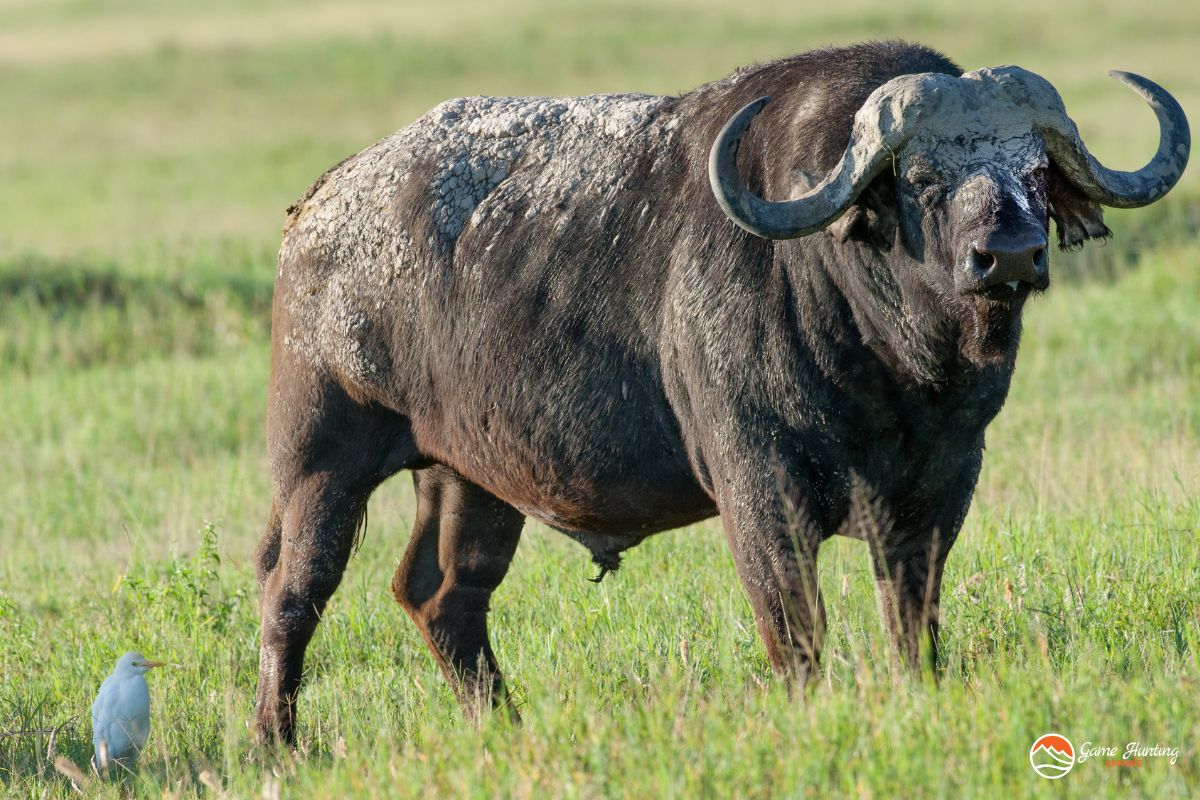
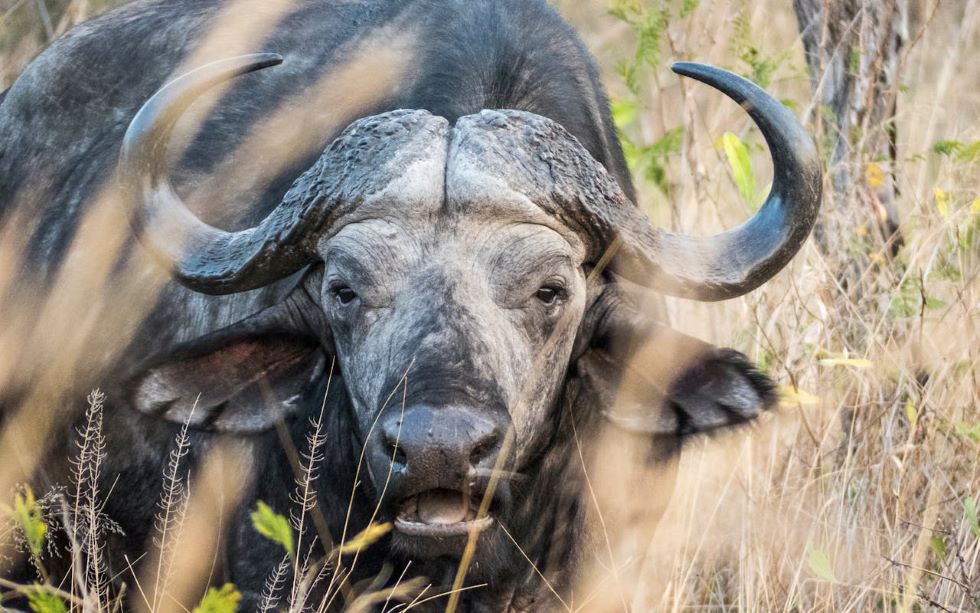
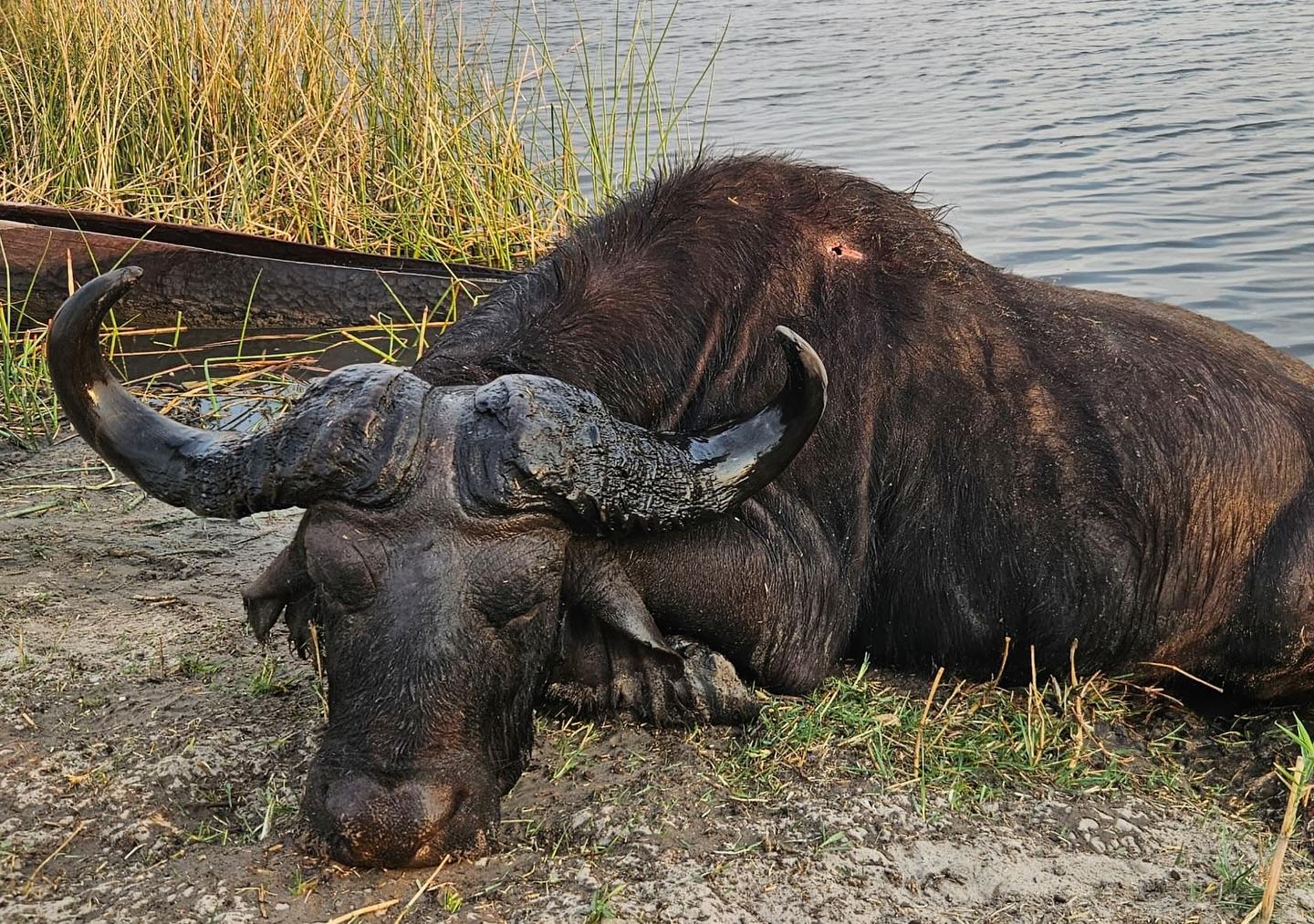
The Cape Buffalo is widely regarded as one of Africa’s most dangerous animals to hunt, and remains one of the most sought-after species in Cape buffalo hunts in Africa. A member of the Big 5 and Dangerous 7, buffalo are known for their unpredictability, resilience, and the very real tendency to turn the tables when wounded.
Buffalo hunting in Namibia, however, is not spread across the entire country. It is specific. Geographically limited. And shaped almost entirely by water. Unlike destinations such as Zimbabwe or Tanzania, buffalo hunting in Namibia takes place almost exclusively in the far northeast, within the Zambezi Region (formerly known as the Caprivi Strip), making it one of the most unique areas for hunting in Namibia. This narrow stretch of land is defined by rivers, floodplains, and seasonal movement, creating a hunting environment that feels very different from anywhere else in Africa.
Available Cape Buffalo Hunts
5 Full Day Zambezi Cape Buffalo Safari, Namibia
Booking Season: 2026
Hunt Difficulty: Difficult

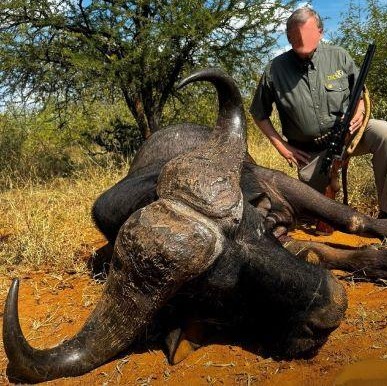
5-Day Non-Exportable Cape Buffalo Hunt in Namibia
Booking Season: 2026
Hunt Difficulty: Difficult

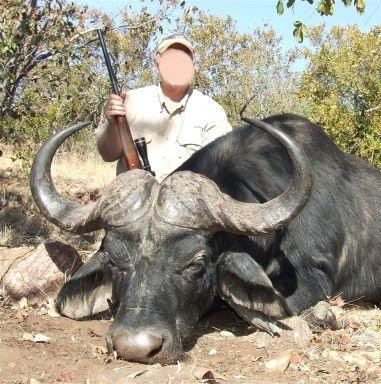
7-Day Free-Range Cape Buffalo Safari in Namibia
Booking Season: 2026
Hunt Difficulty: Difficult
Trophy Cape Buffalo Hunting Safari in Namibia 5 Days Caprivi
Booking Season: 2026
Hunt Difficulty: Moderate, Difficult
Buffalo hunting in Namibia is centered around the Zambezi Region, where river systems such as the Chobe River, Kwando, and Linyanti shape the entire ecosystem. This is not typical bushveld, this is floodplain country.
During the wet season, large areas of the region flood completely, filling up like a bathtub. As water spreads across the landscape, buffalo disperse across vast grazing areas. As the dry season progresses, that water recedes, and everything changes. Buffalo begin to concentrate along remaining water sources, river edges, and floodplain margins, creating far more predictable movement patterns and better hunting opportunities. Hunters who have spent time in the region quickly learn that understanding this cycle is not optional, it’s what determines whether you find buffalo in the right place at the right time.
One of the most important factors in Namibia buffalo hunting is cross-border movement. Buffalo in this region are not confined by fences or boundaries. Large herds move freely between Botswana and Namibia, particularly within the Chobe and Linyanti systems. At certain times of the year, buffalo will cross the Chobe River to access the nutrient-rich grasses of Namibia’s floodplains.
These movements are driven by water availability, grazing conditions, and seasonal pressure. High densities of African bush elephant in northern Botswana also place significant pressure on vegetation in some areas, which can further influence where buffalo choose to feed and move. The result is a dynamic, shifting system, where buffalo are not just present, but constantly adapting to the environment.
Buffalo hunting in Namibia is a combination of tracking and positioning. Most hunts begin by cutting fresh spoor early in the morning, followed by tracking on foot through a mix of woodland, riverine bush, and open floodplain edges. But unlike more general bushveld systems, this is a water-driven hunt. If you don’t understand how water controls movement here, you will struggle to get close.
Buffalo movement is closely tied to river systems, grazing along floodplains, and access to water during the dry season. This allows hunting teams to predict movement, intercept animals, and work within a system that is structured, but still completely free-range.
Not all buffalo hunts in Africa feel the same. Namibia's Zambezi Region offers something quite different from the vast concessions of Tanzania, the established buffalo areas of Zimbabwe or the more managed hunting environments found in parts of South Africa.
Here, water plays a major role in how the hunt develops. Rivers, floodplains and seasonal flooding influence where buffalo feed, when herds move and where mature bulls may be found. Conditions can change considerably as the season progresses, which means the hunting team needs to understand what the water is doing as much as where the buffalo were yesterday.
The buffalo remain free-ranging, and finding them is only part of the challenge. Fresh tracks can lead through woodland, riverine bush and open floodplain before the final approach begins.
That dependence on water and seasonal movement is what gives buffalo hunting in Namibia its own character.
Buffalo in Namibia are found in a mix of herd structures and smaller, more isolated groups, with mature bulls, often referred to as dagga boys, spending much of their time in thicker cover near water systems. In the Zambezi Region, these animals are closely tied to floodplains, riverine vegetation, and seasonal grazing areas, which directly influences how and where they are encountered.
During the dry season, visibility is good. As water recedes and vegetation thins out, you can see further and track more easily. But closing the final distance can be difficult, often requiring careful use of terrain features like riverbanks and embankments to stay concealed. In contrast, early flood conditions create a different scenario, as vegetation thickens along floodplain edges, getting close becomes more achievable. Under the right conditions, it is not uncommon to work within tight distances, sometimes inside 20 yards, particularly when using a double rifle in cover near water.
Most buffalo hunts don’t fail because animals weren’t found. They fail after they were. A herd is located. A bull is identified. The approach begins. And then small mistakes start to compound. Hunters often underestimate how exposed they are in the dry season, moving too quickly in open ground where visibility works against them. Wind, terrain and timing can decide whether that final approach succeeds. In Namibia, finding buffalo is only the first step. Finishing the hunt is where most things go wrong.
Namibia sits in the middle range of African buffalo hunting destinations. Standard buffalo hunts typically range from $14,000 – $20,000, while premium concessions or higher-end operators range from $20,000 – $28,000+. Pricing depends on the hunting area within the Zambezi Region, safari duration, trophy quality and quota availability, and operator reputation. Compared to Zimbabwe, Namibia can be slightly higher in cost. Compared to Tanzania, it is significantly more accessible in both price and time commitment.
Our African Hunting Safari Prices guide provides a broader comparison of safari costs, trophy fees and other expenses across the major hunting destinations in Africa.
One of the most overlooked advantages of hunting buffalo in Namibia is the availability of own-use or non-export buffalo hunts, an option that significantly changes both cost and logistics. In many areas of the Zambezi Region, buffalo are available at reduced rates, often in the range of $7,000–$8,000 for a full safari. These animals are typically hunted under community or management quotas, where the meat and proceeds remain within the local system rather than being exported as trophies.
This creates a different type of opportunity. You may not be taking horns home, but you keep the experience, the photographs, and the hunt itself, without the added complexity of international shipping, permits, and mounting costs. This same approach often applies to other dangerous game species in the region, including elephant and crocodile, making Namibia one of the most practical destinations for hunters looking to pursue multiple dangerous game animals without the administrative burden that typically comes with trophy export.
While buffalo is often the primary focus, the Zambezi Region is also one of the few areas in Africa where multiple dangerous game species overlap within the same system. Hunters pursuing buffalo in this region are operating in true Big Game Hunting in Namibia country, where species such as hippo, crocodile and elephant are part of the same river and floodplain environments. It’s not uncommon to encounter their tracks, hear them at night, or see them during the course of a buffalo hunt.
For those considering a broader safari, explore our available dangerous game hunts in Africa.
Namibia is widely regarded as one of Africa’s leading conservation success stories, largely due to its community conservancy system. In the Zambezi Region, many buffalo hunting areas operate within these conservancies, large, unfenced landscapes where wildlife and local communities coexist. Revenue from regulated hunting supports local communities, funds anti-poaching efforts, and helps maintain wildlife populations across vast, functioning ecosystems. This is not theoretical conservation, it’s practical, working on the ground.
The best time to hunt buffalo in Namibia is during the dry season, from May to October. As floodwaters recede, buffalo concentrate around rivers and remaining water, movement becomes more predictable, and tracking conditions improve significantly.
For hunters traveling from the United States, buffalo hunting in Namibia is relatively straightforward to reach. Most hunters will fly into Windhoek and connect to the Zambezi Region, where the hunting areas are located. Rifle import procedures are well-established and generally efficient, with caliber requirements of a minimum .375 for dangerous game being standard and predictable, and most outfitters handle the process in advance.
In the field, the hunting itself can feel very different from what an American hunter knows back home. This is not a stand hunt or a managed property, it is a tracking-based system where success depends on reading spoor, wind, and terrain rather than waiting for animals to appear. Physical preparation matters: even in relatively flat terrain, tracking buffalo can involve long hours on foot, often in heat and humidity. For American hunters, the biggest adjustment is not the travel or logistics, it’s the shift in mindset. This is not about opportunity volume. It’s about getting one opportunity right.
Buffalo hunting in Namibia is often centered in the Zambezi Region, but forms part of a broader experience offered through Namibia hunting safaris. Within a single trip, hunters can move through completely contrasting environments. The lush floodplains and river systems of the Caprivi stand in direct contrast to the dry, open landscapes that define much of the rest of the country. Beyond the hunt itself, Namibia offers access to regions such as the Skeleton Coast and the Namib Desert.
For those willing to take on the Zambezi Region, the experience often extends beyond the hunt itself. The same river systems that hold buffalo also offer exceptional fishing opportunities, particularly for species like tigerfish. It’s another example of how Namibia offers more than a single objective, you come for the buffalo, but what you experience while you’re there often goes far beyond it.
Buffalo hunting in Namibia suits hunters who are looking for a free-range dangerous game experience without committing to the longer, more demanding 10–14 day safaris typically associated with destinations like Tanzania. The hunting remains free-range, requiring patience, good positioning and the ability to adapt as conditions change.
That said, Namibia is not for everyone. If your goal is to hunt in the most remote, untouched wilderness Africa has to offer, Tanzania may be a better fit. If you’re looking for higher-volume opportunities or multiple chances on buffalo, Zimbabwe provides more consistency. Namibia is not necessarily easier or harder than the other major buffalo destinations. It is simply different. Here, water dictates movement, and movement dictates everything that follows. Hunters ready to compare available packages, safari lengths and combination opportunities can explore our current African Hunting Trips.
Namibia has a strong reputation for the quality of its Professional Hunters. PHs operating in dangerous game areas work within a well-regulated hunting system, with a level of training and professionalism comparable to other established dangerous game destinations such as Zimbabwe. That consistency shows in how hunts are conducted, from the first track to the final follow-up.
Buffalo hunting in Namibia is not defined by volume, convenience, or guarantees. It is defined by environment, movement, and understanding how the system works. Namibia offers something few places still can: a true free-range dangerous game experience, grounded in real conditions, supported by strong conservation, and guided by professionals who know how to navigate it properly.
Buffalo hunting in Namibia is concentrated in the Zambezi Region, formerly known as the Caprivi Strip. The Chobe, Kwando and Linyanti river systems create extensive floodplains and riverine habitat where free-ranging buffalo move between Namibia and neighboring Botswana.
Yes. Buffalo in Namibia's Zambezi Region move through large unfenced areas and can cross between Namibia and Botswana. Their movements are strongly influenced by water levels, grazing conditions and seasonal changes across the floodplains.
The main period for buffalo hunting is during the dry season, generally from May through October. As floodwaters recede and permanent water becomes more important, buffalo movement can become easier to predict and tracking conditions generally improve.
Standard trophy buffalo hunts typically range from around $14,000 to $20,000, with premium hunts potentially reaching $20,000 to $28,000 or more. Own-use or non-export buffalo hunts can sometimes be available for approximately $7,000 to $8,000, depending on quota and hunting area.
Most buffalo hunts begin by finding fresh spoor and tracking on foot. In the Zambezi Region, rivers, floodplains and seasonal water levels play an important role in determining where buffalo are likely to feed, move and rest.
A .375-caliber rifle is generally regarded as the minimum for dangerous game in Namibia. Hunters should always confirm current legal requirements with their outfitter before travelling with a firearm.
Yes. Depending on quota and the hunting area, buffalo may be combined with species such as elephant, hippo and crocodile. These species occupy many of the same river and floodplain systems found throughout the Zambezi Region.
The terrain is generally flatter than mountain hunting country, but buffalo hunting can still involve several hours of tracking on foot in heat and humidity. How demanding the hunt becomes depends on where the buffalo are found and how far the herd or bull moves after fresh tracks are picked up.
Search from our range of Hunts across various popular destinations in Africa.

Book Your Hunt