Hunting in Zambia: Leopard, Plains Game Plus Croc OR Hippo
Booking Season: 2027
Hunt Difficulty: Difficult

Available African Crocodile Hunts
Hunting in Zambia: Leopard, Plains Game Plus Croc OR Hippo
Booking Season: 2027
Hunt Difficulty: Difficult
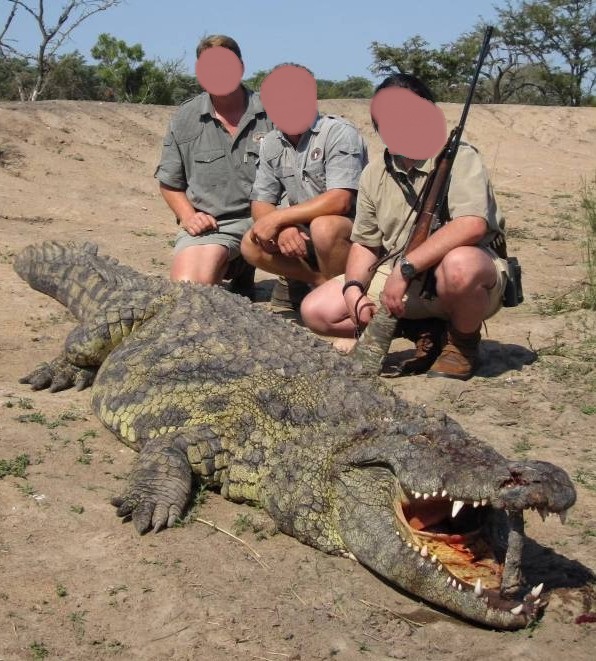
Non-Exportable Crocodile Hunt in Namibia’s Caprivi Strip
Booking Season: 2026
Hunt Difficulty: Moderate, Difficult

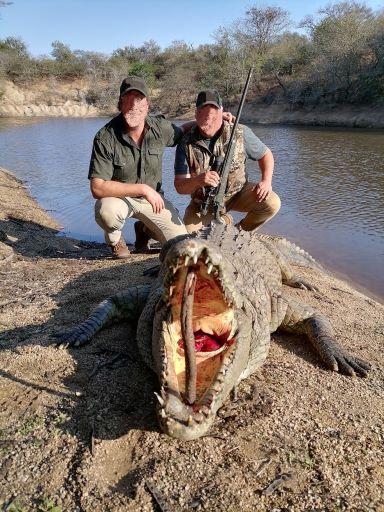
Free Range Crocodile Hunting Safari in Limpopo, SA
Booking Season: 2026
Hunt Difficulty: Moderate
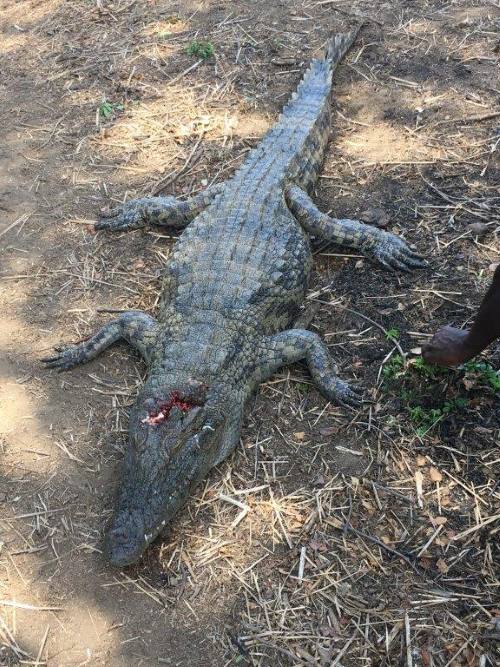
Hippo & Nile Crocodile Hunting Safari in Zimbabwe
Booking Season: 2026
Hunt Difficulty: Difficult
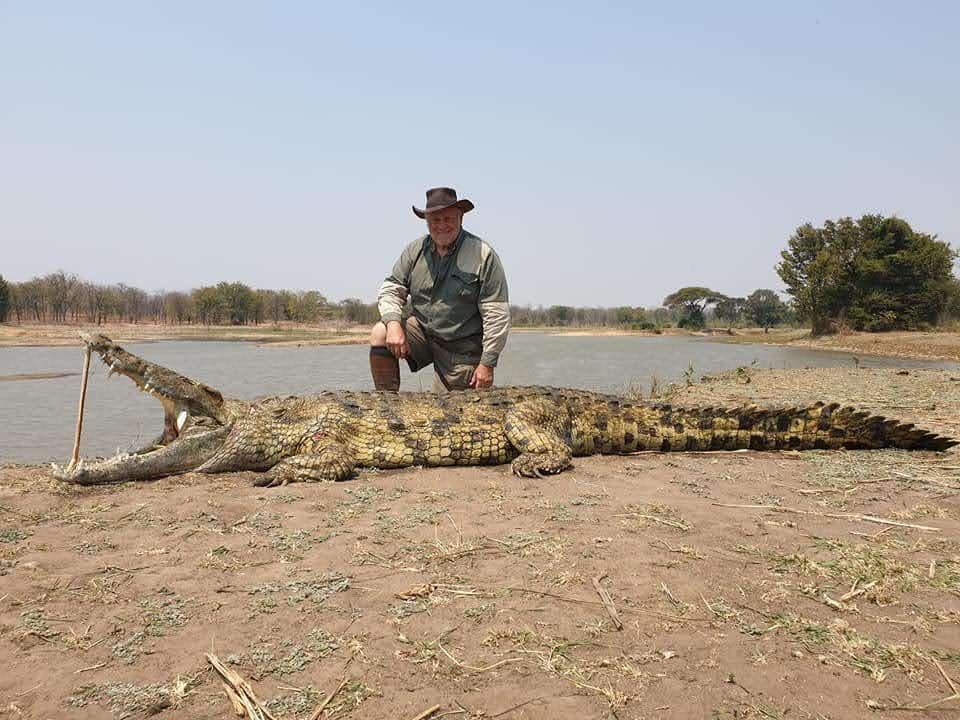
Lake Cahora Bassa Nile Crocodile Hunting Safari
Booking Season: 2026
Hunt Difficulty: Difficult
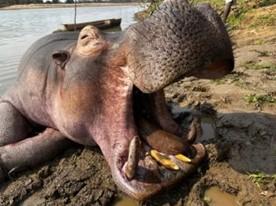
7-Day Dangerous Game & Plains Game Safari in Zambia
Booking Season: 2026
Hunt Difficulty: Difficult
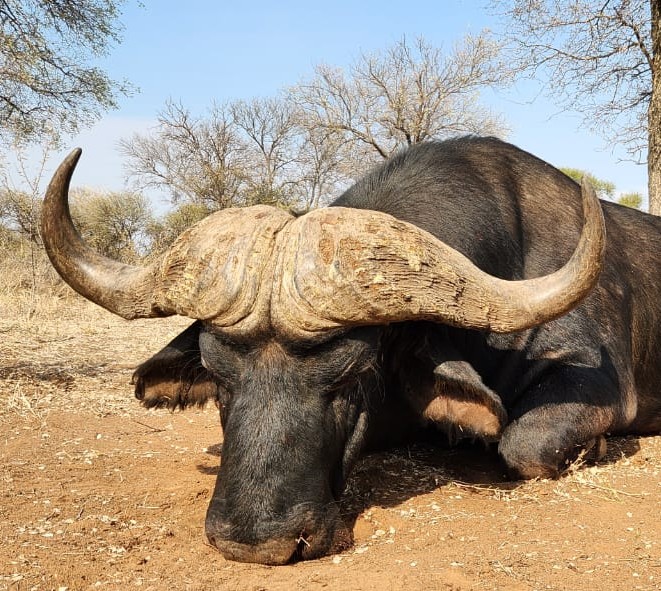
Cape Buffalo, Crocodile & Sable Safari in Limpopo
Booking Season: 2026
Hunt Difficulty: Difficult
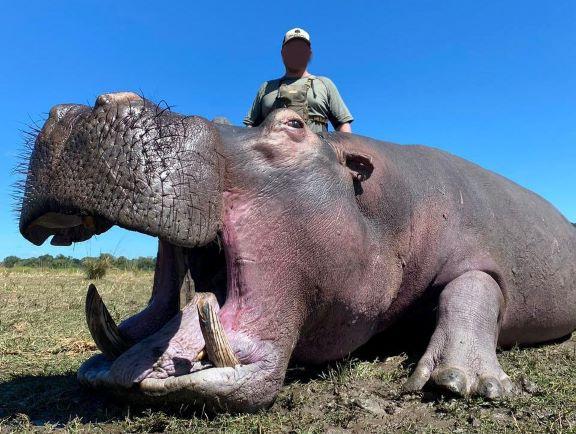
South Africa Dangerous Game & Nocturnal Hunting Safari
Booking Season: 2026
Hunt Difficulty: Moderate, Difficult
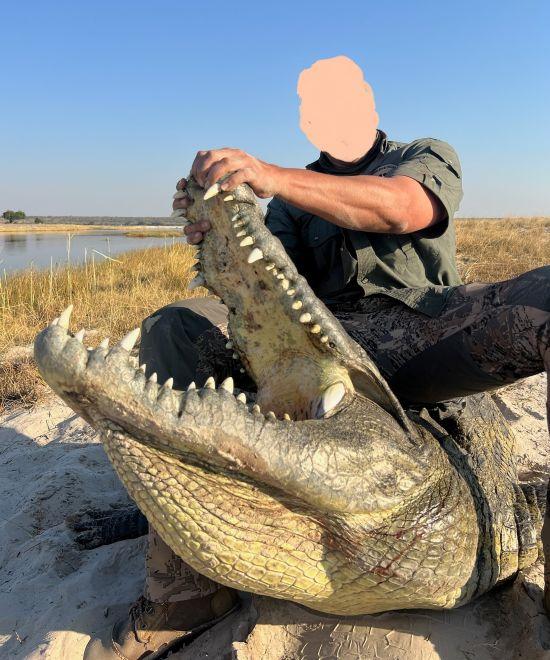
7-Day Nile Crocodile Hunting Safari in Namibia's Zambezi Region
Booking Season: 2026
Hunt Difficulty: Difficult
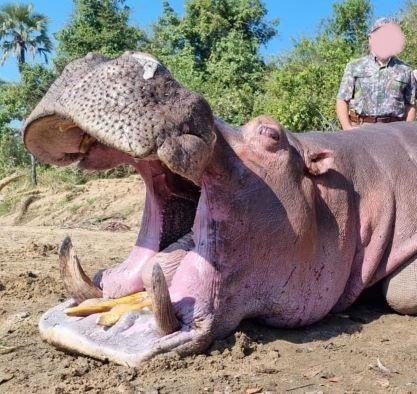
14-Day Dangerous Game & Plains Game Safari in South Africa
Booking Season: 2026
Hunt Difficulty: Difficult
Crocodile hunting in Africa is a highly technical pursuit where patience, careful positioning and precise shot placement often determine the outcome. Unlike dangerous game hunted by tracking over long distances, much of a crocodile safari is spent glassing riverbanks, lakes and sandbars, studying individual animals and waiting for the right opportunity.
Nile crocodiles are perfectly adapted to their environment and can disappear beneath the water within seconds of detecting movement or disturbance. This makes the approach particularly important. Hunters may spend considerable time observing a mature crocodile before working into a suitable shooting position, knowing that a poorly placed shot can result in an animal reaching deep water and becoming extremely difficult to recover.
For hunters travelling from the United States and Canada, crocodile hunting can be planned as a dedicated safari or incorporated into broader Dangerous Game Hunts in Africa. Crocodile is frequently combined with hippo, while longer safaris may include Cape buffalo or other species depending on the destination, hunting area and available quota.
The Nile crocodile is the principal crocodile species pursued by international trophy hunters in Africa. Hunting opportunities are available in several countries, with Zimbabwe, Mozambique and Zambia particularly well known for large crocodiles associated with major rivers, lakes and extensive water systems. South Africa, Tanzania, Botswana and other destinations may also offer opportunities depending on current regulations and quota.
Crocodiles are generally hunted around freshwater habitats, including rivers, lakes, wetlands and large reservoirs. Mature animals are often located by glassing traditional basking areas, exposed banks and sandbars, with the Professional Hunter assessing the crocodile carefully before deciding whether an approach should be made.
Crocodile hunting is regulated by the wildlife authorities of the country in which the safari takes place, and international trophy export and import requirements must be confirmed before the hunt. Hunters should work with their outfitter or hunting agent to ensure the necessary permits and documentation are arranged for their particular destination.
The length of a crocodile safari varies according to the hunting area and whether other species are included. Dedicated hunts may be relatively short, while combination safaris involving hippo or other big game generally require additional hunting days.
Nile crocodile hunting is available in several African countries, but the character of the hunt can vary considerably depending on the water system, hunting area and size of the crocodiles available.
Crocodile Hunting in Zimbabwe is available around major water systems such as Lake Kariba and the Zambezi River, which provide extensive habitat for large Nile crocodiles. Crocodile can often be combined with hippo and, depending on the hunting area and available quota, other dangerous game.
Crocodile Hunting in Mozambique offers excellent opportunities, particularly around major water systems such as Lake Cahora Bassa and the Zambezi. The country's remote hunting areas make crocodile a natural addition to a longer safari that may include buffalo, hippo or plains game.
Crocodile Hunting in Zambia is another established option, with crocodiles hunted along major rivers and lakes, including waters associated with the Zambezi system. Tanzania, South Africa, Botswana and Namibia may also offer crocodile hunting opportunities depending on the hunting area, current quota and regulations.
Crocodile Hunting in South Africa is conducted around suitable rivers, dams and permanent water systems in the warmer northern and eastern regions of the country. Hunters should compare the hunting circumstances, trophy-size pricing and origin of the crocodiles carefully, as South African offerings can differ considerably.
Tanzania, Botswana and Namibia may also offer crocodile hunting opportunities depending on the hunting area, current quota and regulations.
Choosing where to hunt should involve more than simply comparing the advertised size of past trophies. The quality of the hunting area, strength of the crocodile population, hunting pressure, accessibility of the water system and opportunities to combine other species can all influence which destination is best suited to a particular safari.
The best time to hunt Nile crocodile depends on the destination and local water conditions, although the dry season is generally favoured in many of Africa's established crocodile hunting areas. As water levels fall, exposed riverbanks, sandbars and basking areas can become easier to identify, giving hunters better opportunities to locate and assess mature animals.
Time of day can be just as important as time of year. Crocodiles regularly leave the water to bask and regulate their body temperature, and the Professional Hunter will plan glassing and hunting activity around local conditions and known basking areas. Weather, temperature and recent disturbance can all influence whether a particular crocodile appears.
Lower water levels may also concentrate crocodiles into more predictable sections of rivers and lakes, but conditions vary considerably between destinations and even between individual hunting areas. Hunters should therefore avoid assuming that one set of months is ideal across the entire continent.
Once a mature crocodile is located, patience remains important. A crocodile that disappears into the water after detecting movement may not present another opportunity for some time, making careful observation and an undisturbed approach more important than rushing to get into position.
Shot placement is one of the most critical aspects of crocodile hunting. The objective is generally to anchor the animal immediately, as a poorly placed shot can allow a crocodile to reach deep water within seconds and make recovery extremely difficult.
Depending on the position and angle of the crocodile, the Professional Hunter may recommend a carefully placed brain or upper spinal shot. Both require a thorough understanding of crocodile anatomy and the ability to shoot accurately from the position and distance presented.
Hunters should discuss the intended aiming point with their Professional Hunter before the shot and be prepared to take an immediate follow-up shot if instructed.
Our detailed Crocodile Shot Placement Guide explains the recommended aiming points, crocodile anatomy and how shot angles can affect placement.
Judging the size of a Nile crocodile in the field is considerably more difficult than simply looking at its length. Crocodiles are often observed from a considerable distance, and part of the animal may be hidden by water, vegetation or the shape of the riverbank. Without a clear reference for scale, even experienced hunters can find it difficult to estimate the true size of an animal.
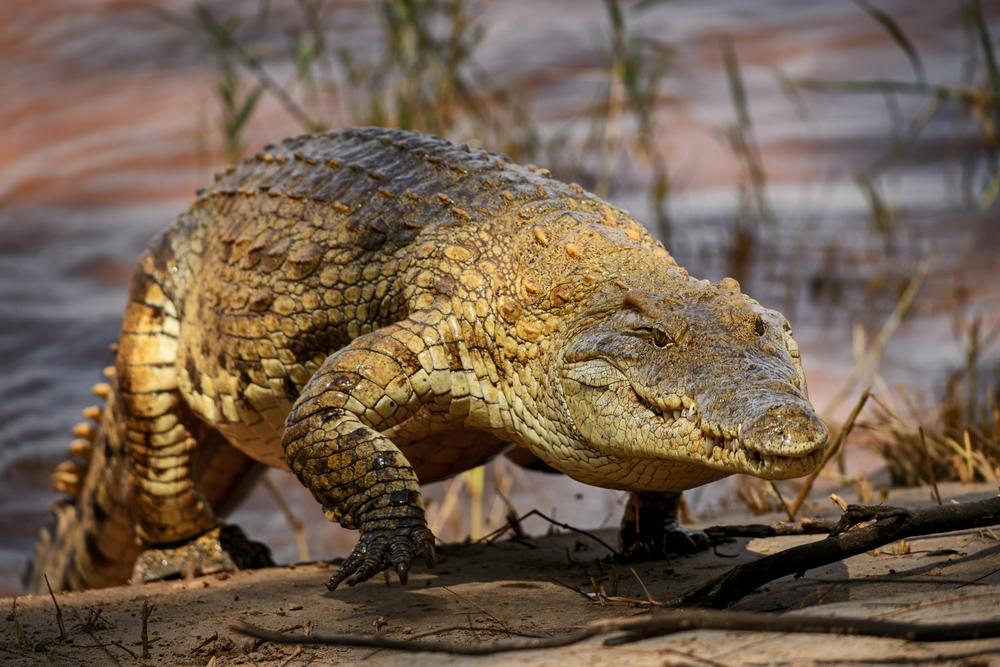
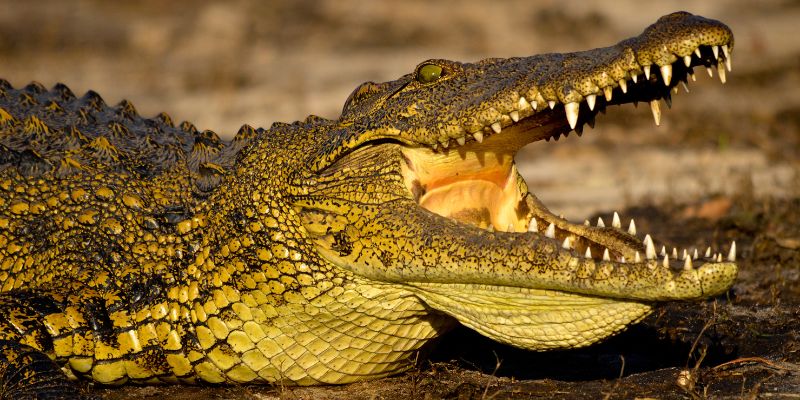
Professional Hunters look at several characteristics when assessing a potential trophy. The size and width of the head, the thickness of the neck and body, and the overall proportions of the animal can all provide clues to maturity. A big old crocodile often carries considerably more mass than a younger animal, with a heavy head and thick body that can be just as impressive as its overall length.
Length remains an important measure, but judging the difference between a good crocodile and an exceptional one from across a river or lake is not easy. An animal that initially appears enormous may look very different once a better viewing angle becomes available, while a heavy-bodied old crocodile can sometimes be underestimated when only part of it is visible.
This is where local knowledge becomes particularly valuable. Professional Hunters and trackers who spend time around the same water systems may know where large crocodiles regularly bask and, in some cases, may have watched particular animals over an extended period. That knowledge can save valuable hunting time and help prevent a hunter from rushing an opportunity on a younger animal.
Hunters should be prepared to spend time glassing and listen carefully to their Professional Hunter before deciding to make an approach. On a crocodile hunt, finding an animal is only the beginning. Correctly judging whether it is the trophy you have travelled to Africa to pursue can be one of the most difficult parts of the hunt.
Crocodile hunting requires a rifle that combines sufficient power with exceptional accuracy. The exact legal caliber requirements vary between African countries, so hunters should confirm the regulations for their chosen destination before travelling.
The .375 H&H is a popular choice, particularly when crocodile forms part of a broader dangerous game safari involving species such as buffalo or hippo. Other suitable calibers may also be used depending on local regulations and the recommendations of the Professional Hunter.
Unlike hunting some larger dangerous game species, success on crocodile is not simply about carrying the biggest rifle available. The target area for a brain or upper spinal shot is relatively small, and the hunter must be able to place the bullet precisely from the shooting position and distance presented.
A familiar rifle that the hunter can shoot accurately and confidently is therefore extremely important. Whatever caliber is selected, hunters should practise extensively before the safari and follow their Professional Hunter's advice on suitable ammunition and shot placement.
Crocodile hunting offers something very different from most African dangerous game hunts. The challenge is rarely about covering great distances on foot or confronting an animal at close range. Instead, success depends on patience, careful observation and the ability to make an extremely precise shot when the opportunity finally presents itself.
A large old Nile crocodile is an impressive African trophy, but finding one is only part of the challenge. Mature animals can be extremely wary, and considerable time may be spent glassing water systems, identifying potential trophies and planning an approach without disturbing the crocodile.
The hunt also appeals to sportsmen looking to add a different dimension to a broader Big Game Hunting safari in Africa. Crocodile can often be combined with hippo and, depending on the destination and available quota, Cape buffalo or other game.
What makes the hunt memorable is the discipline it demands. Hours of patience can come down to a single opportunity, and when that moment arrives, there is very little margin for error.
The moments immediately after a crocodile is shot are often among the most important of the entire hunt. Even a well-placed shot requires a quick assessment by the Professional Hunter, as a wounded crocodile can disappear beneath the water in only a few seconds if it is not anchored effectively.
Hunters should remain ready to fire an immediate follow-up shot if instructed. The Professional Hunter will direct the recovery, taking into account the crocodile's position, the surrounding water and any potential safety risks. Every recovery is different, and patience is often just as important after the shot as it was before it.
Once the crocodile has been recovered, the trophy is carefully prepared in the field. Particular attention is given to preserving the hide, as damage to the scales can affect both the appearance and value of the finished trophy. The skull is also prepared before the trophy enters the dip-and-pack process and is ultimately shipped to the hunter's chosen taxidermist.
What is included in a crocodile hunt varies between destinations and outfitters, but most safaris cover accommodation in the hunting camp or lodge, meals and beverages, the services of a licensed Professional Hunter, trackers and camp staff, and transportation within the hunting area.
The hunting vehicle, boats where required, and other equipment used during the hunt will generally be provided by the outfitter. Field preparation of the crocodile is also normally included, although hunters should confirm exactly where the outfitter's responsibility ends once the trophy leaves camp.
One important point when comparing crocodile hunts is how the trophy fee is structured. Some packages include the crocodile trophy fee in the advertised price, while others quote it separately. Hunters should also establish what happens if a suitable crocodile is not harvested and whether trophy fees vary according to the measured length of the animal.
Additional costs can include road transfers or private air charters to remote hunting areas, government fees and permits, firearm-related costs where applicable, dip and pack, taxidermy and international trophy shipping. These expenses can differ considerably depending on where the hunt takes place.
Crocodile trophies require careful preparation and export documentation, so hunters travelling from the United States or Canada should confirm the complete process before booking. The outfitter or hunting agent should be able to explain which permits and services are included, which costs are payable separately and who will handle the trophy once it leaves the hunting camp.
When comparing different crocodile hunting opportunities, ask for a complete written breakdown of inclusions and exclusions. A hunt with a lower advertised trophy fee may not necessarily represent better value once transfers, daily rates, government charges and trophy handling are taken into account.
The cost of a crocodile hunt in Africa depends on the destination, hunting area, length of the safari and whether crocodile is hunted alone or combined with other species. Most safaris are priced using a daily rate together with a crocodile trophy fee, although some outfitters offer fixed packages that include a set number of hunting days and the trophy fee.
Hunters comparing prices should look beyond the advertised crocodile trophy fee. The total cost may also include daily rates, government levies, licence and permit fees, transportation to the hunting area and any charter flights required to reach remote camps. Dip and pack, taxidermy and international trophy shipping are normally additional expenses.
The location of the hunt can make a considerable difference to the final cost. A crocodile hunt conducted from an established camp with straightforward road access will have a different cost structure from a safari requiring a private charter into a remote concession. Longer combination safaris involving hippo, Cape buffalo or other species will naturally increase the overall budget but may provide better value for hunters travelling a long distance to Africa.
Crocodile trophy fees can also vary according to the destination and, in some hunting areas, the size of the animal. Hunters should establish before booking whether the quoted trophy fee is fixed or based on the measured length of the crocodile, and what happens to the fee if a suitable animal is not harvested.
When comparing crocodile hunting opportunities, the most useful figure is therefore the total expected safari cost, rather than the trophy fee viewed in isolation. Our guide to African Hunting Safari Prices explains how daily rates, trophy fees and additional safari expenses typically fit together when budgeting for a hunt.
Crocodile hunting usually begins with finding the water systems where mature animals regularly feed and bask. Rivers, lakes, reservoirs and sandbanks may be glassed from considerable distances, allowing the Professional Hunter to study individual crocodiles without disturbing them.
Once a suitable trophy has been identified, the challenge becomes getting into a position from which an accurate shot can be taken. Depending on the terrain, this may involve a careful stalk using vegetation and the contours of the riverbank for cover, or setting up a blind overlooking an area the crocodile regularly uses.
Crocodiles are extremely sensitive to movement and disturbance around the water. An approach that is detected too early can send a trophy crocodile into deep water, and there is no guarantee that it will return to the same position that day.
Much of the hunt therefore takes place before the rifle is ever raised. The PH must judge the animal, study its position relative to the water, determine the available shooting angle and consider how the crocodile will be recovered after the shot.
When everything comes together, the shooting opportunity may last only a short time. The hunter needs to be settled, know the exact aiming point and be prepared to follow the Professional Hunter's instructions immediately after the first shot.
A crocodile safari can involve hours of watching an animal that never presents a shot. A big crocodile may appear on a distant bank, disappear beneath the surface and reappear somewhere completely different. Another may look exceptional through binoculars, only for the Professional Hunter to decide after a closer look that he is not the trophy you have come to hunt.
That uncertainty is part of crocodile hunting. Much of the work happens before the hunter ever settles behind the rifle. Crocodiles must be found, judged and watched. The approach needs to be planned, the shooting position prepared and the animal allowed to settle in exactly the right place.
After hours, or sometimes days, of preparation, the actual opportunity can be remarkably brief. The crocodile lifts its head, changes position or begins moving towards the water, and suddenly the time spent waiting comes down to one carefully placed shot.
That contrast is part of what makes hunting a mature Nile crocodile so memorable. The hunt can demand extraordinary patience, yet when the opportunity finally arrives, everything can happen in seconds.
Success on a crocodile hunt depends on far more than simply hunting an area with a healthy population. The quality of the hunting area, the number of mature animals, water levels, weather conditions and hunting pressure can all influence the opportunities available during a safari.
Local knowledge is particularly important. Professional Hunters who know a water system well may understand where large crocodiles regularly bask, which banks they favour at different times of day and how water levels affect their movements.
The hunter also plays an important role. Being able to remain patient, move quietly when required and make an accurate shot from a stable position can ultimately determine the outcome of the hunt.
There are no guarantees when hunting free-ranging crocodiles. A large animal may disappear before an approach is completed, conditions may change, or the PH may decide that a crocodile is not as big as initially thought. Being prepared to walk away and continue looking is often part of hunting for a genuinely mature trophy.
Crocodile hunting suits a hunter who enjoys the technical side of a safari. There may be long periods spent behind binoculars or a spotting scope, studying animals and waiting for the right crocodile to appear in a position where a responsible shot can be taken.
It also requires confidence with a rifle. The opportunity may involve a relatively small target area, and there is considerably less margin for error than on most plains game species.
Hunters looking for a safari built around miles of tracking and constant movement may find crocodile hunting very different from what they expect. However, crocodile is commonly combined with Hippo Hunts, while longer safaris may also include Cape buffalo or selected plains game species, adding a completely different dimension to an African hunting safari.
The hunter who will appreciate crocodile hunting most is usually one who understands that patience is part of the hunt and is prepared to wait rather than force an opportunity on the wrong animal or at the wrong angle.
Crocodile hunting presents a very different challenge from pursuing dangerous game on foot. A Cape Buffalo Hunt may involve following tracks for hours through thick bush before eventually closing the distance on an old bull. Lion Hunts can involve their own demanding methods and considerable preparation. Crocodile hunting, by contrast, is often built around observation, positioning and precision.
The pressure also comes from a different source. A crocodile may be lying motionless on a bank, but the hunter knows that a poorly placed shot can allow the animal to reach deep water within seconds. The first shot therefore carries enormous importance, not only in making a clean kill but in ensuring the trophy can be recovered.
This difference is what makes crocodile such an interesting addition to a broader dangerous game safari. Buffalo may test a hunter's endurance and ability to follow tracks, while crocodile tests the ability to remain patient and then deliver absolute precision when the opportunity finally arrives.
A successful crocodile safari begins with choosing the right destination, hunting area and Professional Hunter. Trophy quality, water systems, safari length and opportunities to combine crocodile with other species should all be considered before deciding where to hunt.
Hunters exploring Hunting Trips in Africa can compare available safari opportunities and plan a crocodile hunt as a dedicated trip or as part of a broader African safari involving hippo, buffalo or other game.
Whether you are looking for a mature Nile crocodile or planning a longer combination safari, Game Hunting Safaris can help match you with an experienced outfitter and hunting area suited to your objectives.
A dedicated crocodile hunt may require around five to seven hunting days, although the recommended safari length depends on the destination, hunting area and trophy expectations. Hunters looking for a particularly large, mature crocodile may benefit from allowing additional time. Combination safaris involving hippo, Cape buffalo or other species will generally require a longer itinerary.
Yes. Crocodile and hippo are frequently hunted on the same safari because both species occupy many of the same rivers, lakes and water systems. Depending on the destination, hunting area and available quota, crocodile can also form part of a longer safari involving Cape buffalo, plains game or other species.
Trophy expectations vary between hunting areas, and overall length should not be the only consideration when assessing a crocodile. Mature animals typically show a large, heavy head, thick neck and substantial body mass. Judging size accurately at a distance can be extremely difficult, so hunters should rely on their Professional Hunter's knowledge and assessment before deciding to make an approach.
Recovery can become considerably more difficult if a wounded crocodile reaches deep water, which is why shot placement and the animal's position before the shot are so important. Hunters should remain ready for an immediate follow-up shot and follow the Professional Hunter's instructions throughout the recovery. The exact approach will depend on the water system, available equipment and circumstances of the hunt.
The ability to import a Nile crocodile trophy into the United States depends on the country of origin and the applicable wildlife and CITES requirements at the time of the hunt and import. American hunters should confirm current import eligibility and required documentation before booking, rather than assuming that a legally hunted trophy can automatically be imported into the United States.
Not necessarily. Depending on the destination and outfitter, hunters may be able to use a suitable camp rifle rather than travelling internationally with their own firearm. Hunters who prefer to bring their own rifle should confirm firearm import and transit requirements well before departure. Whichever option is chosen, the rifle should be accurate, familiar to the hunter and suitable for the legal requirements of the country being hunted.
The Nile crocodile is currently assessed as Least Concern globally, although its conservation position and legal management differ between countries and individual populations.
International transport of a legally hunted Nile crocodile trophy is subject to the CITES listing that applies to the population of origin, together with the relevant national export and destination-country import requirements. Hunters should confirm trophy eligibility and required documentation before booking.
Search from our range of Hunts across various popular destinations in Africa.

Book Your Hunt