Designed by Hunters, for Hunters

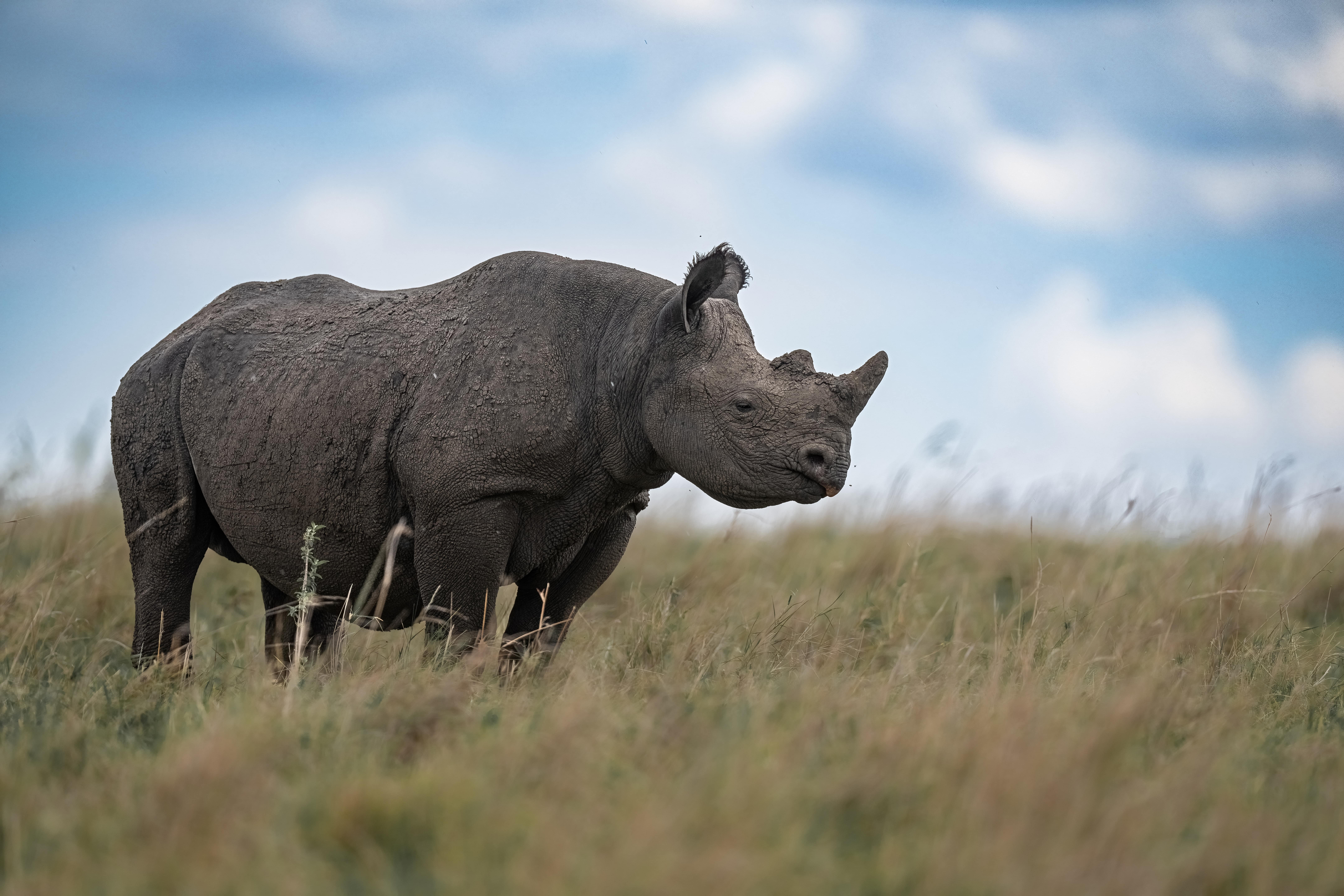
The black rhinoceros (Diceros bicornis) is one of Africa’s two native rhino species. Also known as the hook-lipped rhino, it is distinguished by its pointed upper lip, compact build, solitary behaviour and preference for browsing on leaves, shoots and woody vegetation.
Black rhinos inhabit savannas, shrublands, woodlands and semi-arid areas across parts of southern and eastern Africa. Despite their size, they can move quietly through dense vegetation and rely heavily on their hearing and sense of smell to detect danger.
Hunters researching legal opportunities, permits, prices and current availability can visit our dedicated Rhino Hunts page. As one of the animals associated with Big Five Hunting, the black rhino remains subject to exceptionally strict national and international controls.
This species profile focuses on the black rhino’s physical characteristics, habitat, diet, behaviour and conservation status.
Four black rhino subspecies have traditionally been recognised:
The surviving subspecies occupy fragmented populations across southern and eastern Africa. Their distribution has been shaped by historical poaching, habitat loss, translocations and intensive conservation programmes.
Scientific Name:
Diceros bicornis
Male Weight:
1,760–3,080 pounds
Shoulder Height:
55–71 inches
Range:
Dispersed populations across southern and eastern Africa
Habitat:
Savannas, shrublands, woodlands and semi-arid areas
Diet:
Leaves, shoots, twigs, herbs and succulents
Breeding:
Year-round
Lifespan:
Approximately 30–50 years
The black rhino is a large, powerfully built animal with a compact body, thick legs and a relatively short neck. Adult males are generally larger than females and may stand approximately 55–71 inches at the shoulder.
Despite its name, the black rhino is not black. Its skin varies from grey to brown depending on soil, mud and dust in the surrounding habitat. Both black and white rhinos may therefore appear similar in colour.
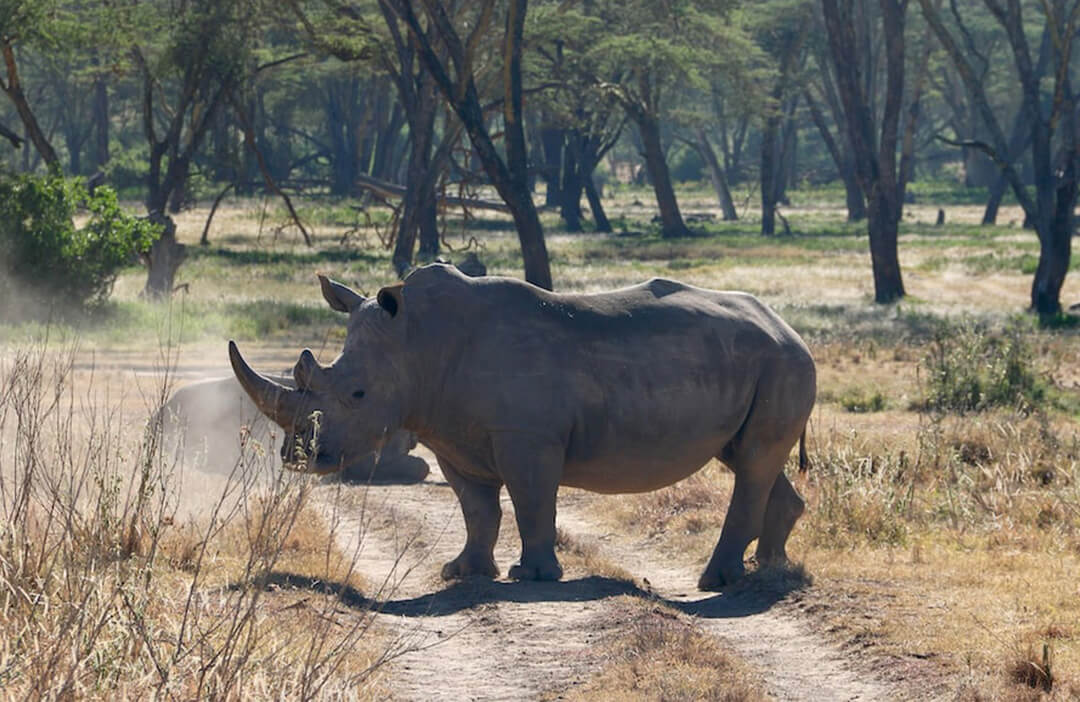
The clearest physical difference is the mouth. A black rhino has a pointed, prehensile upper lip adapted for grasping leaves, shoots and twigs. The white rhino has a much wider, square-shaped mouth adapted primarily for grazing.
Black rhinos normally have two horns, with the front horn generally longer than the rear. Rhino horns consist of tightly packed keratin rather than bone and continue growing throughout the animal’s life. Horn size and shape vary considerably between individuals.
Their eyesight is relatively poor, but this is compensated for by highly developed hearing and an exceptional sense of smell. Their independently moving ears help identify sounds from different directions, while scent allows them to detect animals, people and changes in the wind.
Black rhinos occupy a wide range of habitats, including savannas, dry shrublands, open woodlands, dense thickets and semi-arid areas. Suitable habitat must provide sufficient browse, access to water and enough cover for resting during the heat of the day.
Remaining populations occur in protected areas and conservation landscapes across parts of southern and eastern Africa. Important populations are found in countries including South Africa, Namibia, Zimbabwe and Kenya, with smaller or reintroduced populations occurring elsewhere.
Black rhinos often use established paths between feeding areas, water sources, wallows and resting sites. Their compact build and pointed lip allow them to move and feed effectively in thicker vegetation than the predominantly grazing white rhino.
Black rhinos are generally solitary. Adult bulls establish territories, while females may occupy wider ranges that overlap those of several other rhinos. Females are usually accompanied by their calves until the young animals become independent.
Although black rhinos are often described as aggressive, their behaviour is influenced by visibility, wind, surrounding vegetation and how they interpret a possible threat. An animal startled at close range may investigate, retreat or charge.
Scent marking plays an important role in communication. Black rhinos use dung middens, urine and paths to exchange information about territory, breeding status and the presence of other animals.
As browsers, black rhinos feed mainly on leaves, shoots, branches, herbs and succulents. Their pointed upper lip can curl around vegetation and pull it into the mouth. The exact diet changes according to the habitat, season and available plant species.
Black rhinos regularly visit water when it is available, but populations in drier regions can survive for periods without drinking every day. Mud wallows help them cool down and provide some protection against insects and sun exposure.
Black rhinos can breed throughout the year. After a gestation lasting approximately 15–16 months, the female normally gives birth to a single calf.
The calf remains close to its mother for several years, learning where to find water, suitable browse and secure resting areas. Females reproduce slowly, which makes the loss of breeding animals especially significant to small or fragmented populations.
The black rhinoceros is classified as Critically Endangered. Although intensive conservation programmes have helped some populations recover, poaching for rhino horn and the loss or fragmentation of suitable habitat remain serious threats.
Protection involves anti-poaching operations, biological monitoring, genetic management, translocation and the establishment of new populations in secure areas. Because black rhinos reproduce slowly, each population must be managed carefully over many years.
The species is protected under CITES Appendix I. Any exceptional legal hunting allocation or international movement of a trophy is subject to strict national approvals, individual animal selection and applicable CITES requirements.
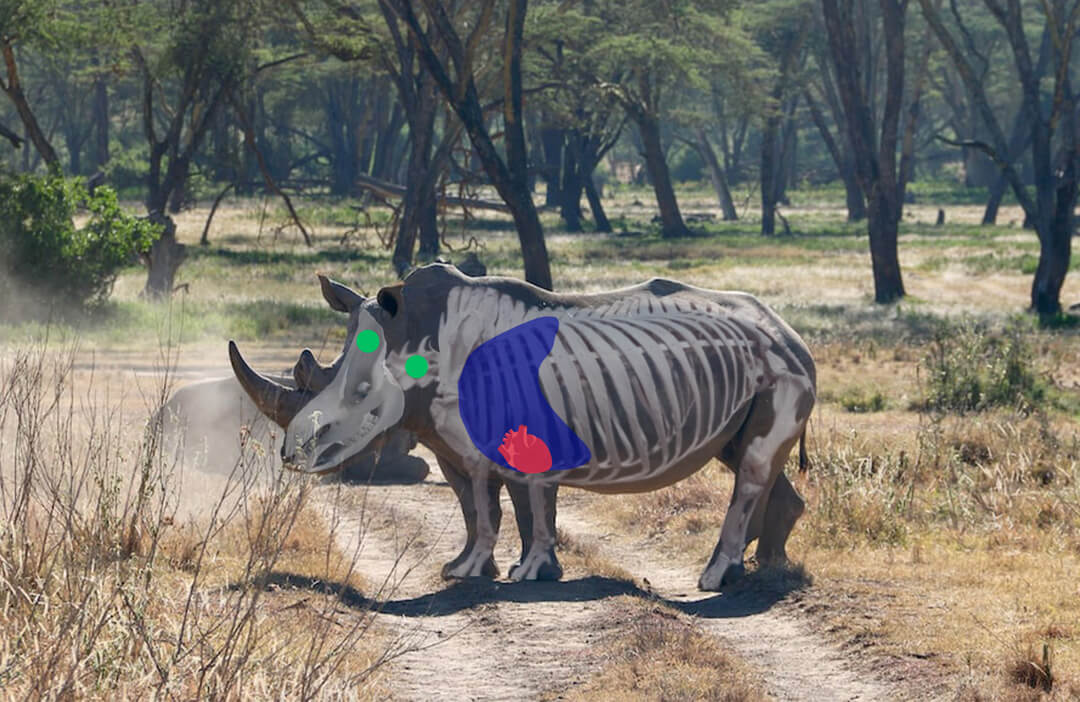
A black rhino’s compact body, heavy shoulders and tendency to stand partly concealed in thick vegetation can make its anatomy difficult to judge. Head position, body angle and the placement of the front leg can all change how the vital area appears.
Hunters studying the animal’s anatomy can consult our dedicated Rhino Shot Placement guide for diagrams and practical information.
Search from our range of Hunts across various popular destinations in Africa.

Book Your Hunt