
Planning your first hunting safari in Africa can raise questions that have little to do with the hunt itself. Is the country safe to visit? Who meets you at the airport? What happens when travelling with a firearm? How do you reach a remote hunting camp? And if your wife or children are travelling with you, will they be comfortable and safe?
These are reasonable questions to ask before travelling thousands of miles to a continent you may never have visited. The answer, however, depends considerably on where in Africa you are going, the hunting area you will be visiting and the people responsible for your safari.
Well-planned African Hunting Safaris in established destinations are typically organised from the moment the hunter arrives. Airport collection, firearm procedures, overnight accommodation, domestic connections and transfers to camp may all form part of the itinerary. In remote hunting areas, the journey could continue by road or charter aircraft, making it important to understand exactly what happens between stepping off your international flight and arriving in camp.
Africa should not be viewed as one destination with a single safety profile. Conditions in South Africa can differ considerably from those in Mozambique, Zimbabwe, Namibia or Tanzania, and circumstances can vary within individual countries. A professionally organised safari therefore begins with understanding the specific destination, hunting area and travel arrangements rather than making assumptions about the continent as a whole.
This guide looks at the practical safety considerations international hunters should understand before travelling to Africa, from airport arrival and transfers to remote camps, travelling with family and hunting dangerous game. The objective is not to suggest that travel anywhere is without risk, but to help hunters understand those risks, ask the right questions and arrive in Africa knowing what to expect.
Africa Is Not One Destination With One Safety Profile
One of the mistakes when considering travel safety is treating Africa as though it were a single destination. The continent consists of more than 50 countries, and the conditions a hunter encounters can vary considerably depending on the country, region and hunting area being visited.
A safari in a well-established hunting area in South Africa is very different from travelling to a remote concession in northern Mozambique or western Tanzania. Namibia, Zimbabwe and Zambia present their own travel considerations, while even within a single country there can be significant differences between major cities, rural communities and isolated hunting areas.
The nature of a hunting safari also changes the way most international hunters travel through Africa. A hunter is typically not arriving without a plan and deciding where to go next. Airport collection, accommodation, domestic flights, road transfers or charter arrangements are normally organised in advance, with the outfitter or a representative responsible for getting the hunter from one stage of the journey to the next.
This distinction becomes particularly important when reading general travel warnings or news reports about events in a particular country. A security concern hundreds of miles from the hunting area may have little bearing on a safari, while a developing problem closer to the intended destination could be extremely relevant. Hunters should therefore consider current information in the context of where they will actually be travelling, rather than relying solely on broad perceptions of whether an entire country, or Africa itself is safe.
The right question is not simply, "Is Africa safe?" It is: Where am I going, who is meeting me when I arrive, how am I getting to camp, and who is responsible for me while I am there?
Your Safety Starts Before You Leave Home
A safe hunting safari begins long before the hunter boards a flight to Africa. Before paying a deposit, you should know exactly where you will be hunting, who will operate the safari and how you will travel from the international airport to your final destination.
The outfitter should be able to provide a clear itinerary covering airport collection, overnight accommodation where required, domestic flights, road transfers or charter arrangements. If you are travelling with your own firearm, the necessary permits and procedures should also be understood well before departure, particularly when connecting through another country on the way to your hunting destination.
Current travel conditions should form part of that preparation. Government travel advisories and other reliable sources can provide useful information, but they should be considered alongside the location of the actual hunting area. A warning affecting one region does not necessarily apply to an entire country, although any concern close to the planned route or hunting area should be taken seriously and discussed with the outfitter.
Travel and medical insurance, emergency contact details and communication arrangements should also be confirmed before leaving home. Hunters heading into particularly remote areas may want to understand what emergency procedures are available and how long it would realistically take to reach appropriate medical care if required.
This preparation becomes even more important when a wife, children or other non-hunting companions are joining the safari. Their accommodation, transfers and activities should be considered as carefully as the hunt itself. A safari that is perfectly suited to a group of experienced hunters may not necessarily be the right choice for a family travelling to Africa for the first time.
The objective is not to eliminate every possible risk, that is impossible with any international travel. It is to remove unnecessary uncertainty. Before leaving home, you should know where you are going, who is expecting you and how you are getting there.
What Happens When You Land in Africa?
The first hours after arriving in Africa can look very different depending on where the safari begins. An international hunter landing in Johannesburg for a hunt in South Africa may have a relatively straightforward journey to camp, while another hunter could be connecting onward to Zimbabwe, Mozambique, Zambia or Tanzania before beginning a further road or charter transfer to the hunting area.
That difference matters, particularly for someone visiting Africa for the first time. Before departure, the hunter should know which airport he is arriving at, whether someone will be waiting for him, where that person will meet him and what the next stage of the journey involves. If an overnight stay is required, the accommodation and transfer should ideally already be arranged.
Travelling with a firearm adds another consideration. Depending on the country and route, hunters may need to complete firearm procedures at the airport, work with a permit service or comply with transit requirements when connecting through another country. These arrangements should be confirmed before travel rather than worked out after landing.
The same principle applies when travelling with a wife, children or other companions. After a long international flight, arriving in an unfamiliar country without knowing who is collecting you or how you are reaching your hotel or hunting camp creates unnecessary uncertainty. A well-organised safari should provide clear instructions before the journey begins.
Once outside the major arrival airports, the journey can change considerably. Some hunting camps are reached within a few hours by road. Others may require a domestic connection, a charter flight into a remote airstrip or a long drive through areas rarely visited by international tourists. No two African safaris are exactly the same, and neither are the journeys required to reach them.
The important point is that the hunter should never have to arrive in Africa and then start figuring out what happens next. From the airport to the hunting camp, the route should already be understood and the people responsible for each stage should be known.
Safety in Africa is Not Only About Crime
When hunters ask whether it is safe to travel to Africa, personal security is often the first concern. There are, however, other risks to consider, particularly when travelling to remote hunting areas.
Health considerations vary considerably by destination. Malaria is present in parts of Africa, while certain regions may have other insect-borne diseases and risks associated with mosquitoes or tsetse flies. Hunters travelling into remote areas should understand the health considerations specific to the country and hunting region they will actually be visiting rather than assuming the same precautions apply everywhere in Africa.
Access to medical care is another consideration. A hunting camp several hours from a major town presents different challenges from a lodge within easy reach of established medical facilities. Before travelling, hunters should discuss appropriate vaccinations and preventative medication with a qualified medical professional and understand what arrangements are available should a medical emergency occur in camp.
The important point is that health risks, like personal security, should be assessed according to the specific destination and hunting area rather than Africa as a whole.
Is It Safe to Bring Your Wife or Children on an African Hunting Safari?
Safety in a Remote African Hunting Camp
Once in camp, the safety considerations often change. Concerns about airports, cities and transfers become less relevant, while the remoteness of the hunting area and the surrounding environment become more important.
Some African hunting camps are within relatively easy reach of established towns and medical facilities. Others are deep in wilderness areas where reaching a hospital could involve several hours by road or require an aircraft. Hunters considering remote safaris should understand what communication is available in camp and what procedures are in place should a genuine emergency occur.
Camp staff also understand risks that may be unfamiliar to visiting hunters. Depending on the area, elephants, buffalo, hippo or other wildlife may move close to camp, particularly after dark. Simple instructions about where it is safe to walk and when to ask a member of staff for assistance should be taken seriously.
Remote does not necessarily mean unsafe, but it does mean that help may not be immediately available. Knowing how isolated the camp is and what emergency arrangements exist is part of understanding the safari you are booking.
Hunting Dangerous Game Requires a Different Kind of Safety
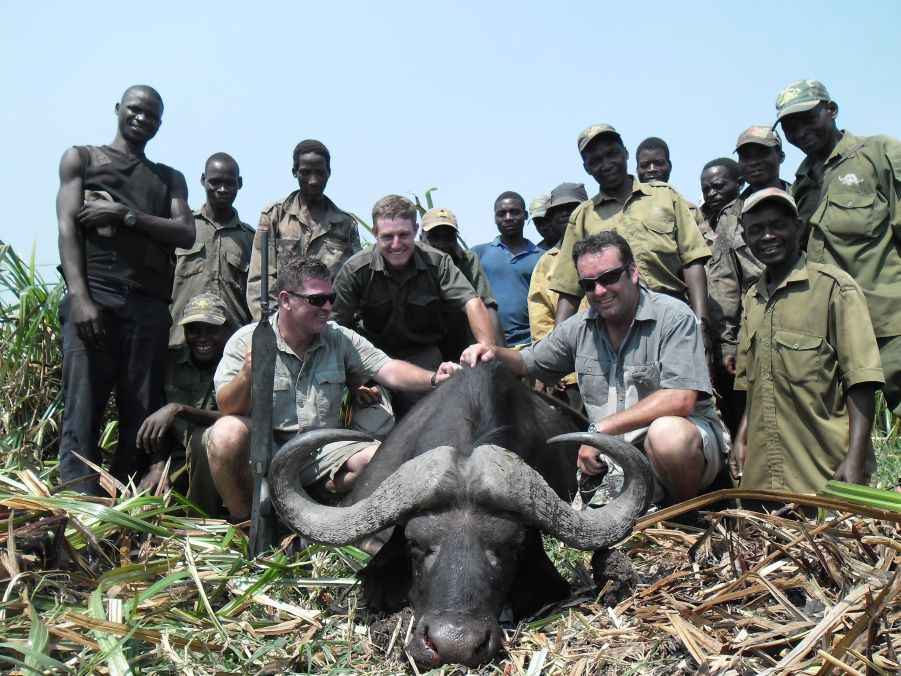
Personal security and travel safety are only part of the picture when the safari involves dangerous game. Once the hunt begins, the Professional Hunter and hunting team become responsible for managing risks that have little to do with airports, crime or political conditions.
During Dangerous Game Hunts, encounters with species such as Cape buffalo, elephant, lion, leopard and hippo can develop quickly and at close range. Hunters should understand the PH's instructions before entering the field and follow them immediately when circumstances change.
Firearm handling also becomes particularly important. The hunter should know when the rifle is expected to be loaded, where other members of the hunting team are positioned and what is expected if a potentially dangerous situation develops. This is not the time to improvise or ignore the judgement of the Professional Hunter who understands the animal and terrain.
The risks involved in hunting dangerous game cannot be eliminated entirely, that is part of the nature of pursuing these species in wild environments. They can, however, be managed through an experienced Professional Hunter, a competent hunting team and a client who understands that safety takes priority when conditions change.
What if Conditions Change Before Your Safari?
An African hunting safari may be booked months or even years before departure, and circumstances can change during that time. Airline schedules can be disrupted, access to a hunting area can change and, occasionally, political or security concerns may develop in a particular region.
Hunters should remain in contact with their outfitter as the departure date approaches and check current travel information for the countries and regions through which they will be travelling. This is particularly important when the journey involves connecting through several countries or travelling into a remote hunting area.
If a genuine security concern develops, the outfitter should be able to explain whether it affects the hunting area or travel route and what alternatives are available. This is another reason why knowing exactly where you are going, and having reliable people on the ground, is more useful than trying to judge the safety of an entire country from a headline.
Planning a Safe African Hunting Safari
There is no honest way to say that every destination in Africa is equally safe or that international travel comes without risk. What can be said is that a professionally planned hunting safari is a very different proposition from arriving in an unfamiliar country without local support or a clear itinerary.
Know where you are hunting. Understand who is meeting you at the airport and how you are getting to camp. Research the current conditions in the region you will actually visit. If your wife or children are travelling with you, make sure the safari is suitable for them as well as for the hunter. And once in the field, listen to the Professional Hunter and the people who know the country.
Good planning removes much of the uncertainty that can make a first trip to Africa feel intimidating. Hunters exploring available Hunting Trips should consider the complete journey, not simply the species being pursued or the price of the hunt, and choose an outfitter and safari that match their expectations, comfort level and intended destination.
Frequently Asked Questions
Is it safe to go on a hunting safari in Africa?
A professionally planned hunting safari in an established African hunting destination can generally be undertaken safely, but there is no single answer that applies to every country or hunting area. Hunters should consider the current conditions in the specific region they intend to visit, choose a reputable outfitter and have airport transfers and onward travel arranged before departure.
What is the safest African country for a hunting safari?
There is no single African country that can be described as the safest choice for every hunter. South Africa and Namibia are well-established destinations that may suit first-time visitors particularly well, but professionally operated safaris also take place in Zimbabwe, Zambia, Mozambique, Tanzania and elsewhere. The hunting area, outfitter, travel route and current regional conditions are often more relevant than a broad assessment of the country as a whole.
Is South Africa safe for American hunters?
South Africa receives large numbers of international visitors and remains one of Africa's established hunting destinations. As in other countries, personal security can vary considerably between locations. American hunters should arrange reliable airport collection and transfers, understand where they will be staying and follow the advice of their outfitter regarding areas they may be unfamiliar with. A hunting lodge in a rural area presents a very different environment from independent travel through a major city.
Is it safe to travel through Johannesburg with a hunting rifle?
International hunters regularly travel through Johannesburg with sporting firearms, but South African firearm import and transit requirements must be followed. Hunters should confirm the current permit requirements before departure and ensure that any airport collection, overnight accommodation and onward transfers are arranged in advance. Travelling with a firearm should be planned as part of the complete itinerary rather than addressed only after arrival.
Can I bring my wife and children on an African hunting safari?
Yes, families and non-hunting companions can accompany hunters on suitable African safaris. The important consideration is choosing the right safari for everyone travelling. Hunters should ask about accommodation, travel distances, activities for non-hunters, whether children are welcome in camp and access to medical facilities. A comfortable lodge-based safari and a remote wilderness camp can provide very different family trips.
Do I need to worry about malaria when hunting in Africa?
Malaria risk varies considerably across Africa and can also differ between regions within the same country. Hunters should determine whether malaria or other health risks are present in the specific hunting area they intend to visit and seek appropriate medical advice before travelling. The same principle applies to vaccinations and other preventative measures: decisions should be based on the actual destination rather than assuming that health risks are uniform across Africa.
About the Authors
Pierre and Tamlyn van Wyk are the co-founders of Game Hunting Safaris. Born and raised in Africa, they have travelled and hunted extensively across the continent, giving them firsthand insight into the practical considerations involved in planning and undertaking an African hunting safari.