
Updated: June 2026
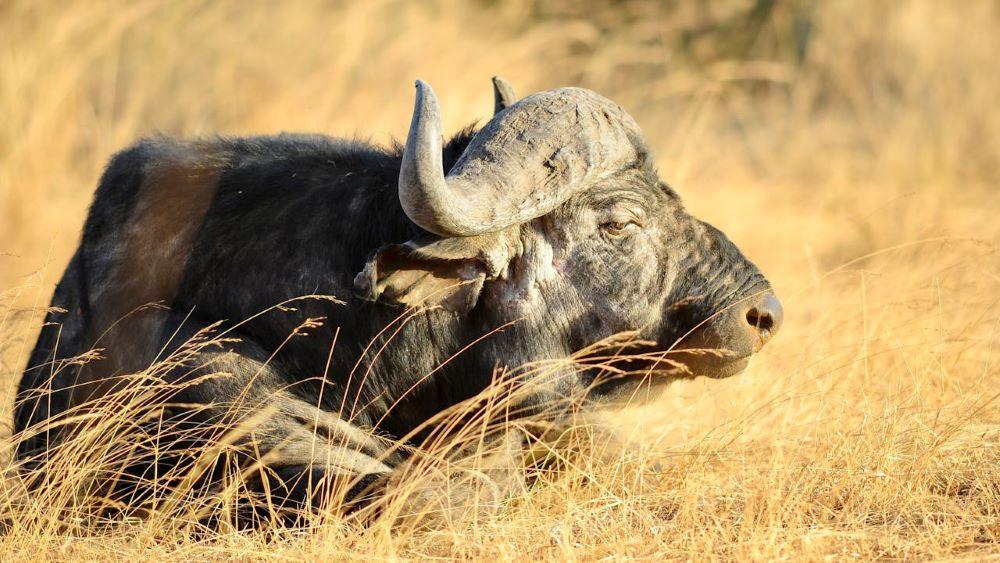
Nicknamed “Africa’s Black Death” and “The Widow Maker” the Cape buffalo is an aggressive, dangerous, and highly sought-after member of Africa’s Big 5 and Dangerous 7. Known as being unpredictable and one of the most cunning of the Big 5, Cape buffalo hunting in Africa remans a sought-after safari for international hunting enthusiasts.
[DYNAMIC-BLOGTABLEOFCONTENT]
The African Buffalo
Africa is home to three main species of buffalo:
- Southern Savanna/Cape Buffalo (Syncerus caffer subsp. caffer).
- Central African Savanna Buffalo (S. c. aequinoctialis)
- West African Savanna Buffalo (S. c. brachyceros)
The buffalo is the only bovine species found among African big game. The one which is the most common on game hunting expeditions is the Cape buffalo. These Cape buffalo are originally found in the southern areas of Africa, where they live in various habitats and ecosystems. Cape buffalo are herd animals, with a herd being made up of breeding bulls, cows, and young Cape buffalo. Older bulls that have left the herd are done breeding, and these bulls generally form bachelor herds or live a solitary life.
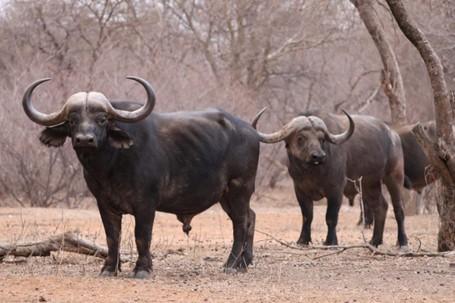
A Cape buffalo is considered African big game, a reputation well-deserved as they are among the largest African herbivores. They possess a set of massive headgear. The horns begin at the base of the skull, connected to it with big round bases, commonly known as bosses. These bosses then grow out to the side of the skull and create a rounded horn that flares backward. Cape buffalo use these horns to fight off natural predators, such as lions and hyenas. Cape buffalo males will also use this impressive headgear to establish ranks and dominance amongst other bulls, where they determine the right to mate with females. An immature Cape buffalo bull will have underdeveloped bosses that feel soft to the touch, whereas mature and old males have hard bosses that protect their skulls and grow to impressive dimensions.
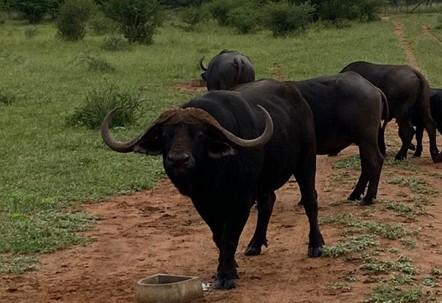
Cape Buffalo Breeding Operations In South Africa
Cape Buffalo hunting in South Africa is widely popular among international hunters for one specific reason; bigger is better. South Africa intensively breeds Cape buffalo on many game ranches across the country. These game ranches aim to breed Cape buffalo which have wider horns, bigger bosses, and heavier, more muscular bodies. These animals are bred for game hunting, conservation sustainability, and long-term breeding programs. Cape buffalo within these programs are selectively chosen according to specific characteristics, among both males and females. Bulls typically breed with large quantities of cows, generally between 40-60 cows for one bull.
The South African intensive breeding industry provides the game hunting industry with exceptional wildlife of all kinds of species, in this case specifically Cape buffalo as they are popular species for hunting in South Africa.
Cape Buffalo Breeding Bulls
These animals are often taken out of natural systems and chosen according to specific characteristics that are unique and will breed well. Breeders look for the following characteristics in a Cape buffalo breeding bull:
- In the sexual prime of their life – between six and eight years of age.
- No genetic abnormalities or defects.
- Horns of at least 45 inches in width – the biggest Cape buffalo currently breeding in one of these systems is 56 2/8 inches.
- Bosses with a width of at least 18 inches.
- A scrotum that is naturally shaped and with a circumference of at least 15 inches.
- Large physical stature and high volume of muscle mass.
- Fertility tests to confirm breeding ability.
- Blood tests – checking for diseases such as tuberculosis and corridor disease, only clean Cape buffalo will legally be allowed to breed.
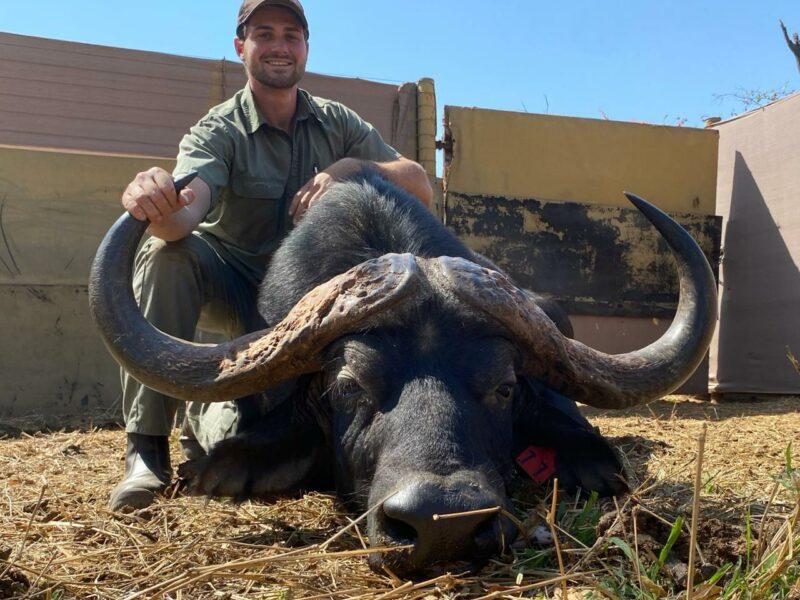
Cape Buffalo Breeding Cows
On the other hand, breeders are also required to be highly selective in choosing Cape buffalo cows, with many characteristics that are different and alike:
- In the sexual prime of their life, between three and eight years of age.
- No genetic abnormalities or defects.
- Horns of at least 28 inches in width. Buffalo cows have been known to exceed the width of 42 inches in rare cases.
- Bosses are not important, cows do not have distinguished bosses like bulls.
- A vulva, vaginal cavity, and uterine wall which is healthy and fit for carrying and birthing numerous calves.
- Mammary glands which are healthy and able to feed their calves with sufficient daily milk production.
- Large physical stature and high volume of muscle mass – specifically wide hips to allow a calf to grow and be birthed easily with no human assistance.
- Fertility tests to confirm breeding ability.
- Blood tests: checking for diseases such as tuberculosis and corridor disease, only clean cape buffalo will legally be allowed to breed.
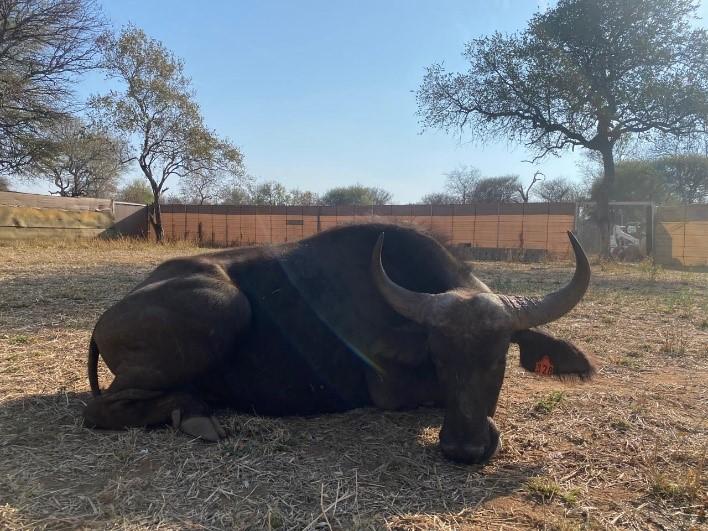
Cape Buffalo Breeding Camps
Once these Cape buffalo breeding individuals have been determined, they are placed in large camps, these camps can be any size from 120 acres to 250, 000 acres depending on the resources available. Herds are generally made up of roughly 50 cape buffalo cows and one singular bull to cover all the cows, allowing for no conflict between bulls. The fence enclosing these animals needs to meet certain industry standards:
- 8 feet in height.
- At least 21 strands of horizontal galvanized wires, connected by vertical steel poles.
- Anchor poles concreted into the ground at 330-foot intervals.
- Electric fencing adequate to contain the wildlife, powered with at least 4, 000 volts.
These standards ensure that the Cape buffalo do not escape their enclosure and that other Cape buffalo do not break into the enclosure to breed with any members of the herd. These fences also help keep out predators such as lions, spotted hyenas, and black-backed jackals who will prey on any weak or small calves.
The Sale of Cape Buffalo in South Africa
Cape buffalo are among the most valuable wildlife species traded in South Africa, with prices influenced by genetics, horn quality, breeding potential, disease-free status, and proven bloodlines. Exceptional breeding bulls can command remarkable prices because they have the potential to improve the quality of future generations rather than simply serving as hunting trophies.
Most sales take place through specialist wildlife auctions or private transactions between breeders. Before transport, buffalo are safely immobilised by experienced wildlife veterinarians and capture teams, allowing the animals to be examined, loaded, and relocated with minimal stress. Because Cape buffalo are highly social animals, they are typically transported and held with other buffalo wherever possible, as isolation can cause significant stress.
Although record-breaking auction prices occasionally attract media attention, they represent only a small part of South Africa's wildlife industry. The broader breeding sector plays an important role in maintaining valuable genetics, supporting disease-free breeding programmes, and supplying buffalo for conservation initiatives, private game reserves, and hunting properties across southern Africa.
Where Is the Best Place to Hunt Cape Buffalo in Africa?
There is no single answer to where the best Cape buffalo hunting can be found, as each destination offers a different style of safari. The right choice depends on whether a hunter values exceptional trophy genetics, vast free-range wilderness, traditional tracking, or the opportunity to combine buffalo with other iconic African species.
Hunting in South Africa has become one of the world's leading buffalo destinations, offering outstanding trophy quality, experienced professional hunters, and well-developed safari infrastructure. Many hunters also choose South Africa because buffalo can easily be combined with a wide variety of plains game and dangerous game species during the same safari.
For hunters seeking a traditional free-range experience, Hunting in Tanzania remains one of Africa's classic buffalo destinations. Vast government concessions support healthy buffalo populations, where tracking mature bulls on foot through unfenced wilderness remains one of the continent's great hunting experiences.
Other outstanding destinations include Hunting in Mozambique, where buffalo thrive in remote wilderness concessions; Hunting in Zimbabwe, renowned for its old dagga bulls and traditional safari hunting; and Hunting in Zambia, where free-range buffalo hunting continues to attract hunters looking for authentic walking safaris.
Each destination offers its own advantages, making it worthwhile to understand the differences in hunting style, habitat, trophy quality, and available species before choosing where to hunt Cape buffalo.
What Is The Best Caliber For African Buffalo Hunts?
There is no single "best" calibre for Cape buffalo hunting. While a .375 H&H Magnum is widely regarded as the legal minimum in many African countries, experienced hunters successfully use everything from the .375 through to larger calibres such as the .416 Rigby, .458 Winchester Magnum, .458 Lott, and .500 Nitro Express.
The reality is that calibre alone does not determine the outcome of a buffalo hunt. Cape buffalo are exceptionally tough animals with heavy muscle, dense bone, and an extraordinary ability to absorb punishment. Even large-calibre rifles cannot compensate for poor shot placement.
For this reason, professional hunters consistently place greater emphasis on accuracy than calibre. Choosing a rifle that you can shoot confidently and accurately is far more important than selecting the biggest cartridge available. A well-placed .375 is almost always more effective than a poorly placed shot from a much larger rifle.
Regardless of calibre, success ultimately depends on understanding Buffalo Shot Placement and waiting for the correct angle before taking the shot. Precise bullet placement into the vital organs remains the single most important factor in achieving a quick, ethical, and safe kill.
Some of the most commonly used buffalo calibres include:
- .375 Holland & Holland Magnum
- .416 Rigby
- .458 Winchester Magnum
- .458 Lott
- .500 Nitro Express
Why are Cape Buffalo so Aggressive?
Among Africa's Dangerous Game Hunts, few animals have earned a reputation equal to the Cape buffalo. Powerful, unpredictable, and exceptionally resilient, buffalo have long been regarded by professional hunters as one of the continent's most formidable game animals.
Much of this behaviour is a natural defence mechanism. For thousands of years, buffalo have evolved alongside predators such as lions and spotted hyenas. Rather than relying solely on flight, buffalo will often stand their ground, defend the herd, or aggressively confront a perceived threat. This instinct to fight rather than flee is one of the characteristics that has earned them the nickname "Black Death."
Although buffalo will frequently avoid confrontation if given the opportunity, they can react quickly when surprised, wounded, or cornered. A mature bull may appear calm one moment and charge the next if it perceives danger. This unpredictability is one of the reasons buffalo hunting demands careful judgement, experienced professional hunters, and disciplined shot placement.
Buffalo living in areas where hunting pressure is common may also become more cautious and alert to human presence. Their remarkable senses, combined with an ability to use thick cover to their advantage, make them one of Africa's most respected and challenging game animals to pursue.
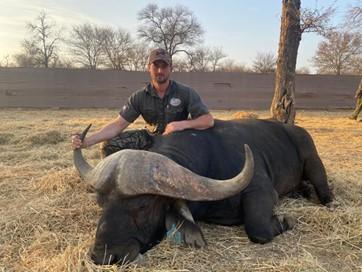
Cape buffalo bulls are significantly more aggressive than Cape buffalo cows, this can be due to a higher level of testosterone found in males. Older bulls, also known as Dugga boys, are past their breeding days and live out the rest of their lives living in small bachelor herds. These bulls have less competition when feeding and are allowed to grow to their maximum physical potential under the right circumstances with nutrient-rich vegetation to feed on.
During African hunts in the pursuit of Cape buffalo, these Dugga boys are the animals that are generally targeted for numerous reasons:
- They are mature bulls.
- They have completed their breeding and reproduction stage of life.
- They make excellent trophies with impressive headgear – the perfect safari hunting specimen.
- They feed heavily on the vegetation, removing them from the system allows for the recovery of the vegetation to occur.
- They are often problem animals, being potential dangers to other animals and people living in the area.
Why Do Old Buffalo Bulls Leave the Herd?
As Cape buffalo bulls grow older, they eventually lose their place within the breeding herds. Rather than competing with younger, stronger bulls for breeding rights, mature bulls often leave the herd and spend the rest of their lives alone or in small bachelor groups known as dagga boys.
These old bulls are among the most respected trophies in Africa. Years of fighting, drought, and surviving predators leave them with heavy bosses, worn horn tips, and the unmistakable character that experienced buffalo hunters admire. Because they have already contributed to the next generation, they are also the animals most commonly selected during regulated hunting programmes.
Pursuing an old dagga bull is about far more than horn size. It reflects the principles of ethical wildlife management, where mature animals are harvested after they have completed their breeding role while younger bulls continue strengthening the population.
How Many African Buffalo Are Left In The World?
The African buffalo is not in any immediate threat or danger of being extinct and having their species wiped out. The African buffalo is listed as least concern by the International Union for Conservation of Nature (IUCN). The species remains widespread across the African continent, finding a home in its historical natural habitats, as well as being introduced into newer areas where they do not naturally occur.
A global population estimate states there are approximately 900, 000 buffalo not just in Africa, but worldwide. This includes educational centers such as zoos in foreign countries, as well as exotic game ranches and wildlife sanctuaries. More than three-quarters of this global population is found in protected areas, meaning that designated conservation efforts are in place to conserve, preserve, and protect these wildlife populations. This population is relatively stable but is still gradually decreasing due to habitat loss and habitat fragmentation.
Your First Cape Buffalo Will Change the Way You Think About Hunting
Every experienced buffalo hunter remembers their first encounter with an old Cape buffalo bull. It is rarely about the size of the horns or the photograph taken afterwards. Instead, it is the moment you realise you are standing within close range of an animal that has survived years of drought, predators, disease, and countless other challenges in the African bush.
Following fresh tracks at first light, studying spoor in the dust, listening to your professional hunter and tracker quietly reading signs that most people would never notice, and finally catching sight of a mature bull disappearing into thick cover is an experience unlike any other form of hunting. It quickly becomes clear why Cape buffalo have earned such enormous respect among hunters across the world.
Success on a buffalo hunt is seldom measured by horn width alone. The greatest trophies are often old dagga bulls that have already contributed to future generations before being selected as part of a carefully managed hunting programme. Their scarred bosses, worn horn tips, and battle-marked faces tell the story of a lifetime spent surviving in one of Africa's harshest environments.
For first-time buffalo hunters, the hunt often becomes about far more than taking home a trophy. It is about learning to slow down, trust your professional hunter, read the wind, understand animal behaviour, and appreciate why Cape buffalo continue to be regarded as one of Africa's greatest hunting challenges. Long after the safari has ended, those lessons are often remembered just as clearly as the buffalo itself.
Frequently Asked Questions About Cape Buffalo Hunting
Is South Africa the best country for Cape buffalo hunting?
South Africa is one of Africa's leading buffalo destinations, particularly for hunters seeking exceptional trophy quality, experienced professional hunters, and well-developed safari infrastructure. However, hunters looking for a traditional free-range wilderness safari often choose, Tanzania, Zimbabwe, Mozambique, or Zambia. The best destination depends on the type of buffalo hunting experience you are looking for.
What calibre is recommended for Cape buffalo hunting?
Although the .375 H&H Magnum is widely accepted as the legal minimum for buffalo hunting in many African countries, larger calibres such as the .416 Rigby, .458 Lott, and .500 Nitro Express are also popular. Regardless of calibre, accurate shot placement remains far more important than bullet size. Understanding Buffalo Shot Placement and waiting for the correct angle is far more important than simply choosing a larger rifle.
Why are old buffalo bulls called dagga boys?
As mature Cape buffalo bulls age, they leave the breeding herds and often spend the rest of their lives alone or in small bachelor groups. These older bulls frequently wallow in mud, or "dagga", to cool themselves and protect against insects, giving rise to the name "dagga boys." Because they have already contributed to breeding, they are the animals most commonly selected during regulated hunting programmes.
Can Cape buffalo hunting be combined with other species?
Yes. One of the advantages of buffalo hunting is that it can easily be combined with a wide variety of plains game and dangerous game species, depending on the destination. Many hunters choose longer African Hunting Trips that include species such as kudu, sable, zebra, waterbuck, or even elephant and leopard where regulations allow. Combining several species into a single safari is often one of the most cost-effective ways to experience Africa's diverse hunting opportunities.
Are Cape buffalo endangered?
No. The Cape buffalo is currently listed by the International Union for Conservation of Nature (IUCN) as a species of Least Concern. Healthy populations remain across much of southern and eastern Africa, supported by protected areas, sustainable wildlife management, and carefully regulated hunting programmes.
How close do hunters usually get to a Cape buffalo?
Most buffalo are taken at relatively short distances, often between 30 and 80 yards, although every hunt is different. Thick vegetation, changing wind conditions, and careful stalking usually mean hunters spend far more time tracking than taking long shots.
Why is Cape buffalo hunting considered so challenging?
Cape buffalo combine exceptional strength, acute senses, unpredictable behaviour, and a willingness to confront danger when threatened. Successfully hunting an old free-range bull requires patience, accurate shooting, experienced professional hunters, and skilled trackers, making Cape Buffalo Hunts one of Africa's most respected dangerous game pursuits.
Author: Keenan van Wyk (Conservationist & Professional Hunter)