
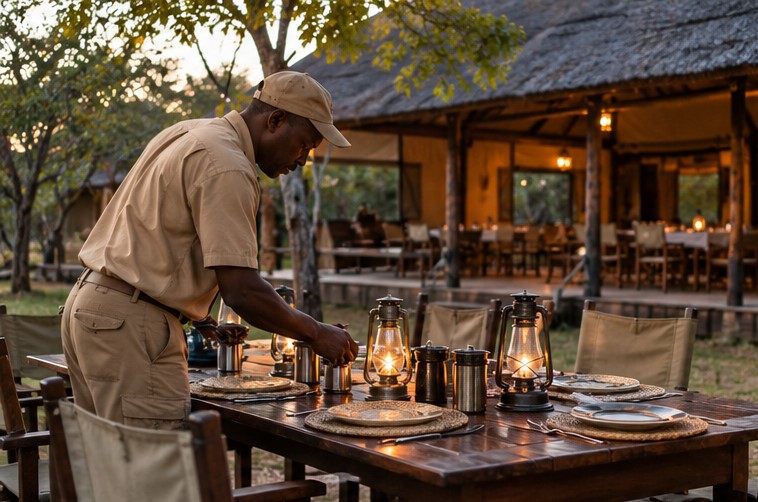
A hunter arriving at a well-run African hunting camp seldom gives much thought to what happened before they arrived. The vehicle is ready, there's something cold to drink, the staff know what they're doing, and the professional hunter is usually more interested in discussing tomorrow's hunting than whether the generator has enough diesel.
That's generally how it should be. But having owned and operated our own game farm in South Africa, and having spent a great deal of time hunting out of camps and concessions across Africa, we've seen the other side of the operation. There is more to keeping a hunting camp running than preparing meals, making beds and having a vehicle waiting outside.
It's one of the less visible sides of an African hunting safari, but an important one. The hunter may spend most of the day following tracks with the PH, while back at camp somebody must make sure everything needed for the next day's hunting is ready when the hunting party returns.
Before the Hunter Arrives, the Work Has Already Started
Long before a hunting client arrives, somebody must make sure the camp is ready. That sounds straightforward until you've been responsible for organising it yourself. On our game farm, preparing for visiting hunters meant thinking well beyond clean accommodation and a stocked kitchen. Staff had to know what was expected of them, vehicles and equipment needed attention, and the supplies required for the coming hunt had to be available before anyone arrived.
One of the lessons you learn when running a hunting operation is that small shortages can become inconvenient. Fuel, drinking water, food, cleaning supplies and spare parts all need to be considered. The same applies to things a visiting hunter might never think about, such as having enough salt available for trophy preservation. Nobody wants to discover that an essential supply is running low after a hunter has taken an animal. Overlooking these supplies can create problems that are entirely avoidable.
Preparing the camp also involves understanding what the hunting party is likely to need. A group of plains-game hunters may place different demands on vehicles, staff and meat-handling facilities than a client pursuing a single dangerous-game animal. The number of hunters, observers and days in camp all affect provisioning and how the work is organised. Even the timing of deliveries matters, because supplies are only useful if they arrive before they're needed.
In remote hunting concessions, replacing a forgotten item may involve hours of travelling over difficult roads or waiting for the next supply run. Preparing properly before the hunting party arrives becomes even more important when outside assistance is a long way off.
Most hunters will never see this preparation taking place, nor should they have to concern themselves with every detail. But it can make a considerable difference to their safari. A hunting party that can leave camp on time, use dependable equipment and return to a properly prepared operation has a much better chance of spending its available days doing what it came to Africa to do: hunt.
Keeping the Camp Running While the Hunters Are in the Bush
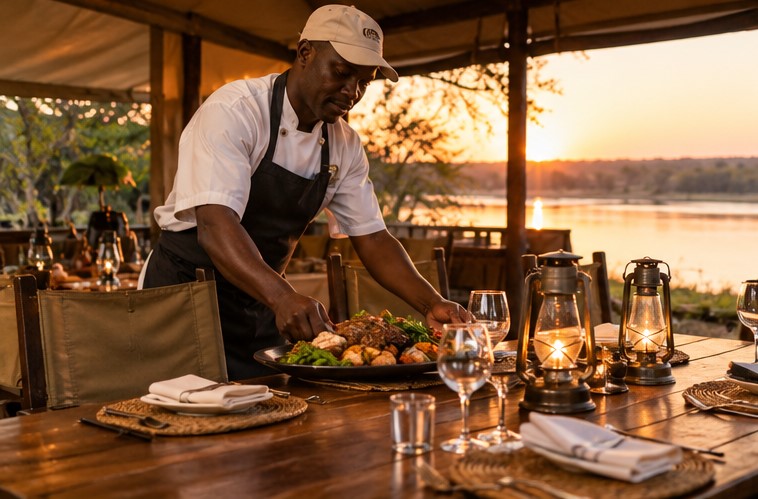
One thing you quickly learn about running a hunting camp is that animals have very little respect for mealtimes. A hunting party expected back for lunch may still be following buffalo tracks late in the afternoon, while hunters who set off expecting a full day in the bush might return with an animal before breakfast is properly cleared away. The cook can prepare a meal for a particular time, but keeping it edible for another four hours isn't always easy. We've seen meals dry out, staff waiting long after they should have finished work, and an entire evening's routine rearranged because the hunting party returned much later than expected.
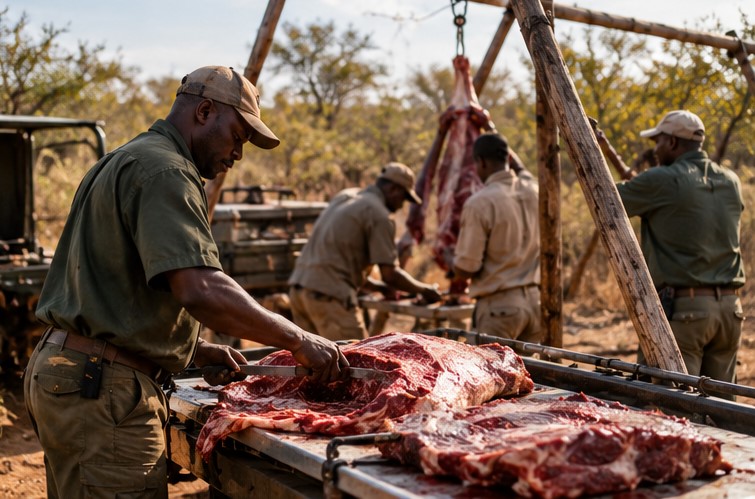
A successful hunt can also mean more work for the people who never fired a shot. Vehicles may need cleaning and preparing overnight, meat must be dealt with, and skins and trophies cannot simply be left lying in the heat. Proper preservation matters, particularly where delays can lead to hair slipping and a trophy being damaged. Depending on the country, concession and arrangements with nearby communities, meat may also need to be distributed, sometimes long after the hunters have returned to camp.
Elephant hunting brings its own logistical challenges. An elephant taken late in the afternoon may require a recovery operation that continues after dark or into the following day. Securing the animal and ivory, organising vehicles and coordinating meat recovery and distribution can involve a great deal of work and require many people.
Then there are the ordinary demands of keeping a camp functioning while everyone is hunting. Laundry, accommodation, meal preparation, equipment maintenance and provisions still need attention. An observer may remain in camp while the hunting party is out, or a hunter may return early after several exhausting days. Somebody must be available to look after them. In a large camp there may be dedicated staff for these jobs. In smaller operations, the same handful of people can find themselves doing almost everything.
When Something Goes Wrong, the Camp Still Has to Function
Our good friend Kay Naidoo once shot an eland late in the afternoon. Darkness had fallen by the time we went to recover it, and during the recovery Kay didn't follow the instructions he'd been given. He fell and split his head open. Suddenly, we had a rather different problem on our hands. The eland still needed recovering and the trophy needed attention, but Kay needed a doctor, and the nearest one was four hours away. What should have been an evening spent dealing with a successful hunt became a journey through the night for stitches and treatment for a head injury.
That evening was a reminder that a hunting operation has to deal with whatever happens, not simply whatever was planned. Getting Kay medical attention took priority, but the eland couldn't be forgotten. Recovery, trophy preservation and the rest of the hunting party still needed attention. These situations demand decisions, transport and people capable of handling different responsibilities at the same time.
Fortunately, most disruptions are less serious. Vehicles break down, water pumps stop working and generators develop problems. We learned how much easier life becomes when essential equipment is maintained and sensible backup arrangements are available. In a remote hunting concession, where parts and outside assistance may be hours or even days away, a relatively ordinary failure can have much greater consequences.
We experienced a good example of this in Tanzania, just before leaving for a remote hunting concession. We'd stopped at a filling station when somebody noticed fuel leaking from the vehicle. Not the ideal start to a journey into the bush. Our PH took a photograph of the troublesome part and sent it to a contact. About fifteen minutes later, a fellow arrived on a little scooter with the replacement. Problem solved, and we were on our way. Sometimes the most important piece of equipment an outfitter has is a phone full of useful contacts.
Most hunters will never hear about the smaller problems resolved during their safari, and that's usually a good sign. But when something does go wrong, the outfitter must be able to respond without leaving the hunter to sort it out. That responsibility becomes particularly important when the problem involves someone's safety rather than an inconvenient breakdown.
The Hunting Camp Is Only Half the Operation
There is another side to running a hunting operation that visiting hunters seldom see, and it has little to do with tracking animals. Before a professional hunter can take a client into the bush, somebody must find that client, convince them to book and make sure everything is in place when they arrive. Without a steady flow of bookings, even an excellent hunting area with outstanding professional hunters cannot remain a viable business.
For outfitters, that means maintaining a website, answering enquiries, managing social media and travelling internationally to meet prospective clients. Hunting conventions such as those organised by Safari Club International can be valuable opportunities to build relationships, but attending them costs money and takes time away from the operation. Flights, accommodation, exhibition space and days spent travelling all come out of the business. Larger outfitters may have dedicated marketing and administrative staff. Smaller operators often do much of this work themselves, sometimes after spending an entire day hunting with clients.
And making a booking is only the beginning. International clients may have different arrival dates, flight connections and accommodation requirements. Some need charter flights to reach remote concessions, while others require additional transfers or overnight accommodation. Then there are individual preferences: meals, drinks, dietary requirements, observers and particular hunting arrangements. A hunter may see a confirmed ten-day safari on their itinerary, but behind that booking are numerous arrangements involving people who may be hundreds of kilometres apart.
Even small details matter. If rifle rental is offered, somebody must ensure a suitable rifle is available and the correct ammunition has been arranged. In remote areas, where supplies cannot be purchased at short notice, these things need attention well beforehand. The same applies to anything promised as part of the package, whether that's a particular beverage, additional equipment or something as simple as the camp shirts and caps that outfitters sometimes provide. Individually, none of these arrangements sounds particularly demanding. Together, they can occupy a surprising amount of time.
Then there is the responsibility of employing people. Staff management doesn't end when the hunting begins. Employees still have questions about their pay, need leave approved, become ill and have family matters requiring attention. Now consider handling ordinary employment administration from a remote concession with unreliable communications and limited transport. How does an employee submit a leave application or resolve a salary query when the nearest office may be several hours away? Those responsibilities don't disappear because the workplace happens to be in the African bush.
The financial obligations continue whether hunters are in camp or not. Salaries, concession fees, vehicles, maintenance and supplier accounts still must be paid. The operation must remain financially viable through quieter periods while preparing for the next hunting season. The PH may be the person the client remembers, but behind them is a business that needs attention throughout the year.
Being an excellent professional hunter doesn't automatically make someone an excellent administrator. A PH who has spent the day following buffalo tracks may not be particularly enthusiastic about spending the evening answering emails and reconciling invoices. That doesn't excuse inaccurate quotations, unanswered booking questions or poor arrangements when hunters are committing substantial sums of money. But understanding what happens behind the scenes helps explain why running a successful hunting operation takes more than knowing how to find game.
There is also a personal side to all this. Professional hunters and outfitters are husbands and wives, fathers and mothers, sons and daughters. Someone guiding big game hunts in a remote concession may spend months away from home, missing birthdays, school events and ordinary family life. In places such as the rainforest concessions used for hunting in Cameroon, even keeping in touch with family can be difficult. Others live with their families on hunting properties, where work and home are often the same place and the working day seldom has a definite ending.
From the outside, a life spent hunting in Africa can look rather glamorous. And there are certainly wonderful moments. But behind the photographs of magnificent animals and evenings around the campfire are people trying to manage businesses, raise families and meet responsibilities that don't disappear because they're working in the bush. Having experienced both sides of the hunting operation, we've come to appreciate just how demanding that life can be.
Understanding what happens behind the scenes is also part of why hunters choose to work with GHS. We know the questions worth asking before a booking is confirmed and the importance of keeping communication clear between hunter and outfitter.
What This Means for the Hunter
A hunter paying thousands of dollars for an African safari is entitled to expect a properly organised operation. That doesn't mean everything will go according to plan, or that every camp must offer luxury accommodation. It means the outfitter has taken responsibility for the people, equipment, supplies and arrangements necessary to deliver the hunt being sold. Those responsibilities are part of the service, not an extra favour to the client.
You can see some of the differences reflected in daily rates. Operating a remote concession in Zambia or Tanzania can be expensive, from maintaining camps and vehicles far from reliable services to transporting fuel, provisions and staff over long distances. A hunting property in South Africa or Namibia may have easier access to suppliers and workshops, although that certainly isn't true of every property. Higher daily rates don't necessarily buy greater luxury or a better hunt. Sometimes they reflect the cost of keeping a remote operation functioning in the first place.
For hunters comparing safari prices, our guide to what an African hunting safari really costs explains why two seemingly similar hunts can have very different costs, and what those differences actually mean.
We've hunted out of impressive lodges and relatively simple bush camps, and the standard of accommodation hasn't always told us much about the quality of the operation. A comfortable bed and a good meal are welcome, but so are a dependable hunting vehicle, people who know their responsibilities and an outfitter who deals with problems rather than passing them on to the client. Some of the things that matter most are barely noticed when everything is working properly.
Questions Worth Asking Before You Book
You don't need to know how an outfitter manages every detail of the camp, but a few practical questions can tell you a great deal about how well the operation is prepared.
For a broader look at assessing an outfitter before committing to a safari, see our guide to choosing an African hunting outfitter.
- How far is the nearest doctor, and what arrangements are in place for a medical emergency?
- What communications are available in camp and while hunting: mobile reception, satellite phone or radio?
- What backup arrangements are available for essential services such as power, water and refrigeration?
- If you're renting a rifle, which rifle will be provided, and has the appropriate ammunition been confirmed?
- How are trophies preserved and stored before they leave camp?
None of this means hunters should accept poor service. A delayed meal or a vehicle breakdown doesn't automatically mean the outfitter has failed, but remoteness isn't an excuse for repeated disorganisation or failing to deliver what was agreed. A little understanding goes a long way, provided the outfitter takes responsibility for the operation.
So, what really happens behind the scenes at an African hunting camp? Far more than most visiting hunters will ever see, and probably more than they need to. The hunter has come to Africa to hunt, not to worry about generators, staff salaries or whether somebody remembered to arrange ammunition for a rental rifle. Those responsibilities belong to the outfitter. When they're handled properly, the hunter can concentrate on the safari, while the people behind it make sure everything continues to work.
Frequently Asked Questions About African Hunting Camps
Why do some African hunting outfitters take so long to answer emails?
Some professional hunters spend much of the hunting season in remote concessions where internet and mobile reception are unreliable. After a full day in the bush, they may still have clients to entertain, staff to manage and arrangements to make for the following day. Answering enquiries isn't always their first opportunity to sit down.
That doesn't mean hunters should accept weeks of silence, particularly when deposits, travel arrangements or important booking decisions are involved. Larger operations may have dedicated office staff, while smaller outfitters sometimes handle everything themselves. It's one reason many work with hunting agents who can maintain communication while the PH is occupied with clients.
Who runs an African hunting camp while the professional hunter is out hunting?
That depends on the size and structure of the operation. Larger hunting camps may have a dedicated camp manager overseeing kitchen staff, accommodation, supplies and the daily running of the property. Smaller camps may rely on a cook, housekeeper and other experienced staff who share those responsibilities.
The professional hunter remains responsible for conducting the hunt, but somebody must also coordinate the camp's daily requirements. A capable camp team allows the PH to concentrate on the hunting party without having to supervise every meal, delivery or maintenance issue personally.
Do African hunting camps operate throughout the year?
Not necessarily. Some hunting properties in South Africa and Namibia operate for much of the year, depending on the hunting programme and local conditions. Remote concessions in countries such as Tanzania, Zambia and Cameroon may operate seasonally, with hunting periods influenced by regulations, weather and access.
In areas where seasonal rains make roads difficult or impassable, camps may close between hunting seasons. Some temporary camps are dismantled, while permanent facilities require maintenance and preparation before hunters return. Even when no clients are in camp, the outfitter may still be organising staff, supplies, repairs and bookings for the next season.
About the Authors
Pierre and Tamlyn van Wyk are the co-founders of Game Hunting Safaris, bringing more than 50 years of combined experience in African hunting. Having owned and operated their own game farm in South Africa, they understand the practical challenges of running a hunting operation. Their extensive hunting experience across African countries, from remote wilderness concessions to established safari lodges, gives them firsthand insight into both sides of an African hunting safari.