
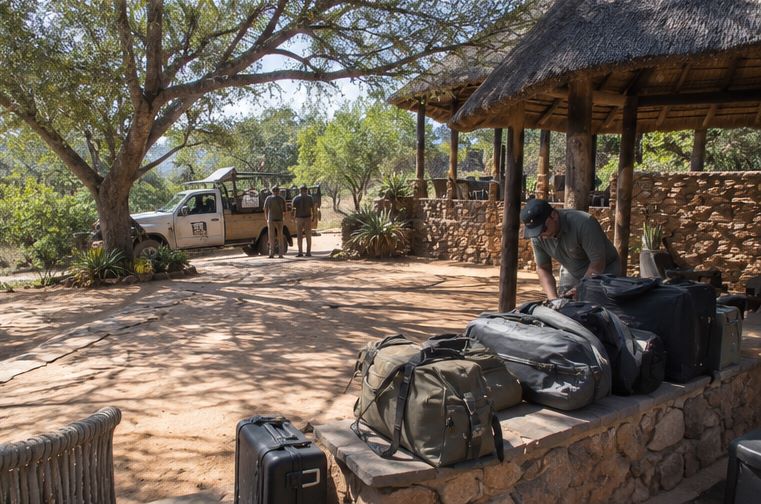
Moving between hunting areas is nothing unusual on an African safari. In South Africa, it might mean a short drive to another property where the outfitter has access to different species. In more remote parts of Africa, the same decision could involve a long journey over difficult roads, changing camps, or making arrangements with a different hunting outfitter. The distance on a map seldom tells the whole story.
Some moves are planned from the beginning, particularly when a hunter wants to pursue species that are unlikely to be found in the same area. Others happen during the safari, when the professional hunter believes a change of location offers a better opportunity. Both can make good hunting sense, but the practical consequences are not always the same.
When comparing African hunting trips, it is worth understanding what a proposed move involves. Will you lose a morning's hunting or an entire day? Will the same PH and trackers accompany you? What happens to trophies already taken, and who is responsible for any additional arrangements or costs?
Why Some African Hunting Safaris Involve More Than One Hunting Area
A hunting outfitter may have access to several excellent areas, but that doesn't mean every species on a client's wish list can be hunted in the same place. Habitat, the animals available and the way individual properties or concessions are managed all influence where a safari takes place. Sometimes dividing a hunt between two or three areas makes considerably more sense than trying to accomplish everything on one property.
This becomes particularly relevant when a hunter has specific trophy objectives. Someone putting together a springbok slam, for example, may want common, black, white and copper springbok. Not every property offering springbok will have all four varieties available. The same applies to hunters pursuing colour variants of other plains-game species. An outfitter may arrange access to another property specifically for those animals while keeping the remainder of the safari centred on the original hunting area.
In South Africa, an outfitter might use one property for kudu and impala, another for selected springbok varieties, and perhaps a third for a species better suited to different terrain. This flexibility is one of the reasons hunters considering hunting in South Africa may find themselves visiting several properties during a single safari. The hunter may remain at the same lodge throughout, travelling to whichever property offers the intended opportunity that day. That's quite different from a safari where the hunter packs up, leaves one camp and spends the next several days hunting elsewhere. Both arrangements involve more than one hunting area, but only one necessarily involves relocating accommodation and the wider hunting operation.
Then there are moves that weren't part of the original itinerary. A PH may recommend changing areas because hunting conditions have changed, a particular species is proving difficult to locate, or another area offers a more realistic opportunity. That can be sound professional judgment, provided the alternative genuinely improves the hunter's prospects. It isn't necessarily evidence that anything was wrong with the original area, and changing location is never a guarantee of success.
Moving Between Hunting Areas Is Not the Same in Every Country
South Africa — Moving Between Properties for Different Species
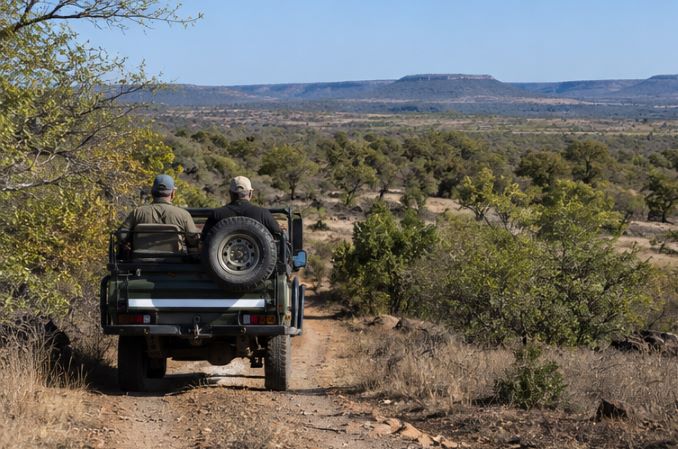
South Africa offers considerable flexibility when planning a safari across several hunting properties, but that flexibility doesn't necessarily mean the properties are close together. A hunter wanting Cape buffalo in Limpopo and black wildebeest in the Free State may be combining two very different hunting experiences, with a substantial road transfer between them.
Outfitter Tiaan Botha of Doornboom Safaris explains that his hunts are sometimes arranged across different locations according to the species a client wants to pursue. Combining buffalo in Limpopo with black wildebeest in the Free State, for example, can involve around seven hours on the road. A safari might also begin with buffalo in Limpopo's thick bushveld before moving to the Kalahari region of North West Province for lion. These aren't casual trips to neighbouring properties. They are deliberate changes of hunting area built around the client's objectives.
But there is another reason to move that has little to do with a trophy list. Tiaan also describes situations where a client struggles with buffalo hunting in thick bush. In those circumstances, moving to more open hunting country may offer conditions better suited to that hunter. It doesn't necessarily make the buffalo easier to find or guarantee a successful hunt, but it can change the way the hunt develops.
The lesson is that a multi-property South African safari can involve anything from visiting nearby hunting areas to travelling across provinces. The important question is not simply how many properties an outfitter uses, but why each move is being made and whether it offers something worthwhile to the hunter.
Tanzania — When a Hundred Miles Is More Than a Drive
In remote Tanzanian hunting country, a hundred miles can take considerably longer than expected. Rough tracks, seasonal conditions and limited access can turn a relatively short distance into a substantial journey. In some wilderness concessions, reaching the next hunting area may take most of the day, particularly when access roads are in poor condition.
One possible arrangement on an extended 28-day safari would be to begin in Maasailand, pursuing some of the specialised plains-game species found in northern Tanzania, before moving south to Rungwa for a particular lion-hunting opportunity. These are two very different hunting regions, and reaching the second area may involve a substantial road journey or a flight followed by further travel to camp. This isn't simply a matter of packing a rifle case and driving to the next property.
Moving within an outfitter's established hunting operation is not necessarily the same as transferring to a hunting block controlled by another company. The arrangements for the second hunt, including available quota, authorised hunting opportunities and any necessary approvals, must be established in advance.
Lion hunting in Tanzania is possible in suitable parts of Maasailand as well, so moving to Rungwa isn't automatically necessary or advantageous. The decision should come down to the lion opportunity being offered, the arrangements already in place and whether the additional journey genuinely improves the safari.
Namibia — Combining Hunts Across Distant Regions
The distances involved in some Namibia hunting safaris can be deceptive. A hunter might book buffalo, hippo or crocodile in the Zambezi Region, still commonly called the Caprivi, and then travel to Bushmanland for a particular elephant opportunity. Both hunts take place in the same country, but they may be separated by a substantial journey, with different camps and hunting arrangements at either end.
The Zambezi Region offers hunting along river systems, floodplains and woodland, while Bushmanland is a different environment. Moving between them isn't simply a matter of changing properties after breakfast. Depending on the concessions involved, the hunter may need to travel a considerable distance by road, arrange alternative transport or coordinate the transfer between two hunting operations. The safari effectively becomes two separate hunts joined by a carefully planned journey.
Elephant can also be hunted in parts of the Zambezi Region, so travelling to Bushmanland isn't automatically necessary simply because elephant appears on the trophy list. The hunter may have booked a particular elephant opportunity in Bushmanland, or the available hunting arrangements may make combining the two regions worthwhile.
For a hunter considering this combination, the important question is whether the transfer has been properly accounted for in the itinerary. The camps, vehicles and people involved may be different, and trophies taken during the first part of the safari will still need to be looked after while the hunter continues elsewhere. Those arrangements are easier to settle before leaving home than halfway through a hunt.
Zimbabwe — When Moving Can Mean Changing Hunting Arrangements
Consider a hunter who wants to pursue leopard in Matetsi Unit 3 and then move to the Kariba area for hippo and crocodile. On paper, it looks like a sensible combination of Zimbabwe hunting safaris. In practice, the two hunts may take place in concessions managed by different operators, with separate camps, hunting teams and arrangements for reaching each area.
The journey itself deserves attention. Much of Zimbabwe's remote hunting country is reached by gravel roads and bush tracks, and road conditions can vary considerably. A transfer that looks reasonable on a map may take substantially longer than expected, particularly where access roads have deteriorated. But reaching the next camp is only part of the job. The operator must also make sure that the arrangements for hunting in the second area are properly in place.
A different situation arises when hunters move between community hunting blocks. One block may have an available elephant or leopard hunting opportunity while another does not. Even where the habitat and wildlife are similar, authorised hunting opportunities and remaining quota may differ. A hunter might therefore change blocks to pursue the next animal on the safari, rather than because hunting conditions are better elsewhere.
Depending on the areas involved, that move may also require coordination with a different concession holder, professional hunter or locally assigned personnel. Any requirements involving government game scouts or other officials must be confirmed for the blocks. The hunting team that accompanied the client in Matetsi cannot simply be assumed to have the same arrangements waiting at Kariba.
Combining hunting areas can provide opportunities that aren't available in one concession alone. The important thing is knowing who will conduct the second hunt, which arrangements have been confirmed and what happens when the first part of the safari ends.
Zambia — From Swamp Hunting to Buffalo Country
A hunter planning sitatunga hunting in Zambia might also want to pursue Cape buffalo. Both animals can be hunted in the country, but the best arrangements for one may not necessarily suit the other. A sitatunga hunt in Zambia's northern wetlands, for example, could be combined with a buffalo safari in Rufunsa, bringing two very different hunting environments into the same trip.
The first question is whether the hunter needs to move. Some Zambian concessions offer opportunities for both sitatunga and buffalo, provided the appropriate hunting opportunities are available. Others may require a substantial transfer between distant areas. What appears to be one combined safari on paper could involve a long road journey, a charter flight or a change of camps and hunting teams.
The arrangements on the ground may also be different. A specialist swamp hunt calls for trackers who know the wetlands, suitable access and equipment adapted to the conditions. The buffalo portion of the safari might take place in an entirely different concession, where another team is waiting. Before combining the two, the hunter should understand whether one outfitter coordinates the entire trip or whether two separate hunting operations are involved.
What Does Moving Actually Cost in Hunting Time?
A seven-hour transfer between hunting areas doesn't necessarily mean losing seven hours of hunting. It may mean losing an entire hunting day. By the time rifles, luggage and trophies are organised, the vehicle is loaded and the next camp reached, there may be little daylight left to do anything beyond unpacking and preparing for the following morning.
There are ways to minimise that disruption. An outfitter might arrange a move after the morning hunt, use an afternoon that would otherwise have been spent travelling back to camp, or have the next lodge ready when the hunter arrives. In remote country, however, the journey may dictate the schedule rather than the other way around. River crossings, poor tracks and the distance between camps don't always leave much room for clever planning.
The distinction matters when comparing advertised safari durations. A ten-day itinerary involving two distant hunting areas isn't necessarily ten full days of hunting. If a day is allocated to transferring between camps, the hunter should know that before deciding whether the remaining time is sufficient for the animals being pursued. This becomes even more important on a dedicated dangerous-game hunt, where several days may pass before the right opportunity presents itself.
Of course, staying in one area simply to avoid travelling makes little sense if the animal the hunter came for is more realistically hunted somewhere else. The question is whether the move has been allowed for in the itinerary and whether the opportunity at the other end justifies the hunting time given up.
What Else Has to Move Besides the Hunter?
Packing a rifle and a few bags is usually the easy part. Behind the scenes, moving a safari can involve considerably more work, especially when the next hunting area is managed by a different operator or lies in another concession. Sometimes the PH and trackers travel with the client. In other cases, the hunter arrives to find a new tracking team, different vehicles and another camp already prepared. Neither arrangement is necessarily better, but it helps to know who will be conducting the next part of the hunt.
In remote hunting areas, there may also be official arrangements to consider. Government game scouts or other authorised personnel may be assigned to specific concessions or hunting blocks, depending on the country and how the area is managed. Moving to another block can therefore require additional coordination before hunting resumes. These aren't arrangements a visiting hunter should have to organise, but the outfitter needs to have them properly settled.
Charter flights introduce another consideration. A hunter travelling with a rifle, ammunition, a hard case and several bags shouldn't assume everything can simply be loaded onto a small aircraft. Baggage limits, firearm transport arrangements and the capacity of the aircraft need to be established before the transfer. Discovering that a rifle case or part of the luggage cannot travel as planned is hardly the way anyone wants to begin the next stage of a safari.
Then there are the trophies already taken. A hunter might leave a leopard skin and skull in one Zimbabwean hunting camp before travelling to another area for hippo or crocodile. The trophies cannot simply be forgotten because the hunter has moved on. Someone must remain responsible for their preparation, safekeeping, documentation and eventual collection. When trophies are taken in several areas, they may need to be brought together before further processing or shipment. Our guide to what happens to your African hunting trophies after the hunt explains the wider custody process.
The hunter may only see the journey between camps. A well-organised outfitter has already worked out what happens to the hunting team, equipment and trophies at both ends. That's often the difference between a move that feels effortless and one that creates unnecessary complications.
What Should You Agree Before Booking a Safari That Involves Moving?
Before committing to a safari involving several hunting areas, establish which transfers are part of the agreed itinerary and which are only possibilities. A move between two properties belonging to the same outfitter may already be included in the package, while travelling to another concession or changing camps could involve additional transport, accommodation or charter costs. There is no universal arrangement, and those differences should be clear before a deposit is paid.
An unexpected move deserves a different conversation. If the PH recommends changing areas because conditions aren't producing the opportunities anticipated, ask what the alternative offers, how much time the move will take and whether it changes the agreed price or hunting arrangements. A good solution should be discussed with the hunter rather than assumed simply because another property is available.
Frequently Asked Questions About Moving Between Hunting Areas
Do You Need to Tip Different Hunting Teams When You Change Areas?
When different PHs, trackers or camp staff are involved, ask the outfitter how gratuities are normally handled. Some operators coordinate the distribution among the teams, while others leave hunters to tip each group separately. It's best to understand the arrangement before leaving the first camp rather than assume everyone will be included.
What Happens if Bad Weather Makes the Next Hunting Area Inaccessible?
A planned transfer can become difficult when heavy rain makes access roads impassable, river crossings unsafe or a charter flight cannot operate as scheduled. In remote hunting country, that may mean remaining in the original camp longer than anticipated.
The important question is what the outfitter can realistically arrange instead. Can the hunter continue hunting in the first area, or must the itinerary change? If the delay affects the second hunt, any additional accommodation, transport costs or changes to the agreed arrangements should be discussed before decisions are made. Having an alternative plan is far better than discovering halfway through the safari that nobody has considered the possibility.
About the Authors
Pierre and Tamlyn van Wyk are the founders of Game Hunting Safaris. Between them, they have more than 50 years of African hunting experience, covering plains game and dangerous game across several African countries. Tamlyn is also a qualified South African Professional Hunter.
Having hunted in different regions, worked alongside professional hunters and spent time in remote safari camps, they understand that choosing the right hunting area involves considerably more than finding the species on a trophy list.
Through Game Hunting Safaris, they help international hunters compare hunting opportunities, understand what different outfitters offer and make informed decisions before booking an African safari.