
Updated: June 2026
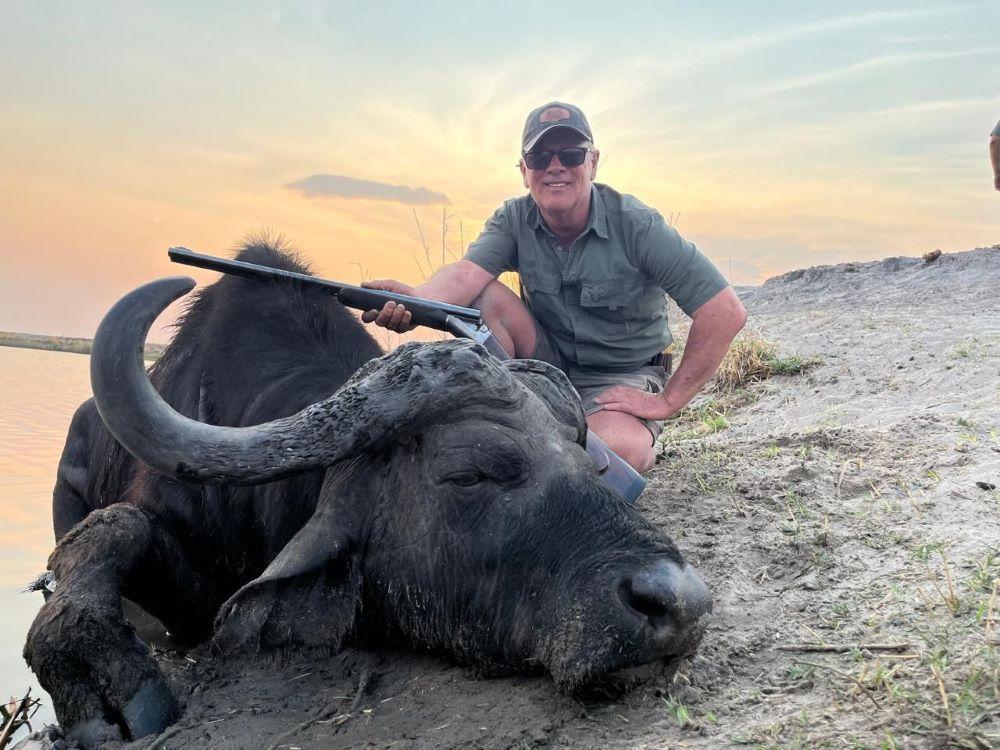
Hunting in Namibia is always a pleasure, but the immense drought that Namibia is experiencing is putting major pressure on the Ministry of Environment, Foresty and Tourism (MEFT) that has announced the culling of more than 700 animals.The team at Game Hunting Safaris supported this drought relief program, with a safari elephant and Cape buffalo hunting safari.
Namibia: The Current Situation
In May 2024, the Namibian Government declared a state of emergency following the worst drought that the country has experienced in the last 100 years.
As the drought worsens, the Ministry of Environment, Forestry and Tourism (MEFT) confirmed that more than 700 animals would be culled comprising of 83 elephants, 300 zebras, 30 hippos, 60 buffaloes, 50 impalas, 100 eland and 100 wildebeest.
MEFT spokesperson Romeo Muyunda also announced in a press release that the meat from these animals will support Namibia’s drought relief program. The shooting of these animals would take place in mostly in national parks such as Naukluft Park, Mangetti National Park, Bwabwata National Park, Mudumu National Park, and Nkasa Rupara National Park.
The culling will be conducted by professional hunters and safari outfitters on Namibian hunting safaris. This decision was condemned by a group of conservationists, many of whom wished to remain anonymous for fear of reprisal.
MEFT stood firm by their decision. Hunting in Namibia normally ends in the month of November every year, but due to the state of emergency, it has been extended to include December 2024. The team at Game Hunting Safaris decided to support the drought relief initiative and as such booked a hunting safari for 1 x Non-Exportable Hippo and 1 x Non-Exportable Cape buffalo.
Why we Supported Namibia's Drought Relief Program
When news of Namibia's drought relief programme made international headlines, opinions were divided. Some viewed the culling purely through emotion, while others recognised the difficult decisions faced by wildlife managers during one of the country's worst droughts in living memory.
Rather than commenting from thousands of miles away, we believed it was important to witness the situation firsthand. As a company built around ethical African hunting and conservation, we wanted to understand how the programme worked, how local communities benefited, and whether regulated hunting genuinely formed part of the solution.
Our decision to book one non-exportable Cape buffalo and one non-exportable hippo was never about collecting trophies. The meat remained in Namibia to support local communities, while the hunting fees contributed directly to conservancy projects and wildlife management. More importantly, it gave us the opportunity to see the reality on the ground, the devastating effects of the drought, the difficult choices facing conservation authorities, and the role that sustainable hunting continues to play in protecting both wildlife and rural livelihoods.
By the time we left the Zambezi Region, we had gained something far more valuable than a hunting story. We had witnessed conservation in its most challenging form, where every decision carried consequences, and where the balance between people, wildlife, and the environment was far more complex than many people realise.
Travelling to the Hunting Grounds
Reaching Namibia's remote Zambezi Region is part of the adventure. Unlike many hunting destinations in southern Africa, the Caprivi Strip lies more than 1,000 miles northeast of Windhoek, where lush river systems, floodplains, and dense woodlands replace Namibia's famous deserts and create ideal habitat for Cape buffalo, elephant, hippo, and crocodile.
Most international hunters either fly into Windhoek before taking a domestic flight to Katima Mulilo, followed by a short road transfer to the hunting concession, or arrive via Kasane International Airport in neighbouring Botswana before crossing into Namibia by road. Both routes are well established and provide easy access to one of Africa's most productive dangerous game hunting regions.
Dangers of Hunting Cape Buffalo During the Dry and Hot Season
When big game hunting in Namibia during the dry season, especially during a period of drought, the biggest risk to any hunter is possible dehydration. Dehydration is not to be scoffed at, and with temperatures during the hot months such as October and November easily exceeding 104 Fahrenheit, it is a real threat.
To remain hydrated, it is recommended to drink more than 5 liters (1,3 gallons) a day. It is also recommended to take hydrating supplements in the morning before heading out on the hunt. These supplements include electrolytes, sodium and potassium that help keep your body’s fluids in balance and regulate important functions like muscle contractions and nerve signals.
About Namibia's Zambezi Region
Formerly known as the Caprivi Strip, Namibia's Zambezi Region is unlike anywhere else in the country. Instead of endless desert landscapes, hunters discover a network of permanent rivers, floodplains, riverine forests, and open grasslands that support some of southern Africa's richest concentrations of wildlife.
Bordering Botswana, Zambia, Angola, and Zimbabwe, the Zambezi Region forms part of the vast Kavango–Zambezi (KAZA) Transfrontier Conservation Area, allowing wildlife to move freely across international borders. The permanent rivers, floodplains, and dense riverine forests create ideal habitat for some of Africa's most iconic dangerous game species.
The region is renowned for exceptional Cape buffalo hunting, while the mighty Zambezi and Chobe river systems also offer outstanding Hippo Hunts. Further downstream, hunters can pursue Crocodile Hunting in Namibia, with these ancient reptiles thriving along the region's extensive waterways. Elephant, lion, leopard, and a wide variety of plains game complete one of southern Africa's premier dangerous game destinations.
The success of the region is built on Namibia's internationally respected conservancy system, where local communities work alongside government and safari operators to protect wildlife while benefiting directly from sustainable hunting and conservation. It is this partnership that has helped make the Zambezi Region one of Africa's great conservation success stories.
Community benefits of non-exportable Cape buffalo hunts
The Namibian government, depending on the size of each individual conservancy will allocate quota to each conservancy. These animals are harvested by clients of African outfitters and communities benefit by not only meat proceeds, but also a portion of the trophy fee paid by the international hunters.
Outfitters have regular meetings with the members/committee team of the conservancy and are required in terms of the concession agreements to meet certain criteria. In terms of financial aid, a portion of the outfitter’s income needs to be allocated for basic requirements such as building schools, drilling boreholes for fresh water and providing solar electricity.
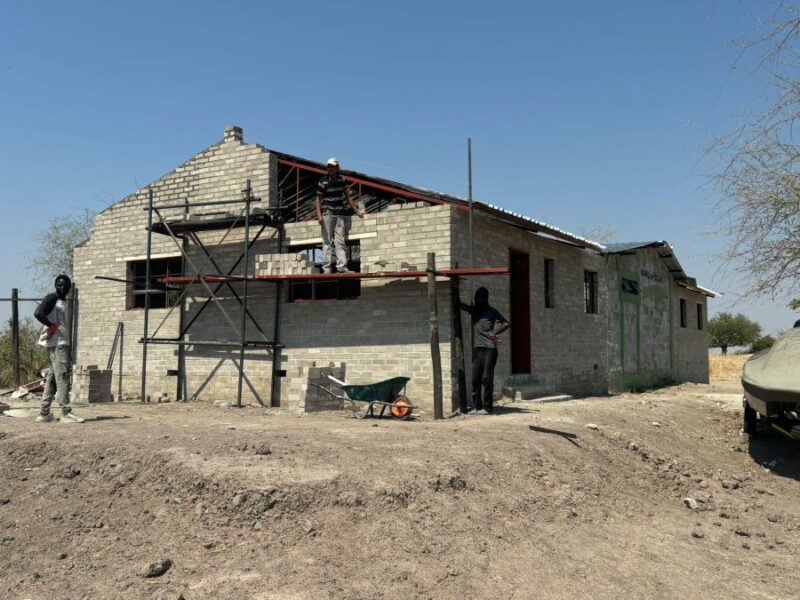
For this specific non-exportable Cape hunting safari, proceeds will be used to complete the office block for the use by members of the Kabulabula conservancy.
African outfitters also face large penalties if problems are encountered. By way of an example, should the outfitter not deliver meat proceeds timeously to the community and the meat is spoilt, a fine of N$ 100 000 is payable by the outfitter to the community. With such high temperatures, deliverables can be very challenging.
Challenges on a Buffalo hunt in the dry season
Besides heat and fatigue being obvious obstacles to overcome, other factors play a big role:
- Lack of cover between the hunter and the Buffalo. It is difficult to get close. When dangerous game hunting, taking a long shot at 60 to 100 yards does not give the Buffalo a fighting chance and in my opinion does not follow ethical hunting practices.
- In the Caprivi, Buffalo traverse over the Chobe River from Botswana and with all the water channels, you need to ensure you are in the correct country. Luckily representatives from the Namibian government accompany the hunters to ensure mistakes are not made.
- Herds of Buffalo feeding on the open grasslands are in their thousands. Choosing and selecting a suitable bull in these conditions can be difficult at times.
- Once harvested, the meat needs to be processed and delivered in a short space of time. Refrigeration facilities are not available, and the carcass needs to get into the salt within a matter of hours.
- Besides Cape Buffalo, the hunting grounds in the heat are filled with other dangerous critters such as venomous snakes and scorpions, besides the other members of the dangerous 7 that occupy the same territories.
- During the dry season, local communities graze herds of cattle on the open plains resulting in an increase of activities relating to human encroachment, not that a Cape Buffalo is concerned in the least.
Cape Buffalo Shot Placement
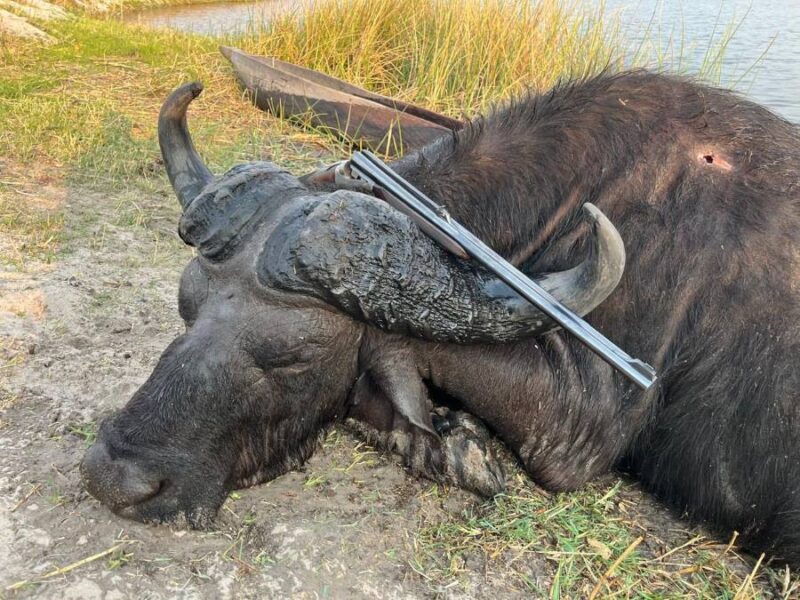
Correct buffalo shot placement is paramount. The preferred shot on a Cape Buffalo will be while the Buffalo is standing broadside, straight into the heart. In this instance, with little time to prepare the shot and being up close, firing off the shoulder, the result was the first shot being a double lung shot, just a little high, but at the same time fatal.
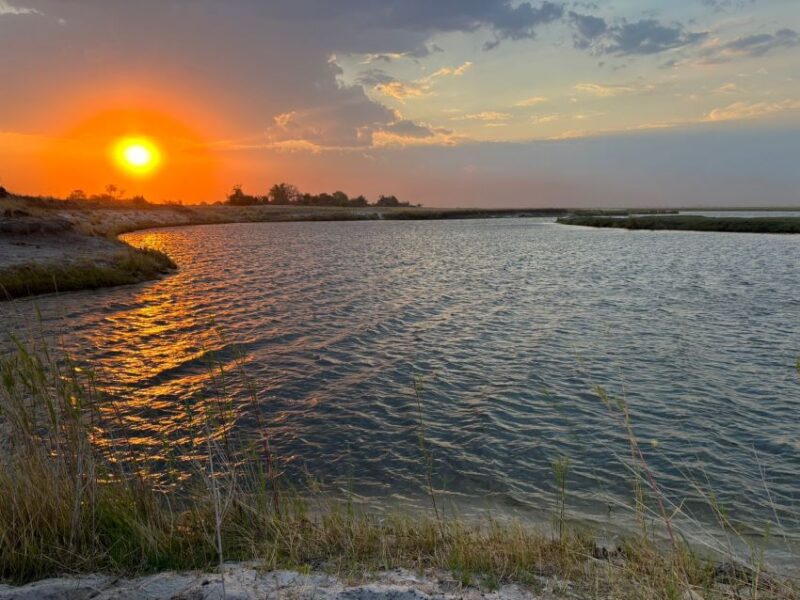
As death is not instantaneous and it takes a minute two for the heart to stop while adrenaline pumps through the system, the Buffalo made a turn into the water facing the Botswana border fifty yards away. The Buffalo was hit a second time while facing away, the bullet entering the rib cage behind the shoulder and exicting the other side leaving a massive wound channel and anchoring the animal. The Verney Carron 500 NE loaded with 570 grain Hornady DGS expanding tips got the job done.
Even after a direct hit to the heart, many big game hunters will tell listeners that it often takes plenty more lead to convince a Buffalo that he is in fact dead.
Moments We'll Never Forget
On the hunting safari, we met Barbara and her husband Paul, an amazing and true gentlemen from Colorado in the USA, who unfortunately is terminally ill with cancer. Digging deep, Paul still managed to harvest a beautiful non-exportable Elephant bull. How much satisfaction it is to know that while your body is broken, you still managed to provide enough meat to feed villages for weeks after completing the Elephant hunt! Congratulations Paul, you are a rock star!
Following the Elephant hunt, we encountered a younger Elephant bull that was stuck in a mud pit. Pulling the Elephant out, while being dangerous, took a good many hours using a Toyota Landcruiser. Unfortunately, being very weak we found the Elephant back in the mud the following day.
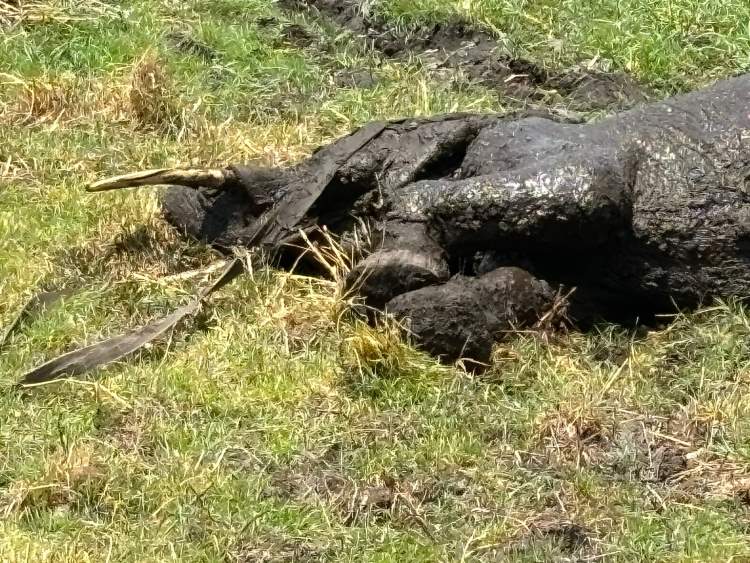
The Elephant was obviously starving with the drought conditions and risked going back towards the greener fresh grass shoots. Unfortunately, it cost the Elephant his life as when we pulled him out the next day, he was just to weak to stand. As an Elephant is a CITES animal, we had to wait to get confirmation which took a few hours from the Namibian government before we could end his suffering. It really was heartbreaking to witness and if the repercussions were not potentially so disastrous, we would have shot him without authorization.
Interesting fact, if an Elephant is overheating in the sun and there is no available water, an Elephant can stick his trunk into his stomach, suck up liquids and spray himself to curb the heat.
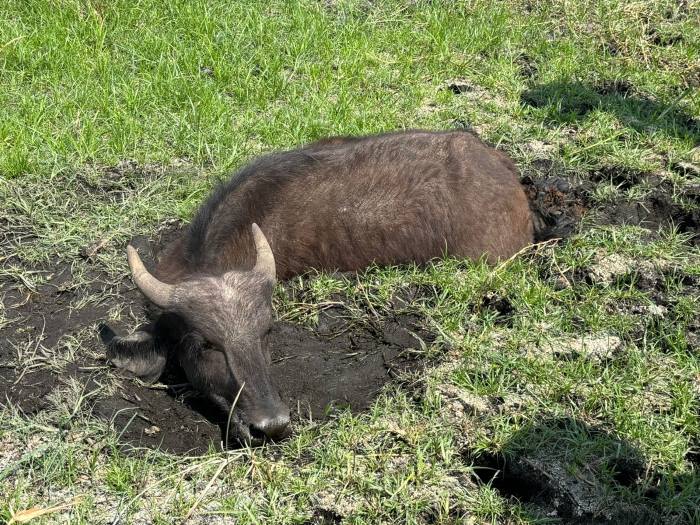
On a happier note, we successfully managed to recover a young buffalo cow who was also facing death in a mud pity. It is incredible to see that even while we were saving her life, you could see through her eyes that she would love nothing better than to impale and kill us with her immature horns. What character. We also encountered some amazing Marabou Storks who were feeding on a young Buffalo carcass. It is incredible to realize just how big these birds are.
The Yellow Billed Kites were more than happy to catch bits of buffalo meat thrown into the air and all the starving dogs from these villages were happy with their treats and enjoyed a belly full of meat. Nothing on a non-exportable hunt goes to waste.
Accomodation & Safari Life
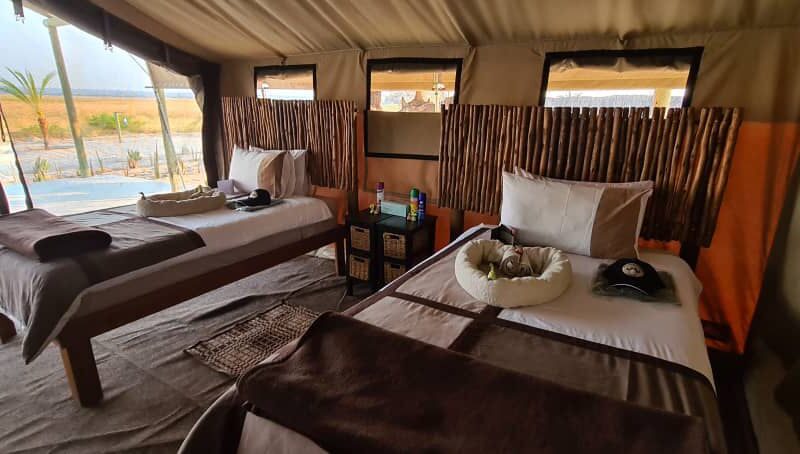
Despite the remote location deep within Namibia's Zambezi Region, the safari camp offers an impressive level of comfort without losing its authentic African character. Hunters and observers stay in spacious luxury safari tents with comfortable beds and private bathrooms, while traditional wood-fired "donkey" boilers provide plenty of hot water after long days tracking Cape buffalo through the bush.
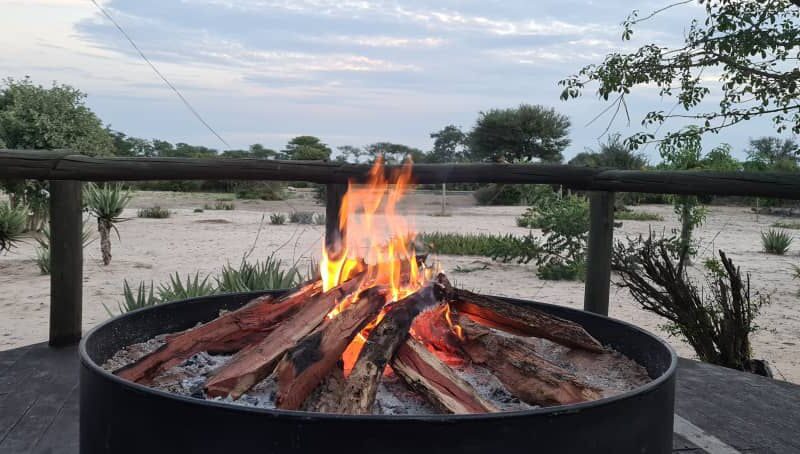
Evenings quickly became one of the highlights of the safari. As the sun disappeared over the floodplains, everyone gathered around the campfire on the raised deck, sharing stories from the day's hunt while mopane wood burned slowly beneath an African sky filled with stars. One evening, the camp staff treated us to traditional singing and dancing, providing a wonderful insight into the local cultures that call the Zambezi Region home.
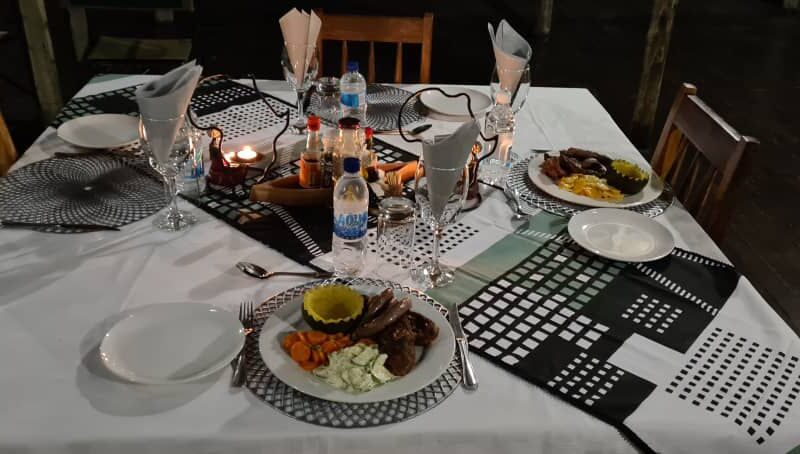
The food throughout the safari was exceptional. Hearty breakfasts prepared us for early starts, while freshly prepared lunches and outstanding evening meals showcased both local flavours and international favourites, all accompanied by excellent South African wines and genuine Namibian hospitality.
One detail that perfectly reflected the character of our outfitter was his passion for the bush itself. During the severe drought, ancient hardwood logs and tree stumps that had remained hidden beneath the Chobe River for decades emerged as the water levels dropped. After the hunt, we spent time exploring the riverbanks collecting these remarkable pieces, each one destined to become part of the lodge, preserving a small piece of the Zambezi for future hunters to enjoy.
Frequently Asked Questions About Namibia's Drought Relief Buffalo Hunts
Why were these Cape buffalo classified as non-exportable?
These buffalo formed part of Namibia's government-approved drought relief programme and were harvested under special non-exportable quotas. While the trophies remained in Namibia, the meat was distributed to local communities, ensuring the animals provided a direct benefit during one of the country's worst droughts in living memory.
How did local communities benefit from these hunts?
Communal conservancies received both the meat from harvested animals and a portion of the hunting revenue generated through concession fees. These funds help support local employment, wildlife management, schools, water infrastructure, and other community projects linked to Namibia's conservancy programme.
Why did Namibia introduce a drought relief cull?
Following years of below-average rainfall, many parts of Namibia experienced severe drought conditions that placed enormous pressure on wildlife populations and available food resources. The government's drought relief programme aimed to reduce pressure on the environment while providing much-needed protein to affected communities.
Was this a normal trophy hunt?
No. This safari formed part of a unique government-managed conservation initiative rather than a traditional trophy hunt. The focus extended far beyond harvesting an animal and included supporting local communities, witnessing the realities of wildlife management during an extreme drought, and understanding how sustainable hunting contributes to conservation.
Can hunters still book traditional Cape buffalo safaris in Namibia?
Absolutely. Namibia remains one of Africa's premier dangerous game destinations, offering traditional Cape buffalo hunting in well-managed conservancies and hunting concessions throughout the Zambezi Region, subject to annual government quotas and hunting regulations.
Why is the Zambezi Region so well suited to Cape buffalo?
Unlike Namibia's arid desert landscapes, the Zambezi Region contains permanent rivers, floodplains, dense woodlands, and rich grazing areas that support healthy populations of Cape buffalo, elephant, hippo, crocodile, and numerous plains game species.
What was the most difficult part of hunting during the drought?
The heat was physically demanding, but witnessing the effects of the drought on wildlife proved far more challenging. Seeing exhausted animals struggling to survive reinforced just how difficult conservation decisions become when natural resources are stretched to their limits.
Would Game Hunting Safaris support a similar conservation programme again?
If a programme is scientifically managed, government regulated, ethically conducted, and provides genuine benefits to wildlife conservation and local communities, we believe it deserves to be evaluated on its individual merits. This safari reinforced our belief that responsible hunting can play an important role in African conservation when managed correctly.
Conclusion
We travelled to Namibia expecting to hunt a Cape buffalo. We left with a far deeper appreciation of what conservation looks like when nature pushes wildlife and people to their limits. Witnessing exhausted animals, helping rescue those that could still be saved, and seeing firsthand how local communities, conservancies, professional hunters, and government worked together during one of the country's worst droughts in living memory changed the way we viewed African conservation.
This safari was never simply about harvesting a Cape buffalo. It was about understanding the realities of wildlife management, the value of community conservancies, and the important role that ethical, sustainable hunting continues to play in protecting Africa's wild places. If you would like to learn more about hunting in Namibia or discuss planning your own African hunting safari, contact the team at Game Hunting Safaris, we're always happy to share our firsthand experience and help you choose the safari that's right for you.