
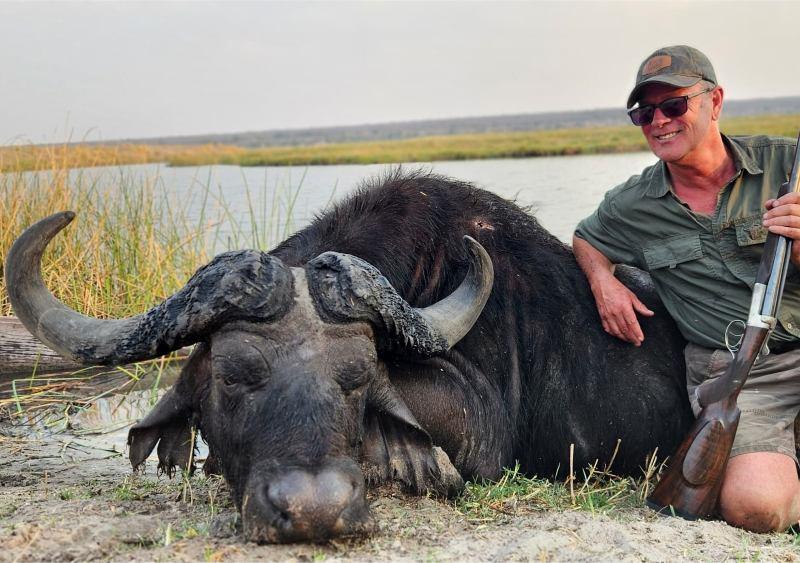
After hours following tracks through thick brush, finally catching up with a herd of Cape buffalo can feel like the hard work is over. There may be fifty or a hundred animals in front of you, several bulls among them, and at first glance more than one looks worth hunting.
Then the Professional Hunter starts saying no. One bull is too young. Another has impressive width but bosses that are soft. A heavy old bull disappears behind cows before there is time to judge him properly. Another bull looks promising until he turns his head and reveals what the PH needed to see.
For an American hunter on his first buffalo safari, this can be one of the biggest surprises of the hunt. Finding buffalo and finding the right buffalo are very different things. That is part of what makes Cape Buffalo Hunts so challenging. The objective is not simply to get within rifle range of a buffalo. It is to identify an old bull, judge him and wait until the right animal presents a safe, clear opportunity.
Sometimes that happens with the first herd you find. Quite often, it doesn't.
Finding Buffalo Is Only the Beginning
Following tracks can consume hours of a hunting day. Spoor may lead across dry riverbeds and into areas where the herd has fed during the night before bedding down. Eventually the trackers slow down. Dung becomes fresher, tracks overlap and the smell of buffalo may hang in the air. A flick of an ear or the black curve of a horn appears through the bush.
Now the hunt changes. Getting close enough to see buffalo does not mean the PH has had enough time to judge them. In a large herd, animals constantly move behind one another. Cows, calves and younger bulls can obscure an older bull, while vegetation may reveal nothing more than a horn tip, part of a boss or a section of his body.
There is another problem. While the hunter and PH are trying to study the buffalo, dozens of animals may be looking, listening and testing the wind in their direction. One cow catching movement or scent can put the entire herd on alert. The hunting party must remain concealed and quiet while somehow finding a position that gives the PH enough time to look at individual bulls properly.
Buffalo are not necessarily the only animals paying attention. In areas where lions are present, predators may be following or watching the same herds, while elephant, plains game and other animals can also give away the hunters' position. A sudden alarm call or movement elsewhere in the bush can change the situation without the buffalo ever seeing the hunters themselves.
This can make judging a bull difficult. The hunter may already have the rifle on the sticks while the PH is still trying to see the bull's bosses, horns and body clearly. He may get a good look for only a few seconds before the animal disappears behind another buffalo, only to reappear somewhere else.
Finding the buffalo has solved one problem. Finding the right bull without the herd discovering you is the next one.
Age Matters More Than Inches
Horn width is often the first thing a hunter notices when looking at a Cape buffalo bull. A wide bull can be impressive, but width alone does not tell the PH whether he is looking at an old buffalo.
Age leaves other clues. As a bull matures, the bosses become harder and more solid, developing the heavy, worn appearance associated with an old bull. The horns may show years of wear, with polished surfaces, damaged tips or sections that have been rubbed and battered over time. The face can appear older and heavier, while scars, worn ears and changes in body condition may add to the overall picture.
This is where judging buffalo becomes interesting. A younger bull may have beautiful wide horns and immediately catch the hunter's attention, while an older bull standing nearby may be narrower, worn down and considerably less symmetrical. The younger buffalo may look better in a photograph. The older buffalo may be the bull the PH wants.
Boss development is important. On younger bulls, the bosses may still be softer and less developed, sometimes with hair remaining between them. As the bull matures, the bosses harden and become more substantial. An experienced PH will look at this together with horn wear, body development and the general appearance of the animal rather than relying on one feature alone.
The PH will also be watching the way individual bulls behave. An older bull may spend more time on the edge of the herd, lag behind other animals or separate from the main group altogether. Behaviour alone cannot determine age, but combined with boss development, horn wear and body condition, it can help identify which bull deserves a closer look.
Old bulls can also carry their years differently. Some remain heavy and powerful, while others begin losing body condition as they move beyond their prime. Horn tips can be broken, bosses worn and hides marked by scars from years of fighting. None of that necessarily makes the buffalo less desirable. Those signs of age and character can be exactly what a hunter came to Africa looking for.
Not every buffalo hunter is chasing inches either. One hunter may want a wide, symmetrical bull, while another would walk straight past him for an old buffalo with a broken horn, battered tips or a heavy scrum-cap boss. Trophy preference is personal, and the PH needs to understand what matters to the hunter before deciding which bulls deserve a closer look.
The right buffalo is therefore not always the widest bull in the herd. Sometimes it is the old, battered bull standing beside him.
A Good Bull Can Still Be the Wrong Bull
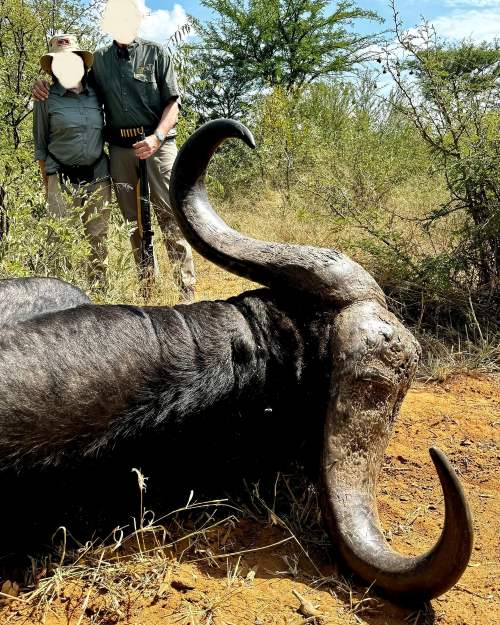
Not every buffalo that gets passed is rejected by the Professional Hunter. Sometimes the PH is perfectly happy with the bull, but the hunter is not.
This can happen on a first Cape buffalo hunt when a hunter arrives in Africa with a specific idea of the bull he wants. He may have spent months looking at photographs, comparing horn shapes and thinking about width, symmetry or boss development. When a good mature bull finally appears, he may simply be different from what the hunter had expected to find.
There is nothing wrong with having a trophy preference. If a hunter wants a wide bull, a scrum-cap bull or an old buffalo carrying plenty of character, the PH needs to know that before the hunt begins. The difficulty comes when expectations become so specific that perfectly good bulls are repeatedly passed while waiting for an animal that may never appear.
Buffalo hunting has a way of changing those expectations as the safari progresses. A heavy old bull passed early in the hunt can become more appealing after days of following tracks, losing herds to the wind and looking over younger animals. There is also no guarantee that another bull of the same quality will be found.
Part of buffalo hunting is learning to accept what the bush gives you. A PH can advise the hunter, but ultimately the decision belongs to the person carrying the rifle. If the hunter is not happy with the buffalo, he should not shoot simply because somebody tells him to. Equally, when a PH who knows the area and its buffalo says, “That's a very good old bull,” it is probably worth listening carefully before deciding to walk away.
Sometimes the buffalo you remember most clearly at the end of the safari is the one you decided not to hunt.
Sometimes the Right Bull Never Gives You the Shot
A PH can find the bull, judge him and decide that he is exactly the animal they have been looking for. That still does not mean the hunt is over.
Buffalo rarely stand alone in the open waiting to be shot. An old bull may remain buried among cows and calves, another buffalo may be standing directly behind him, or thick vegetation may cover the part of the animal the hunter needs to see. Even when he steps clear, the opportunity may last only seconds before another animal moves across him.
Shot angle matters as well. Understanding Cape Buffalo Shot Placement becomes important when the bull the PH has selected is facing away, quartering at an angle or standing in a position where there is simply too much uncertainty. Moving closer may improve the opportunity, but it also increases the chance of the herd seeing, hearing or smelling the hunting party.
The hunter's rifle setup can influence the opportunity as well. A hunter may arrive determined to take his buffalo at close range with a .500 Nitro Express, only to find the right bull standing beyond the distance at which he is comfortable using it. Getting inside 50 yards may simply not be possible when the cover opens and dozens of buffalo are watching.
At that moment, the .375 with a low-magnification scope left back in camp can suddenly look like a sensible rifle. There is a good argument for bringing both. The heavier rifle is ready when the bush closes in, while a scoped .375 gives the hunter more flexibility when distances open and can also be used for other species encountered during Big Game Hunting in Africa.
Excitement can cost an opportunity as well, especially on a first buffalo hunt. After hours of tracking, the right bull may finally step clear and suddenly everything happens quickly. A hunter can forget the safety, fail to chamber a round or short-stroke the action when trying to reload. By the time the mistake is corrected, the bull may have disappeared back into the herd. Practising with the rifle before the safari matters, because the moment to use it may last only a few seconds.
Then there is the simple problem of keeping track of one buffalo among many. A bull can disappear behind the herd and emerge somewhere completely different several minutes later. Unless the PH is certain he is looking at the same animal, there is no reason to rush the decision.
Sometimes everything finally comes together. The old bull steps clear, the PH confirms him, the sticks go up and the hunter gets the opportunity he has been waiting for. Other times the wind changes, one cow becomes suspicious and the entire herd disappears into the bush.
The right bull was there. He simply never became a bull you could hunt.
The Bull You Hunt Is the One the Bush Gives You
Cape buffalo hunting rarely goes exactly as expected. The first herd may not contain any suitable bulls, the best bull may disappear before he can be judged, or an old buffalo that looked ordinary at first may become more interesting after the PH gets a better look.
That uncertainty is part of the hunt. You can arrive prepared, know the type of buffalo you would like and give yourself enough hunting days, but you cannot decide which bull will step out of the bush or when the opportunity will come.
A good African Hunting Trip therefore leaves enough time for the hunt to develop naturally. Some buffalo safaris come together quickly. Others involve days of tracking, blown stalks, rejected bulls and starting again the following morning.
Eventually, the PH may stop, raise his binoculars and spend a little longer looking at one buffalo.
This time he doesn't say no.
He turns to the hunter and says, “That's your bull.”
Cape Buffalo Hunting FAQs
How does a PH judge the age of a Cape buffalo bull?
A Professional Hunter looks at several features rather than relying on horn width alone. Hard boss development, horn wear, broken or polished tips, body condition, facial appearance and the overall character of the bull can all help indicate maturity. Behaviour may provide additional clues, but no single feature should be used on its own.
Is a wider Cape buffalo always a better trophy?
No. Width is only one measure of a Cape buffalo trophy. Some hunters deliberately prefer an older bull with heavy bosses, worn horns, broken tips or a scrum-cap boss over a younger, wider animal. The best trophy is ultimately the mature bull that matches what the hunter wants from the safari.
What is a scrum-cap Cape buffalo?
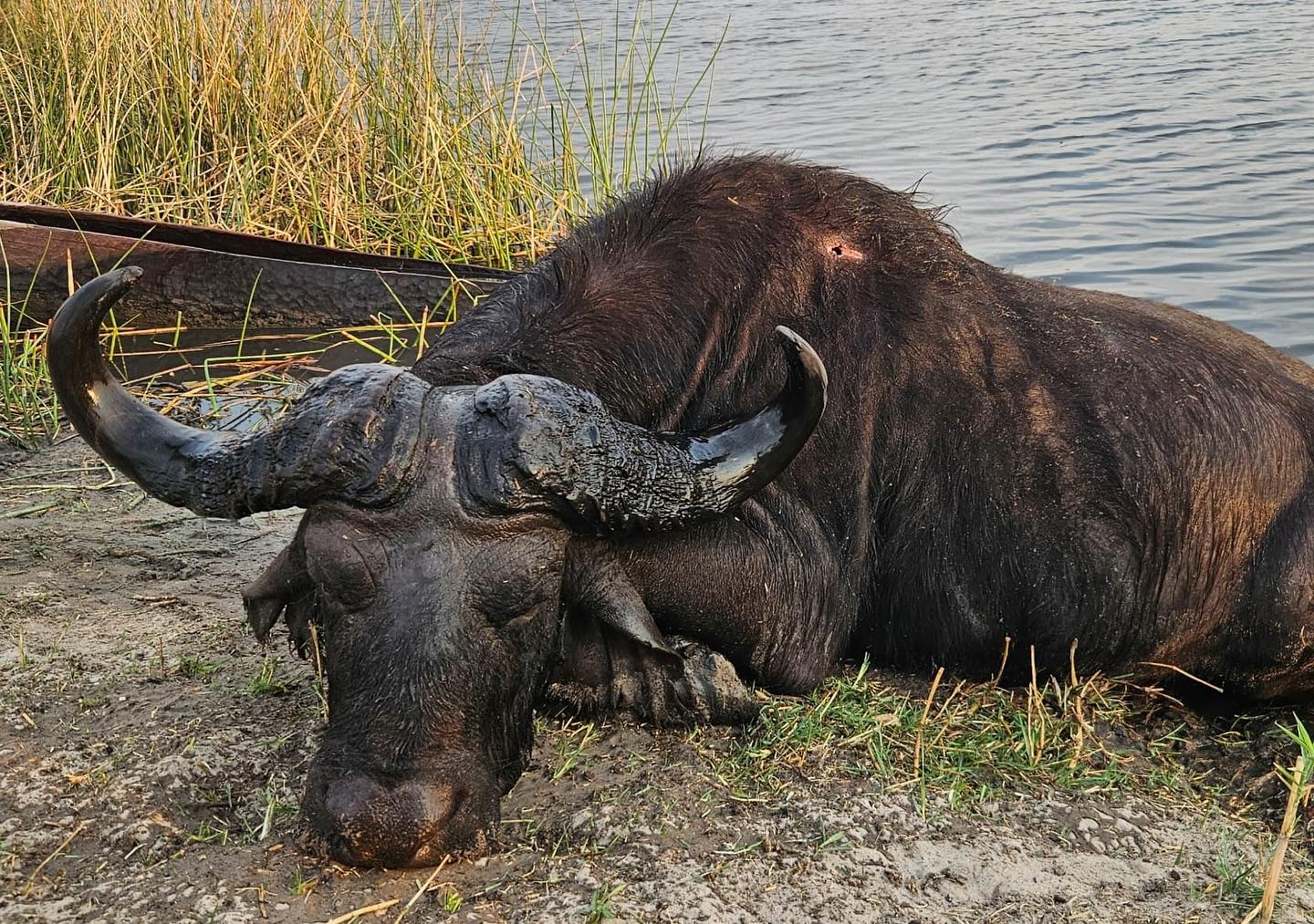
A scrum-cap buffalo is an old bull whose horn bosses have become heavily worn and rounded with age, sometimes creating the appearance of a solid cap across the top of the head. These bulls may have lost some of the horn shape and width seen earlier in life, but many buffalo hunters prize them specifically for their age and character.
Should a first-time buffalo hunter tell the PH what trophy he wants?
Yes. Discuss trophy expectations before the hunt begins. If width, symmetry, age, heavy bosses, broken horns or an old character bull matter to you, tell the PH. He can then concentrate on bulls matching those preferences while also explaining what is realistically available in the hunting area.
How quickly do you need to shoot when the right buffalo appears?
Sometimes there is plenty of time, but opportunities can also last only seconds. Buffalo in a herd continually move behind one another, and a clear bull can quickly become obstructed by another animal. The hunter should be familiar with his rifle, safety and shooting sticks before the hunt so that he is ready when the PH confirms the bull.
Should you pass a good Cape buffalo early in the safari?
That depends on the bull, the hunting area and what the hunter is looking for. Passing a good mature bull early can pay off, but there is no guarantee that a better animal will appear later. A PH who knows the area's buffalo can give valuable advice about whether the bull in front of you is one worth taking.