
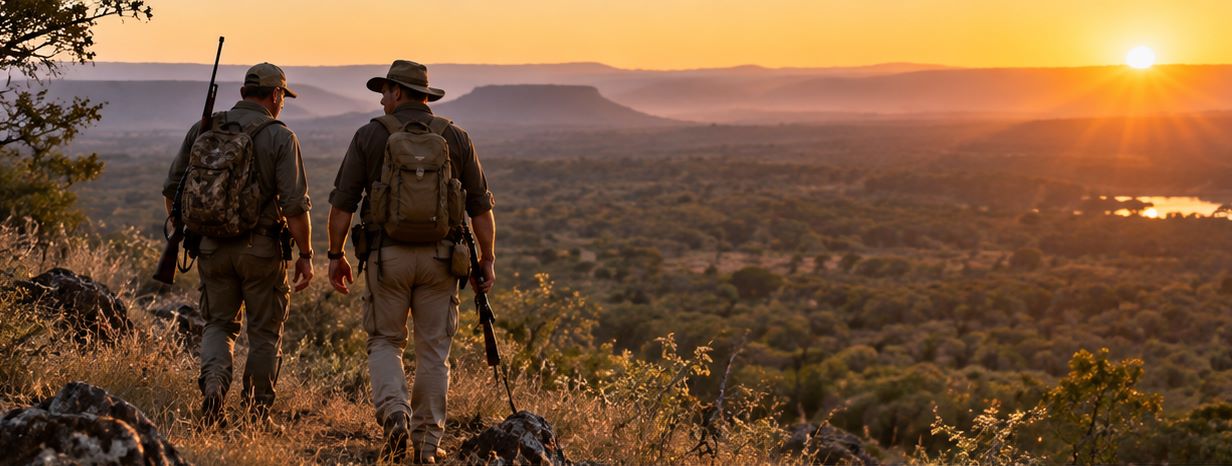
You can choose the right country, the right outfitter, the right hunting area and the right target species, and still have a bad safari if you are paired with the wrong Professional Hunter.
On hunting safaris in Africa, the PH is the person you spend more waking hours with than anyone else on the trip. You drive together, walk together, sit over baits together, eat together and make decisions together when the hunt is going well, and when it is not. He may help you take the biggest buffalo, elephant or leopard of your life. He may also be the reason those same ten or fourteen days become a trip you never want to repeat.
I have been on enough African safaris, and spoken to enough hunters after theirs, to know that a successful hunt and a successful safari are not always the same thing. In the last month alone, I can think of several hunters who came home with the animals they wanted but had absolutely no desire to hunt with the same PH again.
That is something a trophy photograph cannot show. A hunter may look at a magnificent buffalo on his wall for the rest of his life and still remember that the two weeks surrounding it were miserable. A great PH must obviously know how to hunt. But that is only part of the job. He must understand people, communicate well, know when to push and when to back off, keep confidence alive when the target animal has not appeared, and recognize when the hunter beside him is tired, frustrated or simply needs some space.
A good PH must be able to read spoor in the bush, and read the room back in camp.
Remote hunting compresses people together. Small incompatibilities can become big incompatibilities when there is nowhere to go. That is why the relationship between hunter and PH deserves serious attention before the safari ever begins.
The PH You Book May Not Be the PH You Hunt With
One of the easiest mistakes a hunter can make is assuming that the person selling the safari will also be the person guiding it.
You may meet an outfitter at SCI, DSC or another hunting convention, spend hours talking to him about leopard, buffalo or elephant, and come away feeling that you know exactly who you are booking with. Over the following months, you discuss the area, the animals, the hunting method and what you hope to achieve.
For many of our U.S. clients, that relationship may develop for months before they ever board a flight to Africa. They may have met the outfitter in Dallas, Nashville, Atlanta or at another hunting convention, spoken repeatedly by phone and WhatsApp, and naturally assume that the person they have come to trust will also be the person guiding them once they arrive.
Then you arrive in Africa and discover that the outfitter operates several concessions, perhaps in more than one country, and you have been assigned to one of his Professional Hunters instead. That does not automatically mean there is a problem. Many large outfits employ excellent PHs, and some are good at matching the right guide to the right client. But the hunter should never simply assume that the person he has built a relationship with during the booking process will be the person beside him in the hunting vehicle.
The difference is important as the outfitter may only spend a small amount of time with you during the safari. The PH may spend ten, fourteen or twenty-one days with you.
The PH is the person you will rely on when the animal does not cooperate, when the plan changes, when the weather turns, when a vehicle gives trouble, when a shot opportunity disappears, or when frustration starts building after several hard days. I believe hunters should ask a simple question well before the safari:
Who will be guiding me?
If that person has already been selected, ask for his contact details. Speak to him. Have a video call. Exchange WhatsApp messages. Talk about the hunt, but also talk enough to get a feel for the person.
You are not trying to become best friends before you arrive. You are simply trying to avoid discovering on the first morning of a major safari that the PH you will be spending the next two weeks with is someone you have never spoken to before. With large operations, this deserves even more attention. Some outfitters manage multiple areas, concessions and safari teams at the same time. That scale can be a strength, but it also makes it easier for the hunter-guide relationship to become just another allocation on a busy schedule.
The best operators understand that the match matters.
The hunter should too.
A Great PH Is Not Always the Right PH for You
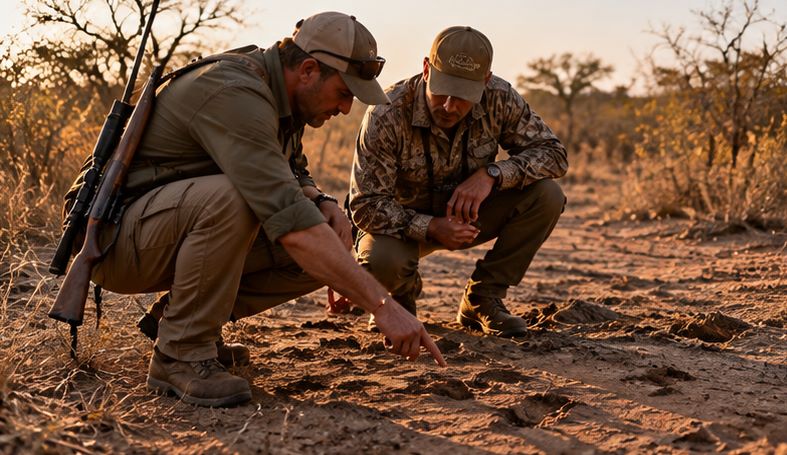
A Professional Hunter can be excellent in the field and still be the wrong person for a particular client. Hunters do not always consider this before a safari. We tend to think first about experience, species knowledge, shooting ability, tracking skill and whether the PH knows the area. That matters. On a ten-, fourteen- or twenty-one-day safari, technical competence is only one part of the relationship.
Personality matters. Communication matters.
Age, pace, sense of humor, lifestyle and even the way two people spend an evening in camp matter more
than most hunters expect. A 65-year-old hunter who has spent years building a business and is taking one major African safari may have different expectations from a young PH who lives for hard hunting, early mornings and long days in the bush. There is nothing wrong with either person. But if they do not connect, the gap can become obvious quickly.
At first, small differences may seem irrelevant. By day six, after several hard days without seeing the target animal, they may not feel small anymore.
The PH talks too much. Or not enough. He is always on his phone. He wants to push harder when the hunter wants to slow down. He treats every evening like another strategy meeting when the client simply wants a drink, a meal and some space. None of these things necessarily make him a bad PH. But they may make him the wrong PH for that hunter.
The opposite is also true.
When hunter and PH get on well, the whole safari can feel easier. Long drives become good conversations. A vehicle problem becomes something to laugh about. A missed opportunity does not become a crisis. The hunter trusts that the PH is still working toward the same goal, even when the hunt is not going according to plan.
That kind of compatibility is difficult to measure on paper.
Once you are in a remote camp together, that compatibility becomes real.
When the Hunt Gets Hard, the Relationship Gets Tested
A good hunter-PH relationship is easy to appreciate when everything is going well. The animal is there, the weather cooperates and the plan comes together.
The real test is when it does not.
By day five or six, after long hours in the vehicle, hard walking and no sign of the animal you came for, frustration can start creeping in. This is when trust matters most. If you know the PH well and believe in his judgment, you can accept a difficult day for what it is. You know he is still working, still thinking and still trying to put the hunt together.
If you do not trust him, the same day feels different.
Long safaris can put real pressure on both the hunter and the hunting team, especially when the target animal refuses to cooperate. We have looked at that side of the safari in more detail in our guide to managing pressure and conflict on an African hunting safari.
A missed opportunity starts to feel like poor planning. A vehicle problem becomes evidence that the operation is badly run. A change of area feels like desperation. A quiet evening becomes awkward rather than restful.
Hunters who have had an exceptional safari with a particular PH will often ask for that same person again. They are not just booking a hunting area or a species. They are booking a working relationship they already know functions. The longer a hunter and PH work well together, the more the PH learns the hunter's strengths and weaknesses. He learns how far the hunter is comfortable shooting, how hard he can be pushed physically, when fatigue is starting to affect judgment, and when a shot should simply be passed.
That knowledge is just as important as knowing the concession.
A PH who knows you may push you at exactly the right moment because he knows what you are capable of. He may also be the person who tells you not to take a shot because he knows it is outside your comfort zone. A PH who does not know the hunter may misread him completely. He may push too hard physically, encourage a shot the hunter is not comfortable taking, or mistake hesitation for lack of commitment.
Trust can disappear quickly.
Once you have hunted successfully with someone and know there will be no drama, no fuss and no uncertainty about how you work together, that confidence has real value. On a difficult safari, it can be worth almost as much as knowing there is game in the area.
The Best PHs Go Further Than Just Finding the Animal
A good PH does far more than locate game and put the hunter in position for a shot. The best ones have a way of holding the whole safari together.
When the hunt gets difficult, they keep looking for another option. They change the plan when the first one stops working. They push a little harder when there is still a realistic chance, and they know when continuing to force the day is only going to make things worse. Sometimes that means checking one more bait, following one more track or moving to another part of the concession late in the afternoon. Sometimes it means doing less.
But the best PHs do not give up easily.
A good PH also knows that the harder you work, the luckier you tend to get.
The best ones keep going when the easy option would be to start lowering expectations. They know that one more track, one more bait check or one more move late in the day can still change the whole safari.
We have seen many safaris come together in the final hours. A hunter can spend days without the opportunity he came for, then suddenly everything changes on the last afternoon. A good PH keeps working while there is still a genuine chance. That does not mean pushing blindly. It means staying committed to the hunt right to the end.
A good PH also knows when the hunter is tired, when confidence is slipping, or when everyone simply needs to get back to camp, have something to eat and start again properly the next morning. The hunter should feel that the PH is genuinely invested in the safari, not simply working through another booking on the calendar. You will notice it in small things.
He remembers what matters to you. He listens when you say you are not comfortable with a shot. He makes sure the tracker understands the plan. He keeps you informed when the strategy changes instead of leaving you wondering what is going on.
He also protects the standard you came to hunt for.
If a hunter has made it clear that he is looking for a particular quality of animal, a good PH should not suddenly start lowering that standard simply because the safari is getting difficult or the days are running out. If the goal was a 60-pound elephant, a 45-pound bull should not suddenly become “close enough” just because everyone wants to put something on the ground.
That kind of honesty matters.
A good PH would rather tell the hunter the truth and keep hunting than sell him a different result in the final days. And when something does go wrong, he does not make the problem bigger than it already is. The best PHs have a way of making difficult days feel manageable.
That is often what hunters remember long after the trophy has been collected.
Frequently Asked Questions
Should I know who my Professional Hunter will be before booking an African safari?
Ideally, yes. If the outfitter already knows who will guide your safari, ask for the PH’s contact details and speak before you travel. A phone or video call can tell you a great deal about communication, personality and whether you both understand what you want from the hunt.
Does a good outfitter always mean I will get the right PH?
Not necessarily. Good outfitters can employ several excellent Professional Hunters, but the right PH for one client may not be the right PH for another. Experience matters, but so do personality, communication, hunting style and the ability to work together over a long safari.
Why do hunters often request the same PH again?
Once a hunter and PH have worked well together, much of the uncertainty disappears. The PH already understands the hunter’s shooting ability, fitness, temperament, expectations and when to push or back off. That trust can be extremely valuable on a difficult hunt.
What should I discuss with my PH before arriving in Africa?
Start with the hunt itself: your target species, trophy expectations, previous hunting experience, shooting distances you are comfortable with, fitness and any physical limitations. But also have a normal conversation. You may be spending ten, fourteen or twenty-one days together, and getting a feel for each other beforehand matters.
The PH Becomes Part of the Safari You Remember
A Professional Hunter can help you take the animal of a lifetime. But the trophy alone does not decide whether the safari was a good one.
Years later, you may still remember the bull, leopard or elephant. You will also remember the person who was standing beside you when things went right, and perhaps even more clearly when they went wrong.
The best PHs become part of the hunt. They know when to push, when to stop, when to change the plan and when to simply sit around the fire and leave tomorrow until tomorrow.
Some hunters finish a safari with a magnificent trophy and never want to see their PH again.
Others finish without exactly what they came for and immediately start discussing the next hunt with the man who guided them. That tells you how much the relationship matters.
When planning future African hunting trips, spend time choosing the country, area and species. But also find out who will be beside you when the hunting starts.
About the Author
Pierre van Wyk is the co-founder of Game Hunting Safaris and has hunted extensively across Africa. Through GHS, he works directly with hunters, Professional Hunters and outfitters, giving him first-hand insight into what makes a safari work, and what can cause one to go badly wrong.