
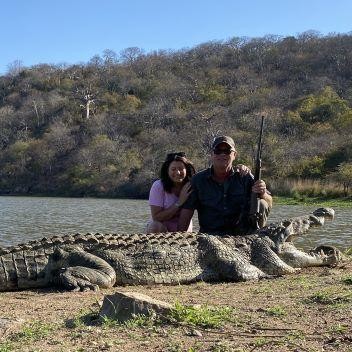
Take Steven, a Louisiana swamp hunter who has hunted alligators for years. He understands dark water, patience, powerful reptiles and the importance of staying calm when things happen quickly. So when he starts thinking about hunting a trophy Nile crocodile in Africa, it would be reasonable for him to assume that some of that experience will carry over.
It will, but only up to a point.
Crocodile hunts in Africa can become a different kind of hunting problem. Instead of working familiar swamp country, Steven may find himself glassing long stretches of river or lake, trying to relocate one old crocodile that has survived for decades by being good at disappearing.
The differences go beyond the animal itself. The scale of the water, the difficulty of judging a crocodile when much of its body may be hidden, the role of the Professional Hunter and hunting team, and the consequences of a huge reptile reaching deep water can make the hunt feel unfamiliar.
That is something Tamlyn and I learned firsthand while hunting Nile crocodiles in Mozambique. Between us, we discovered that experience around big reptiles certainly helps, but a mature African crocodile hunt has its own frustrations and demands. Much of the challenge lies in watching, waiting, judging and understanding when the opportunity in front of you is the one you have been looking for.
For an American hunter who already knows alligator country, that may be the biggest surprise of all: crocodile hunting can look familiar at first glance, yet develop in a different way once you are sitting beside an African river waiting for the right animal to show himself.
Alligator Experience Helps, But Only Up to a Point
An experienced alligator hunter is not starting from zero.
He already understands that large reptiles can sit motionless for long periods and then disappear in seconds. He knows that water hides more than it shows, that patience matters, and that getting careless around a big reptile is never a good idea.
This background helps on a crocodile hunt. But it can also create the wrong expectations.
Alligator hunting in the southern United States involves different methods, depending on the state and the area being hunted. Some hunters work at night. Some hunt from boats, use lines, or other methods allowed under local regulations. In Africa, a Nile crocodile hunt may involve hours of glassing, returning to the same section of river, watching basking areas, checking bait sites, or trying to get another look at one old crocodile.
The animal may already be known to the Professional Hunter and trackers. They may have seen him before, know where he likes to lie, and have a good idea of where he disappears when disturbed.
That does not mean he will cooperate.
On our own crocodile hunts in Mozambique, we quickly learned that seeing a good crocodile and getting a proper opportunity at him were two different things. A big bull could be lying on a bank one minute and gone the next, leaving little more than a slide mark and a lot of water to search.
Alligator experience helps. Patience helps. Staying calm helps. Knowing that you may need to wait helps.
What changes is the size of the problem.
A Louisiana swamp hunter may already know reptiles well. In Africa, he has to learn a different piece of water, a different hunting system, and often a crocodile that has spent years becoming difficult to hunt.
The Biggest Difference Is the Hunting Environment
A hunter coming from Louisiana may picture swamp country, narrow waterways and vegetation closing in around him. Africa can be a different picture.
In Mozambique and Zimbabwe, crocodiles may be hunted around large lakes and broad river systems. On the biggest lakes, the opposite bank can be many miles away. A crocodile lying on a distant sandbank may first be nothing more than a dark shape through binoculars. Before anyone starts thinking about a stalk, the hunting team must decide whether the animal is worth a closer look.
This is one reason why crocodile hunting in Zimbabwe can be such a different experience from the alligator country familiar to American hunters. Big water means more shoreline to glass, more places for a crocodile to disappear and, at times, considerable distance between the hunter and the animal he is trying to evaluate.
The Caprivi is different again. Rivers, floodplains, channels and islands break the country into pieces. A crocodile may be spotted hundreds of yards away across water, only for the hunting team to discover that getting into a useful position involves a boat ride, a long detour or waiting for the animal to move.
Mozambique gave Tamlyn and me another version of the same problem. On Cahora Bassa, the amount of water is difficult to appreciate until you are there. You can spend hours moving between bays and shorelines, glassing crocodiles that look promising, only to discover that they are either smaller than expected or gone by the time you get into position for a better look.
That amount of water changes the hunt.
You are not simply looking for a crocodile. You are trying to find the right crocodile and work out how to get close enough without sending him straight back into the water.
For an alligator hunter, the reptile may feel familiar. The country often does not.
Finding the Right Crocodile Can Take More Time Than Expected
Seeing crocodiles is not always the difficult part.
On good water, you may see several animals in a morning. Some will be young, some females, and some will look impressive until you get a better view. The problem is finding the old bull you came to hunt. Of course, everyone wants a sixteen-footer. That is easy to say before the hunt starts.
A truly old crocodile is old for a reason. He has spent decades learning when to stay put, when to slide back into the water, and when something does not feel right. The careless ones do not make it to that size. A big crocodile may also give you little to work with. You might see a large head, heavy shoulders and part of the back, while the rest of the animal is hidden in the water. This can make judging length difficult.
After you have looked at enough average crocodiles, your eyes can start playing tricks on you. Suddenly the next one looks enormous. Then you get closer and discover he is simply a decent crocodile in a good position. Finding crocodiles is one thing. Finding a genuinely old bull that is worth the time, effort and expense of the hunt is another.
This is where the Professional Hunter and trackers earn their money. They are not simply looking for a crocodile. They are comparing animals, watching where they lie, checking tracks and slide marks, and often returning to the same places because they know a certain bull uses that section of water.
An old crocodile has had a lifetime to learn what happens around his stretch of river or lake. That was something we saw clearly in Mozambique. We could find crocodiles. Finding the one we wanted was another matter. There is also a temptation to become impatient. After several hours of glassing, almost any decent crocodile starts to look a little bigger.
That is where good judgement matters most. If the hunting team believes a better animal is using the area, the sensible decision may simply be to leave, come back later and start looking again.
For Steven, this may be one of the bigger adjustments from alligator hunting. The challenge is not always finding a reptile.
Sometimes it is spending enough time with the binoculars to make sure you have found the right one.
Spot-and-Stalk and Baiting Can Produce Different Hunts
A Nile crocodile hunt does not always follow the same recipe.
Some crocodiles are hunted by spotting them on a bank and working out a way to approach without being seen. That can mean using the shape of the shoreline, vegetation, hills or even a boat to get into a position where the final part of the stalk can begin.
Other hunts are built around bait.
A bait can give the hunting team a reason for a crocodile to return to a particular place, especially when they already know that a big bull is using that section of water. This does not mean the hunt becomes simple. The crocodile still chooses when he arrives, how long he stays and whether he gives the hunter an opportunity.
That difference in methods may surprise an American alligator hunter.
Depending on where he hunts at home, he may be accustomed to working from a boat, hunting at night, using lines, or getting much closer to the animal before the final shot. An African crocodile hunt may involve a rifle or bow, hunting in daylight, longer distances and more effort simply getting into the right place without disturbing the animal.
Neither spot-and-stalk nor baiting guarantees an easy hunt. A crocodile on a bank can disappear before a stalk gets started. A crocodile visiting bait can suddenly change his habits. Sometimes the hunting team changes tactics because the animal has changed the rules.
You may start the hunt believing you know how the crocodile will be hunted and end up doing something quite different two days later because the old bull has decided otherwise.
The Hunting Team Matters More Than You Might Expect
A first-time crocodile hunter may think the hunting team’s main job is to find a good animal and get him into range.
There is more to it than that. The Professional Hunter and team may already know which stretches of river hold the better bulls, where certain crocodiles like to bask, how they react when disturbed, and which approaches are likely to send them straight back into the water.
That local knowledge can save a lot of wasted time.
A bank that looks simple to reach from the boat may be cut off by a channel. A route that seems perfect from a distance may leave the hunter exposed for the final hundred yards. Sometimes the shortest route is the worst one.
The team is also thinking ahead. Where is the crocodile lying? How deep is the water behind him? Can a boat get close if needed? If the animal is taken there, how difficult will recovery be?
Those questions matter before anyone starts the final approach.
On our hunts in Mozambique, the value of local knowledge became obvious quickly. The PH and trackers understood the water far better than we could after only a few days in camp. They knew where to look first, when an area deserved another visit, and when it was better to leave a crocodile alone and try again later.
The local communities can add another layer of information. People living along the rivers and lakes often know where big crocodiles are being seen, which animals have started taking livestock, and where a problem crocodile may be spending time. They may also know of crocodiles involved in attacks on people. That does not replace the judgement of the PH and trackers, but it can help point the hunting team toward the right stretch of water.
A good crocodile hunt is therefore not simply one hunter trying to outsmart one reptile. It is a small team working together, each person watching something slightly different and using experience that may have taken years to build.
For Steven, that may be another adjustment from hunting at home. His own experience still matters, but in Africa he is joining a hunting team that already knows the country and, in some cases, already knows the crocodile.
The Hunt Is Not Over When the Crocodile Is Down
Getting the shot is only part of the job.
A large crocodile lying close to deep water can create a real recovery problem. Even after the animal is down, the team must work carefully and safely to get him clear of the water and into a position where he can be handled.
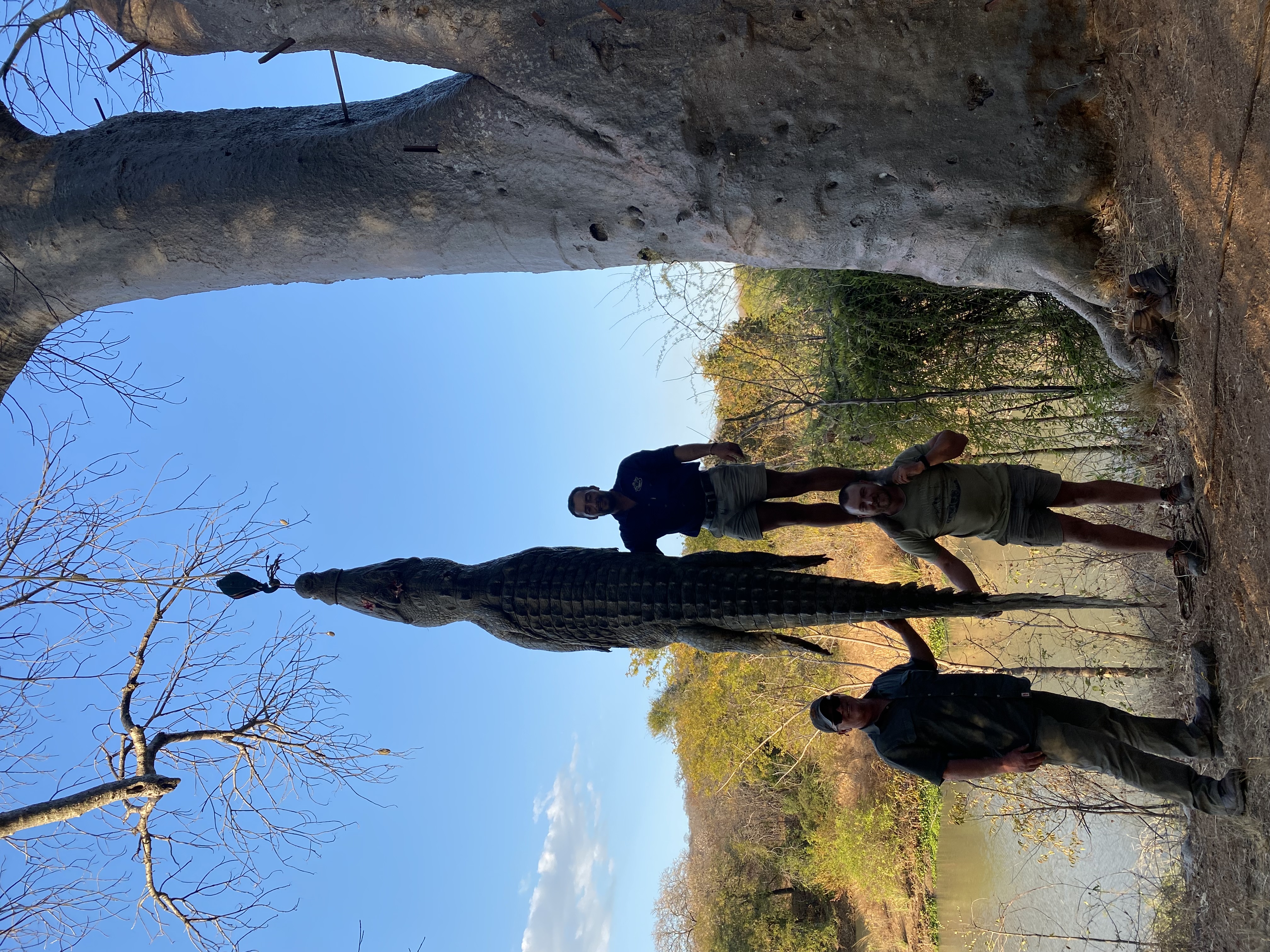
That can take more people than a first-time crocodile hunter expects. On big bulls, ropes, boats and extra hands all come into play. Local people sometimes help with the recovery simply because moving several hundred pounds of crocodile up a muddy bank is hard work, no matter how experienced the hunting team is.
Everyone must pay attention to the water.
Where there is one crocodile, there may be others. A recovery can put people close to the edge, in shallow water or around reeds where visibility is poor. Nobody wants to become so focused on the animal being recovered that they forget what else may be watching from a few yards away. This is a practical difference that an alligator hunter may not immediately think about. The size of the crocodile, the depth of the water, the shape of the bank and access for a boat all influence what happens after the shot.
On our Mozambique hunts, getting a large crocodile back to camp was part of the experience, not an afterthought.
The hunt may be over from the shooting point of view. The work often is not.
What Our Own Crocodile Hunts Taught Us
One thing that is difficult to appreciate until you stand next to a trophy Nile crocodile is the sheer size of the animal.
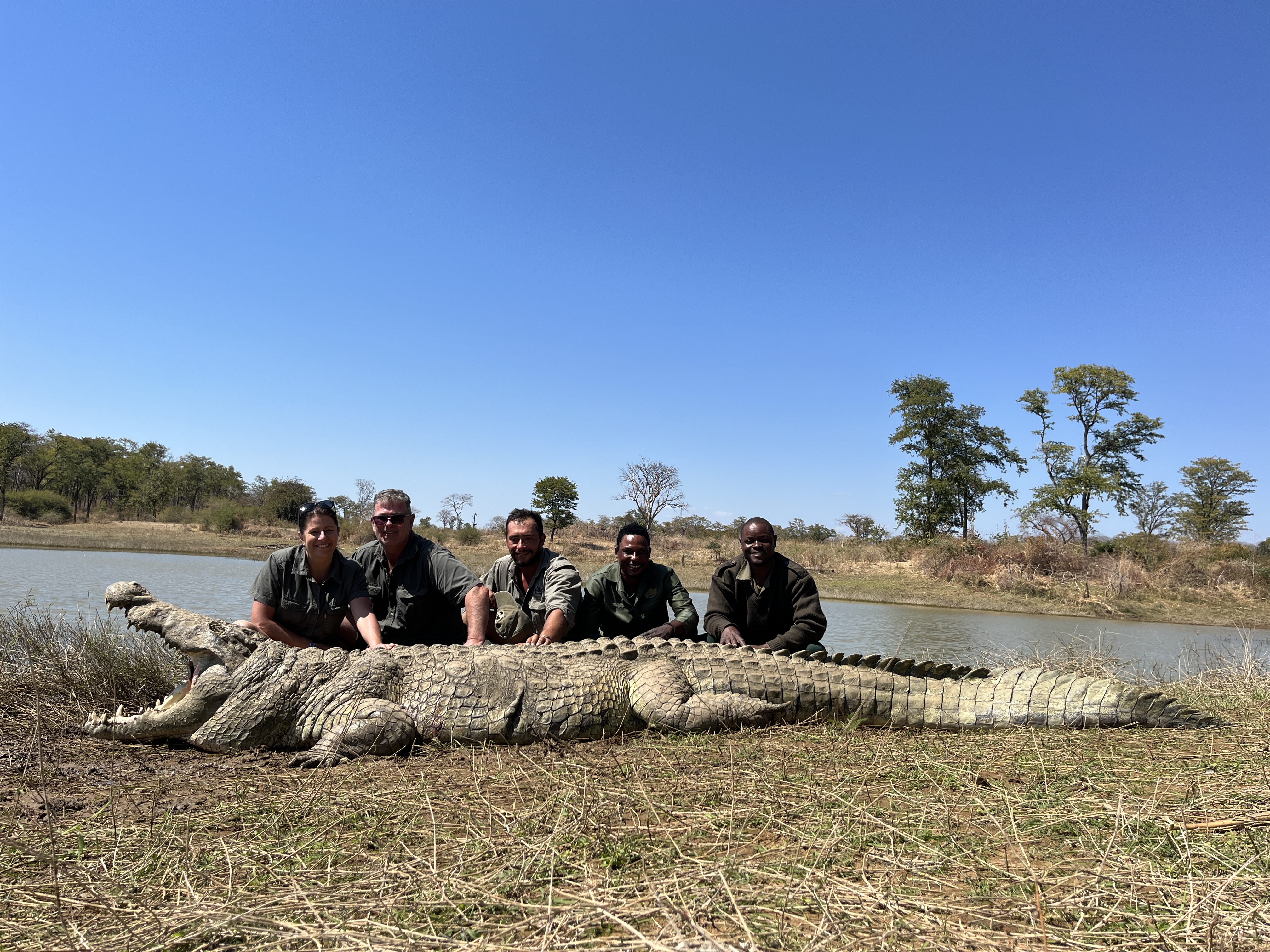
Alligators can grow large, but a big African crocodile is another proposition. On our Mozambique hunts, my bull measured 14.9 feet. Tamlyn’s was even larger at 15.1 feet and built like a tank.
The length is impressive, but the bulk is what really hits you once the animal is on the bank. Tamlyn’s crocodile was so heavy through the body and tail that she could barely hold the tail up for a photograph.
Through binoculars, a crocodile can look long and impressive. Standing next to one that size is different. The head is enormous, the body is thick, and the tail seems to keep going.
Tamlyn’s hunt reinforced another lesson: two crocodile hunts in the same country do not necessarily happen the same way. Different animals, different water and different circumstances can change how the hunt develops.
That is probably the biggest takeaway from our own hunts. You can understand the basic idea of crocodile hunting before you arrive, but the size of the animal and the country he lives in are much easier to appreciate once you are there.
For hunters considering their own Hunting Trips in Africa, a Nile crocodile hunt can be one of the most unusual ways to experience Africa’s rivers, lakes and dangerous-game country.
Frequently Asked Questions
Does alligator hunting experience help with crocodile hunting?
Yes. Experience around large reptiles helps with patience, reading water, staying calm and understanding how quickly an animal can disappear. But African crocodile hunting sits within the wider world of big game hunting, where the scale of the country, hunting methods, Professional Hunter’s judgement and difficulty of finding and evaluating the right mature animal can make the experience very different from hunting alligators at home.
Are Nile crocodiles hunted by stalking or over bait?
Both methods are used. Some hunts involve locating a crocodile on a riverbank or lake edge and working out a stalk. Others use bait to encourage a known animal to return to a particular area. The method depends on the country, water system, animal and hunting conditions.
How difficult is it to judge the size of a Nile crocodile?
It can be surprisingly difficult. A crocodile may expose only its head, shoulders and part of the back while the rest of the body remains hidden in the water. Distance and angle can also make an average animal look larger than it is.
How big can trophy Nile crocodiles get?
Large, mature bulls can reach impressive lengths, but hunters should be cautious about arriving with one number in mind. Everyone talks about sixteen-foot crocodiles, but genuinely old animals of that size are exceptional. Judging age, body mass and overall quality matters as much as chasing a headline length.
Can crocodiles be hunted with a bow?
In some hunting areas and under the applicable local rules, bowhunting may be possible. Rifle hunting is also common. The legal method depends on the country and hunting area, so this should always be confirmed before the safari.
Why is recovery such an important part of crocodile hunting?
Because crocodiles are often hunted close to deep water. Once a large animal is down, boats, ropes, extra manpower and careful planning may all be needed to recover it safely. On a very large bull, simply getting the animal back to camp can become a job of its own.
Authors: Pierre van Wyk & Tamlyn van Wyk
Pierre van Wyk and Tamlyn van Wyk are the founders of Game Hunting Safaris and have extensive first-hand experience hunting across Africa. Both have hunted large Nile crocodiles in Mozambique. Their writing draws on practical hunting experience, time spent with Professional Hunters and outfitters, and years of working with international hunters planning African safaris.