Lake Cahora Bassa Nile Crocodile Hunting Safari
Booking Season: 2026
Hunt Difficulty: Difficult

If you're researching Hunting in Mozambique, and specifically crocodile hunting safaris, you're already beyond the casual stage of planning a hunt.
This isn't a numbers-driven hunt like a typical plains game safari. It is one of Africa's most technical Big Game Hunting pursuits, where patience, precision and recovery often matter more than opportunity.
Mozambique offers some of Africa's wildest crocodile hunting, but it isn't always the easiest option or the right choice for every hunter. If you want a broader understanding of how these hunts work across different countries, start with our full guide to crocodile hunts before narrowing your decision to Mozambique.
This guide will help you make that call honestly, based on real conditions, not marketing.
Available African Crocodile Hunts
Lake Cahora Bassa Nile Crocodile Hunting Safari
Booking Season: 2026
Hunt Difficulty: Difficult
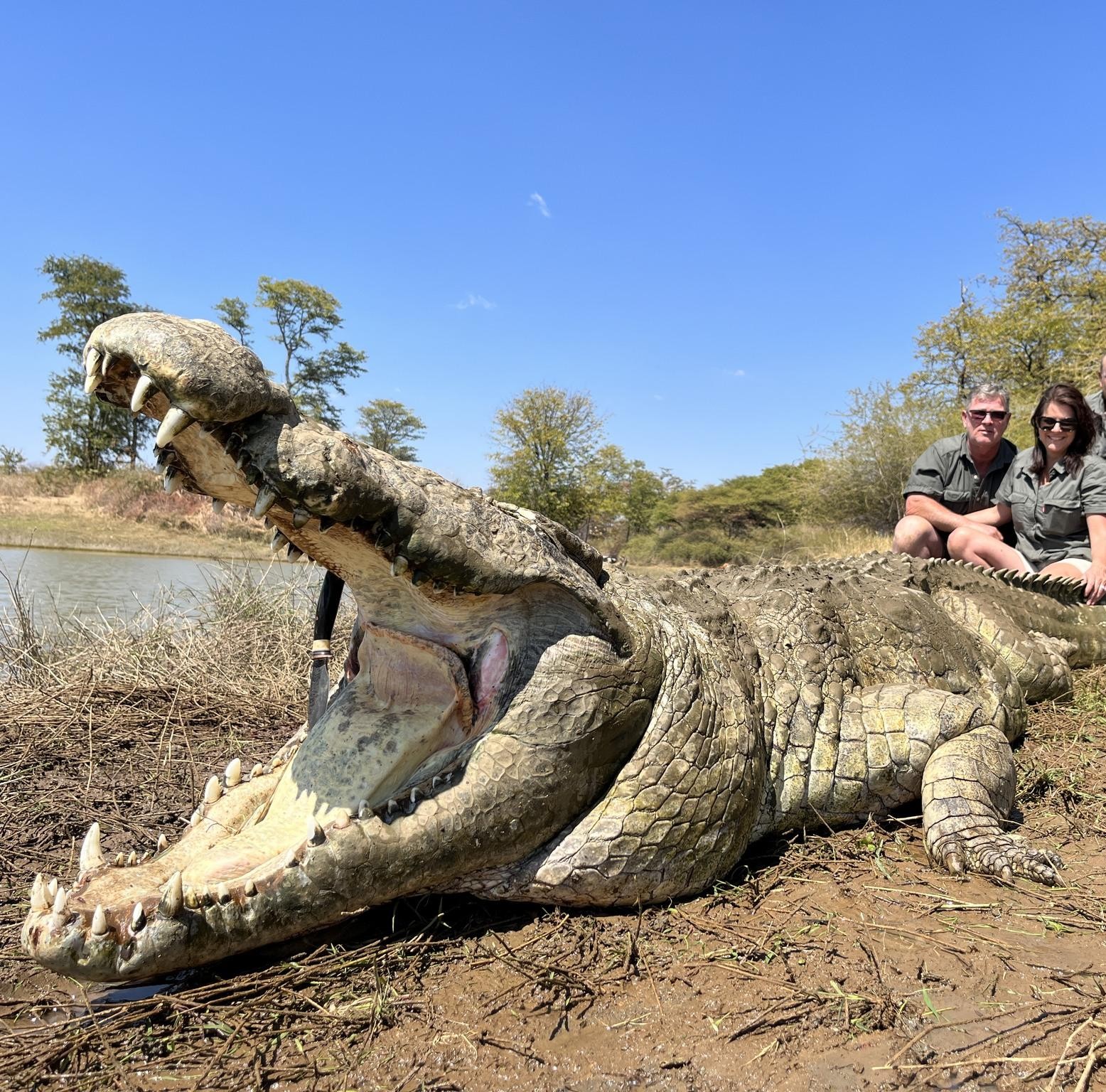
Giant Crocodile Hunt on Lake Cahora Bassa
Booking Season: 2026
Hunt Difficulty: Difficult
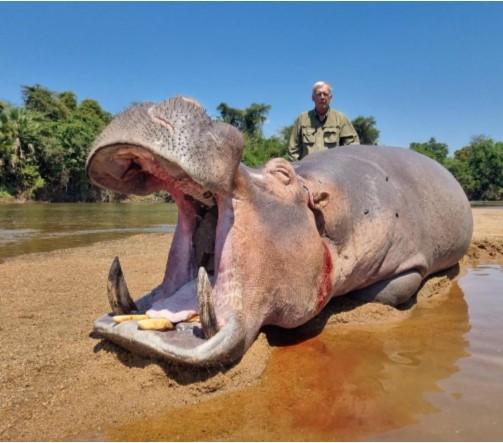
Lake Cahora Bassa: Mozambique’s Wild Water Hunt
Booking Season: 2026
Hunt Difficulty: Difficult
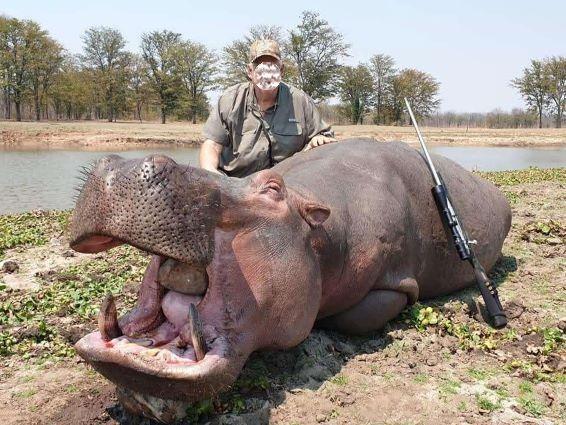
Dangerous Game on the Water: Hippo & Crocodile in Mozambique
Booking Season: 2026
Hunt Difficulty: Difficult
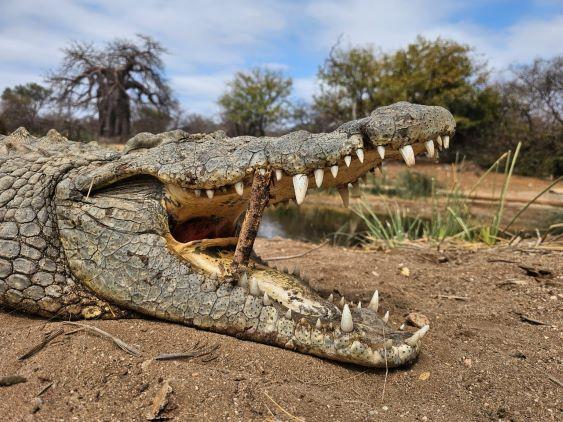
Hunt Hippo or Giant Crocodile in Wild Niassa
Booking Season: 2026
Hunt Difficulty: Moderate, Difficult
Not all crocodile hunting areas in Mozambique are equal, and choosing the wrong one can completely change the outcome of the hunt.
On paper, multiple regions may hold good crocodile populations. The outcome of your hunt depends far more on conditions than numbers. Water clarity, bank structure, vegetation density, and recovery conditions all play a major role in whether an opportunity turns into a successful hunt.
Two areas can both produce large crocodiles, yet deliver completely different experiences in terms of shot opportunities, difficulty, and overall success rate. Understanding these differences upfront is what separates a well-planned hunt from a frustrating one. In crocodile hunting, finding crocodiles is only part of the equation. The real question is whether you can take the shot and recover the animal successfully.
The Zambezi Delta is one of the most iconic crocodile hunting regions in Mozambique, known for its scale, remoteness, and truly wild character. It offers a classic African floodplain environment, but it also comes with conditions that can challenge even experienced hunters.
The terrain is defined by wide floodplains, thick papyrus and reed systems, muddy riverbanks, and a network of channels and backwaters. It is a living, shifting ecosystem where water levels and visibility can change quickly depending on the season.
In practical terms, this creates a very specific type of hunt. Crocodiles are often encountered partially submerged or positioned in heavy vegetation, which limits clean shot opportunities. Instead of clear, broadside presentations, hunters frequently deal with small windows and brief moments where the vital area is exposed.
Water conditions add another layer of complexity. The Delta’s water is typically darker and sediment-heavy, with reduced visibility compared to lake systems. When a crocodile is disturbed or hit, it can disappear almost instantly, and tracking becomes difficult.
This leads directly to the biggest factor in the Delta: recovery. Deep channels, current, and dense vegetation all work against you once the shot is taken. Even well-placed shots can result in difficult recoveries, and this is something that needs to be understood before choosing this type of hunt.
The Zambezi Delta is best suited to hunters who value the experience of a true wilderness safari and are comfortable with uncertainty. It is rewarding, but it is not forgiving, and it is generally not the ideal starting point for a first crocodile hunt.
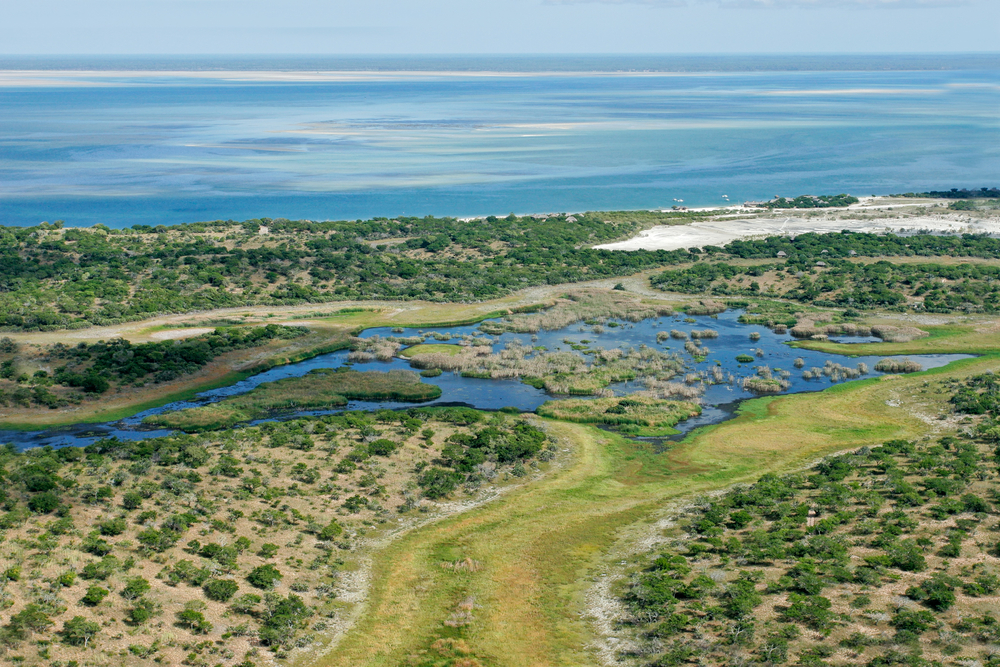
Lake Cahora Bassa offers a very different environment and, for many hunters, a more consistent and controlled crocodile hunting experience.
The terrain here is more open, with defined shorelines, rocky and sandy banks, and far less vegetation obstructing visibility. This immediately changes the nature of the hunt. Crocodiles are often seen clearly while basking, allowing hunters to properly assess size and position before taking a shot.
This improved visibility translates into more controlled shot opportunities. Instead of working through vegetation or partial views, hunters are more likely to have a clear presentation of the vital area, which increases confidence and accuracy.
Water conditions also play a significant role. Compared to the Delta, the water in Cahora Bassa is generally clearer and more stable, with fewer variables affecting visibility on a day-to-day basis. This consistency makes it easier to plan approaches and manage shot execution.
Recovery is where this area stands out most. With better access to shorelines, less dense vegetation, and more manageable water conditions, the chances of successfully recovering a crocodile after the shot are significantly higher. This is one of the main reasons why Cahora Bassa is often considered the more reliable option.
For first-time crocodile hunters, or those who prioritize success rate and recovery over a purely wild setting, Cahora Bassa is usually the safer and more practical choice. The trade-off is that it lacks some of the raw, remote character of the Delta, but in return, it offers a more predictable hunting environment.
Beyond the Delta and Cahora Bassa, there are additional concessions across Mozambique that offer crocodile hunting. However, quality can vary significantly, and this is where careful selection becomes critical.
Many of these areas are marketed based on crocodile numbers alone, but that rarely tells the full story. The real determining factors are how those crocodiles can be hunted and whether conditions support a clean shot and successful recovery.
Access is one of the first considerations. If reaching productive areas is inconsistent or difficult, opportunities become limited. Water clarity is equally important, as it directly affects your ability to judge size and place an accurate shot.
Bank structure and vegetation density influence how you approach the animal and whether you can create a stable shooting position. In some areas, thick vegetation may hold crocodiles but severely restrict visibility and shot opportunities.
Finally, recovery conditions must always be considered. A concession that produces slightly smaller crocodiles but allows for reliable recovery will often deliver a better overall outcome than an area with larger animals but poor recovery conditions.
In short, the best crocodile hunting areas in Mozambique are not defined by numbers alone, but by how well all of these factors come together in the field.
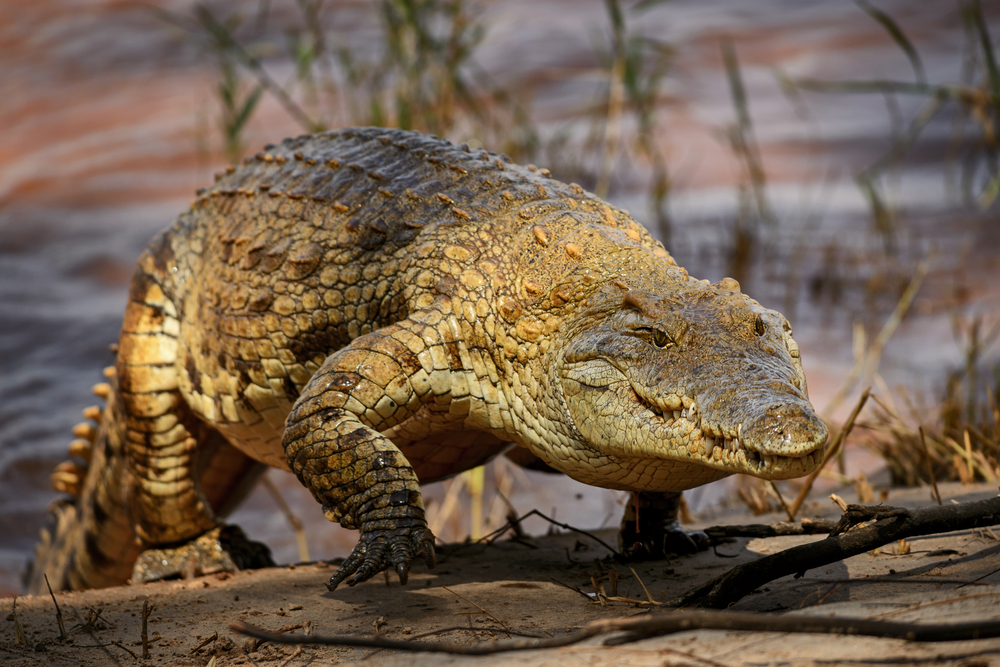
Mozambique produces consistently good Nile crocodiles, with solid trophy quality across the right areas.
But this is also where expectations need to be set properly, because crocodile hunting is one of the most misrepresented hunts in Africa when it comes to size.
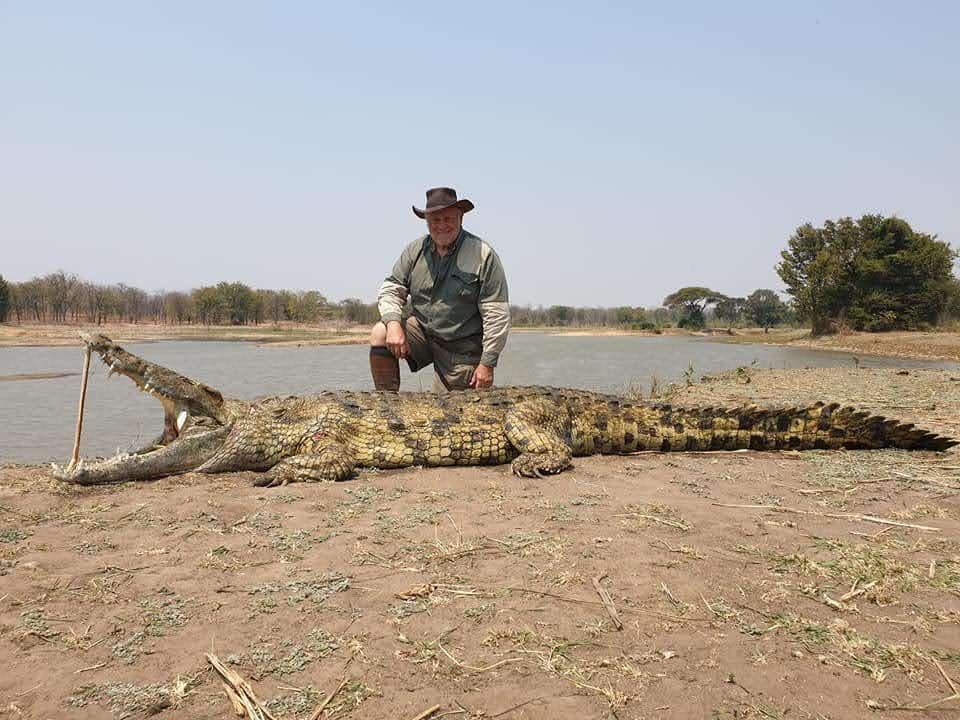
A realistic trophy in Mozambique falls in the 10 to 13-foot range. These are mature, high-quality animals and represent exactly what most hunters should be aiming for. Larger crocodiles do exist, but they are not something you should plan a hunt around. True giants over 14 feet are rare anywhere in Africa, not just in Mozambique.
The mistake many hunters make is focusing only on size before the hunt even begins. In reality, size is only one part of the equation, and often not the deciding factor in whether a hunt is successful.
What matters far more is whether the conditions allow you to take a clean shot and recover the crocodile successfully.
Shot opportunity is critical. Crocodiles rarely offer perfect presentations, and even in good areas, you are often working with small windows and limited exposure. Waiting for the right moment is part of the hunt.
Recovery conditions are just as important, especially in Mozambique. A crocodile that reaches deep water, heavy vegetation, or strong current after the shot can be extremely difficult to recover, even if the shot placement was close to ideal.
And then there is patience. Crocodile hunting is slow by nature. You may spend hours watching a single animal, waiting for it to shift position or expose the right angle. Rushing that moment to chase size is where many hunts go wrong.
A well-managed hunt is not about taking the biggest crocodile you see. It’s about taking the right crocodile, in the right conditions, where a clean shot and a successful recovery are realistic. A poorly placed shot or a bad retrieval situation can turn a potential trophy into a lost animal very quickly.
Crocodile hunting in Mozambique is structured around daily rates and a trophy fee, but the real cost of the hunt depends on how the package is put together and where you are hunting.
Before comparing individual hunt packages, it's worth understanding how African Hunting Safari Prices are structured, including daily rates, trophy fees and the additional costs that apply across Africa.
Daily rates range between $800 and $1,500 per day, depending on the area, level of accommodation, and operator. Trophy fees generally fall between $3,000 and $8,000 or more, based on crocodile size and concession quality.
Those figures provide a useful starting point, but they rarely reflect what hunters actually spend. Most serious hunters want to understand the total cost of the hunt, not just the individual components.
Most of our clients are traveling from the United States and Canada, so planning typically includes international flights, firearm import permits, and trophy export back home. These processes are straightforward when handled correctly, but they are an important part of the overall hunt planning process.
For a well-managed crocodile hunt in Mozambique, particularly in established areas like Lake Cahora Bassa, a realistic all-in figure is often in the region of:
$10,000 to $15,000 total
• Daily rates for the duration of the hunt
• Trophy fee for a standard crocodile
• Professional hunter and guiding services
• Accommodation and meals
In our case, current hunts on Lake Cahora Bassa are structured at approximately $13,000 all-in, including the trophy fee. This gives hunters a clear, upfront understanding of what the hunt will realistically cost without having to piece together multiple variables.
Even with packaged hunts, there are still additional costs that need to be planned for.
These can include:
• Charter flights into remote areas
• Trophy handling, dip and pack, and export
• Gratuities for staff
• Observer fees if you bring a non-hunter
• Rifle permits or firearm import costs
These costs can vary depending on location and logistics, and in some cases can add a few thousand dollars to the overall hunt.
Mozambique often sits in a middle ground when it comes to pricing.
It can be more affordable than Tanzania, where daily rates and government fees tend to be higher. However, it is not always cheaper than Zimbabwe once you factor in travel logistics, charter flights, and remote access.
The key difference is not just price, but what you are getting for it. In Mozambique, you are often paying for a more remote, less pressured hunting environment, which comes with both advantages and added logistical costs.
While cost is always part of the decision, it should not be the only factor.
A slightly more expensive hunt in the right area, with better visibility and recovery conditions, will almost always deliver a better outcome than a cheaper hunt in a difficult environment.
In crocodile hunting, the difference between a successful hunt and a lost opportunity often comes down to conditions, not cost.
This is one of the most important decisions you’ll make when planning a crocodile hunt in Africa, and it’s not as simple as one country being better than the other.
If you want a broader comparison before narrowing it down, our full crocodile hunts guide breaks down how different African destinations compare.
Both Mozambique and Zimbabwe offer excellent crocodile hunting, but they deliver very different experiences. The right choice depends on what you value more: environment, consistency, difficulty, and how much uncertainty you’re willing to accept.
In areas like the Zambezi Delta and parts of Lake Cahora Bassa, you are hunting in large, open, and often remote ecosystems where crocodiles behave naturally and pressure is relatively low. There is a strong sense of wilderness, and hunts can feel less structured and more exploratory.
This comes with real advantages. Crocodile populations in good concessions are solid, and the lack of pressure can sometimes lead to better opportunities on mature animals. For hunters looking for a more traditional, less managed safari, Mozambique has a strong appeal.
However, those same conditions also introduce variability.
Water levels, visibility, and vegetation can all work against you, particularly in delta environments. Shot opportunities are not always clean, and recovery can become difficult very quickly if a crocodile reaches deep water or thick cover.
The quality of hunting concessions also varies more than many hunters realise. A well-run area can produce excellent results, but weaker concessions can struggle due to access, visibility, or overall management. This makes operator selection more important in Mozambique than in many other countries.
Mozambique offers a more authentic and less predictable hunt, where conditions play a major role in the outcome.
Zimbabwe approaches crocodile hunting differently, and that difference is immediately noticeable in the field.
Many crocodile hunts in Zimbabwe take place in more controlled environments such as river systems and dam edges where visibility is better, access is easier, and conditions are more consistent. This allows for more structured hunting, with clearer shot opportunities and better planning around specific animals.
Higher visibility and more stable water conditions make it easier to judge crocodiles before the shot and significantly improve recovery rates. This translates into a higher likelihood of success, particularly on a first crocodile hunt.
That said, this consistency comes with a trade-off.
Some areas can feel more managed and less wild compared to Mozambique. While the hunting is still fair and challenging, it may not offer the same sense of remote, untouched wilderness that certain Mozambican concessions provide.
Zimbabwe is often the more predictable and controlled option, where the focus is on execution and outcome rather than navigating changing conditions.
The key difference between Mozambique and Zimbabwe is not crocodile size or even overall availability, it’s how the hunt unfolds.
In Mozambique, the environment plays a larger role. Conditions can shift, visibility can be limited, and recovery is not always straightforward. Success depends heavily on timing, patience, and adapting to what the terrain allows.
In Zimbabwe, the environment is generally more stable. Hunts are easier to manage, shot opportunities are clearer, and recovery is more reliable. The process is more controlled from start to finish.
If your priority is a wild, less structured African hunt, where the experience is as important as the result, Mozambique is often the better fit. It offers a level of rawness and unpredictability that appeals to experienced hunters.
If your priority is consistency, higher success rates, and a more controlled environment, Zimbabwe is usually the smarter choice, particularly for a first crocodile hunt.
Neither option is objectively better. The right decision comes down to what you value more: the nature of the experience, or the reliability of the outcome.
This is exactly the kind of decision where getting honest guidance matters. The wrong choice doesn’t just affect the hunt, it affects the entire experience.
This is where most hunters underestimate the hunt.
On the surface, crocodiles can look like a simple target, often stationary, lying on a bank, seemingly exposed. That perception is misleading.
Crocodile hunting is one of the most technical and unforgiving hunts in Africa. It is slow, precise, and leaves very little room for error.
Everything in crocodile hunting comes down to Crocodile Shot Placement.
You are not shooting for a general vital area. You are aiming for a very small target, the brain and the margin for error is minimal. Even a slight deviation can result in a non-fatal hit.
What makes this more difficult is that the angle is not always perfect. Crocodiles are often partially submerged, slightly turned, or positioned in a way that distorts the visual reference point for the brain.
A shot that looks correct in the moment can be off just enough to cause a problem.
And when that happens, the consequences are immediate.
Even with a good hit, the situation is not over.
A crocodile’s natural reaction is to move toward water, and quickly. If it reaches depth, things change fast.
In Mozambique especially, this is where hunts become stressful.
We have personally hunted crocodiles there, and even with solid setups, the pressure after the shot is real. A crocodile can disappear within seconds, and once it is in deeper water, your control over the situation is limited.
Even during a death roll, a crocodile can pull itself back into deeper water or thick cover. At that point, recovery becomes uncertain, regardless of how good the opportunity looked before the shot.
Recovery is the most underestimated part of crocodile hunting.
• Crocodiles almost always head for water after the shot
• Deep channels, current, and murky water work against you
• Vegetation and structure can hide a submerged animal completely
In some cases, even well-hit crocodiles are not recovered. This is simply part of the reality of the hunt, particularly in areas with difficult water conditions.
This is why experienced operators place so much emphasis on when not to shoot, not just when to take the shot.
Crocodile hunting is not a high-volume hunt. You may spend hours watching a single animal, waiting for it to shift position, lift its head slightly, or expose the correct angle. In some cases, that process can take days.
The pressure builds because you know how much depends on one moment. Rushing that moment, especially in pursuit of size, is one of the most common mistakes hunters make.
Crocodile hunting is a precision hunt where discipline, patience and sound judgement matter more than speed. Poor angles and rushed decisions are rarely forgiven.
When everything comes together, it is one of the most satisfying hunts you can do. When it doesn’t, it can turn into a very difficult experience very quickly.
Timing matters more than most hunters realize, and it has a direct impact on visibility, shot opportunity, and, most importantly, recovery.
Crocodiles are present year-round in Mozambique, but the conditions you hunt them in can change significantly depending on water levels, temperature, and seasonal movement. These factors influence not just where crocodiles are found, but how huntable they are.
The dry season is generally the most reliable time to hunt crocodile in Mozambique, and this is when most serious hunts are scheduled.
As water levels drop, crocodiles are forced into more defined areas such as river edges, channels, and exposed banks. This concentration improves your chances of finding mature animals and creates more predictable patterns.
Lower water levels also improve visibility. Banks are more exposed, vegetation is less intrusive, and crocodiles spend more time basking in the open. This makes it easier to judge size and wait for a proper shot opportunity.
Recovery conditions are significantly better during this period. With less water and more accessible shorelines, the chances of retrieving a crocodile after the shot improve considerably, which is one of the most important factors in the entire hunt. The dry season offers the best balance of opportunity, visibility, and recoverability, making it the preferred window for most hunters.
The wet season presents a very different set of conditions, and in most cases, a more difficult hunt.
Rising water levels spread crocodiles across a much larger area, making them harder to locate consistently. Flooded vegetation and expanded waterways reduce predictability and limit access to key hunting zones.
Visibility is also reduced. Crocodiles spend more time in the water, and when they do come out, they are often positioned in areas where vegetation or terrain interferes with a clean shot.
The biggest challenge, however, is recovery.
Higher water levels, stronger currents, and deeper systems increase the likelihood of a crocodile reaching water after the shot and becoming difficult, or impossible to recover. Even in situations where the shot is close to ideal, the environment can work against you.
The wet season is not recommended unless you are hunting in a very specific area where conditions remain manageable despite higher water levels.
The best time to hunt crocodile is not just about when animals are present, it is about when conditions allow you to take a clean shot and recover the animal successfully.
In Mozambique, that window is most consistently found during the dry season.
Crocodile hunting in Mozambique is not for everyone, and it’s better to be clear about that upfront.
This is not a hunt where effort alone guarantees success. Conditions, timing and good decisions all play an equally important role.
You are patient enough to wait for the right moment.
Crocodile hunting often means long periods of observation followed by a very short window to act. If you are comfortable watching a single animal for hours, or even days, waiting for the correct angle, this type of hunting will suit you.
You value the experience as much as the result.
Mozambique, especially in places like the Delta, offers a raw and often unpredictable environment. If being in that setting is just as important to you as taking the animal, you will get far more out of the hunt.
You understand that not everything is controllable.
Water levels change, visibility shifts, and recovery conditions are not always in your favor. Hunters who accept this tend to make better decisions in the field and ultimately have better experiences.
You are comfortable making disciplined decisions under pressure.
Knowing when not to shoot is just as important as taking the shot. If you can hold back when conditions are not right, even on a good crocodile, you are approaching the hunt the right way.
We will actively suggest a different option, whether that’s Zimbabwe or a different concession entirely, if we believe it will lead to a better outcome for the hunter.
Our goal is not simply to book a hunt, but to match each hunter with the right area, the right conditions and the right expectations.
Mozambique can offer an exceptional crocodile hunting experience, but it is also one of the more condition-dependent hunts in Africa. Water levels, visibility, and recovery conditions all play a major role, and these factors can vary significantly between areas and seasons.
That means the decision is not just about the country, it’s about matching the hunter to the right environment.
We work with a small number of trusted operators in Mozambique where:
• Crocodile populations are proven and actively managed
• Hunting areas are consistent, not just advertised well
• Recovery conditions are understood and planned for before the shot is ever taken
• Decisions in the field are based on experience, not pressure
In some cases, Mozambique is exactly the right choice, particularly for hunters looking for a more remote, less structured experience.
In others, it isn’t.
And being clear about that upfront is what leads to better hunts, better outcomes, and fewer regrets.
If you’re considering a crocodile hunt in Mozambique, the most important step is not choosing a package, it’s choosing the right setup for your expectations.
If Mozambique is the right fit for you, the next step is selecting the right area and operator, not just choosing a hunt off a list.
We typically recommend a small number of proven setups based on current conditions and what you want out of the experience.
In the Zambezi Delta, this means true wilderness hunts where the focus is on experience, patience, and working within changing conditions.
Around Lake Cahora Bassa, the focus shifts toward more consistent opportunities, better visibility, and improved recovery conditions, making it a more practical choice for many hunters.
Each recommendation is based on:
• Current crocodile activity in the area
• Seasonal conditions and water levels
• Your expectations, experience level, and priorities
We do not run mass listings or push volume. The focus is on matching you to the right hunt, not just any available hunt.
Mozambique offers some of Africa's finest crocodile hunting, but it is not the easiest option, and it is not the right fit for every hunter.
This is a hunt where conditions matter just as much as the animal itself. Water levels, visibility, shot opportunity, and recovery all play a role in how the hunt unfolds. When those elements come together, Mozambique can deliver an experience that is hard to match anywhere else.
But when they don’t, the same factors that make it appealing can quickly work against you.
That is why this decision should never be based on price, availability, or a single trophy photo. It should be based on understanding the conditions, the area, and whether the hunt aligns with your expectations and experience level.
Get that right, and Mozambique can be one of the most rewarding hunts you will ever do.
Get it wrong, and it can become a frustrating experience for reasons that could have been avoided from the start.
Choosing the right operator and hunting area before you book is one of the most important decisions you'll make. Our carefully selected African Hunting Trips are built around proven hunting areas, experienced Professional Hunters and honest advice to help you choose the safari that best matches your expectations.
Search from our range of Hunts across various popular destinations in Africa.

Book Your Hunt