
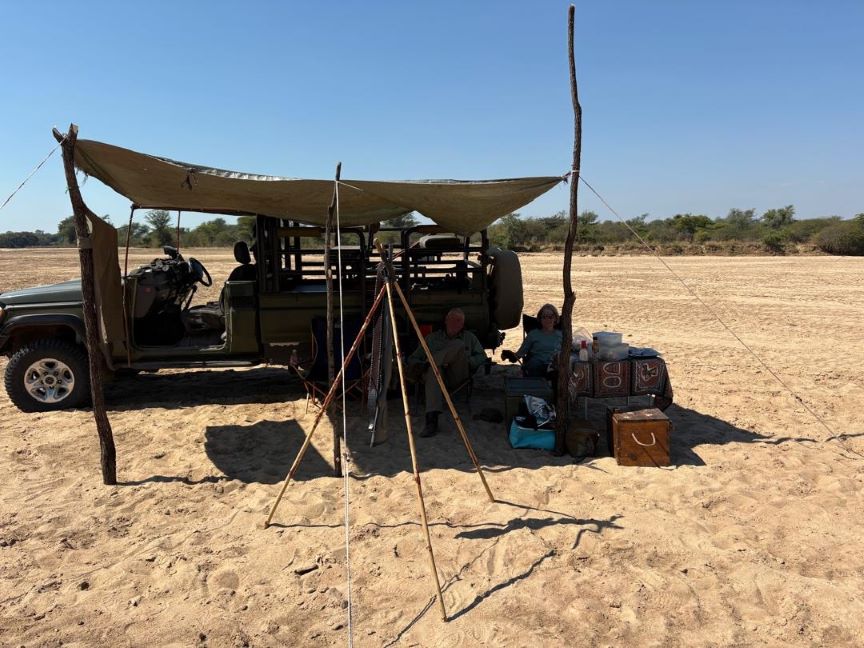
A Zambia big game safari is often planned months, and sometimes years, before a hunter ever boards a flight to Africa. Licences are confirmed, quota is checked, the hunting concession is selected, and the Professional Hunter knows which animals should take priority when the safari begins.
Then the hunter wakes up on the second morning and the plan is different.
That is not poor preparation. It is one of the realities of big game hunting in Zambia. Fresh buffalo spoor may cross a road during the night. A leopard that has ignored a bait for four days may suddenly feed. Scouts working another part of the hunting area may report elephant movement. Late-season rain can put water where there was none the previous afternoon, animals can shift into another section of the concession, and a wind that looked perfect at daylight can make following a promising track a waste of the morning.
The important information on a Zambia safari is often the information that did not exist yesterday.
Yesterday’s plan was built on yesterday’s information. By the following morning, the PH may be working with a completely different set of facts.
That does not necessarily change the objectives of the safari. It changes which opportunity deserves attention now.
Professional Hunters do not simply work through a fixed hunting schedule. They start each day by asking what has changed. Which tracks are fresh? What happened at the baits overnight? Where were buffalo seen yesterday afternoon? Has anything moved through the area during the night? What are the scouts reporting? What is the wind doing now, and which parts of the hunting area are still worth working?
One of the Zambia operators we work with, Shamwari Safaris, has seen exactly this happen in the field. Buffalo movement, changing spoor and new information from elsewhere in the hunting area can alter the day's priorities quickly. A track that looked worth following yesterday may mean little the next morning, while a single fresh report can suddenly justify travelling to a completely different part of the concession.
For a hunter arriving from the United States, this can initially feel strange. You have travelled a long way, booked a fixed number of hunting days and arrived with a clear idea of what you want to hunt. It is natural to expect the safari to follow the plan.
In Zambia, the better approach is often the opposite.
The plan matters. But knowing when new information should change it matters more.
Yesterday’s Information May Not Be Good Enough This Morning
A good Zambia safari is never improvised. Long before the hunter arrives, the Outfitter has already considered quota, season, access, recent game movement, the strengths of the hunting area, and which species should take priority.
What changes in the field is not the objective. It is the route taken to reach it.
A hunter may arrive intending to spend the first few days concentrating on buffalo. That makes sense when there is fresh sign, the wind is workable and the herd is moving through country where a stalk is possible. If the spoor goes cold, the animals move toward a boundary, or new information comes in from another part of the concession, spending the rest of the day stubbornly following the original plan may simply waste time.
The same applies across a big game safari. A leopard may suddenly begin feeding on a bait that has been quiet. Scouts may find fresh elephant spoor in an area that had shown little activity the previous day. Buffalo that were using one drainage may move overnight after rain or pressure. None of those developments could be known with certainty when the safari itinerary was drawn up.
Experienced PHs work with priorities rather than rigid daily schedules. The priority may still be buffalo. The question is whether buffalo remain the best use of that morning. As with many African hunting trips, a Zambia safari is planned around fixed dates, clear objectives and available quota, but it still needs enough flexibility to respond to current conditions. The hunter is not changing direction because the original plan failed. He is changing direction because the information has improved.
On a serious Zambia safari, that is the difference between spending a day hunting what was relevant yesterday and spending it hunting what is happening now.
Fresh Information Can Change the Priority Before Breakfast
One minute, you may be sitting in camp with a cup of coffee, looking forward to breakfast and expecting to follow the plan discussed the night before.
Ten minutes later, somebody has found fresh spoor. Breakfast can wait. A quick look at tracks on a road, a radio call from a scout, or a report from another part of the hunting area can turn an easy start into several hours on foot before the coffee has properly settled. On a Zambia safari, the most important development of the morning may happen before anyone has finished eating.
Overnight information can carry enormous weight. Fresh buffalo tracks can justify abandoning a
completely different plan. A leopard bait that was untouched yesterday may have been hit during the night. Elephant movement reported from another section of the concession may suddenly make that area worth reaching before the day warms up. What matters is not simply that new information exists, but whether it is fresh enough and important enough to act on.
That flexibility is also part of what makes hunting in Zambia so interesting for hunters pursuing more than one big game species. You may arrive with clear priorities, but the best use of a hunting day can change when fresh information reveals an opportunity that did not exist, or was not known, the evening before.
Experienced PHs and trackers are constantly judging that difference. A track across a road is not automatically a reason to change the day. They will look at how fresh it is, where the animal is heading, what the wind is doing, how far ahead it may be, and whether following it still gives the hunter a realistic chance of catching up.
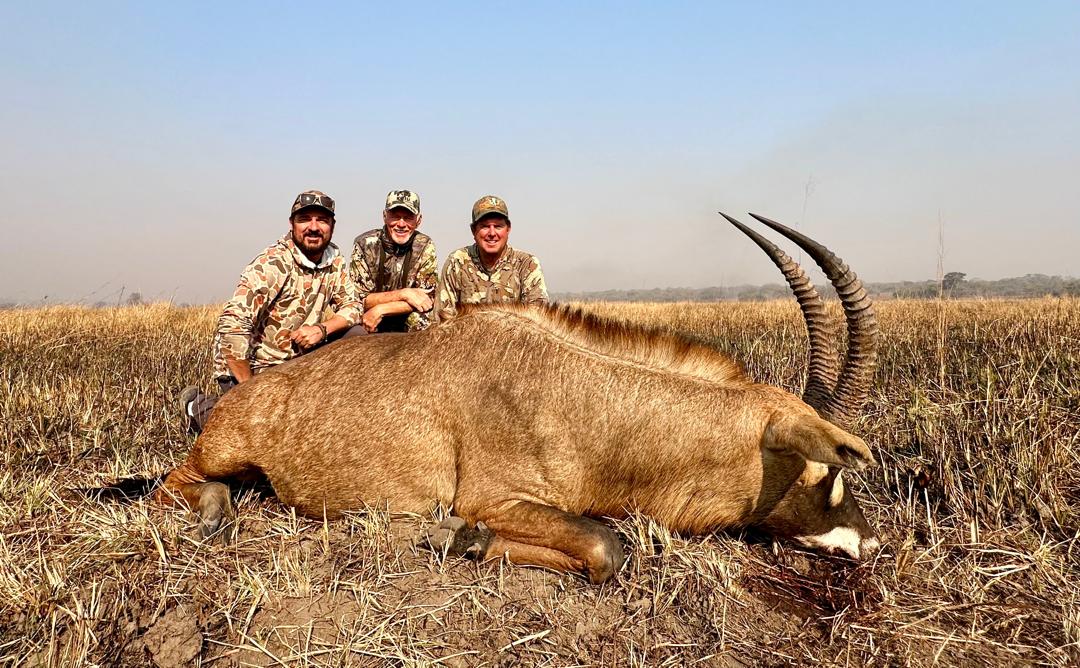
And that is how a morning that looked like breakfast first can turn into ten miles on foot before breakfast ever happens — something Doug, one of our Texas clients, and Steve from Shamwari Safaris can both verify from their recent safari in Rufunsa.
Fresh buffalo spoor changed the morning, but the day did not end with buffalo. It ended with a Cookson’s wildebeest, a good example of how quickly a Zambia hunting day can change when new information and new opportunities develop in the field.
Water Can Move the Game, and the Hunt
Water can be a quiet force behind a Zambia safari.
For much of the main hunting season, Zambia is progressively drying out. Reliable rivers, springs, pans and other permanent water become increasingly important, and animal movement can become easier to read as the season advances.
Buffalo may begin using the same drainage lines repeatedly. Elephant can concentrate around certain rivers, springs or pans. Tracks leading toward water can carry more meaning than the same spoor found earlier in the season, when animals have more options.
Later in the season, as the first rains begin to arrive, that pattern can change quickly. A storm that puts water into seasonal pans and low ground can spread animals out almost overnight. Buffalo that had been relying on one dependable water source may no longer need it. Elephant can alter their movements, and tracks that looked predictable a few days earlier may suddenly lead into country the hunting team had barely been working.
Hunters can make the mistake of assuming that because an area held plenty of game yesterday, it should still be productive today. It may not be, and the PH is looking beyond where the animals were. He is asking where the water is now, whether anything has changed since the last rain, and whether the movement pattern the team had been relying on still makes sense.
That can mean abandoning a productive road system, shifting to another drainage, or spending hours getting into a part of the concession that suddenly looks far more promising than it did a few days earlier.
The same principle works in reverse as the country dries out. As water disappears, animals can begin concentrating again, and areas that seemed quiet earlier in the season can suddenly become much more important.
Water does not just determine where animals drink. It can determine where the hunt goes next.
Wind Can Destroy a Good Plan in Minutes
Fresh spoor can put a hunting team on the right animals, but the wind often decides whether they ever get close enough to do anything with it.
A buffalo track may be fresh, the herd may be only a short distance ahead, and the terrain may look ideal for an approach. Then the wind begins to swirl. Pushing harder is not always the brave decision. It can be the expensive one. If the herd catches the hunters' scent, animals that were moving through the area can break away, cross a drainage, head toward thicker cover or move far enough that the rest of the morning becomes a recovery exercise rather than a hunt.
The same problem applies when approaching elephant or working around bait sites. A good plan on the map can fall apart when the wind no longer allows the team to use the route they intended.
Experienced PHs will often stop, circle, wait, or abandon an approach altogether rather than force it. That is frustrating when you know the animals are close, but a few minutes of patience may preserve an opportunity that pushing ahead would destroy. Wind also changes the value of time. A track that was worth following at first light may become a poor bet two hours later if every possible approach puts the hunters downwind. Changing objectives is not giving up on the animal. It is refusing to spend the day making the situation worse.
A Zambia safari cannot be managed from a fixed schedule. The animals may be exactly where the hunting team hoped they would be, but if the wind says no, the PH has to listen.
A solid safari plan needs more than the right area and the right species. It needs enough flexibility to recognise when a promising opportunity has temporarily become the wrong one to pursue.
A Scout’s Radio Call Can Change the Day, or Tell You to Back Off
The PH and client are not the only people gathering useful information on a Zambia safari.
Trackers, scouts, anti-poaching teams, bait-checkers and other people moving through the hunting concession can all pick up information that the hunting vehicle would never have found by itself. In a large concession, that matters. A PH cannot be everywhere, but he can still make decisions using information coming from across the area. Sometimes that information changes the following day before the sun is up.
A scout may report buffalo movement late in the afternoon in a part of the concession that has been quiet for days. By the time the hunting team is back in camp, the plan for tomorrow may already be changing. Instead of a normal breakfast and a daylight departure, the alarm may be set for 3:00 a.m. so the team can reach that area before first light and check whether the spoor is still worth following.
The same thing happens with elephant movement or a leopard bait that has become active. A single radio call can move one area of the concession from low priority to the first place the team wants to be the next morning.
Good information does not always tell the PH where to go. It can also tell him when to leave animals alone.
Buffalo may be moving toward a boundary where pushing them harder could send them out of the huntable area. Elephant may be travelling into country where the wind, cover or access makes a safe approach unlikely. Trackers may read the spoor and decide that continuing will only put unnecessary pressure on animals that can be hunted under better conditions later.
This decision can be difficult for a hunter who knows the animals are there. After travelling halfway around the world and paying for a limited number of hunting days, the instinct is to keep going. An experienced PH sometimes must do the opposite, backing out for the afternoon, changing direction, or leaving animals undisturbed until the wind or movement improves. That can protect an opportunity that would otherwise be lost through impatience.
The information network across a Zambia hunting concession matters. It is not only helping the team find animals. It is helping the PH decide which opportunities are worth pursuing and which are better left alone.
Good information does not always tell a hunting team where to go. Sometimes it tells them when to stop.
The PH’s Real Job Is Deciding Which Opportunity Matters Most
On any given day, the PH may have several pieces of good information in front of him.
Buffalo spoor may still be worth following. A lion may have been heard or seen in another part of the concession. Scouts may report elephant movement elsewhere. All three can be genuine opportunities, but the hunting team cannot pursue all three at once.
That is where judgement matters more than activity.
The PH must weigh how fresh the information is, how far away the animals are, what the wind is doing, whether the opportunity is likely to improve or disappear, and how much time the hunter has left on safari. The best decision may be to stay with the buffalo, or it may be to leave them and check the bait while the opportunity is still fresh. It may be to ignore both and move quickly on the elephant report.
None of those choices can be made properly from a fixed schedule written before the safari began. The skill is not simply collecting more information. It is deciding which information deserves to change the hunt. Experienced hunters understand that this can sometimes mean walking away from a perfectly reasonable opportunity in favour of one that is stronger, fresher or more time-sensitive. Other times, the correct decision is to ignore the excitement of a new report and stay with the animal already in front of you.
That is one of the hardest parts of guiding a serious big game safari well. Flexibility is not about chasing every new opportunity. It is about knowing which one deserves the hunter’s time.
Frequently Asked Questions
Can a Zambia big game safari really change overnight?
Yes. Fresh spoor, bait activity, scout reports, wind, water and animal movement can all change the value of a plan made the previous evening. The objective of the safari may stay the same, but the best use of the next morning can change quickly.
What information can change a Zambia safari overnight?
Fresh spoor, new bait activity, scout reports, changing water availability, wind and recent animal movement can all alter the value of yesterday’s plan. The main objectives of the safari may remain the same, but new field information can determine which area, species or opportunity deserves attention first the following morning.
What is considered big game hunting in Zambia?
That depends on the hunting area, quota and species legally available during the safari. Zambia forms part of the wider tradition of big game hunting in Africa, but the actual hunt is shaped by what is available in that concession and season.
Why does the Professional Hunter sometimes change the plan during a safari?
Because new information can make one opportunity stronger than another. A PH may receive a fresh scout report, find better spoor, see a change in wind, or decide that continuing to pressure an animal is likely to make the situation worse. Changing the plan is not a sign that the safari is badly organised. It is often a sign that the hunting team is responding properly to what is happening in the field.
Why the Best Zambia Safaris Stay Flexible
A Zambia big game safari still needs a clear plan. The hunter should know which animals matter most, the PH should understand the strengths of the hunting area, and everyone should begin with realistic priorities. What changes is the willingness to let current conditions improve that plan.
Fresh spoor, a scout’s report, a change in wind, shifting water or unexpected animal movement can make yesterday’s best option the wrong one this morning. The experienced hunting team does not ignore the original objective, but neither does it follow the schedule simply because it was written down before the safari began. The bush keeps providing new information. The PH’s real skill is deciding which of it matters, when it deserves to change the plan, and when the better decision is to wait.
The best plan is not always the one followed most closely. It is the one that can still change when new information says it should.
About the Author
Pierre van Wyk is the co-founder of Game Hunting Safaris. He works closely with experienced Zambian outfitters and Professional Hunters, helping American and other international clients plan serious African hunting safaris around realistic expectations, current field conditions and the right hunting areas.