
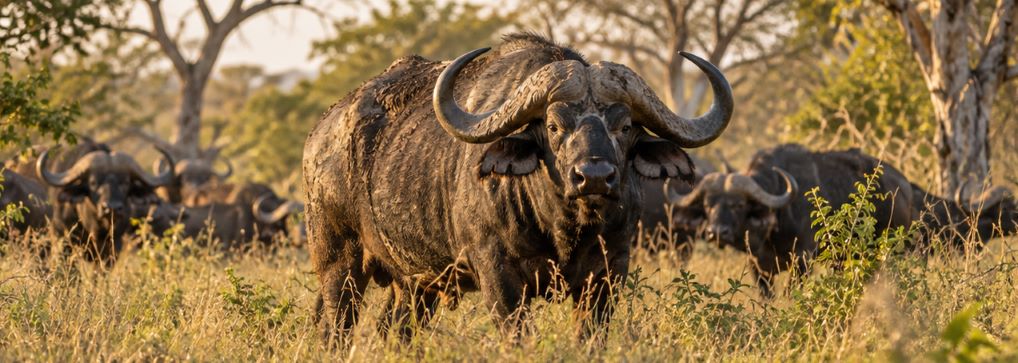
Two hunts can both be sold as a Zimbabwe buffalo safari and take place under different hunting systems. One may be conducted in a state Safari Area, another on communal land operating under CAMPFIRE, and another inside a large private conservancy. They may look similar: buffalo, a professional hunter, a set number of hunting days and a quoted price. In the field, the experience can be different.
This distinction matters when booking buffalo hunting in Zimbabwe. The land system can affect access, how wildlife moves through the landscape, whether villages or livestock form part of the landscape around you, how neighbouring hunting areas are managed and what the operator can realistically do once buffalo spoor leaves one block and enters another.
None of these systems is automatically better than the others. A state Safari Area, a CAMPFIRE concession and a private conservancy can all produce excellent buffalo hunting. The important question is whether the hunter understands what he is booking before the deposit is paid.
State Safari Areas: What the Hunter Is Actually Booking
A state Safari Area is part of Zimbabwe’s government-managed wildlife estate. Areas such as Matetsi are not private ranches and they are not communal CAMPFIRE country. Hunting rights are allocated within a defined safari area, and the operator works inside that system.
For hunters, the important point is not the ownership label itself. It is understanding what that means on the ground. Access may be controlled differently, neighbouring blocks may have separate hunting rights, and buffalo can move through country that is managed by more than one operator or authority.
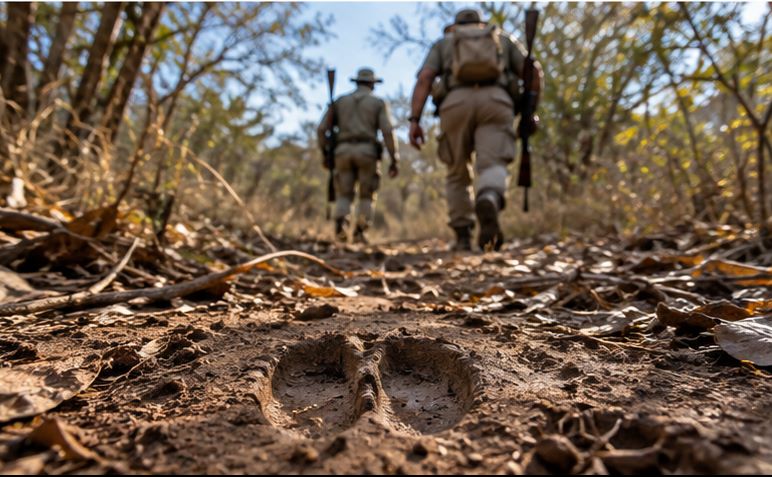
That matters when following buffalo. Spoor does not automatically mean the hunt can continue indefinitely in any direction. A bull or herd can move toward a boundary, into adjoining hunting country or into an area where the operator does not hold the same rights. The hunter may never notice those management lines on the landscape, but the outfitter and professional hunter must know exactly where they are.
State Safari Areas can offer large, wild hunting country and very traditional buffalo hunting. They are also an important part of hunting in Zimbabwe, but the hunter should still ask how the concession is managed, what lies around it and how much usable hunting country the operator has access to.
CAMPFIRE Country: Wildlife, Communities and Hunting Rights
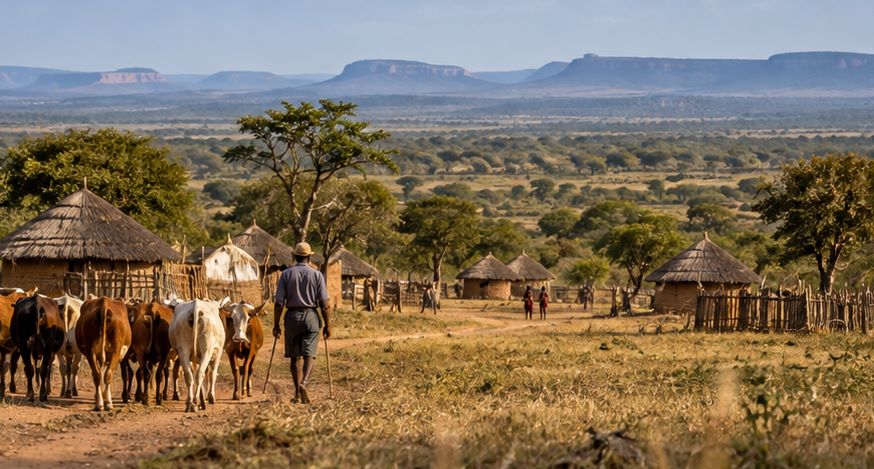
CAMPFIRE areas can feel unfamiliar to hunters who have only experienced private ranches or state Safari Areas. In some parts of Zimbabwe, people, livestock and wildlife share the same broader landscape. You may pass villages, cattle or cultivated ground on the way to a hunting block and then spend the rest of the day following buffalo through country that feels completely wild.
That contrast can surprise first-time hunters. Communal land does not mean the buffalo are tame, nor does it mean the hunt is less serious. The important questions are how the hunting rights are structured, how the area is managed and how wildlife moves through the landscape.
We saw some of that first-hand on our recent Zimbabwe expedition through Matetsi, ECA and Gwayi. Moving through community-linked hunting country around Matetsi, the ECA areas and Gwayi reinforced how quickly the landscape can change from inhabited ground to genuinely wild buffalo country. The presence of people in the broader area does not necessarily define the hunting experience once the tracks are found and the day begins.
We also discussed this with Tiaan from Doornboom Safaris while he was in Zimbabwe hunting buffalo. His view from the field was much the same: people and livestock can form part of the wider communal landscape without defining the hunt once the buffalo are found and the day begins.
For the hunter, CAMPFIRE country is therefore less about the label and more about understanding the operating system behind the hunt. Who holds the rights? Which ground can the outfitter hunt? Are buffalo largely resident or moving through neighbouring areas? Are villages and livestock part of the wider landscape? Those answers matter more than assumptions based on the word “communal.”
Private Conservancies: Managed Does Not Mean Small
Private conservancies are another important part of Zimbabwe’s buffalo hunting landscape. Hunters comparing Zimbabwe with other Cape Buffalo Hunts across Africa should understand that the word “private” can create the wrong picture. It may sound like a small fenced property or a tightly controlled ranch hunt. In Zimbabwe, that can be a serious misunderstanding.
Bubye Valley Conservancy, for example, covers about 3,740 square kilometres. That is not small-country hunting. It is a big, privately managed wildlife system supporting large populations of dangerous game and other species across a landscape measured in thousands of square kilometres.
The important distinction is that private conservancies are managed differently from state Safari Areas or CAMPFIRE country. Wildlife populations, access, hunting rights, quota and habitat are managed within a defined system. That can give the operator a clearer understanding of the buffalo population and how the area has been hunted, but it does not remove the realities of finding and following buffalo in large country.
For the hunter, the better questions are not simply whether the land is private or whether there is a perimeter fence. Ask how large the usable hunting area is, how the buffalo population is managed, how much hunting pressure the area has seen and what the boundary means once a bull or herd starts moving.
A private conservancy can offer highly managed hunting and still feel enormous, wild and unpredictable. The word “private” tells you how the land is managed. It does not, by itself, tell you what the buffalo hunt will feel like.
Why Boundaries Matter More Than Fences
Hunters often ask whether an area is fenced. In Zimbabwe that is only part of the picture. Much of Zimbabwe’s important buffalo country is shaped more by concession boundaries, land tenure and hunting rights than by physical fencing.
An unfenced area does not mean a hunting team can follow buffalo indefinitely in any direction. A bull or herd can move across a concession line, into communal country, onto private land or into another operator’s hunting block. The buffalo may not recognise that boundary, but the professional hunter must.
For hunters, the more useful questions are practical ones. How much usable buffalo country does the operator control? Are the buffalo largely resident within that system or do they regularly move between adjoining areas? What happens if fresh spoor crosses into neighbouring ground? Does the outfitter have access there, or does the hunt stop at the boundary?
The same principle applies inside large private conservancies. A perimeter fence around thousands of square kilometres does not tell you much on its own. What matters more is the size of the country, how the buffalo use it, how hunting pressure is managed and whether the operator has enough meaningful access to hunt the area properly.
So in Zimbabwe, the better question is usually not simply, “Is it fenced?” It is: what do the boundaries mean once the buffalo start moving?
What Changes for Hunters?
The land system can change more than the map. It can change what the hunter sees on the way to the buffalo, how camp access works, how far the vehicle travels each morning and how much contact there is with local communities.
In some CAMPFIRE areas, villages, cattle and cultivated land may form part of the landscape. In other areas, the hunter may spend most of the safari in country that feels completely removed from people. Some hunters enjoy seeing how wildlife, communities and hunting fit together. Others would rather spend ten days seeing nothing but trackers, buffalo and bush.
That is worth knowing before the safari, not after arrival.
Questions to Ask Before Paying the Deposit
Before booking a buffalo hunt in Zimbabwe, ask the outfitter or the team at Game Hunting Safaris exactly what type of hunting area you will be in and how that system works in practice.
Start with the basics. Is the hunt taking place in a state Safari Area, CAMPFIRE country or a private conservancy? Who holds the hunting rights, and how much usable buffalo country does the operator control?
Then ask about the buffalo themselves. Are they largely resident within the area, or do they regularly move between neighbouring concessions? Buffalo may use one area at night and move into neighbouring or protected country by morning, so where they are found is not always where they spend the day. If fresh spoor crosses a boundary, can the hunting team continue, or does access stop there?
Recent hunting pressure matters too. How many buffalo hunters have already hunted the area that season? What quota remains when your safari begins? Is the operator working one block, or can the hunt move through adjoining country under the same rights?
The wider landscape is worth understanding. Are villages, cattle or cultivated land part of the area around camp? How far is the daily drive to the hunting ground? Will the safari feel remote from people, or is community life part of the broader experience?
Hunters should also look beyond the quoted buffalo hunt price and understand the full structure of the safari. Our African hunting safari prices guide explains how daily rates, trophy fees, transfers and other costs fit together across African hunts.
And finally, ask the simplest question of all:
What does this hunting area look like on an ordinary day, not on the website?
A good outfitter should be able to answer that clearly. The goal is not to find a “perfect” system. It is to know exactly what kind of Zimbabwe buffalo hunt you are paying for before you arrive.
Frequently Asked Questions
Is Buffalo Hunting in Zimbabwe Considered Big Game Hunting?
Yes. Cape buffalo is one of Africa’s major dangerous-game species and forms part of big game hunting in Zimbabwe. Buffalo hunts may take place in state Safari Areas, CAMPFIRE country or private conservancies, so the type of hunting area still matters even when the species is the same.
Is CAMPFIRE Hunting the Same as Hunting on a Private Conservancy?
No. CAMPFIRE hunting generally takes place on communal land where local communities form part of the wider land-use system. A private conservancy is managed under a different ownership and wildlife-management structure. Both can produce serious buffalo hunting, but the hunter should understand which system he is booking.
Can Buffalo Move Out of the Hunting Area?
Yes. Buffalo do not recognise concession or administrative boundaries. Herds and bulls may move between neighbouring hunting areas, communal land, private ground or protected areas. Whether the professional hunter can continue following them depends on the hunting rights and access available to the operator.
Should I Ask Whether the Buffalo Area Is Fenced?
Yes, but do not stop there. In Zimbabwe, the more useful questions are how large the usable hunting area is, what the boundaries mean, whether buffalo regularly move between adjoining areas and what happens if fresh spoor crosses onto ground the operator cannot hunt.
Which Type of Zimbabwe Buffalo Hunt Is Better?
There is no single answer. State Safari Areas, CAMPFIRE concessions and private conservancies can all offer excellent buffalo hunting. The important thing is matching the hunting system, landscape and level of community interaction to the experience you want.
Know What Kind of Zimbabwe Buffalo Hunt You Are Booking
Zimbabwe can offer excellent buffalo hunting under very different land systems. The point is not to choose a hunt simply because it carries the label Safari Area, CAMPFIRE or private conservancy. It is to understand the country, hunting rights, boundaries and day-to-day experience behind the safari before you book it.
For hunters comparing Zimbabwe with other hunting trips in Africa, the same principle applies: understand exactly what you are buying, where you will hunt and how that hunting area works once the safari begins.
About the Author
Pierre van Wyk is the co-founder of Game Hunting Safaris and has first-hand experience hunting across southern Africa. His focus is helping hunters understand the practical realities behind African safaris, from hunting areas and operators to the day-to-day decisions that shape the experience.