
13-Day Dwarf Buffalo, Sitatunga & Forest Game Safari in Gabon
Booking Season: 2026
Hunt Difficulty: Difficult

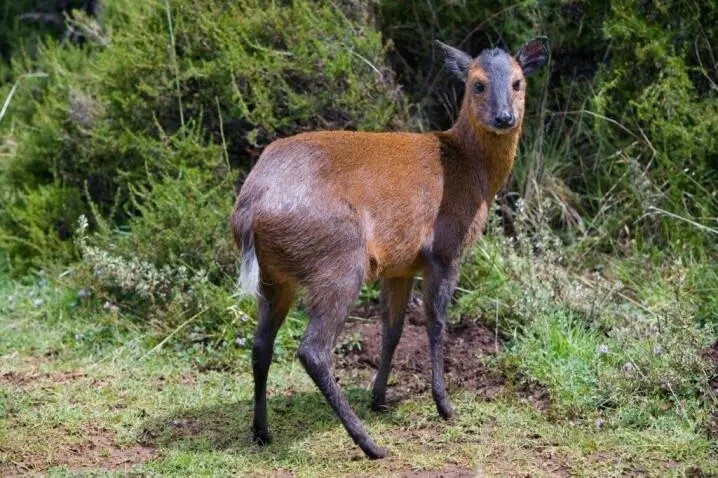
Black-fronted duiker hunting sits at the center of true rainforest safaris in Gabon. While the country is defined by remote concessions and low hunting pressure, it is species like the duiker that shape the experience on the ground. For hunters looking beyond plains game, this is where African hunting becomes more technical, more deliberate, and far more dependent on awareness at close range. It remains one of the most specialized forms of duiker hunting anywhere in Africa.
The black-fronted duiker is a small forest antelope found throughout Central and West Africa. In Gabon, it thrives in dense equatorial jungle where visibility is limited and movement is constant. Unlike savanna species, duiker rely on concealment rather than distance. They move quietly through thick vegetation, often appearing for only a few seconds before slipping back into cover. This behavior is what makes black-fronted duiker hunting in Gabon a close-range, high-focus pursuit.
In practical terms, hunters are not spotting animals at distance—they are reacting to brief opportunities in tight terrain.
Gabon remains one of the last regions where large-scale rainforest hunting is still intact, making it a natural stronghold for duiker species. In these environments, the black-fronted duiker is not incidental—it is part of the foundation of the hunt.
Within the structure of hunting in Gabon Africa, safaris are often built around forest species. The terrain, the pace of movement, and even the role of the trackers are shaped by animals that live in dense cover. For experienced hunters, this creates a clear contrast. Pursuing duiker in Gabon is not simply adding another species—it represents a shift away from open-country safaris toward a more technical form of hunting, where visibility is measured in meters and success depends on positioning rather than distance.
This is what defines the appeal of black-fronted duiker hunting in Gabon for those looking for a more immersive experience.
Available Black-fronted Duiker Hunts
13-Day Dwarf Buffalo, Sitatunga & Forest Game Safari in Gabon
Booking Season: 2026
Hunt Difficulty: Difficult
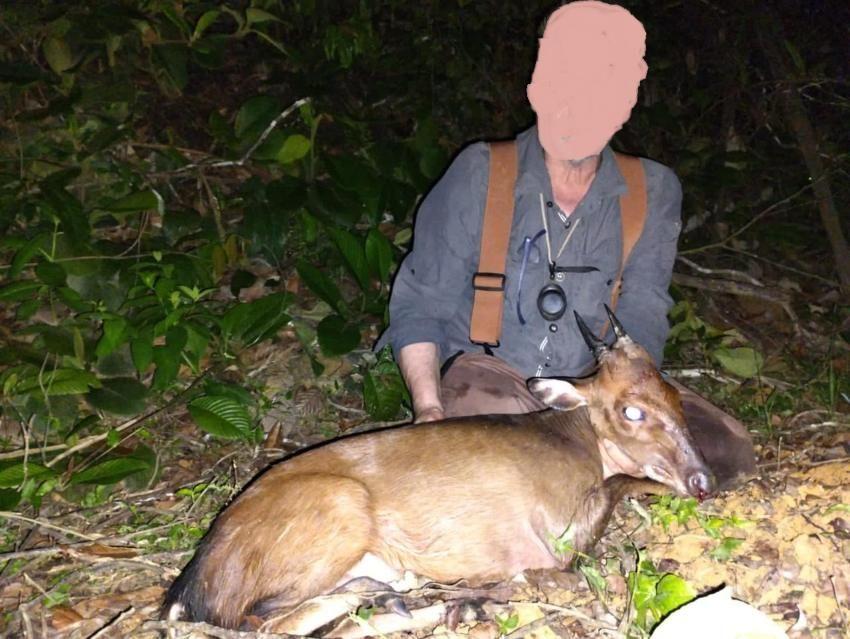
10-Day Gabon Duiker and Forest Game Safari
Booking Season: 2026
Hunt Difficulty: Difficult
Black-fronted duiker are hunted in dense rainforest where conventional safari methods no longer apply. The environment dictates everything. There is no long-range shooting or extended glassing. Success comes from moving carefully through tight cover and recognizing brief opportunities.
Tracking is deliberate and often slow, guided by experienced local trackers who read subtle signs—disturbed leaf litter, feeding under fruiting trees, and faint tracks in soft ground. These details are central to understanding how to hunt duiker in rainforest terrain.
Movement typically follows natural corridors within the forest. Game trails, shaded feeding zones, and transition areas between thicker and slightly more open cover are where encounters are most likely. Unlike savanna hunting, animals are rarely seen before they are within range. More often, they are detected through sound or slight movement. Shot opportunities are close, frequently inside 50 meters, and rarely last more than a few seconds.
This is what separates forest antelope hunting in Africa from more familiar safari environments. The pace is slower, the margins tighter, and the reliance on tracking far greater. It is also why duiker hunting in Gabon is considered technically demanding despite the size of the animal.
This is what separates forest antelope hunting in Africa from more familiar safari environments and reflects the same close-range challenges experienced during many Central African dangerous game hunts.
Timing shapes the quality of any Gabon hunt, though not in the same way as open-country hunts. The species is present year-round, but conditions inside the forest shift with rainfall, ground cover, and food availability. Drier periods are generally preferred for duiker hunting in Gabon. Reduced undergrowth and firmer ground make movement easier and improve visibility, even if only slightly. In dense forest, even a small increase in visibility can have a noticeable impact.
Animal movement follows feeding behavior. Duiker tend to return to fruiting trees, fallen vegetation, and established trails through thick cover. Encounters are rarely random. They are the result of positioning along these subtle but consistent routes. For hunters considering the best time for hunting in Gabon Africa, the focus should be on how conditions affect the forest floor, tracking ability, and visibility rather than relying on broad seasonal assumptions.
The demands of black-fronted duiker hunting favor control over power. In dense rainforest, rifles must be quick to handle, reliable in humid conditions, and suited to short-range shooting. Moderate calibers are commonly used for duiker hunting in Africa, offering the balance needed for precise shot placement without excessive damage. Accuracy under pressure matters far more than raw energy.
Shot opportunities are brief and often partially obscured by vegetation. A clear shooting lane is not always available, and hesitation can mean losing the opportunity entirely. At the same time, forcing a shot through cover often leads to poor outcomes. This is where discipline becomes critical. Knowing when to take the shot—and when to wait—is a defining part of forest antelope hunting in Africa.
Broadside opportunities are preferred when they present themselves, but they are not always clean or predictable. Hunters used to open terrain often find that the biggest adjustment is not distance, but timing and restraint.
For American hunters considering hunting in Gabon, the transition is as much about expectations as logistics.
Travel is typically routed through Europe, with final access arranged into remote forest concessions. Firearm permits are handled in advance, and many hunters choose to use rifles provided by the outfitter to simplify the process. More importantly, the hunting style differs significantly from southern African safaris. There are no open landscapes or high-volume sightings. Instead, the focus is on close encounters, patient tracking, and working within dense terrain.
For those used to plains game hunting, this shift is often what defines the experience. Due to the close-range nature of rainforest hunting and the limited visibility inside dense cover, hunters are strongly encouraged to familiarize themselves with proper shot placement for hunting game in Africa before undertaking a Gabon safari.
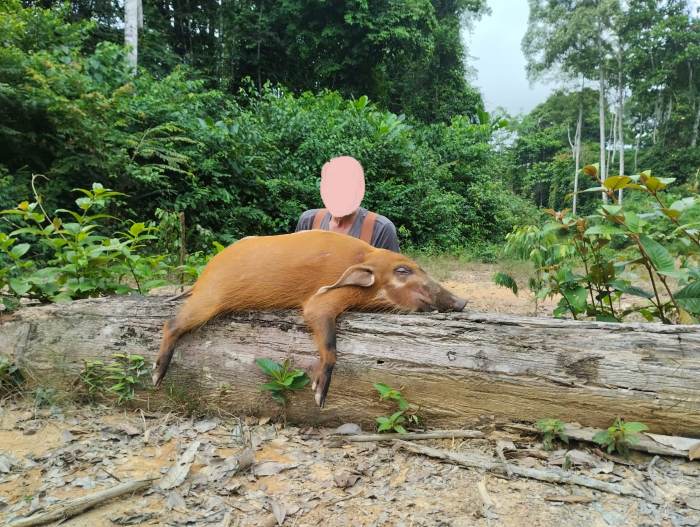
Although black-fronted duiker may be the focus, most hunts take place in areas where multiple species are present. This reflects the broader structure of Gabon hunting safaris, where duiker hunting is part of a wider rainforest experience. Depending on the concession, hunters may encounter other duiker species, red river hog, or sitatunga.
This adds depth to the safari without taking attention away from the primary objective.
The cost of hunting in Gabon Africa reflects the realities of operating in a remote and tightly controlled environment. Access alone often involves international travel, charter flights, and ground transfers into isolated concessions.
For those researching duiker hunting in Gabon cost, pricing is shaped less by the animal and more by the structure of the safari. Daily rates typically include guiding, trackers, camp staff, and the infrastructure required to operate in dense rainforest conditions. Trophy fees for black-fronted duiker are generally moderate, but the overall cost reflects access and exclusivity. Most Gabon hunting safaris operate with limited capacity and strict quotas. Large areas remain undisturbed, but this also means fewer available hunts and higher operating costs per client.
Additional considerations for international hunters may include travel, firearm permits or rifle hire, and export logistics. These are usually handled as part of the outfitter’s process.In practical terms, hunting in Gabon is defined by access—access to remote terrain, experienced trackers, and a style of hunting that remains largely unchanged.
Hunting in Gabon operates within a structured and regulated system. All safaris take place in licensed concessions, under professional supervision, with quotas designed to maintain sustainable wildlife populations. For those asking is hunting legal in Gabon, it is—but only within this controlled framework. Species, numbers, and hunting areas are all regulated, and compliance is essential.
This approach supports conservation by limiting pressure and assigning value to wildlife and habitat. It also contributes to local economies and helps maintain large, intact hunting areas.
For international hunters, this system provides a level of assurance. Safaris are not informal—they are managed, monitored, and tied to long-term conservation objectives.
Black-fronted duiker hunting represents the essence of rainforest hunting. It is defined by proximity, limited visibility, and the need for patience in a constantly changing environment. While hunting in Gabon is often associated with remoteness and exclusivity, it is the pursuit of species like the duiker that brings the experience into focus.
For hunters willing to adapt, it offers something distinct—an environment where success is shaped not by distance, but by awareness, positioning, and timing.
Is duiker hunting in Gabon legal?
Yes, duiker hunting in Gabon is legal when conducted within licensed hunting concessions under government regulation. All hunts operate with defined quotas and are overseen by professional hunters to ensure compliance and long-term sustainability.
What does black-fronted duiker hunting in Gabon cost?
The cost of black-fronted duiker hunting in Gabon is driven primarily by daily safari rates rather than trophy fees. While duiker trophy fees are generally moderate, overall costs reflect remote access, guiding teams, and operating in dense rainforest environments. Most hunts are structured as multi-day safaris with limited availability.
When is the best time to hunt duiker in Gabon?
Duiker can be hunted year-round in Gabon, but drier periods are typically preferred. Reduced vegetation and firmer ground improve tracking conditions and visibility, which can make a noticeable difference in dense rainforest terrain.
How difficult is black-fronted duiker hunting in Gabon?
Black-fronted duiker hunting is technically challenging despite the animal’s small size. Hunting takes place in dense forest with limited visibility, short shooting distances, and brief opportunities. Success depends on patience, tracking skill, and the ability to react quickly in tight conditions.
What other animals can you hunt in Gabon besides duiker?
In addition to black-fronted duiker, hunters may encounter other forest species such as blue duiker, red river hog, and sitatunga, depending on the concession. Most safaris are structured around multiple species within a managed quota system.
Can American hunters travel to Gabon for a duiker hunt?
Yes, American hunters regularly travel to Gabon for hunting safaris. Trips are typically arranged through professional outfitters who handle permits, logistics, and in-country coordination, including firearm import procedures or rifle hire.
Search from our range of Hunts across various popular destinations in Africa.
Book Your Hunt