10-Day Duiker & Red River Hog Hunting Safari in the Republic of Congo
Booking Season: 2026
Hunt Difficulty: Difficult

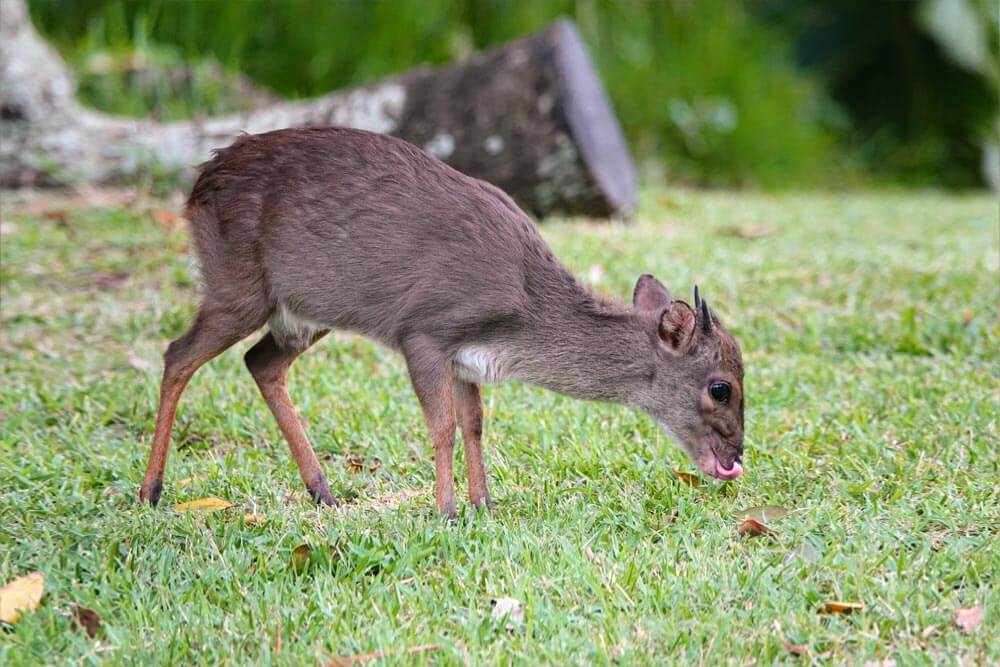
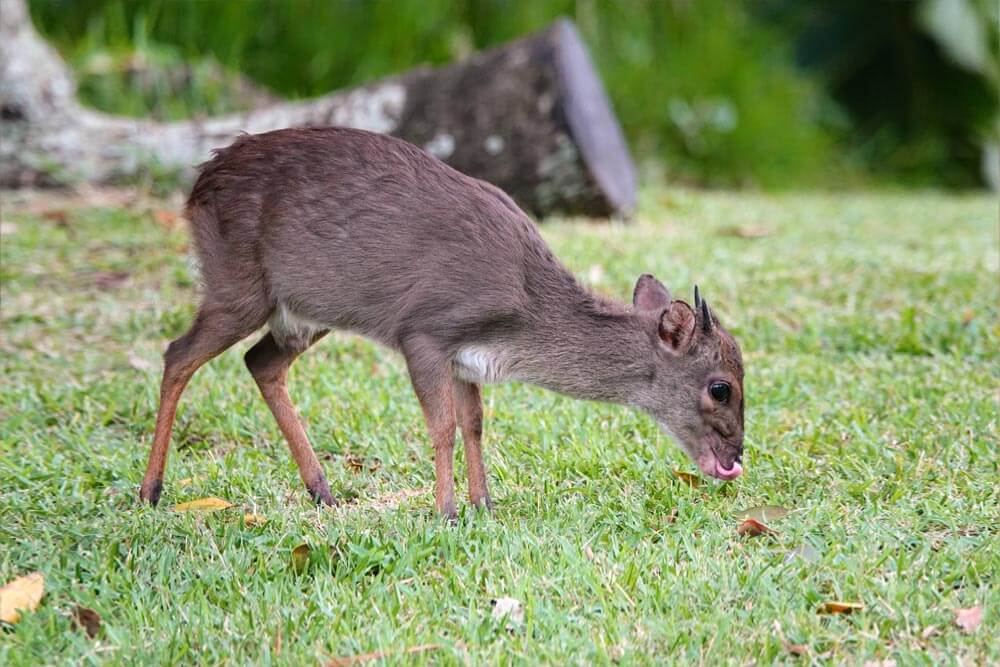
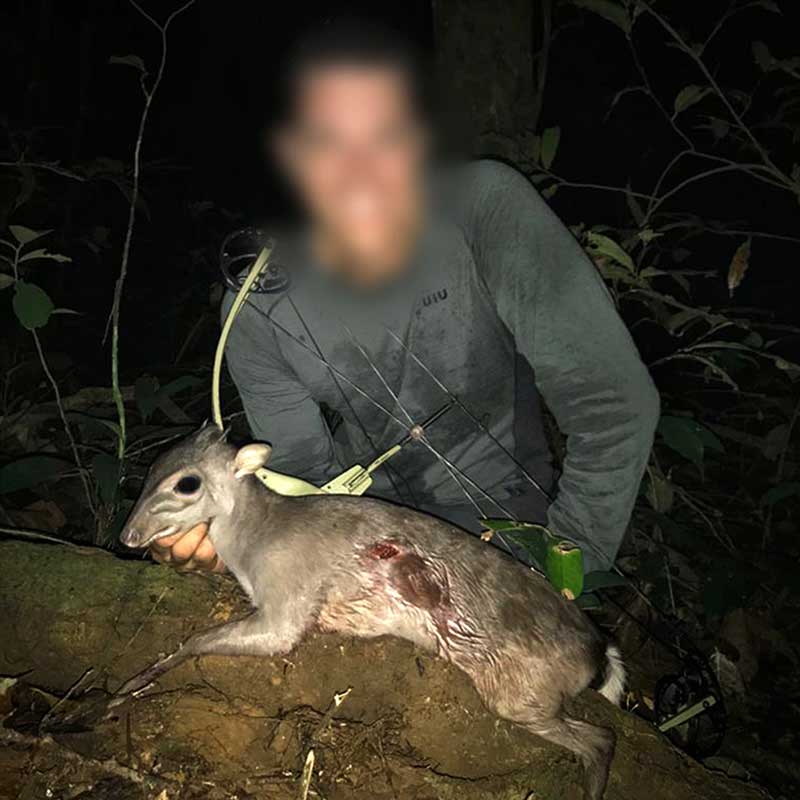
Hunting in the Republic of Congo introduces sportsmen to a completely different side of Africa. The great open spaces associated with traditional safari hunting are replaced by towering forest, narrow trails and thick undergrowth. Here, a blue duiker does not need to be hundreds of yards away to remain unseen. It can be remarkably close and still completely hidden.
Among dedicated species collectors, the blue duiker also holds a special place as one of Africa's Tiny Ten. Completing that group can become a pursuit spanning several countries and multiple safaris, and the blue duiker is often considered one of its more challenging members to add to a collection. In the Congo rainforest, its tiny size and secretive habitat make every genuine opportunity count.
A safari may have begun with Bongo Hunts as the primary objective, but the forest has a way of changing the importance of the smaller animals on a hunter's list. When something as diminutive as a blue duiker can disappear into vegetation only a few yards away, successfully hunting one begins to feel like anything but a small achievement.
Available Blue Duiker Hunts
10-Day Duiker & Red River Hog Hunting Safari in the Republic of Congo
Booking Season: 2026
Hunt Difficulty: Difficult
Blue duiker hunting in the Congo rainforest is not a hunt where the animal necessarily gives you time to settle in and work everything out. An opportunity can begin with a sudden movement in the undergrowth, a glimpse of an animal crossing a narrow opening or a tracker reacting to something the hunter has not yet seen.
Then everything happens quickly.
The challenge is not simply spotting the duiker. In those few seconds, the hunter must identify what he is looking at, find a clear opportunity through the vegetation and be ready before the animal disappears. With something as small as a blue duiker, even a modest patch of undergrowth can hide almost the entire animal.
Within those same few seconds comes another challenge: judging the animal. The tiny horns can be difficult to see clearly through thick vegetation, placing considerable pressure on the Professional Hunter to make sure the animal is properly identified and that only a suitable mature trophy is taken. An opportunity is no opportunity at all if there is not enough time to be certain.
Hours spent moving through thick forest can produce very little, yet the moment everyone has been waiting for may arrive when least expected. There is rarely time to admire the animal or study it at leisure before deciding what to do.
The opportunity may be incredibly close, but that does not make it easy.
In the Congo rainforest, sometimes the difference between taking a blue duiker and watching a patch of vegetation become empty again is measured in seconds.
Distance takes on a completely different meaning beneath the Congo rainforest canopy. A shot that would be considered extremely close in open country can become surprisingly complicated when vines, leaves and branches occupy almost every space between the hunter and the animal.
A blue duiker may appear only twenty yards away and still offer little more than a partial glimpse. Finding the animal through the vegetation is one challenge; finding a completely clear path for the shot is another. A few steps in either direction can make the difference between an opportunity and no shot at all, yet those same few seconds may be all the time available before the duiker moves again.
This is why close does not necessarily mean easy in the rainforest. There may be no time to adjust position repeatedly or wait for the perfect broadside presentation familiar from more open hunting country.
Equally, the hunter cannot allow the urgency of the moment to turn a poor opportunity into a rushed shot.
In open country, two hundred yards may feel like a long way.
In the Congo rainforest, twenty yards can sometimes be considerably more difficult.
To someone unfamiliar with African hunting, travelling halfway around the world to pursue an antelope as small as a blue duiker may be difficult to understand. To the dedicated collector, that is precisely part of the appeal. Some trophies are valued not for their size, but for the difficulty of finding them and the specialised places a hunter must travel to pursue them.
The Congo rainforest provides that kind of hunt. Everything from the limited visibility to the speed at which an opportunity can develop forces the hunter to adapt. Understanding the unwritten rules of hunting Africa's rainforests becomes particularly relevant here, because success beneath the canopy often depends on accepting that the forest, rather than the hunter, dictates how the day develops.
A blue duiker may occupy only a small space on the trophy room wall, but successfully hunting one can represent years of planning, multiple African safaris and another hard-earned step towards completing the Tiny Ten.
That is why size can be misleading. Nobody who has spent days searching the Congo rainforest for a blue duiker is likely to describe the hunt itself as small.
Can you hunt blue duiker in the Republic of Congo?
Yes. Blue duiker may be hunted in the Republic of Congo where suitable quota is available and subject to current hunting regulations. Because availability can differ between hunting areas, hunters specifically interested in adding a blue duiker should discuss this with their safari operator before booking.
Is the blue duiker one of Africa's Tiny Ten?
Yes. The blue duiker is included among the antelope commonly referred to by hunters as Africa's Tiny Ten. For dedicated collectors, pursuing the complete group can involve multiple safaris across different African countries and habitats, with the blue duiker presenting the added challenge of hunting beneath dense forest cover.
How difficult is blue duiker hunting in the Congo rainforest?
Their small size and dense habitat can make blue duiker particularly challenging to hunt. Opportunities may occur at very close range but last only seconds, leaving little time to identify and judge the animal before it disappears. Close-range hunting in thick vegetation also requires patience and careful shot selection rather than assuming a short distance automatically means an easy opportunity.
Can blue duiker be included as part of a larger Congo hunting safari?
Yes, subject to quota and availability in the hunting area. A blue duiker may form part of a broader forest safari rather than being the primary reason for travelling to Congo. Hunters planning African Hunting Trips around specialised species should discuss their complete trophy priorities in advance, particularly when combining sought-after forest antelope within the same safari.
Search from our range of Hunts across various popular destinations in Africa.

Book Your Hunt