Designed by Hunters, for Hunters

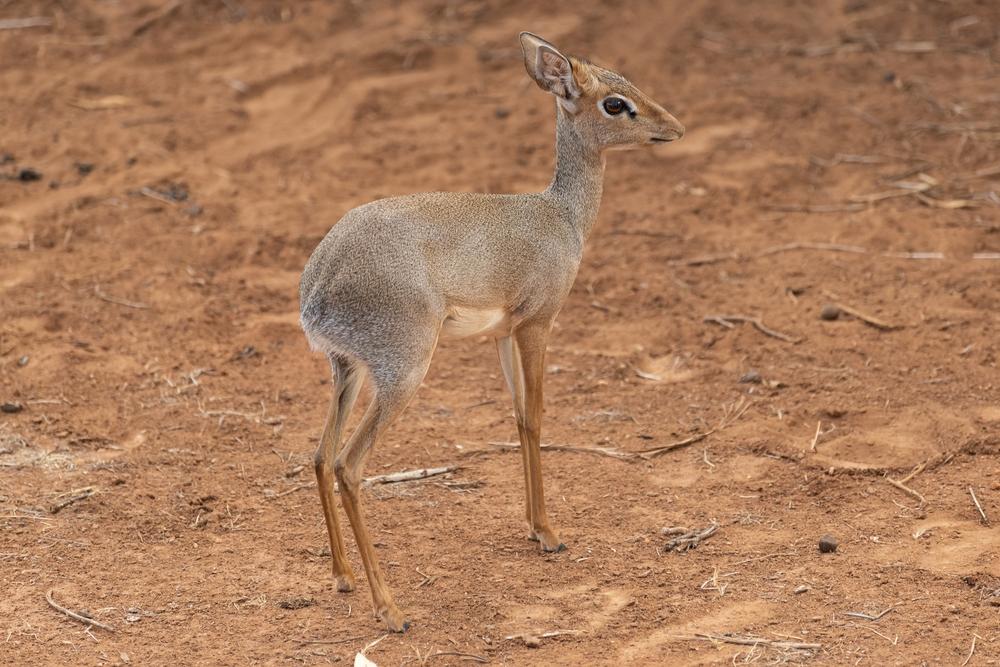
Gunther’s dik-dik are one of the smallest antelope species in Africa, and in Uganda, they sit firmly on the margins of most hunting safaris.
They are present, particularly in the drier northern regions, but they are not a species that drives travel decisions.
No experienced outfitter structures a Ugandan safari around dik-dik. They come into play within the natural flow of a broader hunting safaris in Uganda, usually when the opportunity presents itself in the field.
That distinction is important from the outset. Dik-dik exist in Uganda, but they are not predictable, and they are not something a serious operator will position as a primary objective.
Gunther’s dik-dik can be hunted legally in Uganda, but only within a strictly controlled quota system. Every animal taken is governed by allocation at concession level. If dik-dik are on quota in a given area, they can be hunted. If they are not, they are completely off-limits. There is no flexibility around that.
Most professional hunters do not present dik-dik as part of a core species list. In many cases, they are not even discussed unless a client raises the question directly. The reason is straightforward: availability is inconsistent, and no reputable outfitter will build expectations around something they cannot reliably deliver. What typically happens on the ground is far more straightforward. While hunting primary plains game species, a dik-dik may present itself. If it is on quota and the opportunity is clean, it is taken. If not, it is passed without hesitation.
That is how dik-dik hunting actually works in Uganda.
To understand where dik-dik fit in, you have to understand how hunting in Uganda is structured. Safaris are built around a small number of core species, with the entire experience shaped by quota, terrain, and the pace of the hunt rather than a long checklist of guaranteed animals. Time in the field is deliberate, and success is tied closely to conditions and decision-making rather than volume.
Within that structure, smaller antelope like dik-dik sit on the periphery. They are not ignored, but they are not relied upon either. When they appear, they are taken seriously. When they do not, nothing about the safari is compromised. This is a fundamentally different model to more commercialised systems elsewhere in Africa, and it is one of the reasons Uganda appeals to hunters who value a more authentic, less predictable experience.
Gunther’s dik-dik are adapted to dry, open environments and are most consistently found in the northeastern parts of the country.
Areas surrounding Kidepo Valley National Park and similar ecosystems provide suitable habitat, where semi-arid savanna and light bushveld create the balance of cover and visibility they prefer.
They are territorial animals, usually encountered in pairs, and their size makes them easy to overlook unless you are actively looking for them. In most cases, it is the professional hunter who identifies them first, not the client.
Dik-dik are not managed as a primary species in Uganda, and their distribution reflects that. They are present in certain concessions and absent in others. In some seasons, they appear regularly. In others, they are barely encountered at all. This variability is not an exception, it is part of the system.
From an operational standpoint, this is why expectations are set early. When a client expresses a specific interest in dik-dik, the response is usually measured and direct. The opportunity may present itself, but it cannot be engineered.
This is not a limitation of the country. It is a reflection of how wildlife is managed and how hunting is conducted.
When an opportunity does present itself, the hunt is defined by precision rather than effort. Dik-dik are alert, reactive, and small enough that every movement matters. Encounters are brief. There is rarely time to reposition or recover from a mistake.
The process is simple in structure but demanding in execution. Movement is spotted, a position is taken, and the shot must be placed correctly the first time. There is no margin for rushed decisions.
For many hunters, this is exactly what makes them worthwhile. Not because they are difficult in a traditional sense, but because they demand complete control in a very short window.
Gunther’s dik-dik are commonly included in what is known as the “Tiny 10,” a group of Africa’s smallest antelope species.Their relevance increases in that context, particularly for hunters building out a broader collection.
Even then, they are rarely pursued in isolation. They are taken as part of a wider safari, adding variety rather than defining the experience.
Gunther’s dik-dik are one of several species found across Africa, with distribution tied closely to geography. In Uganda and much of East Africa, Gunther’s dik-dik are the species encountered. In southern Africa, different species occupy similar ecological roles but exist within entirely separate hunting systems.
From a practical standpoint, the distinction is not about preference. It is about location. The decision is not which dik-dik to hunt, but where you choose to hunt and what that system allows.
Comparing Uganda to southern Africa highlights a broader difference in approach.
Southern African hunting systems are generally more structured, with higher predictability and the ability to plan around specific species with a greater degree of certainty. Uganda operates differently. Here, hunting is more dependent on quota, terrain, and natural distribution. Dik-dik are part of that environment, but they are not central to it.
For hunters who prioritise control and predictability, other regions may be more suitable. For those who value a more traditional, less manufactured experience, Uganda offers something distinctly different.
Dik-dik are not priced as a standalone hunt in Uganda.
They exist within the structure of a broader safari, where daily rates and primary species define the overall cost. If a dik-dik is taken, it is treated as an additional trophy fee rather than a driver of the hunt itself.
This reinforces their role within the system. They are an opportunity, not a product.
Any realistic safari plan in Uganda places dik-dik in context. They are not a primary objective, and they are not guaranteed. They are part of the environment, and when conditions align, they become part of the experience.
Most hunts are built around a focused group of species, with others fitting in naturally along the way. Dik-dik sit within that second category. This is why they are best understood as part of a broader plains game safari in Africa rather than something pursued independently.
Dik-dik hunting in Africa is typically opportunistic rather than planned as a primary safari objective. Across most countries, including Uganda, they are taken as part of broader plains game hunts rather than targeted on their own.
In Uganda specifically, Gunther’s dik-dik are the species encountered, and availability depends entirely on quota allocation within a given concession. This makes dik-dik hunting less predictable than in parts of southern Africa, where smaller antelope are more consistently integrated into hunting programs.
For most hunters, dik-dik are not pursued as standalone trophies but as part of a wider safari experience that includes larger plains game species.
They are, provided they are approached correctly. Gunther’s dik-dik are not a guaranteed species, and they are not a primary reason to hunt Uganda. But they are a legitimate part of the ecosystem and can add something unique to a safari when the opportunity presents itself.
For hunters already committed to Uganda, they are worth taking seriously. For those planning specifically around dik-dik, other regions will offer more consistency.
The key is understanding the system, working within it, and aligning expectations with how hunting in Uganda actually operates. For hunters planning a safari, that usually means focusing on a well-structured plains game hunt first, and treating species like dik-dik as part of the opportunity rather than the objective.
Search from our range of Hunts across various popular destinations in Africa.

Book Your Hunt