Designed by Hunters, for Hunters

Forest elephant hunting in Gabon, and the broader question of elephant hunting in Gabon, sits in a different category from most African safaris.
Within the broader structure of hunting in Gabon, the country holds one of the largest remaining populations of African forest elephant—yet hunting them is not what defines the destination. Instead, the subject belongs to a wider discussion involving ecology, regulation, and how rainforest hunting differs from the more familiar savanna experience.
The African forest elephant is a distinct species from its better-known savanna counterpart, shaped by life inside dense equatorial rainforest. While both belong to the same broader elephant family, their behavior, physical traits, and the environments they occupy create two very different hunting contexts.
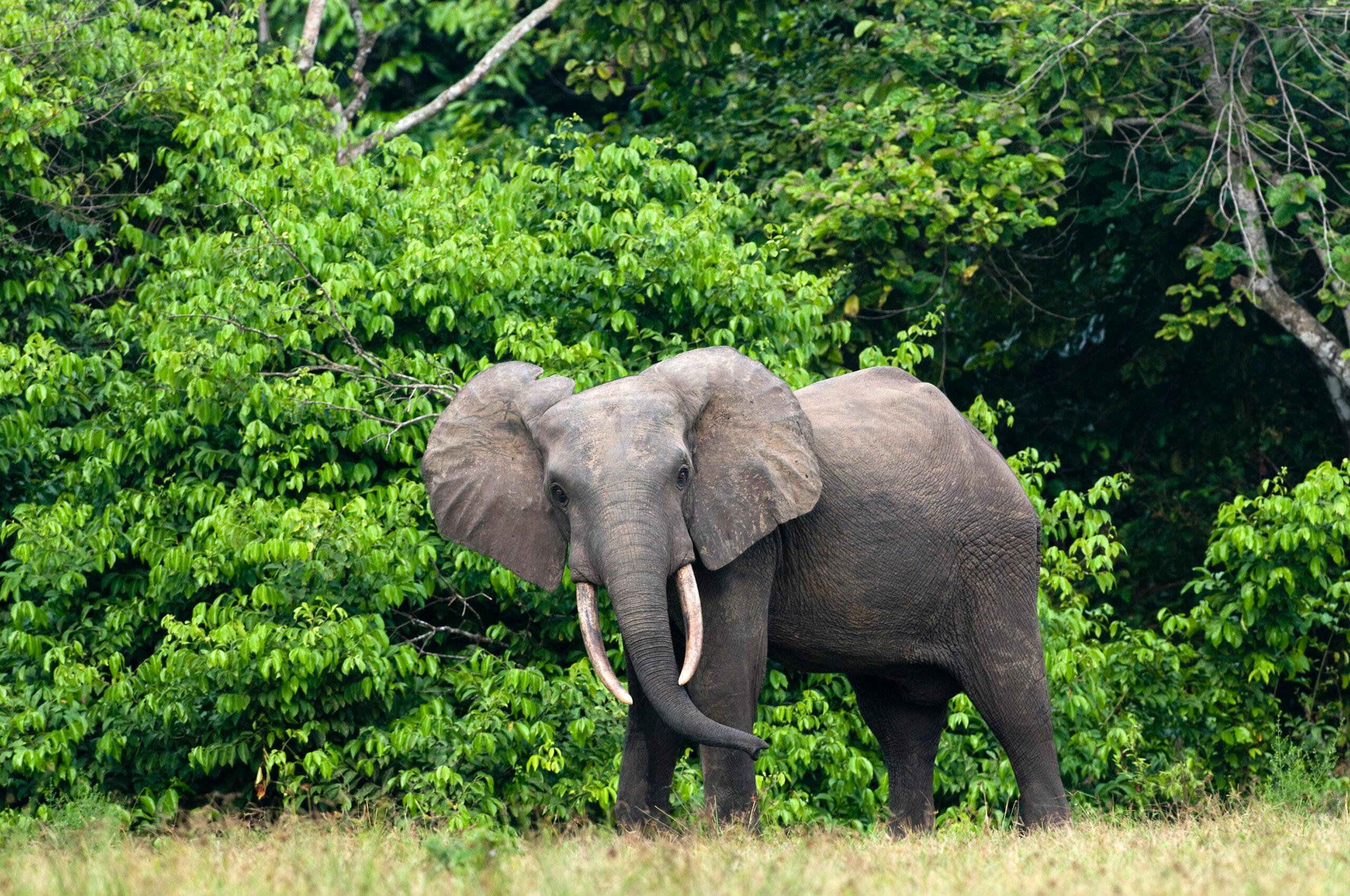
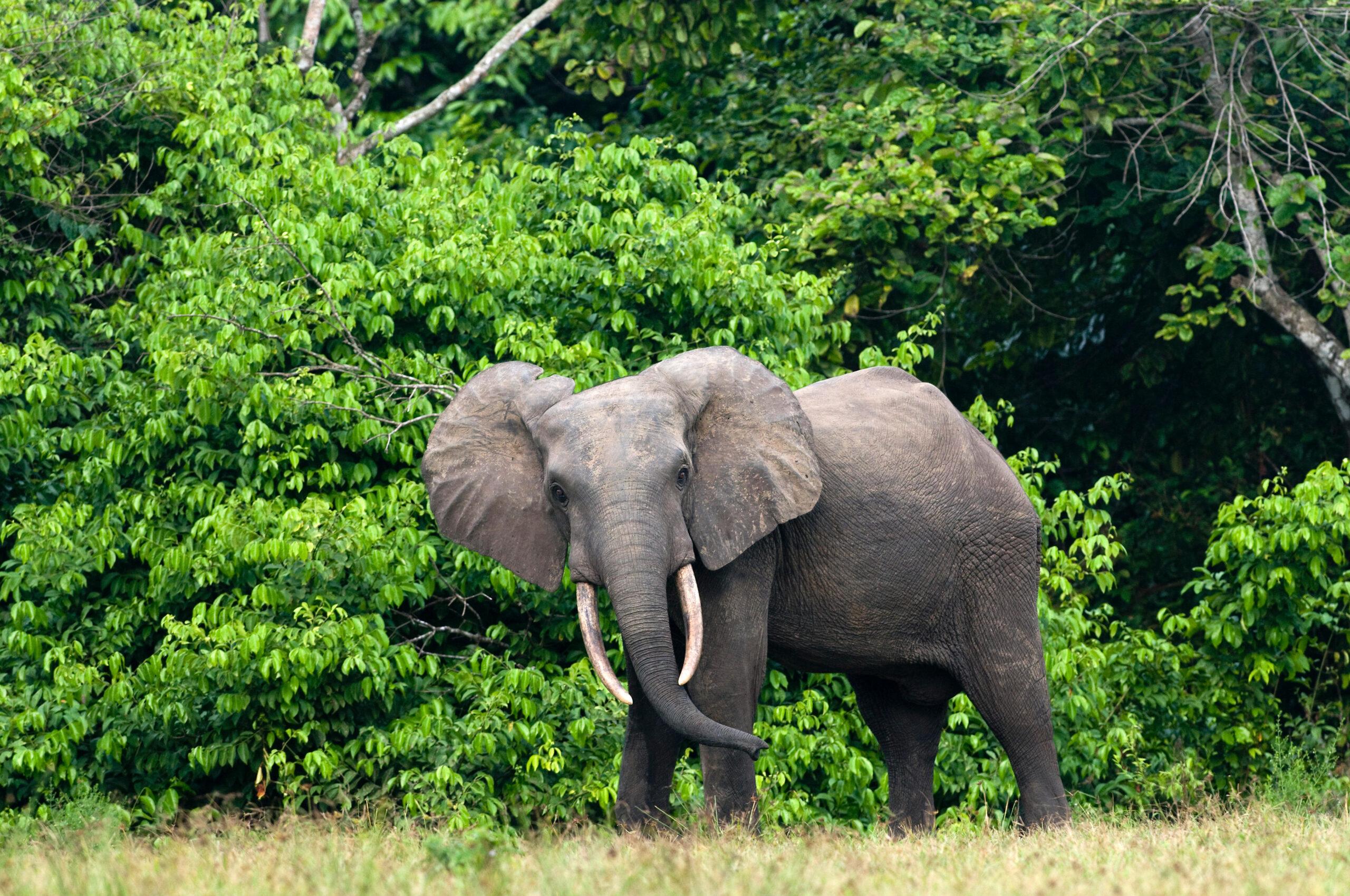
Forest elephants are generally smaller in body size, with more compact frames that allow them to move efficiently through thick vegetation. Their tusks are straighter and point downward, an adaptation suited to navigating dense jungle rather than open terrain. Unlike savanna elephants that can often be spotted at distance across open plains, forest elephants exist in an environment where visibility is extremely limited and movement is largely concealed.
This has a direct impact on how encounters unfold. In rainforest conditions, sightings are rarely prolonged. Animals may appear suddenly at close range and disappear just as quickly, often with only seconds to react. Tracking becomes far more important than glassing, and success depends on reading subtle signs rather than scanning wide landscapes. These differences are what define the challenge of forest elephant hunting in Africa. It is not simply a variation of traditional elephant hunting—it is a fundamentally different pursuit shaped by terrain, visibility, and the behavior of the species itself.
Forest elephants range across several countries in Central and West Africa, but structured hunting opportunities are concentrated in a relatively small number of regions where large, intact rainforest concessions still exist. The most established destinations for forest elephant hunting are Cameroon and Republic of the Congo. In these areas, hunting is conducted across vast forest blocks with low human pressure, where access is limited and safaris are designed around patience, tracking, and time in the field. Unlike more common elephant hunting scenarios in southern Africa, these hunts are typically low-density and highly specialized. Encounters are less predictable, and the emphasis shifts from volume of game to quality of experience and the challenge of the environment. Forest elephant are often pursued as part of a broader rainforest safari that may also include species such as bongo, reinforcing the idea that this style of hunting is defined by the ecosystem as much as the individual animal.
For hunters researching where to hunt forest elephant in Africa, these regions represent the core of what remains of true rainforest elephant hunting—areas where the conditions, scale, and difficulty of the hunt remain largely unchanged.
Gabon occupies a unique position in Central Africa. The country supports one of the largest remaining populations of African forest elephant, yet hunting them is not what defines the safari model. Wildlife management in Gabon is built around strict regulation and long-term conservation. Hunting takes place within controlled concessions, under defined quotas, and with an emphasis on maintaining low overall pressure on wildlife populations. Within that framework, forest elephant are present across large areas of intact rainforest, but they are not commonly offered as part of structured safaris.
As a result, hunts in Gabon are not designed around elephant as a primary objective. The species exists within the ecosystem, and its presence is significant, but opportunities to pursue it are limited and highly restricted. This distinction is important. Gabon is not positioned as an elephant hunting destination, even though it holds one of the most important forest elephant populations on the continent.
Even without being a central focus, forest elephant remains part of what defines the character of hunting in Gabon. Its presence reflects the scale and continuity of the rainforest, where large mammals still move through landscapes that have seen relatively little pressure.
It also speaks to the way wildlife is managed. Gabon’s approach prioritizes preservation of habitat and controlled use, which in turn supports stable populations of species that have declined elsewhere. The forest elephant is one of the clearest indicators of that system working as intended.
For hunters in the field, this adds a layer that is difficult to replicate in more developed safari regions. Moving through dense forest where elephant sign is fresh—tracks, feeding, broken vegetation—creates an awareness that the environment is still functioning on its own terms. Even when not actively pursued, the species contributes to the sense of being in a place where wildlife remains largely undisturbed.
Where forest elephant hunting does take place, it unfolds in some of the most demanding conditions found anywhere in Africa. The environment itself dictates the pace. Dense vegetation restricts visibility to just a few meters in many areas, which means animals are rarely seen before they are already within close range. There is no opportunity for long-distance glassing or planning extended approaches. Encounters happen quickly and often without warning.
Tracking becomes the foundation of the hunt. Progress is slow and deliberate, guided by subtle signs such as fresh tracks, feeding areas, and disturbed vegetation. In rainforest terrain, even small details carry meaning, and experienced trackers play a critical role in interpreting movement through thick cover.
Shot opportunities, when they come, are close and brief. Distances are typically measured in meters rather than yards, and clear shooting lanes are not always guaranteed. The margin for hesitation is small, but so is the margin for error. Every decision is made under pressure, often in confined spaces where awareness matters as much as accuracy.
This is what separates forest elephant hunting in Africa from more familiar safari environments and why these safaris are regarded amongst the most physically demanding dangerous game hunts conducted anywhere on the continent
For American hunters researching elephants in Gabon Africa or asking does Gabon have elephants, the answer is clear—the country holds one of the most significant remaining populations of forest elephant. The more important question is what kind of experience Gabon actually offers.
Travel into Gabon is part of that reality. Most routes pass through Europe before continuing into Central Africa, followed by ground transfers or charter flights into remote forest concessions. Logistics are handled in advance, including permits and in-country coordination, but the process is more involved than a typical plains game safari.
Once in the field, expectations shift quickly. This is not a destination built around high-volume game viewing or open terrain. Instead, hunting in Gabon is defined by limited visibility, slower movement, and a reliance on tracking in dense rainforest conditions. Encounters are fewer, but they carry a different level of intensity due to proximity and environment.
For hunters specifically searching for elephant hunting in Gabon, it is important to understand that structured opportunities are limited. Most established elephant safaris take place in other Central African countries where programs are more consistently offered. Gabon, by contrast, remains a destination where the presence of elephant contributes to the experience rather than driving it.
Within the wider context of elephant hunting in Africa, Gabon occupies a distinct position. The country holds one of the most important remaining populations of African forest elephant, supported by vast areas of intact rainforest and a management approach built around long-term conservation.
At the same time, Gabon is not considered a primary destination for elephant safaris. Hunting operates within a tightly controlled framework, with limited opportunities and a clear emphasis on maintaining low pressure across wildlife populations. This creates a contrast with other African regions where elephant hunting is more widely structured and consistently available.
Understanding this distinction is important. Each destination in Africa serves a different role, and Gabon’s strength lies in the scale, integrity, and preservation of its rainforest ecosystem rather than in high-profile elephant hunting.
Forest elephant hunting in Gabon is best understood within that broader context. The species is present across large areas of the country, the habitat remains largely intact, and conservation continues to shape how wildlife is managed. Hunting exists within this system, but it is not built around elephant as a central objective.
For hunters, the value of Gabon lies in what the environment represents. It is one of the last places in Africa where vast rainforest landscapes remain relatively undisturbed, where wildlife still moves with minimal human pressure, and where the experience is defined by proximity, awareness, and restraint.
This balance—between presence and limitation—is what ultimately defines the role of forest elephant in Gabon.
Is elephant hunting in Gabon legal?
Yes, hunting in Gabon is legal when conducted within licensed concessions under strict government regulation. However, forest elephant hunting is highly restricted, and opportunities are limited compared to other African countries.
Does Gabon have elephants?
Yes, Gabon holds one of the largest populations of African forest elephant in Africa. These elephants live in dense rainforest environments, where they are more often encountered through tracks and sign than direct sightings.
Can you hunt forest elephant in Gabon?
It is possible, but not common. Forest elephant hunting in Gabon is not widely offered, and most safaris in the country are not structured around elephant as a primary species. Hunters typically look to other Central African destinations where opportunities are more established.
Where is the best place to hunt forest elephant in Africa?
The most consistent forest elephant hunting opportunities are found in Cameroon and Republic of Congo. These regions offer large rainforest concessions and specialized safaris built around low-density, high-effort hunting conditions.
Search from our range of Hunts across various popular destinations in Africa.

Book Your Hunt