Designed by Hunters, for Hunters

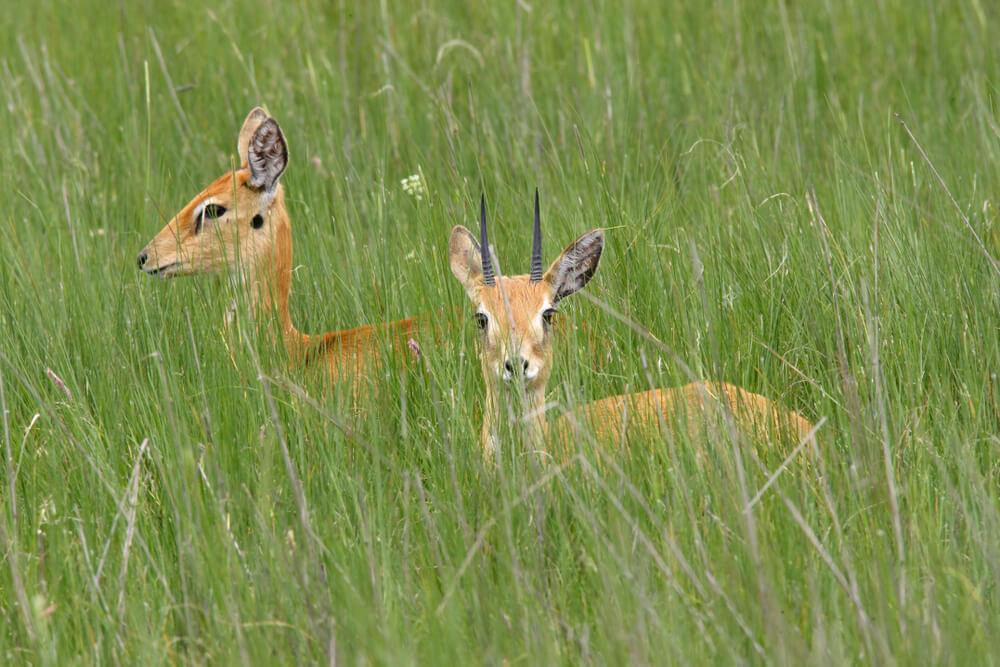
Oribi hunting in Uganda does exist, but it sits on the edge of what most hunters plan for. They’re part of the country’s plains game mix, but they don’t drive safaris. International hunters don’t travel to Uganda specifically for oribi. More often, they come into play as part of a broader hunt, usually when you’re already in the field targeting other species.
For anyone planning a hunting safari in Uganda, that distinction matters early. Oribi are there, and they can be hunted, but they’re not something you build a trip around with any real certainty.
Yes, oribi can be hunted in Uganda. They fall within the country’s regulated hunting system, which operates through quotas tied to specific concessions. If they’re on quota in your area, and if local populations support it, they can be taken legally. Where things become less straightforward is consistency.
Oribi don’t appear on every safari list, and they’re not something outfitters depend on year after year. In some concessions they’ll be available, in others they won’t. Even when they are on quota, encounters aren’t guaranteed. Most are taken opportunistically. You’ll be out hunting other plains game, spot one under the right conditions, and take the opportunity when it presents itself. That’s usually how it happens.
So, while they’re huntable, they’re not predictable and that’s the key difference.
The oribi found in Uganda are generally referred to as the Sudan or East African form. They’re part of a wider species spread across sub-Saharan Africa, but populations here tend to be more localized and, in some areas, lightly distributed.
They favor open grassland and lightly wooded savanna, often holding in transitional areas where grazing and water overlap. Oribi are likely to be encountered in northern and northeastern parts of the country, particularly around ecosystems like Kidepo and in areas bordering larger conservation zones. They don’t behave like typical herd-based plains game. More often, they’re seen alone or in small groups, which makes them easy to miss unless you’re actively looking for them.
From a hunting perspective, that matters more than most people expect.
Oribi aren’t evenly spread across Uganda’s hunting areas, and that’s part of what makes them unpredictable. They tend to show up in specific concessions where the habitat suits them—open grassland, lighter savanna, and areas where hunting pressure and conservation are kept in balance. Even in those places, distribution can be patchy.
Outfitters aren’t building hunts around Oribi, and you won’t see them consistently across every area. In the right concession, hunters might encounter them more than once over the course of a safari. In the wrong one, you may not see one at all.
That variability is simply part of hunting oribi in Uganda.
There isn’t a separate, clearly defined season specifically for oribi. They fall under Uganda’s broader hunting calendar, so availability follows the same framework as other plains game. What makes the difference is condition more than timing.
Shorter grass and drier periods improve visibility and make spotting them far more realistic. In thicker growth, they’re easy to miss, even when they’re there. Their size and behavior work in their favor, especially when cover is heavier. Timing won’t turn oribi into a guaranteed opportunity, but it can shift the odds slightly.
For American hunters, oribi often come into play as part of a broader plains game list, sometimes as a step toward completing smaller collections like the Tiny 10. In that context, they’re less about planning a hunt around and more about being ready when the opportunity presents itself.
Oribi aren’t typically priced as a headline species. In most cases, they’re treated as part of a broader safari rather than something costed on their own. You might see them listed as an additional trophy fee, or included within a plains game package, depending on the concession and how quotas are structured.
Because of that, pricing isn’t always clearly laid out in the same way you’d expect for larger or more in-demand animals.
For most hunters, the cost of taking an oribi sits in the background. It’s something you account for if the opportunity presents itself, rather than something you plan a trip around.
This is where oribi become interesting. They’re small, alert, and quick to disappear if something feels off. Hunting them is less about endurance and more about awareness.
The majority of encounters happen in open or semi-open ground. You’ll spot them at a distance, and from there it becomes a matter of approach. There’s not much room for error. Movement has to be controlled, positioning matters, and shot placement is critical simply because of their size. They’re not physically demanding to hunt, but they do require focus. A rushed approach usually ends the opportunity.
For a lot of hunters, that’s exactly the appeal.
Oribi are part of the system, but they don’t sit at the center of it.
Uganda’s hunting model is built around a relatively small group of species that are consistent, easier to manage within quota structures, and reliable enough to shape a safari around. Those are the animals outfitters plan for, and the ones most hunters arrive expecting to pursue. Oribi fall just outside that group.
They’re present, and they’re huntable, but they don’t offer the same level of consistency or visibility. You can’t reliably build a hunt around them, and that alone keeps them from becoming a focal species. Safari planning, especially for international hunters, tends to revolve around animals that justify the time, cost, and logistics of the trip. Oribi don’t usually fill that role on their own. Instead, they sit in the background, becoming relevant only when the opportunity lines up during a broader hunt.
That’s why you don’t see them marketed heavily. It’s not because they’re absent, it’s because they don’t drive decision-making.
When you compare Uganda to southern Africa, the difference comes down to how hunts are structured and how predictable they are.
In places like South Africa, oribi are part of established hunting programs. Populations are more stable within managed areas, and hunts can be planned with a clear expectation that you’ll have a realistic chance of finding one. Outfitters know where to look, how often they’re encountered, and how to work them into a safari in a deliberate way.
Uganda is different.
Here, oribi are part of the landscape, but they’re not managed as a primary target species. Their presence is more incidental than planned. In the right area, you might see them more than once. In another, you might not see one at all. It comes down to location, conditions, and a bit of luck.
That creates a different kind of decision for hunters.
If oribi are high on your list, something you specifically want to pursue, southern Africa gives you more control over the outcome. If they’re a secondary species, something you’d take given the chance, Uganda can still offer the opportunity, but you have to approach it with some flexibility.
It’s less about where oribi exist, and more about where they can be hunted with intent.
For anyone planning a hunting safari in Uganda, oribi need to be seen in context. They’re not the reason you come, but they can be a worthwhile addition once you’re in the field.
Uganda offers a different kind of hunting experience. It’s more selective, more dependent on quota, and shaped heavily by conservation priorities. Most safaris are built around a small number of core species, with others. like oribi, fitting in when the opportunity presents itself. In practical terms, they sit within the flow of a broader plains game safari, rather than being something you plan around directly. You’ll spend most of your time focused on primary species, with oribi becoming part of the hunt if conditions line up.
Yes, but only if you understand what they are.
They’re not a primary target, and they’re not guaranteed. But they are a legitimate, huntable species that can add something to a safari when the opportunity presents itself. If you’re already heading to Uganda, they’re worth keeping in mind. If you’re planning specifically around oribi, other destinations offer more certainty.
That’s really what it comes down to: Matching expectations with how things actually work on the ground.
Search from our range of Hunts across various popular destinations in Africa.

Book Your Hunt