Designed by Hunters, for Hunters


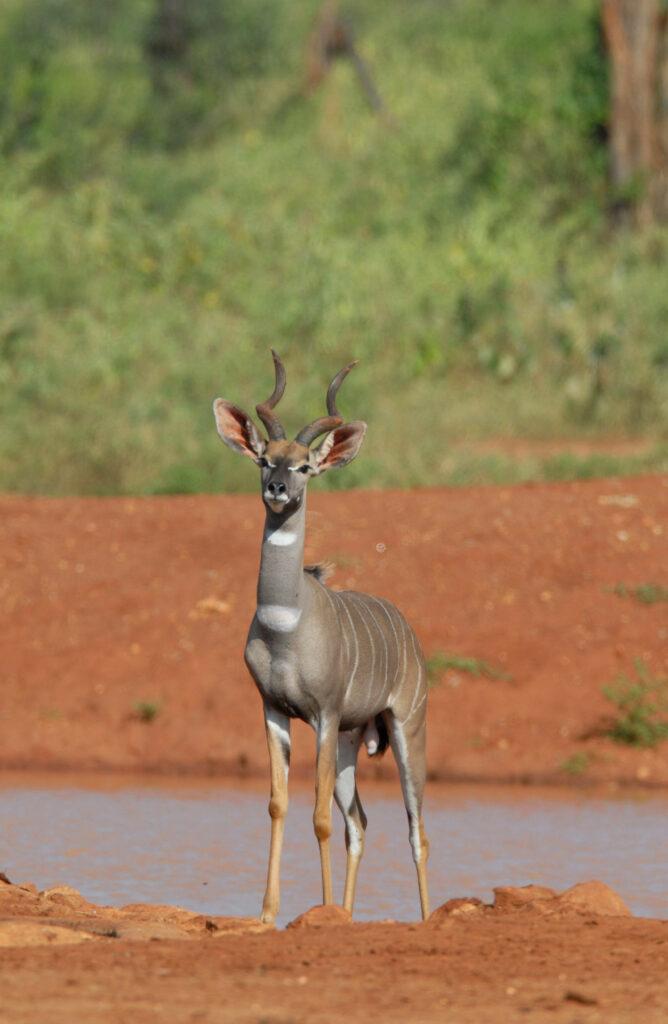
Lesser kudu hunting in Uganda sits on the edge of what most hunters expect when planning this species in Africa. While the animal may be present in certain regions, this is not a destination where the hunt is built around it in a consistent or predictable way.
For hunters considering hunting in Uganda, lesser kudu represents an opportunistic addition rather than a structured objective. Opportunities are limited, conditions are inconsistent, and the experience is shaped more by circumstance than by a repeatable hunting system.
This is not a hunt defined by planning around the species. It is one where the possibility exists, but is never guaranteed to fully develop.
Lesser kudu are already considered one of the more difficult spiral-horned antelope to hunt. In Uganda, however, the challenge comes from something more fundamental than terrain, movement, or visibility, it comes from availability. This is not a system where encounters are expected to build over time.
In more established lesser kudu destinations, even when the hunting is difficult, there is usually a structure behind it. Animals are present in workable densities, movement patterns can be interpreted, and the hunt progresses through repeated interaction, tracking, repositioning, and adjusting until an opportunity develops.
Uganda does not consistently offer that progression. Here, lesser kudu exist at low densities within broader ecosystems where hunting effort is spread across multiple species. You may move through suitable habitat, find occasional sign, or even confirm that animals are in the area, but those signals do not reliably translate into repeatable encounters.
You are not refining decisions over multiple chances. You are not building familiarity with a specific animal or pattern. Instead, you are operating in a space where a single, brief opportunity may appear without warning, and just as easily disappear without a second chance. Because once repetition disappears, the hunt stops being about skill, and starts being about whether the opportunity shows up at all.
Uganda's hunting system is not built around individual species in the same way as more established safari destinations. Instead, it operates through controlled quotas, designated areas, and multi-species allocations where the structure of the hunt is defined long before you arrive.
Within that system, lesser kudu is rarely a priority species. This matters more than most hunters realize.
In destinations where lesser kudu is a primary target, the entire hunt is shaped around creating encounters, time is allocated specifically to the species, areas are selected based on density, and decisions are made to stay with animals until an opportunity develops.
Uganda does not function that way.
Here, lesser kudu exists within a broader allocation. The hunt continues to move, priorities shift between species, and time is not always spent trying to force a single outcome. Even in areas where lesser kudu are present, the structure of the hunt does not pause or narrow to focus on them.
That changes the experience completely.
Because the limiting factor is no longer just finding the animal, it is whether the system allows you to stay with the opportunity long enough to turn it into a result.
In a true lesser kudu destination, the hunt is built around the animal from the start.
Time is allocated specifically to the species. Areas are selected based on known density. When sign is found, the hunt slows down and stays with it. Encounters build over time, and decisions are made within a system designed to create repeat opportunities.
That structure gives the hunter something to work with. Uganda does not offer that same framework.
Here, you may be in suitable habitat and still not have the ability to stay with a single opportunity long enough to develop it. The hunt continues to move, priorities shift, and encounters, if they happen, are often isolated rather than repeatable.
That's the difference. Not how hard it is, but how the hunt is built.
And for most hunters, that distinction determines whether lesser kudu should be a primary objective, or simply part of a broader safari.If your goal is to plan a hunt built specifically around lesser kudu, it's worth understanding how Kudu Hunts are structured across Africa.
Lesser kudu in Uganda are not hunted as a primary objective in the way they are in more established destinations. Instead, they exist within a broader system where multiple species, terrain types, and hunting priorities overlap.
That changes their role from the outset.
You are not entering an environment designed to consistently produce lesser kudu encounters. You are moving through areas where they may be present—but where the hunt itself is not structured around them.
In practice, this shifts the animal into the background of the experience rather than the center of it. You may encounter sign, or even get a brief sighting, but there is rarely a system that allows you to stay with that opportunity long enough to build a hunt around it.
That's what separates Uganda from other lesser kudu destinations. It's not that the animal behaves differently, it's that the hunt around it does.
In Uganda, time in the field is often shared across multiple species rather than concentrated on one.
That means even when lesser kudu are present, you are not always in a position to dedicate full days to pursuing them exclusively. The hunt continues to move, and opportunities are taken as they appear rather than being built over time.
For hunters used to species-focused safaris, this is one of the biggest adjustments.
When lesser kudu is included on a Ugandan safari, it is rarely the primary reason for the hunt, and it should not be evaluated that way.
You are not paying for a structured lesser kudu hunt with predictable opportunity. You are paying for access to a broader plains game hunting safari in a remote and controlled system where a wide range of animals may be encountered.
Lesser kudu is part of that possibility, not the guarantee. Understanding that distinction matters before committing to the hunt.
Because if your expectation is to pursue lesser kudu as a focused objective, Uganda will feel inconsistent and uncertain. But if you view it as an added opportunity within a larger safari, the experience aligns much more closely with what the system is designed to deliver. This is where most expectation gaps occur. Not in the field, but in how the hunt is understood before it begins.
Most lesser kudu discussions focus on theory, habitat, density, timing. In Uganda, the reality is simpler and less predictable.
Most hunters spend several days moving through good-looking country, seeing other species, cutting occasional sign—and only then realize the hunt isn't going to center around lesser kudu at all."
Then, without much buildup, an opportunity can appear, and disappear just as quickly.
There is often no long track to follow. No extended effort on a single animal. No sequence where you adjust, reposition, and improve your chances over time.
Instead, the experience is defined by short windows. For hunters, that's the part they don't expect, it's not the shot that's difficult, it's how little control you have over when the opportunity happens.
When lesser kudu are encountered in Uganda, it is typically in northeastern regions such as Karamoja and areas near the Kidepo ecosystem. These are marginal parts of the species' broader range, where populations are present but not dense.
In these areas, hunting is structured around larger concessions and community-managed zones where multiple species are pursued. Lesser kudu may be included within quota systems, but they are rarely the defining feature of the hunt.
You may see sign. You may get a glimpse. But building a hunt around consistent encounters is not how these areas function.
Timing can influence general hunting conditions, but it does not fundamentally change the nature of lesser kudu availability in Uganda.
Drier periods, typically the later part of the season, can improve visibility, reduce ground cover, and make tracking slightly more manageable. In these conditions, movement is easier to interpret, and any opportunity that does arise may be clearer and quicker to act on.
However, this does not translate into increased encounter rates.
Lesser kudu density remains low regardless of timing, and the hunt is still not structured around producing consistent opportunities. Seasonal changes affect how you move through the environment, not how often you will find the animal.
Earlier in the season, thicker vegetation and more dispersed movement can make even brief encounters harder to capitalize on. Later in the season, conditions may favor visibility and shot execution, but only if an opportunity presents itself in the first place.
That's where most people read this hunt wrong. In Uganda, timing refines the conditions around an opportunity, it does not create the opportunity itself.
Most hunters approach lesser kudu with the expectation that the hunt will revolve around the species itself. That assumption does not hold in Uganda.
Here, lesser kudu is not the focus, it is part of a larger system.
Hunters may enter the right area, spend time in suitable habitat, and still never have a meaningful opportunity. Not because something went wrong, but because the hunt was never structured around producing that outcome in the first place.
That's where expectations usually break down.
Most lesser kudu hunts in Uganda don't fall apart in a single moment, or even over time. They fail quietly, before they fully begin.
You may be in the right region, in suitable habitat, moving through areas where lesser kudu are known to exist. There may be sign, or even brief visual confirmation.
This is usually where the hunt loses momentum, there may be sign, even a brief sighting, but no second opportunity to adjust or follow up.
There is no consistent pattern to follow. No repeated opportunities to adjust to. No system that allows you to stay engaged with a specific animal long enough to turn it into a shot.
Most hunters don't fail because they made a mistake, they fail because the opportunity never develops into something they can act on.
In other lesser kudu hunts, the challenge is staying with the animal or reacting in time. In Uganda, it is more fundamental than that.
The issue is not movement or visibility, it is whether the opportunity exists in a meaningful way at all.
You may have the skills, the setup, and the conditions, but without a system that produces repeatable encounters, those factors don't come into play in the same way.
When opportunities do occur, they are often brief and unpredictable, but the defining challenge is not the shot itself. It is the rarity of the moment.
You are not managing multiple chances or building toward a clean setup. You are responding to a single, often unexpected opportunity that may not come again during the hunt.
This hunt makes sense if:
Lesser kudu is a secondary interest
You are already hunting Uganda for other species
You are comfortable with uncertainty and low probability
It does not make sense if:
Lesser kudu is your primary goal
You expect structured, repeatable opportunities
You are choosing a destination specifically for this species
If lesser kudu is your main objective, there are better places to build your hunt around.
Lesser kudu hunting in Uganda is not defined by difficulty in the traditional sense—it is defined by availability.
The species exists, but the hunt is not built around it.
For hunters looking to pursue lesser kudu as a primary objective, Uganda will feel unpredictable and often unrewarding. The system simply does not support the kind of focused, repeatable effort required to build consistent opportunities.
Where Uganda does make sense is within a broader safari. For hunters focused specifically on lesser kudu, choosing the right destination matters far more than timing or effort.
If lesser kudu is viewed as an added possibility, something that may present itself while hunting other species, then the experience aligns with how the hunt actually functions.
That's what decides whether this hunt feels right, or like a mistake. In Uganda, success isn't driven by effort, it's driven by whether the opportunity exists at all.
Search from our range of Hunts across various popular destinations in Africa.

Book Your Hunt