Designed by Hunters, for Hunters

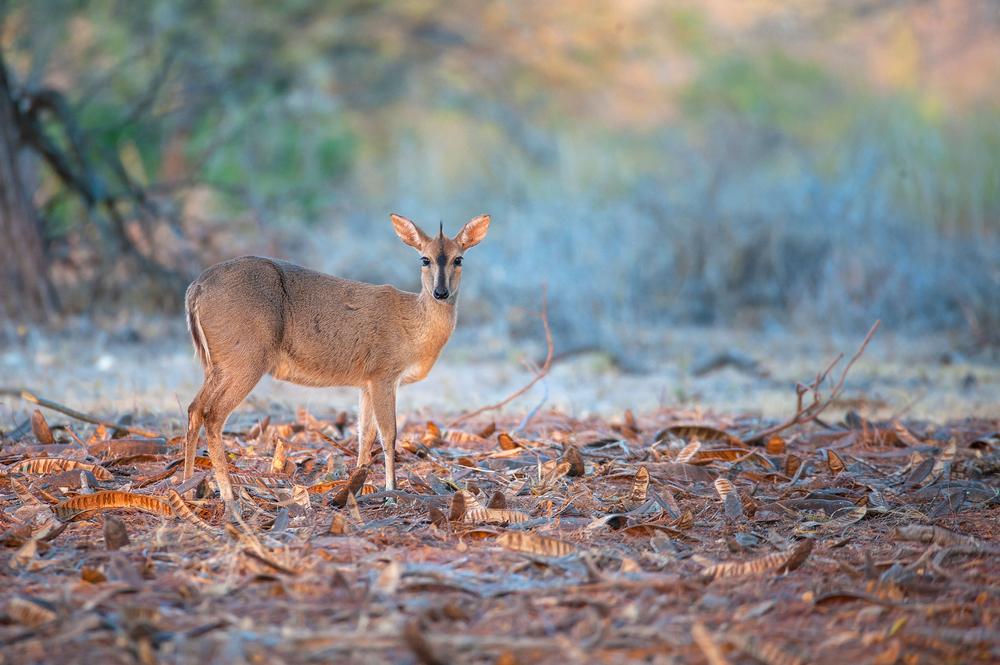
Small antelope hunting in Africa requires exceptional precision, as these smaller-bodied animals present much tighter target areas than larger plains game species. Accurate shot placement is essential to ensure a quick, ethical kill while preserving the trophy.
Most small antelope are pursued as part of broader plains game hunting safaris, where hunters may encounter a variety of species in different environments and shooting conditions. While these animals are not considered dangerous, they are often hunted in regions that also form part of dangerous game hunting safaris, requiring hunters to remain disciplined, adaptable, and highly accurate in their shooting.
For a complete understanding of shot placement across all African species, including both plains game and dangerous game, refer to our African shot placement guide, which covers key aiming points, shot angles, and real hunting scenarios in detail.
Many game hunters when preparing for their African hunts prefer packing smaller caliber higher powered rifles fitted with bigger scopes for increased range when hunting these tiny antelopes. Calibers such as a .22 or .223 are chosen. Other game hunters prefer packing larger calibers loaded with solid bullets, moving slower and causing less hydrostatic shock on impact. This choice could be any thirty-caliber rifle.
In certain circumstances, such as Blue Duiker hunting in Africa, game hunters prefer low-caliber shotguns. Much consideration is given as to the best equipment for the job.
Once the decision of which rifle will be packed for the African game hunting safari, it all then comes down to shot placement. The reality is that these shy and cute antelope also need to be humanely killed. The antelope’s anatomy in terms of brain, heart, and lung positioning must be studied. Most of these small African antelope only weigh a few pounds, thus making the antelope and the trophy exceptionally delicate.
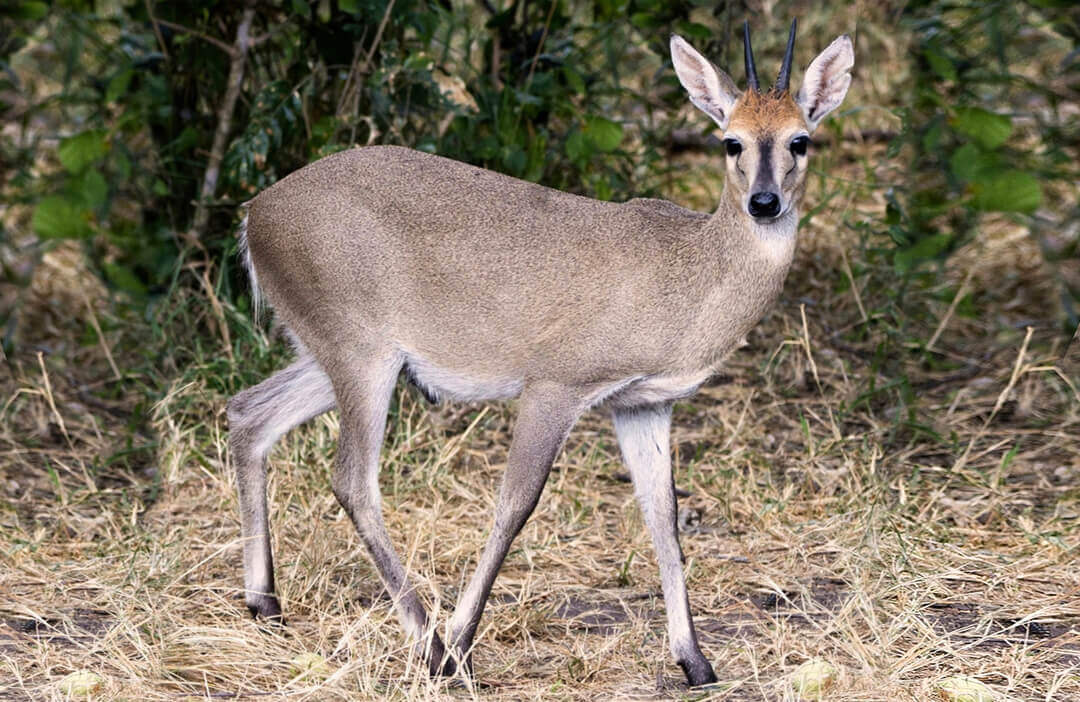
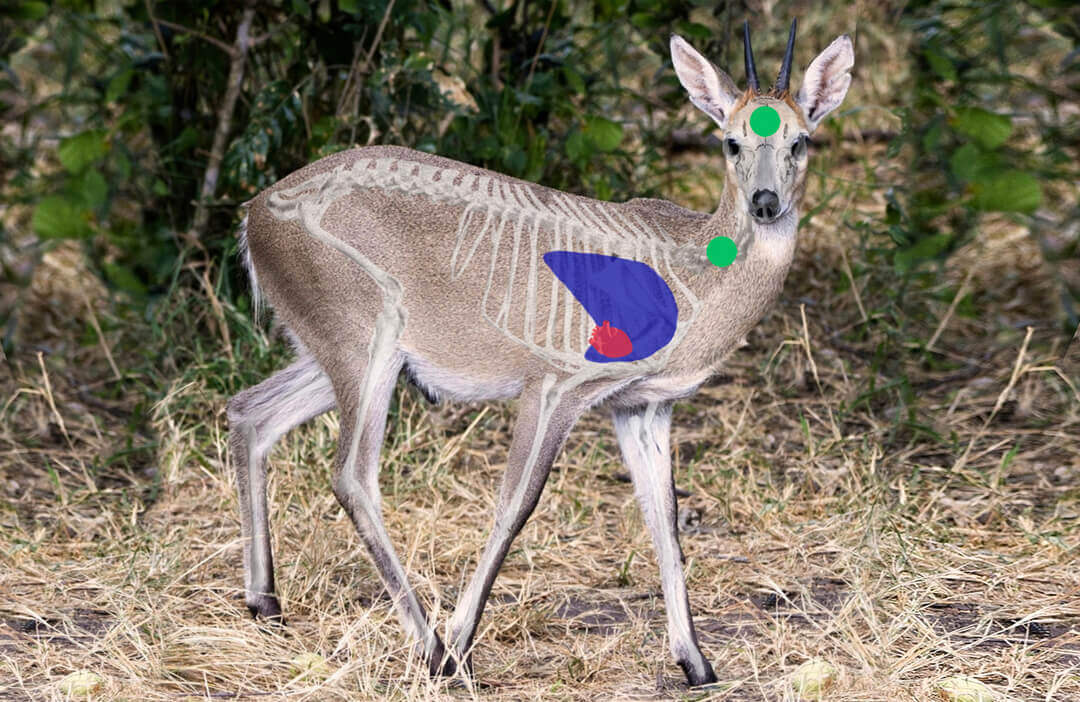
The brain is a tiny target, whether the antelope is large or small. The brain changes position every time the antelope moves its neck. The result is that the hunter could face a moving target that will not be ideal. While the brain and neck shot will be fatal, your professional plains game hunter will not recommend this shot and should not be a consideration on a game hunting safari.
As these small antelope are usually hunted for trophies, the shock of the bullet on impact will do catastrophic damage to the head on a brain shot, the result being a potentially ruined African plains game trophy.
The broadside shot is a popular one when hunting African plains game. Why? If the antelope is standing broadside, the hunter has an excellent target of the heart and lungs. This target is also known as the vital zone triangle. A direct hit to this zone will ensure the animal’s quick and humane demise and should be the main objective for any hunt, irrelevant of the species.
The heart is positioned low and sits just behind the shoulder of the antelope. The antelope’s lungs extend above the heart to just below the spine. A direct hit to this area will result in a rapid loss of blood and oxygen. A successful broadside shot placement will kill the antelope almost instantly. The result is minimal suffering and follow-up tracking involved.
When hunting these small antelopes, the hunter will not always have a perfect broadside ideal shot placement position. These small antelope are used to early warning signs and hiding from predators. African antelope are always on high alert.
Should the broadside shot not be presented, the quartering away shot is the next best option. This shot placement may be challenging to the hunter, but it presents a unique opportunity and line directly to the vital organs.
The point of aim to ensure the perfect shot placement will be a line with the opposite shoulder. Entry will be just behind the nearest shoulder. The successful shot will penetrate the vital organs, with quick incapacitation of the small antelope.
If the shot is too far behind the target, it will miss the vital organs. The bullet will more than likely penetrate the antelope’s liver and stomach. When the antelope is quartering towards the hunter, the bullet must be placed in front of the shoulder on the neck side. Misjudging the bullet trajectory can result in the vital organs being missed.
The most important consideration is distance when contemplating shot placement on small African plains game antelope, using a low-caliber shotgun. By distance, we refer to the yards between the big game hunter and the small antelope. Too far and not enough of the shot will penetrate. Too near, and the trophy will be decimated.
A game hunting safari for a small African antelope is a privilege. The antelopes play a vital role in the ecosystems and demand great respect from local communities and international hunters.
If there is any doubt whatsoever, do not take the shot! African hunts generally require patience, but a game hunting safari for small antelope constantly on high alert for predators and danger takes this to a new level.