
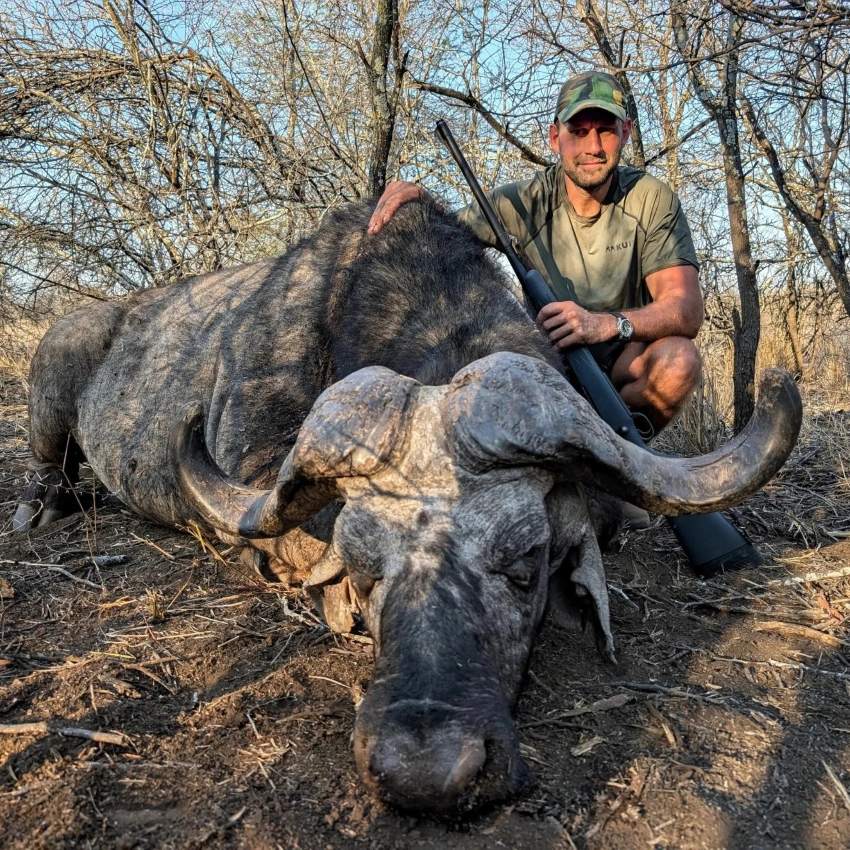
Two Cape buffalo hunts in South Africa can carry a similar price and be different purchases.
One package may include a mature hard-bossed bull with no stated size limit. Another may be restricted to a particular horn-size category, with larger bulls available as an upgrade. A third may be sold as a management hunt. Even the words “all-inclusive” can mean different things once trophy fees, transfers, hunting days, rifle hire and other costs are separated out.
For American hunters planning a Cape buffalo hunt in South Africa, the important question is not simply what the safari costs. It is what that price actually buys you, what kind of buffalo is included, what happens if the right bull is not available, and which costs or conditions only show up after the deposit has been paid.
Before comparing two buffalo packages, make sure you are comparing the same thing.
What Buffalo Does the Price Actually Include?
A Cape buffalo package should tell you more than simply “one buffalo bull included.”
In South Africa, buffalo hunts may be sold around a specific trophy class, a maximum horn spread, a minimum age or maturity standard, a management animal, or with no stated size limit. Those are not the same product, and the difference affects both the price and the kind of bull you are hunting. A package restricted to a specific horn-size category may include bulls up to a certain measurement, with larger animals available at an additional trophy fee. Hunters must know the upgrade structure before the safari starts rather than first hearing about it when a bigger bull steps out.
The same applies to management buffalo. That description needs to be explained clearly. A management bull might be an old, fully mature, hard-bossed animal that simply falls below a particular horn-width category. That is different from a young, soft-bossed bull that happens to measure under the same limit.
A 37-inch young bull and a 37-inch old hard-bossed bull may both sit below a 40-inch benchmark, but they are not remotely the same buffalo. Horn width alone does not tell you the age, maturity or character of the animal.
Hunters should also be careful with the phrase “no size limit.” It sounds attractive, but it only means the package does not restrict you to a particular horn measurement. It does not mean the property is holding 44- or 46-inch bulls. On many South African properties, the landowner and professional hunter know the buffalo population well. If the biggest, mature bulls currently on the property are around 39 or 40 inches, then a no-size-limit package is unlimited. There simply may not be a larger bull there to hunt.
Before booking, ask what mature bulls are present on the specific property you will be hunting, and ask to see recent buffalo taken from that property rather than photographs drawn from an outfitter’s wider operation.
The important questions are simple:
- What class of buffalo is included in the price?
- Is there a maximum horn size or trophy category?
- Are larger bulls available as an upgrade?
- If the package is described as a management hunt, what does “management” mean in this case?
- Is the objective an old mature hard-bossed bull, or simply any bull below a stated measurement?
- If there is no size limit, what mature bulls are available on the property?
The point is not to chase inches for the sake of inches. It is to understand what you have actually paid to hunt before the safari begins.
Is the Buffalo Trophy Fee Included in the Advertised Price?
Not every South African buffalo hunt is priced the same way.
Some safaris are sold as a complete package, with the buffalo trophy fee already included in the advertised price. Others are structured as a daily rate plus a separate trophy fee for the buffalo. On paper, both may look like a “buffalo hunt,” but the final cost can be different.
Before comparing offers, establish exactly what the quoted figure covers.
If a package is advertised at US$12,000, does that include the buffalo itself, or is that only the hunting package before the trophy fee is added? If the trophy fee is separate, is it fixed, or does it change according to the size or class of bull taken?
Hunters comparing African hunting safari prices should make sure they are comparing the same cost components before deciding which offer is cheaper.
This is important where trophy upgrades are possible. A hunter may book one category of buffalo at a certain price, then be given the option to take a larger bull for an additional fee. That is perfectly workable when the structure is clear before the hunt starts. It becomes a problem when hunters only discover the extra cost after a bull has already been selected.
The same applies to management hunts and discounted buffalo packages. A lower advertised price may simply reflect a different trophy category, rather than a cheaper version of the same hunt.
The hunter should know:
- whether the buffalo trophy fee is included;
- whether the fee changes according to trophy class;
- whether any upgrade is optional;
- what the additional cost will be if a larger bull is taken;
- whether the quoted price includes all taxes and hunting charges connected to the buffalo.
The important thing is not whether a hunt is sold as a package or as daily rates plus trophy fees. Both structures can be perfectly clear and fair. What matters is knowing which one you are buying before you compare the price with another safari.
What Happens if the Buffalo You Booked Is Not Available?
A buffalo package may look clear on paper, but the hunt still takes place in the real world. If you have booked a specific trophy category, management bull or mature hard-bossed buffalo, there is no guarantee that the right animal will simply appear because your safari has started. Hunters should ask one important question before wiring a deposit:
What happens if a suitable buffalo in the category I booked cannot be found during my hunt?
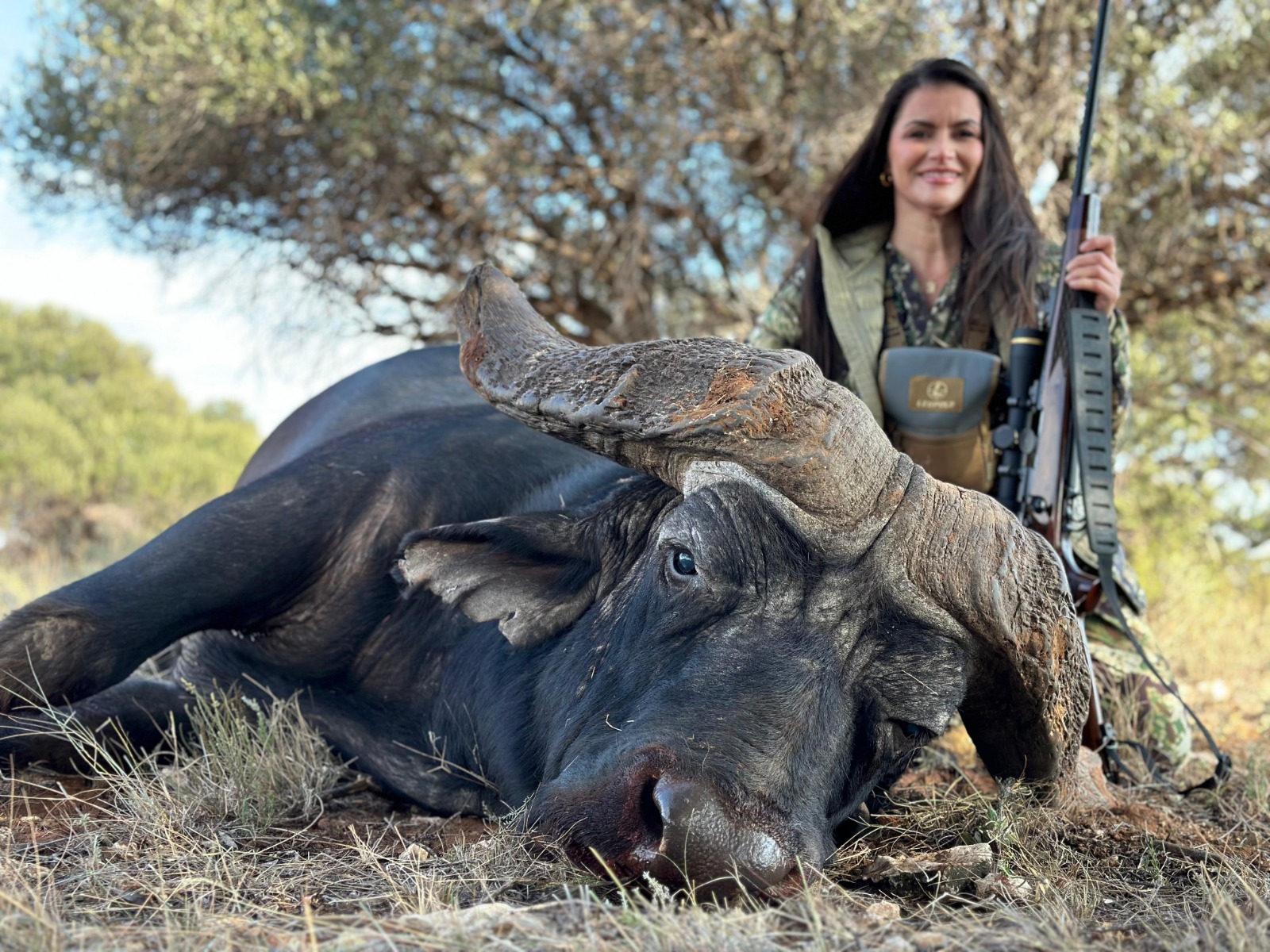
The answer may differ between outfitters and properties.
In South Africa, a property may hold several mature buffalo but only one or two bulls that fit the exact class a hunter has booked. A 37-inch hard-bossed package, for example, can become complicated if the suitable bulls cannot be found while most of the other mature animals fall into a more expensive trophy category.
In some cases, the hunter may continue looking for the correct bull for the full safari. On another hunt, there may be an option to move to a different property, extend the hunt, take a smaller buffalo, or upgrade to a larger trophy class.
None of those options are necessarily a problem. The problem is when they are only discussed after several hunting days have already passed. The situation can be different again with very large buffalo. Bulls over 44 inches may be known animals, including former breeding bulls, and the outfitter or landowner may already know exactly which buffalo are available to hunt. In these cases, hunters are often shown photographs of the available bulls before booking.
That can make the arrangement very clear, but it also means the hunter should understand whether he is booking a trophy category or effectively agreeing to hunt a particular animal. This is especially important with discounted or size-restricted packages. If a hunter books a 36- to 39-inch buffalo, for example, he should know what happens if the only mature bulls being seen fall outside that category.
Is an upgrade optional?
Can the hunter continue looking for a bull within the class he booked?
Can another hunting area be used?
What happens if no suitable buffalo is taken at all?
These questions must be answered before the hunt begins, not when everyone is standing behind a buffalo deciding whether the extra inches are worth another trophy fee.
The same applies to a management hunt. If the package calls for an old hard-bossed management bull, the hunter should know whether that type of animal is genuinely available and what happens if the right bull cannot be located. A buffalo safari should never depend on assumptions about what will happen later.
The clearer the agreement is before the hunt, the easier it is for the hunter and professional hunter to make the right decision when a buffalo finally steps out.
How Many Full Buffalo Hunting Days Are Included?
A seven-night buffalo safari in South Africa does not usually mean seven full hunting days.
In many South African packages, the safari is sold by the number of nights in camp. Seven nights will usually mean around six full hunting days, as the arrival and departure days form part of the stay. That is different from traditional dangerous-game safaris in countries such as Zimbabwe or Tanzania, where the hunt is commonly structured around a set number of hunting days. A seven-day safari means seven hunting days, with the hunter staying an additional night before departure.
The difference sounds small until two packages are compared side by side. A South African offer may advertise seven nights, while another safari elsewhere in Africa is advertised as seven hunting days. They are not giving the hunter the same amount of time in the field.
Part of the confusion comes from the way many South African safaris are structured. Outfitters may use lodges and hunting properties owned by other landowners, and accommodation is often treated much like a hotel stay: nights in camp are part of the package structure, while the hunting takes place during the days between them.
That matters on a buffalo hunt.
If the right bull is not found immediately, one fewer full hunting day can make a difference. This is even more important when a hunter has booked a specific trophy category or an older hard-bossed bull and is prepared to pass animals that do not fit what he came for.
Before booking, ask the outfitter to spell out the actual schedule:
- How many full hunting days are included?
- Are arrival and departure days counted as hunting days?
- If the hunter reaches camp early enough, can hunting begin that afternoon?
- If the buffalo is taken early, can the remaining days be used for plains game or another species?
A hunter should compare buffalo packages by the number of full hunting days rather than simply the number of nights shown in the itinerary. Seven nights and seven hunting days may sound similar, but they are not the same product.
What Does “All-Inclusive” Include?
“All-inclusive” sounds simple, but on a South African buffalo hunt it can cover different things depending on the outfitter and the package. One hunt may include the buffalo trophy fee, accommodation, meals, drinks, hunting licences, field preparation, airport transfers and rifle hire. Another may include only the core hunting package, with several of those costs added separately.
Before comparing two offers, ask for a clear list of what is included and what is not.
The points worth checking are straightforward:
- buffalo trophy fee;
- accommodation and meals;
- professional hunter, trackers and skinners;
- hunting licences and permits;
- airport transfers;
- rifle hire and ammunition;
- observer costs;
- field preparation of the trophy;
- local taxes or levies;
- dip and pack;
- taxidermy;
- trophy shipping.
Even apparently simple inclusions can have conditions attached. Alcohol, for example, may be included only in reasonable quantities or may be limited to local beer, wine or house brands. One hunter’s idea of “moderation” may be very different from the outfitter’s, so if something matters to you, clarify it before the safari rather than assuming it is unlimited.
Some of these costs may be included in the package price. Others may be payable directly to a third party after the hunt.
Small differences between two buffalo offers can add up quickly. A hunt that looks cheaper at first may become more expensive once transfers, rifle hire, observer fees or trophy preparation are added. The same applies to the end of the safari. If the buffalo is taken early, ask whether the remaining hunting days can be used for plains game or another species, and whether additional trophy fees are simply added to the existing package.
The phrase “all-inclusive” is useful, but it should never replace a written breakdown of the actual costs. The hunter should know exactly what is included before comparing one buffalo package with another — and read the fine print before paying a deposit.
Where Does the Included Airport Transfer Begin?
“Airport transfers included” can sound straightforward until the hunter arrives in South Africa and discovers that the included transfer starts from a different airport.
Some buffalo packages include road transfers from OR Tambo International Airport in Johannesburg. Others begin from regional airports such as Polokwane, Kimberley or Kruger Mpumalanga International Airport.
Hunters planning the wider logistics of hunting in South Africa should also consider how the hunting area fits into their domestic flights, road transfers and arrival schedule.
If the package only includes collection from a regional airport, an American hunter may still need to pay for a domestic flight, allow time for the connection, and possibly add another hotel night depending on the schedule. The same applies to the return journey. A hunt ending in a remote area may require several hours on the road before reaching the airport, which can affect which international flight is realistic on departure day.
Before booking, ask exactly where the included transfer starts and ends. If another flight is required inside South Africa, find out who arranges it, whether the cost is included, and how much connection time is needed. “Transfers included” is useful information only when the hunter knows from where.
Cape Buffalo Hunt Package FAQs
What happens if the PH misjudges the size of the buffalo?
If the hunt is priced according to horn-size categories, this should be agreed before the safari starts.
The hunter should know who carries the additional cost if a professional hunter recommends a bull believed to fall within the booked category and the animal later measures larger. Some outfitters may absorb the difference where the PH made the call, while others may have different terms.
Do not wait until the buffalo is in the salt to find out.
Can an outfitter show me the buffalo available before I book?
Yes, and this is common in South Africa, particularly where large bulls, former breeding bulls or specific management animals are being offered.
Photographs can help a hunter understand what is realistically available, but make sure the animals shown are on the property you will be hunting. An outfitter may operate across several different properties.
If the hunt depends heavily on the buffalo population and hunting area, our guide to choosing the right Cape buffalo hunting area in South Africa looks at those considerations in more detail.
Is a management buffalo always a smaller or lesser buffalo?
No, a management bull may be an old, fully mature, hard-bossed animal that falls below a particular horn-width category. Another operator may use the term for a different herd-management reason.
Ask exactly what qualifies the buffalo as a management animal before booking the hunt.
Do South African buffalo packages usually include rifle hire and ammunition?
Rifle hire may be included in the package, charged as a daily rate, or quoted separately. Ammunition may also be an additional charge.
American hunters planning to use the outfitter's rifle should ask which rifle and calibre will be available, whether ammunition is included, and whether there will be an opportunity to check the rifle before hunting.
Can I refuse an upgrade if the only buffalo being seen are larger than the class I booked?
That should be established before the safari begins.
If you booked a particular trophy category, a larger buffalo should not automatically mean that you have agreed to pay an upgrade. A hunter should know whether he can continue looking for the class originally booked and what alternatives are available if the correct bull cannot be found.
An upgrade should be a choice, not a surprise.
Should the trophy category and upgrade price be written into the agreement?
Yes, if the hunt is based on a defined buffalo category, the agreement should make the category, measurement limits and upgrade structure clear.
That becomes important when a larger bull may carry a substantially higher trophy fee.
If I take my buffalo early, can I use the remaining days for plains game?
Often, but do not assume it.
Some outfitters will allow the hunter to use the remaining safari days for plains game, with the additional animals charged according to the applicable trophy fees. Other packages may have different arrangements.
If this matters to you, ask before booking rather than after the buffalo is down.
Are the buffalo shown in photographs definitely on the property I will hunt?
Not necessarily. South African outfitters may hunt several different properties, and photographs used to advertise Cape buffalo hunts can come from different areas within the outfitter's wider operation.
If a particular buffalo or trophy class is important to your decision, ask whether the animals shown are currently on the exact property you are booked to hunt.
Recent photographs from that specific property are far more useful than a collection of the outfitter's best buffalo taken over several years.
What should I check before accepting a last-minute buffalo opportunity?
This happens regularly in South Africa. A hunter may be on a plains-game safari when the outfitter gets a call about a buffalo available on another property nearby.
These opportunities can be excellent, but they should not be treated casually just because the hunt was not planned months in advance.
Before agreeing, confirm exactly which buffalo is being offered, the trophy fee, whether any size or category conditions apply, the hunting property, what is included in the price, and whether the necessary paperwork and permissions are in order.
Spur-of-the-moment buffalo hunts have caused problems when the hunter, outfitter and landowner were working from different assumptions.
A last-minute opportunity can still be a good hunt. Just make sure the i’s are dotted and the t’s crossed before heading down the road.
Compare the Hunt, Not Just the Price
A South African buffalo hunt can be straightforward to book, but only when the hunter knows exactly what the package includes.
The important details are rarely complicated. They are simply easy to overlook: the class of buffalo, whether upgrades apply, how many full hunting days are included, what “all-inclusive” covers, where transfers begin and what happens if the hunt does not unfold exactly as expected.
Get those points clear before paying the deposit and two buffalo offers become much easier to compare.
Hunters still planning the wider safari can also compare different African hunting trips before deciding which country, hunt structure and package best fit what they want from Africa.
Author
Tamlyn van Wyk is co-founder of Game Hunting Safaris and works closely with hunters planning and booking African safaris, including the practical details around hunt packages, trophy fees and safari logistics.