
Completing the Big Five sounds straightforward until you ask one question: what actually counts?
Does the lion have to be a male? Does a tuskless elephant count? What about a buffalo cow, a darted rhino or a legally hunted captive-bred lion in South Africa? Hunters do not always agree, and personal hunting goals do not always match the rules used by record books or hunting organizations. Three different questions matter from the start: was the hunt legal, does it count to you personally, and does it qualify under the formal rules of any organization or award system you care about?
Those answers are not always the same.
Hunters planning Big Five hunting should understand those differences before the first safari, because the standard they choose at the beginning may shape the hunts they book later.
Three Different Standards Can Apply to the Same Hunt
A hunter can legally take an animal and still decide that it does not fit their own idea of completing the Big Five. The opposite can also happen. A hunt may mean everything to the hunter personally, while a record book or hunting organization applies a different standard for formal recognition.
Those are separate questions.
Legal means the hunt was conducted under the laws, permits and conditions that applied in that country and hunting area.
Personal is the hunter’s own standard. Some hunters are comfortable counting a lioness, tuskless elephant or darted rhino. Others set themselves a narrower goal.
Formal recognition depends on the rules of the organization or award being pursued. Those rules may deal with sex, hunting method, record-book eligibility or other requirements.
There is no reason to confuse the three. Hunters should know which standard matters to them before they start chasing the final animals on their list.
Do All Five Animals Have to Be Males?
No. There is no universal rule that says a hunter must take five males to complete the Big Five.
Some Big Five hunting opportunities involve females or management animals. A hunter may encounter a legal lioness hunt, a tuskless elephant, or even a buffalo cow opportunity depending on the country, quota and management system. Some hunters set the bar at five mature males. Others are comfortable counting any legal hunt for the species. Formal recognition is a separate issue again. The published criteria used by organizations such as Safari Club International do not simply say that every Big Five animal must be male.
The important point is to decide your own standard before the opportunity presents itself. It is much easier to make that call before the hunt than afterwards.
Does a Tuskless Elephant Count Toward the Big Five?
Yes, it does.
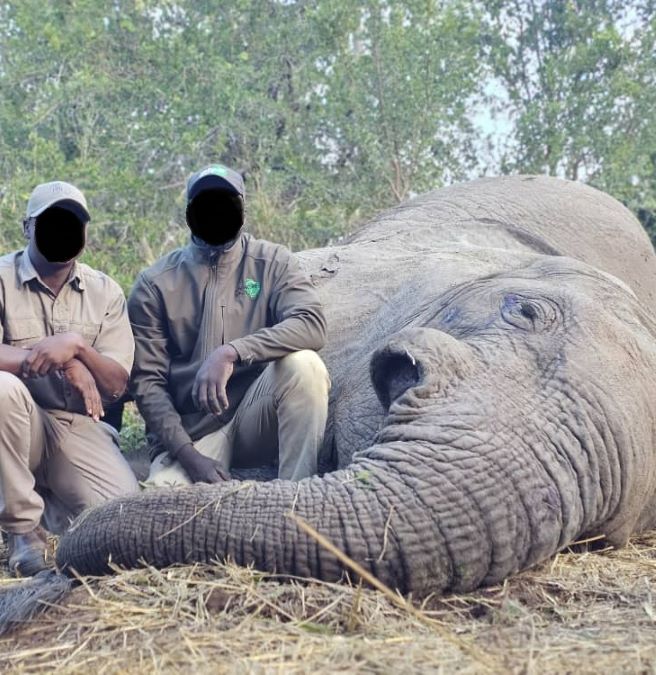
A tuskless elephant is still an African elephant, and a legal tuskless hunt can involve the same tracking, wind, approach, herd pressure and close-range judgement as any other elephant hunt.
The difference is usually the type of animal being hunted and the reason that animal is available. Tuskless elephants may be offered under specific management or quota systems, and the hunt may be structured differently from a traditional trophy bull hunt.
We have experienced that distinction firsthand in Namibia. Our drought-relief elephant hunt in Bushmanland was conducted as part of a wildlife-management response rather than a conventional trophy-bull safari, showing how a legitimate elephant hunt can look very different from the traditional ivory-focused picture of Big Five hunting.
Some hunters will only count a mature tusked bull toward their personal Big Five. Others are satisfied that a legal tuskless or management elephant completes the elephant part of their journey.
Formal recognition should be checked separately. If a hunter is pursuing a particular award or record-book milestone, the rules of that organization matter more than another hunter’s opinion.
Does a Lioness Count Toward the Big Five?
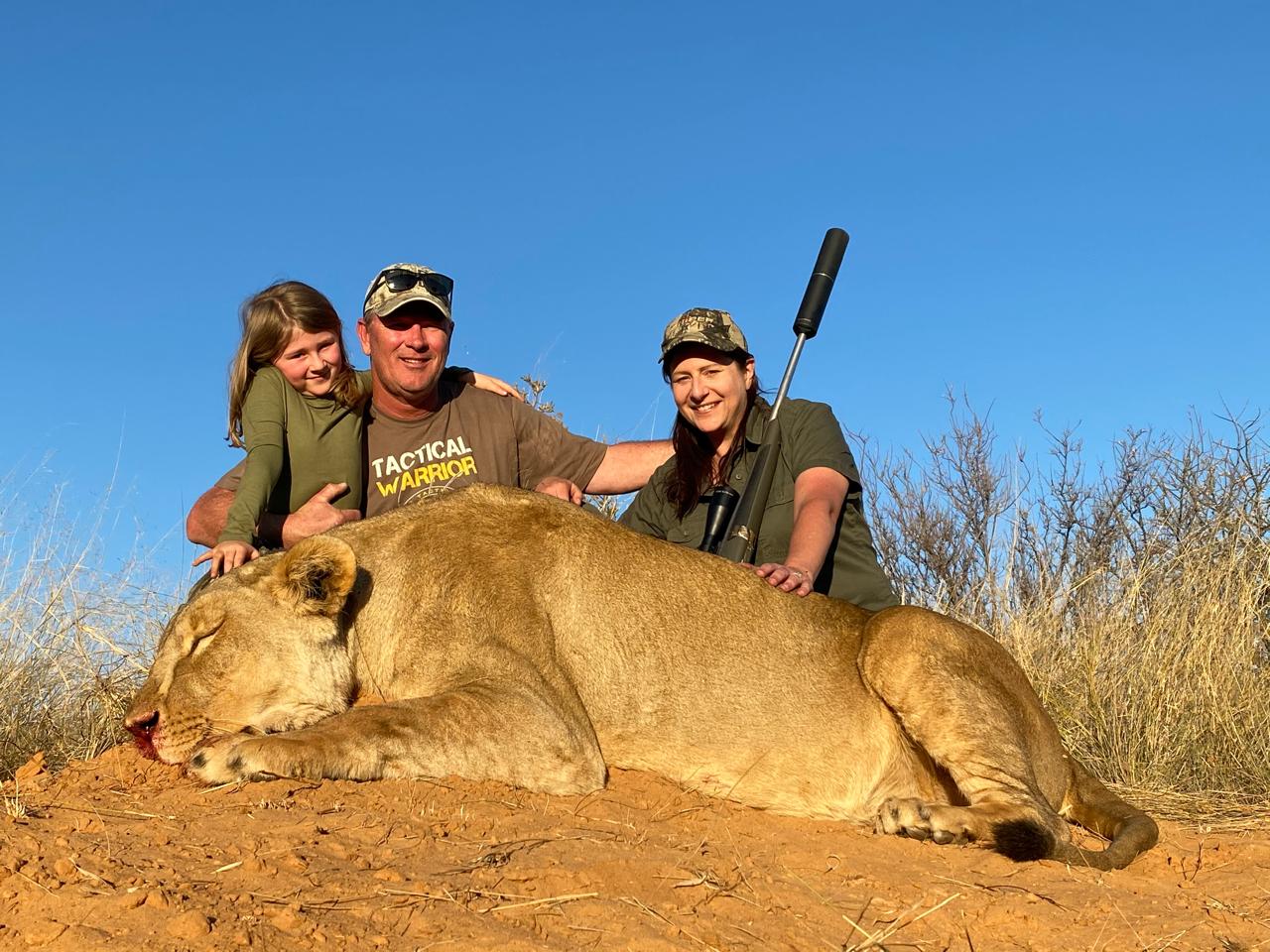
Yes, a lioness is still an African lion. Where a legal lioness hunt is available under the relevant quota and permit system, there is no reason a hunter cannot count that animal toward their personal Big Five.
Some hunters set themselves a male-lion standard. Others do not.
Safari Club International has published a Big Five completion story in which the hunter’s lion was a female, and the same hunter later completed the Five with a darted rhino and an elephant. That is useful evidence that the male-only assumption is not universal, even within formal hunting circles.
For hunters interested in the broader species itself, our Lion Hunts page covers the commercial lion-hunting side. The question here is narrower: whether the sex of the lion changes whether it counts toward the hunter’s own Big Five.
Does a Captive-Bred Lion Count Toward the Big Five?
This is a clear example of why personal completion and formal recognition are not always the same thing. Hunters may legally take a captive-bred lion in South Africa and personally regard that lion as part of their Big Five. That is a personal standard.
Safari Club International takes a different position for formal recognition. SCI’s current policy states that it opposes the hunting of African lions bred in captivity. The policy took effect on February 4, 2018 and applies to hunts taking place after that date. SCI also states that a captive-bred lion taken on such a hunt cannot be entered into the SCI Record Book and will not count toward an SCI hunting award. SCI separately acknowledges that captive-bred lion hunting remains legal in South Africa.
That gives the hunter three different answers:
Legal hunt: potentially yes, if the hunt complies with the applicable South African laws and permit system.
Personal completion: up to the hunter.
SCI formal recognition: no for captive-bred lion hunts covered by the post-2018 policy.
The distinction is important because a hunter may be satisfied with the hunt itself while also knowing that a formal award organization will not recognize it. Hunters considering lion hunting in South Africa should therefore decide which standard matters to them before the hunt, not afterwards.
Does a Darted Rhino Count Toward the Big Five?
Yes, under some formal Big Five award criteria, a rhino may be darted.
This may surprise some hunters as a darted rhino hunt is different from a conventional trophy hunt. The animal is immobilized rather than killed, and the operation may involve veterinary work, measurements, samples and other management procedures before the rhino is revived.
As of 2026, Safari Club International’s published African Big Five criteria specifically allow African rhinoceros to be darted and do not state that the rhino must be male. Hunters intending to use a darted female rhino toward a formal SCI milestone should confirm the current eligibility requirements with SCI before the hunt.
That is relevant to American hunters who follow SCI awards or use SCI recognition as part of their own hunting goals. One hunter may decide that only a conventional rhino hunt fits their idea of completing the Big Five, while another may be satisfied with a recognized darting experience.
South Africa requires an important distinction. Traditional “green hunts,” where the hunting client fires a tranquilizer dart, are illegal. Vita-darting can be legal in some provinces when conducted as part of a genuine rhino-management operation under the required veterinary supervision.
That makes rhino another good example of why the standard matters. A darted rhino can qualify for certain SCI Big Five recognition while still being treated differently under other Record Book rules. SCI’s current policies state that darted animals cannot be certified for certain Record Book major awards because the rhino is measured while alive.
Hunters considering Rhino Hunts should therefore know exactly what type of opportunity is being offered, how it is structured, and whether it satisfies the personal or formal standard they care about. For a deeper look at the management side, our guide How Is a Rhino Selected for a Legal Hunt? explains how a particular animal becomes available and why the process can be very different from an ordinary species hunt.
Does a Buffalo Cow Count Toward the Big Five?
Yes, a Cape buffalo cow is still a Cape buffalo, and where a legal cow hunt is available under the relevant quota or management system, a hunter may choose to count that animal toward their personal Big Five.
That does not mean every hunter will.
Some hunters have a specific picture in mind when they think of Cape buffalo hunting: an old bull, heavy bosses, worn horns and all the character that comes with a mature dagga boy. For them, a cow would not satisfy the objective they set themselves.
Others are working to a different standard. If the hunt was legal, fair and meaningful to them, they may be perfectly comfortable counting it.
Hunters pursuing an SCI award or another formal milestone should also check the current recognition criteria.
The important part is not whether another hunter agrees. It is knowing what you intend to count before the hunt takes place.
Frequently Asked Questions
Do You Have to Hunt All Five Animals in the Same Country?
No, the Big Five can be completed across different countries and different safaris. A hunter might take buffalo in Tanzania, leopard in Namibia, elephant in Zimbabwe and complete the remaining animals elsewhere.
The country does not define the achievement. The important question is whether each hunt meets the legal, personal or formal standard the hunter is working toward.
Do You Have to Hunt All Five on the Same Safari?
No, completing the Big Five is often a journey built over several safaris and sometimes many years. There is no requirement that all five animals be taken during one trip. A single safari may include one Big Five species alongside plains game or other big game hunting objectives, while another trip years later adds the next animal.
Does the Order You Hunt the Big Five Matter?
No, there is no required sequence.
Some hunters begin with buffalo because it is widely available and often their first experience of dangerous game. Others start with leopard, lion or elephant because a particular opportunity comes along. The order matters only if the hunter has set a personal goal or is working toward a formal award with specific requirements.
Is Completing the Big Five the Same as Earning an SCI Big Five Award?
No, a hunter can personally consider the Big Five complete without pursuing any formal award.
SCI recognition is different. It follows SCI’s own published criteria, which can include rules around hunting method, eligibility and how individual species are recognized. A hunter may personally count a particular animal while SCI treats it differently for award or Record Book purposes.
Decide What Completing the Big Five Means to You
Completing the Big Five does not have to mean the same thing to every hunter.
One hunter may want five mature males. Another may be comfortable with a lioness, tuskless elephant or darted rhino. A third may be working specifically toward SCI recognition and therefore needs to follow a formal set of rules. None of those standards should be decided halfway through the journey.
The important thing is to know what matters to you before the opportunity presents itself. That may influence which countries you hunt, which animals you pursue, and how you structure your African hunting trips over the years. Completing the Big Five is rarely one booking or one safari. It is a series of hunts, decisions and opportunities that gradually come together.
The standard a hunter sets can also affect the overall cost of completing the Big Five. A hunter determined to take five mature trophy males may face a very different financial commitment from someone who is comfortable considering legal management animals or other recognized hunting opportunities. Hunters planning the journey should therefore look at the wider African hunting safari prices as well as the individual species involved.
Know your standard at the beginning, and there is far less chance of questioning it at the end.
About the Author
Tamlyn van Wyk is co-founder of Game Hunting Safaris and an avid African hunter. She has spent years learning the realities of hunting across Africa, from following spoor and understanding game to the practical details that can make or break a safari. Tamlyn writes from personal experience, with a straightforward approach and a hunter’s perspective, helping clients understand what they are booking before they arrive in camp.